

Antique Brass Standard Lighting
Antique brass standard lighting brings upright illumination into a room, combining heavy cast metal bases with adjustable columns for reading and ambient glow.
Antique Brass Standard Lighting
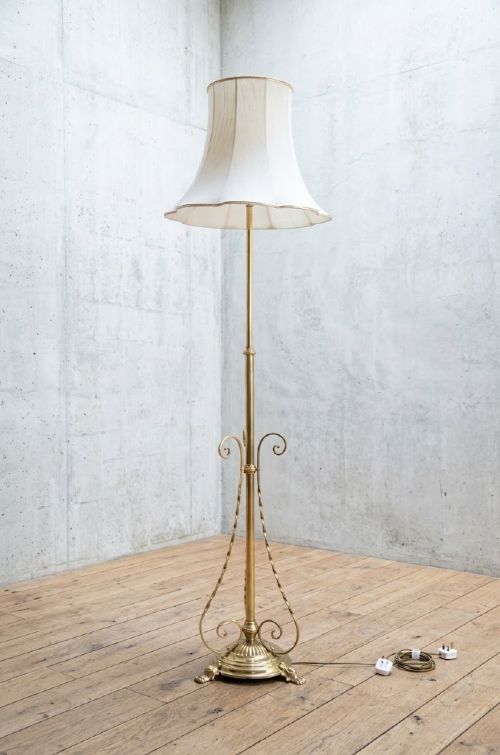
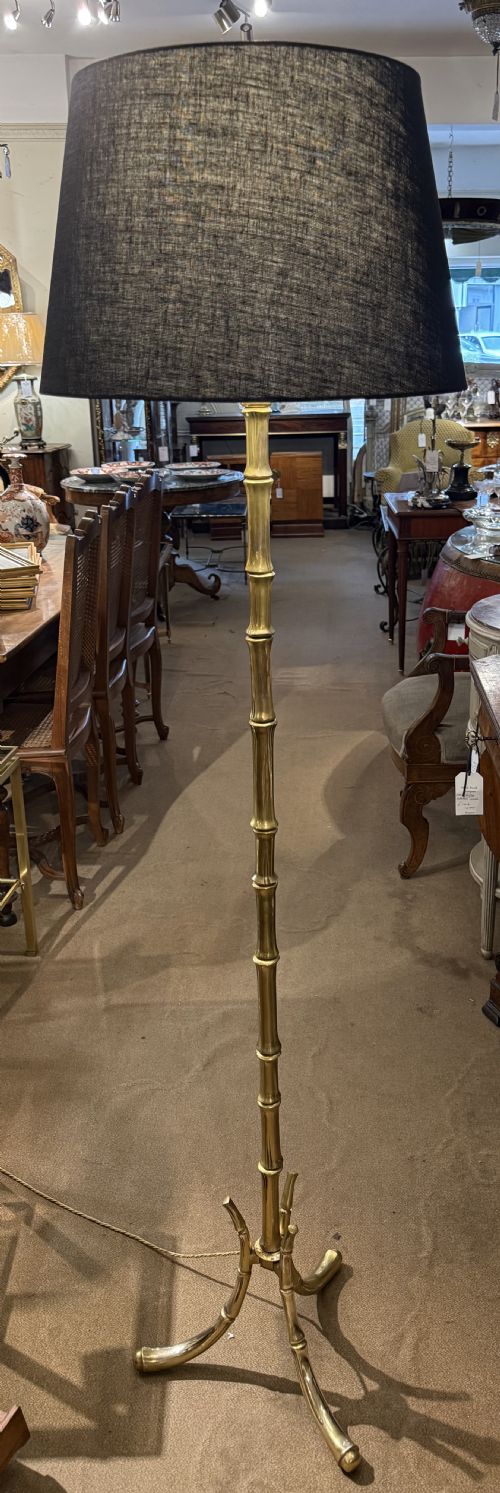
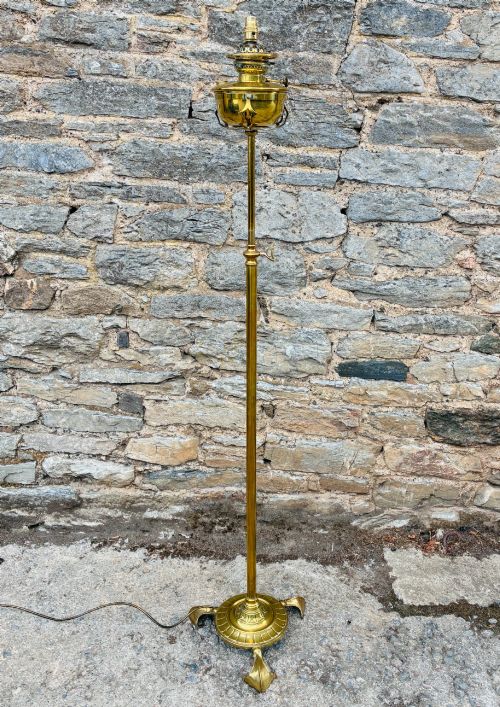
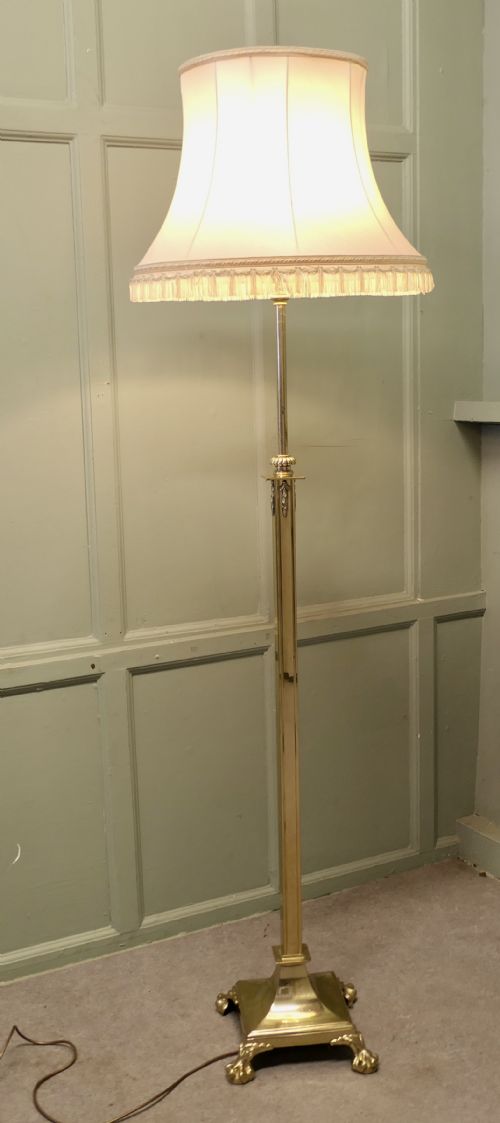
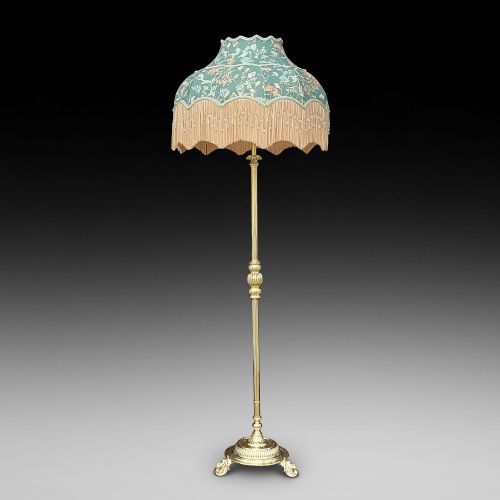
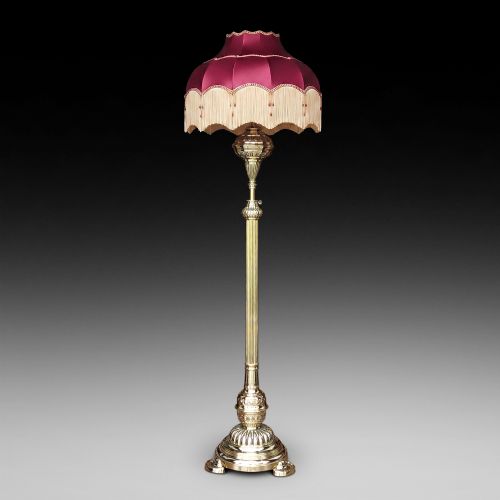
Antique brass standard lighting encompasses floor-standing lamps designed to illuminate large spaces from an elevated position. The pieces found here range from Victorian telescopic oil lamps converted to electricity to early twentieth-century adjustable columns.
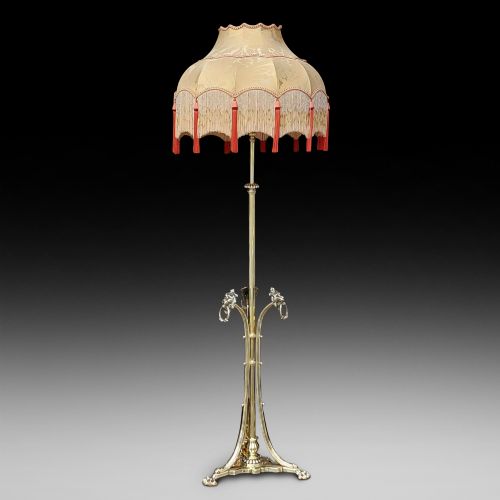
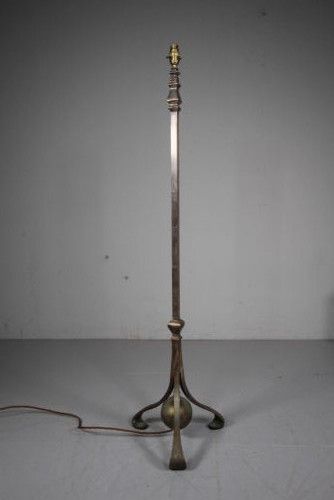
Buyers frequently encounter Victorian and Edwardian examples featuring heavy metal bases, alongside Arts and Crafts and Art Nouveau designs. Many incorporate mechanical adjustments to raise or lower the height of the light source depending on the room layout.
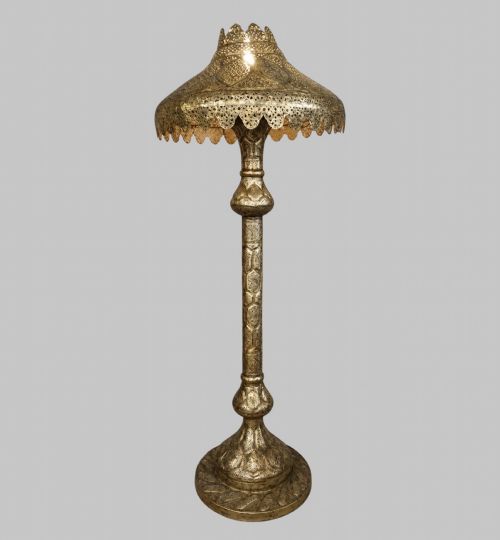
The selection includes specialised forms such as standard lamps, floor candlesticks, and searchlight adaptations. Most pieces rely on brass as the primary structural material, often paired with fabric shades or glass elements.
Materials and Construction
Makers utilised solid brass, patinated brass, and silver plate to construct the upright standards and weighted bases. Additional elements of copper, cast iron, mahogany, marble, and fabric appeared across different styles and periods.
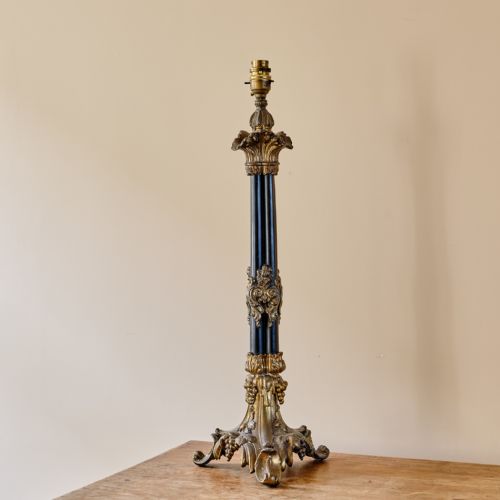
Construction techniques often involved telescopic mechanisms or screw adjustments to allow height variation. Elaborate casting created floral openwork bases and Corinthian columns, while other pieces incorporated glass fonts and cranberry glass shades.
Some tall brass standards arrived via early aviation history, having begun life as Bleriot searchlights before finding a second act indoors.
Distinctions in Quality
Quality rests in the weight of the metal and the precision of the mechanical adjustments. Heavy, solid brass bases provide stability to tall columns, whereas lighter or poorly balanced pieces tend to wobble.
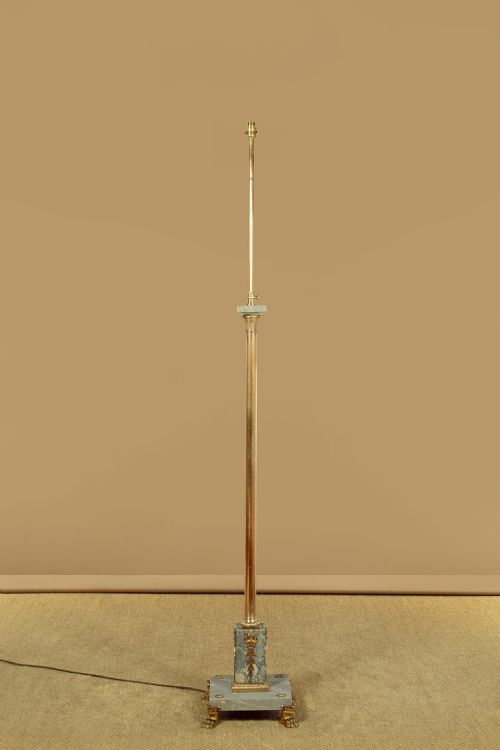
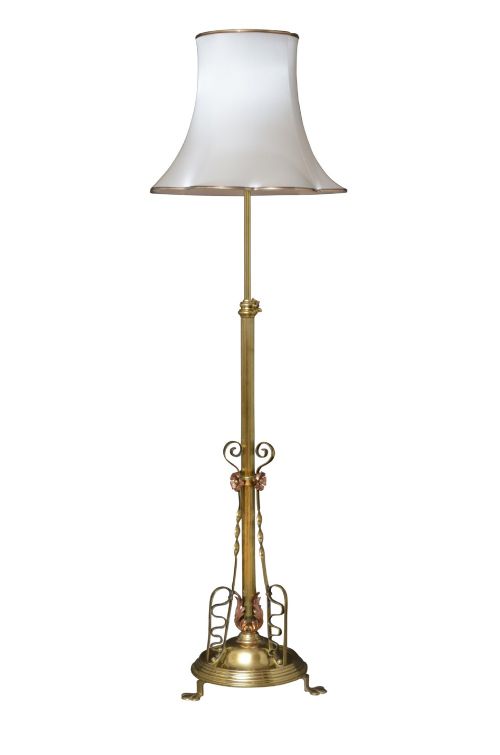
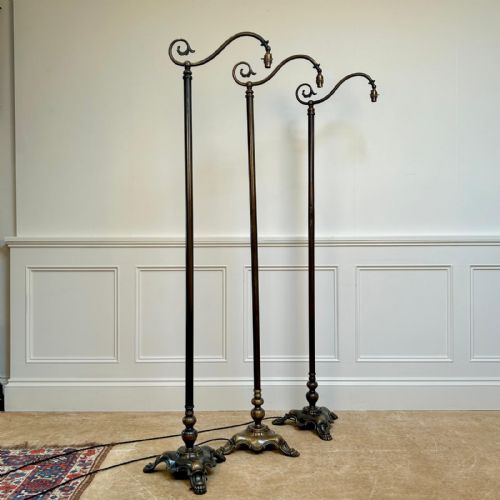
The sophistication of the decorative detail sets finer examples apart, visible in crisp Corinthian capitals, cast openwork, and fluid Art Nouveau scroll arms. Maker attribution, such as work by Hinks of B'ham, also elevates a piece.
Hinks of B'ham·Maison Bagues·Bleriot
The Antique Brass Standard Lighting Glossary
- Standard Lamp
- A term historically used for a floor lamp that supports a shade at standing height. These pieces illuminate a room from a vertical post rather than a table.
- Telescopic
- A construction method allowing the upper section of the lamp stem to slide inside the lower tube. This mechanism adjusts the overall height of the light.
- Bouillotte Lamp
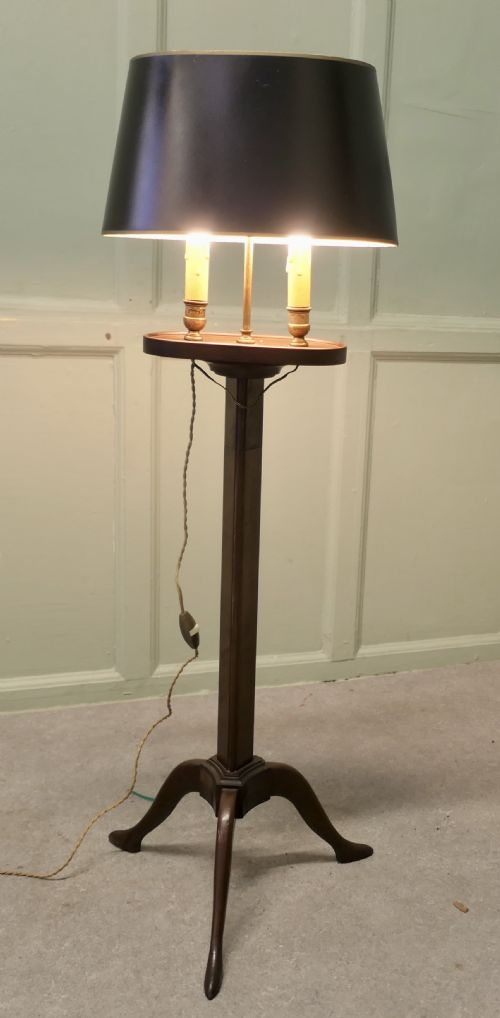
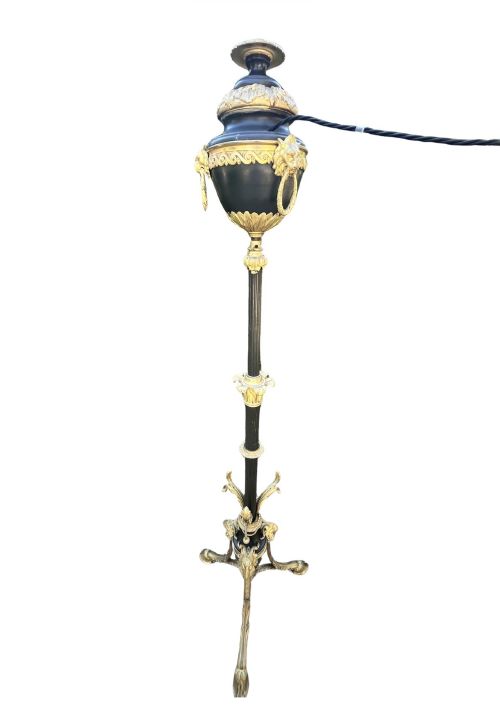
- A type of lighting traditionally featuring multiple candle arms around a central column, often accompanied by a metal shade. Examples can be found adapted as floor lamps.
- Oil Lamp Standard
- A lighting fixture originally designed to burn oil in a glass or metal reservoir before later conversion to electricity. These often retain extending brass stems.
Antique Brass Standard Lighting: Frequently Asked Questions
How do I adjust the height on these lamps?
Many antique standard lamps use a telescopic stem secured by a thumbscrew or key mechanism. Loosening this allows the upper shaft to slide up or down before tightening to hold the position.
Heavier examples require a firm grip on the upper section to prevent sudden drops while adjusting the height for reading or ambient light.
Were these lamps originally electric?
A large portion of Victorian and Edwardian standard lamps started as oil-burning fixtures with glass reservoirs. These were subsequently converted to run on electricity as domestic power became common.
Converted pieces often retain their original burners and telescopic keys, blending historic metalwork with modern wiring.
What styles are common in brass standard lighting?
Victorian and Edwardian designs dominate, frequently incorporating Neoclassical columns or Corinthian capitals. Art Nouveau and Arts and Crafts examples also appear with fluid scroll arms and floral openwork bases.
French influences remain prominent, including Empire style standards and tole painted metalwork from the nineteenth and early twentieth centuries.
How do I place a tall floor lamp in a room?
Standard lamps work well beside armchairs or sofas where the adjustable height directs light downward for reading. Their weighted bases provide stability when positioned near seating areas.
Consider the proportions of the room, as very tall telescopic models require adequate ceiling clearance and floor space to display the brass column effectively.