
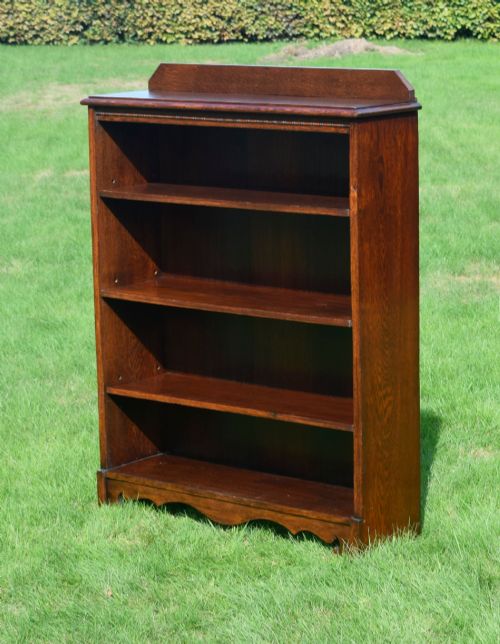
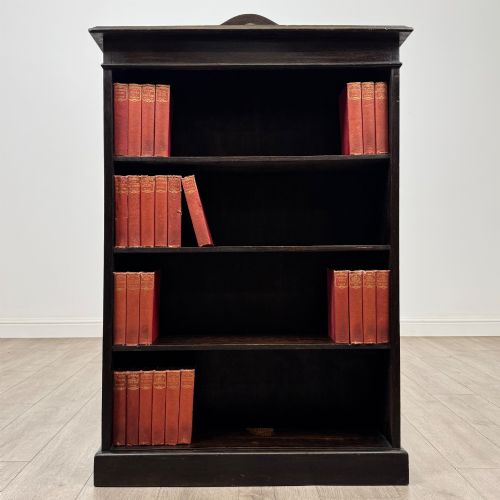

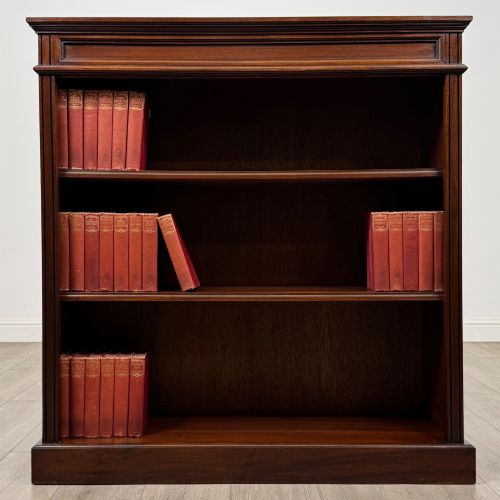
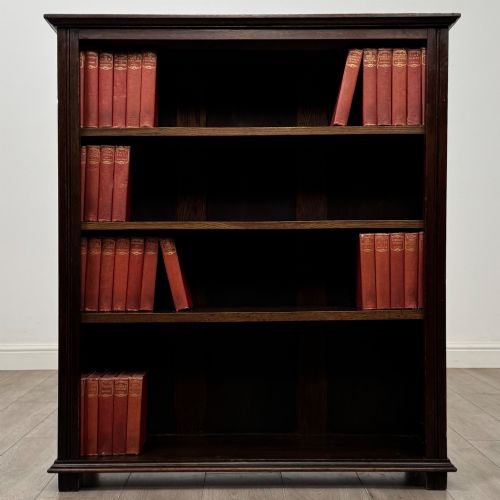
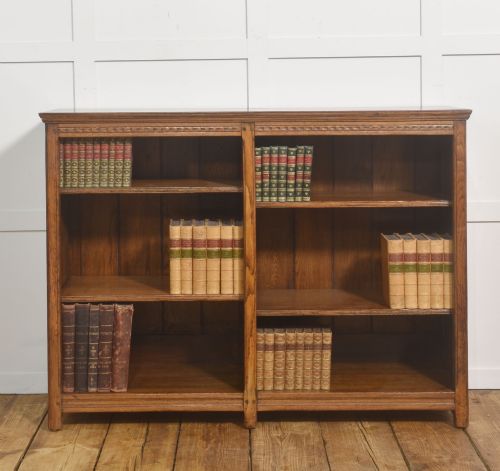
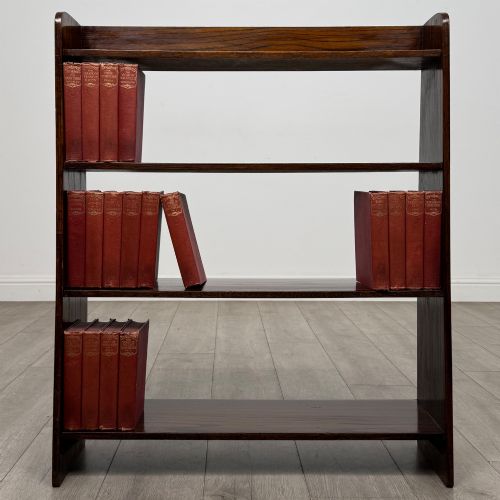
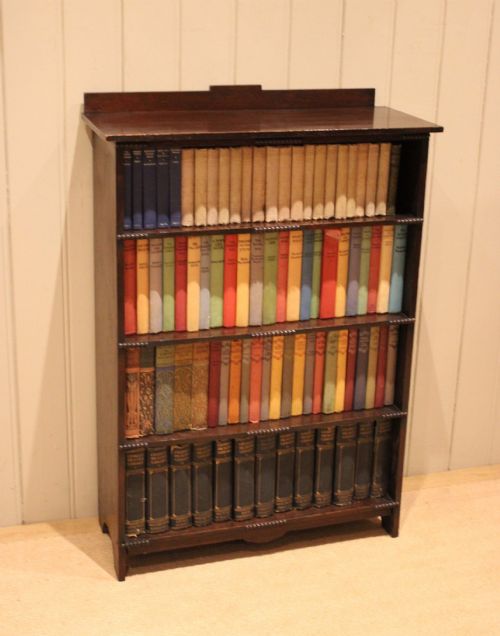
Standing Book Shelving
Standing book shelving brings together open timber tiers and freestanding display, offering practical depth for everyday rooms.
Standing Book Shelving
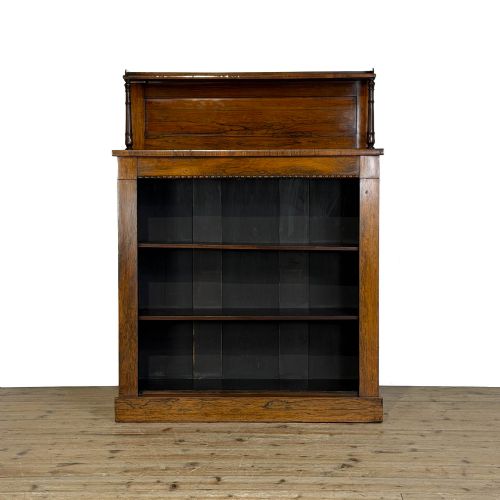
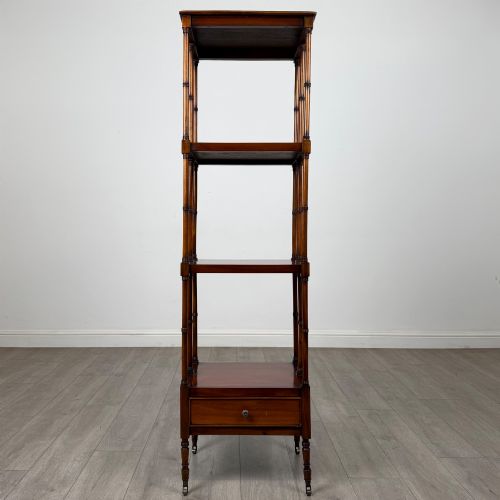
Standing book shelving gathers open bookcases, tiered étagères, and whatnots designed to rest directly on the floor without wall fixings. These pieces range from compact pine and oak numbers to substantial mahogany and rosewood library furniture.
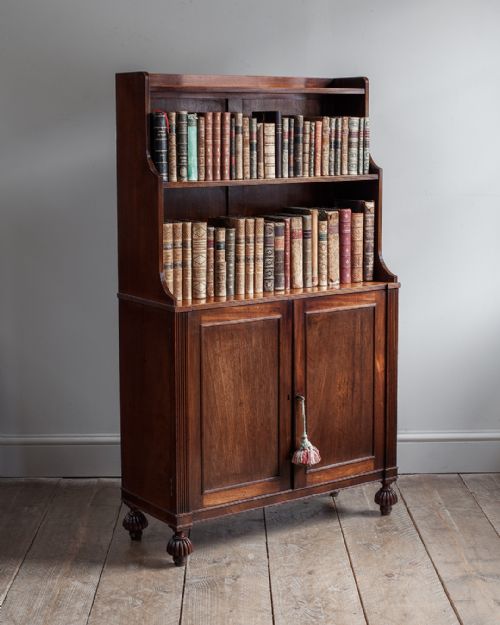
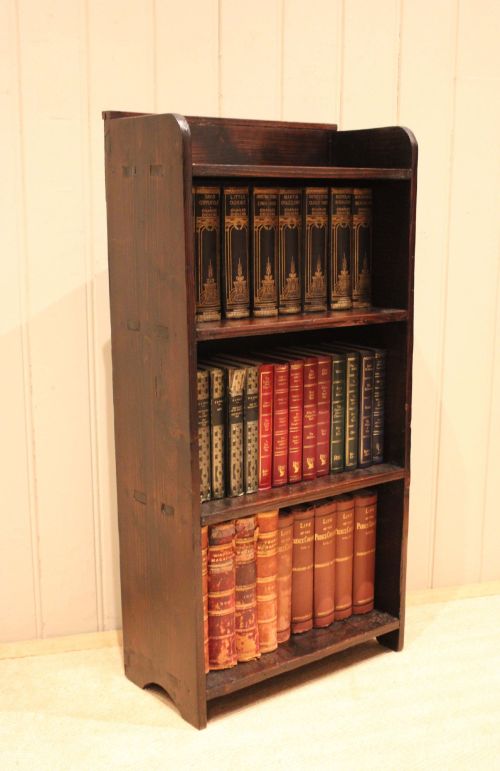
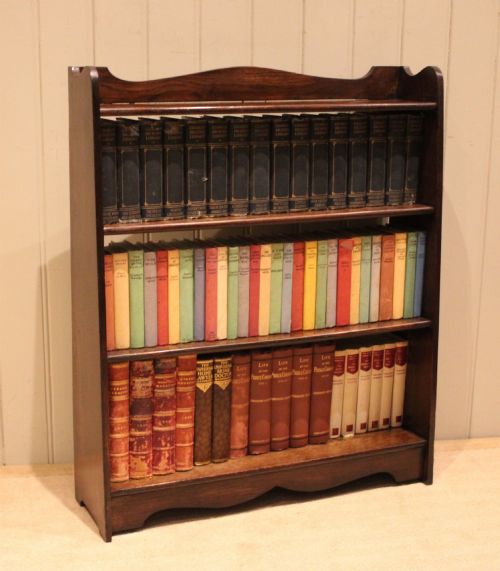
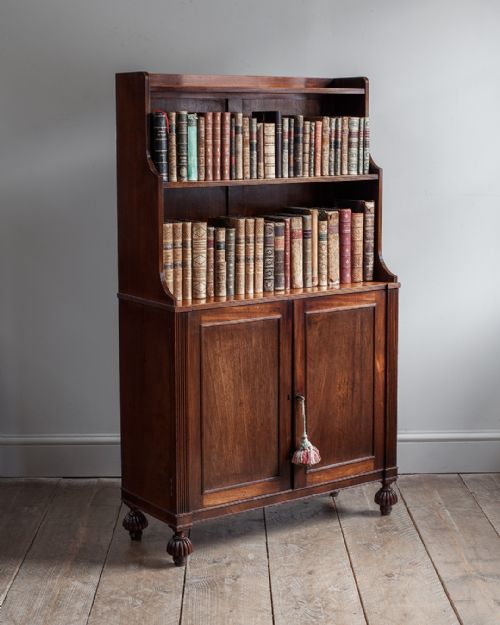
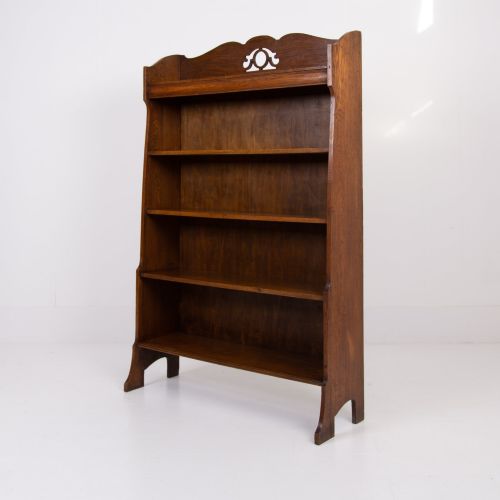
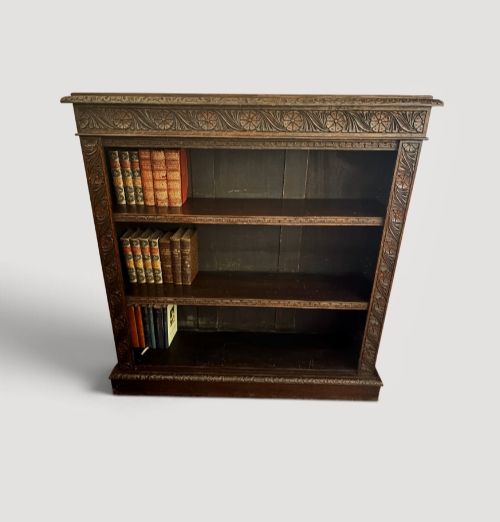
Buyers most frequently encounter Edwardian and 1920s oak examples, alongside Victorian open bookcases and earlier Regency waterfall designs. The selection spans straightforward rustic country items to carved Arts and Crafts pieces and Art Deco limed timber forms.
The primary appeal lies in accessibility, as open tiers allow books and objects to sit within arm's reach while defining corners or dividing larger living spaces.
Materials and Construction
Makers relied principally on solid oak, mahogany, rosewood, and pine, often selecting timber for both structural strength and visible grain pattern. Brass fittings occasionally appear on hinges or adjustable shelf mechanisms, while leather inserts sometimes surface on top surfaces.
Joinery techniques varied by period, shifting from pegged joints in earlier workshop pieces to machine-cut housings in twentieth-century examples. Carved details on Victorian and Arts and Crafts pieces required hand chiselling directly into the solid wood rather than applied mouldings.
Several items combine book storage with leather-topped writing surfaces, catering to Victorians who liked to read standing up.
Judging Quality and Proportion
Quality rests in timber selection and timber matching, where premium pieces display consistent grain direction and rich natural colour across the visible uprights and shelves. Secondary woods on the backs and interiors reveal whether makers maintained high standards out of sight.
Proportion and structural honesty separate better examples from utilitarian storage, particularly in how shelves integrate with upright supports. Pieces with adjustable shelf systems or thoughtful beaded edges demonstrate deliberate design rather than mass production.
The Standing Book Shelving Glossary
- Waterfall bookcase
- A standing shelving unit where each successive tier steps back from the one below it. This creates a sloping profile reminiscent of cascading water.
- Whatnot
- A multi-tiered piece of freestanding furniture used for displaying ornaments or holding books. These originated in the eighteenth century and persisted through the Victorian era.
- Étagère
- A French term for a piece of furniture consisting of a set of open shelves for displaying small objects. They often feature delicate uprights and multiple tiers.
- Open bookcase
- A shelving unit without doors enclosing the front. This style prioritises immediate access over dust protection.
Standing Book Shelving: Frequently Asked Questions
What is standing book shelving?
Standing book shelving refers to freestanding furniture designed to hold books and display objects without requiring wall attachment. These pieces include open bookcases, tiered étagères, and whatnots.
They serve as flexible storage solutions that can be moved easily around a room while keeping volumes immediately accessible.
How do I date an oak bookcase?
Dating relies on examining construction methods, timber treatment, and stylistic clues such as carving or edge beads. Edwardian and 1920s pieces often show simpler machine milling, whereas Victorian items feature heavier carved decoration.
Hardware, backing boards, and finish types also provide clear indicators of the manufacturing era.
Are these shelves adjustable?
Many period shelving units feature fixed shelves, but adjustable mechanisms appear in several Edwardian and library pieces. These typically use wooden ratchets, brass pins, or metal tracks.
Adjustability allowed owners to accommodate varying book heights over time.
Where should I place a whatnot?
Whatnots and étagères suit corners, alcoves, or spaces beside seating where their open tiers can be viewed from multiple angles. They perform best away from direct heat sources to protect older timbers.
Their open construction makes them ideal for lighter reading material or display items rather than massive archival collections.