


Standing Bible Lectern
A standing bible lectern brings architectural gravity and practical book-holding presence to any room.
Standing Bible Lectern
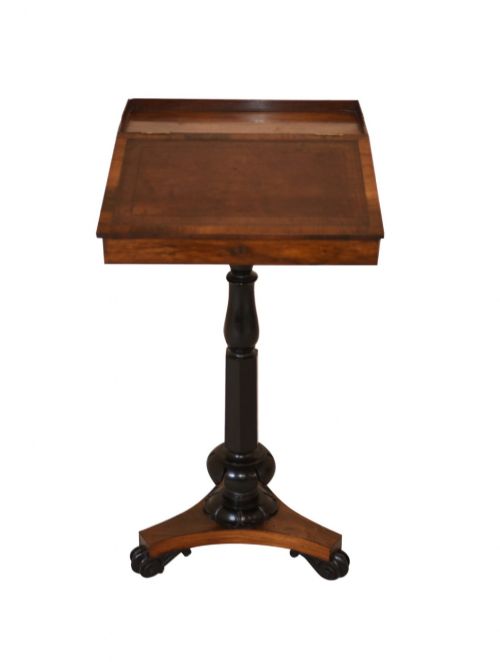
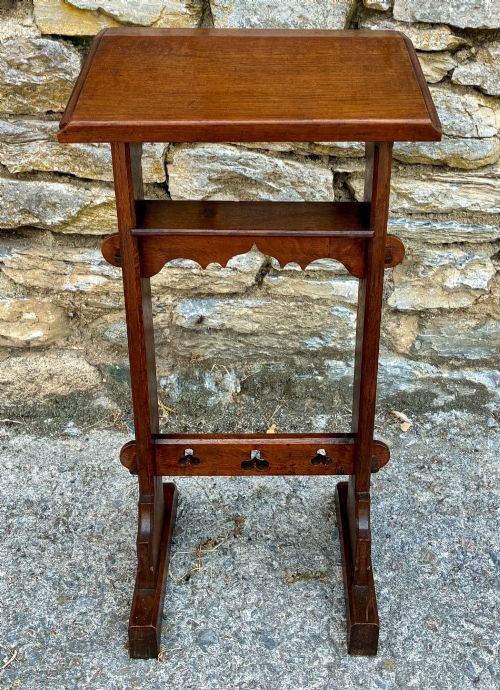
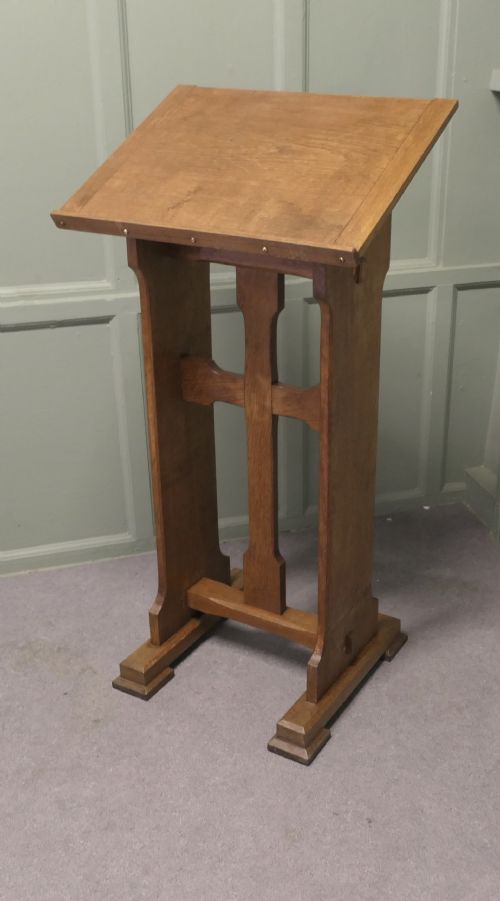
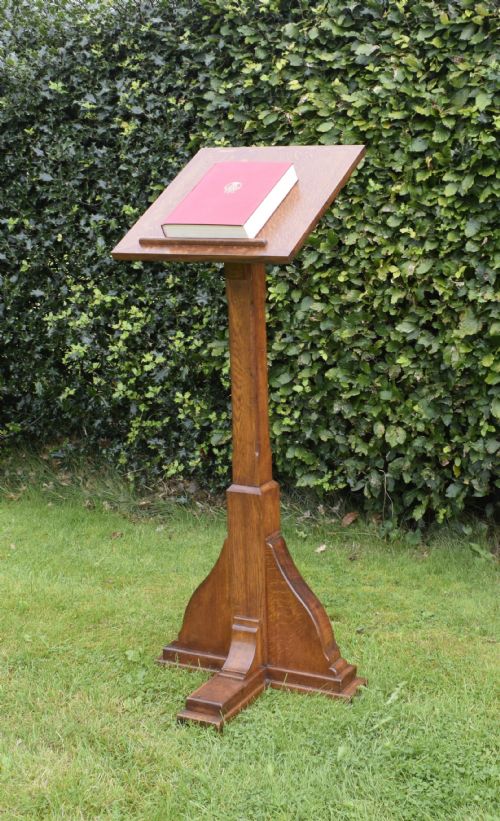
A standing bible lectern is a sturdy reading stand designed to hold large texts at a comfortable height for the speaker or reader. Most pieces encountered on this page originate from the eighteenth, nineteenth, and early twentieth centuries, reflecting ecclesiastical, domestic, and institutional origins.
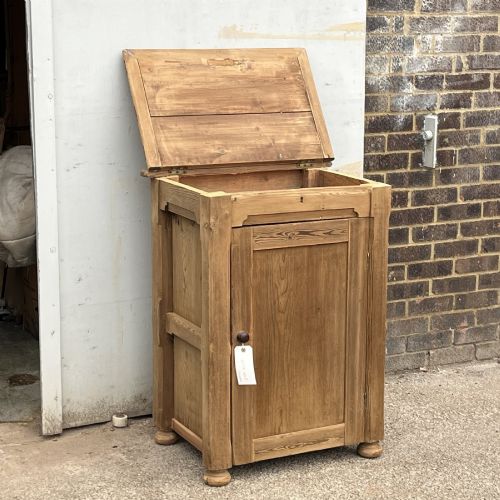
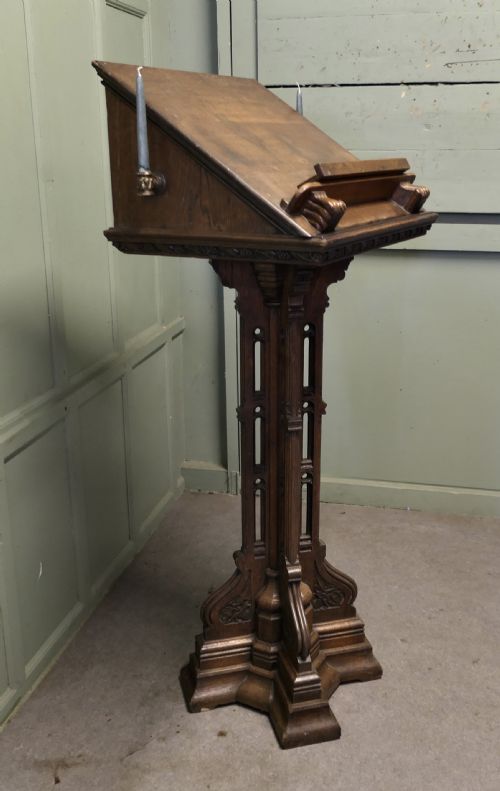
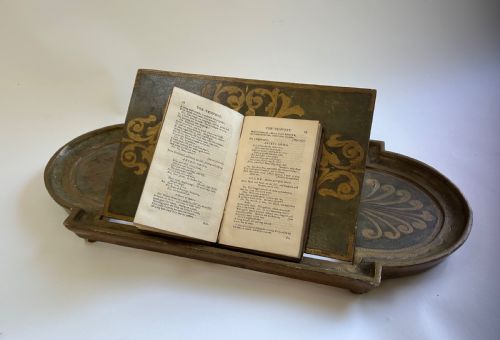
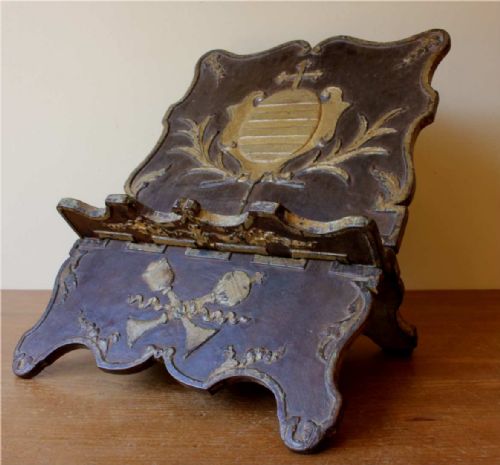
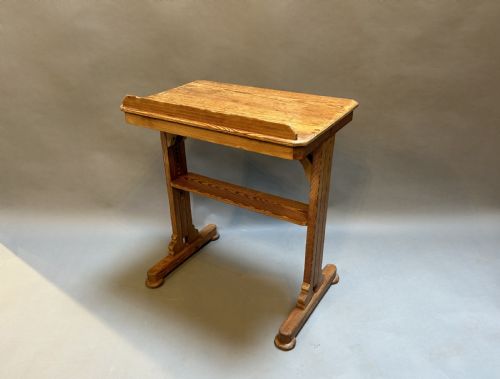
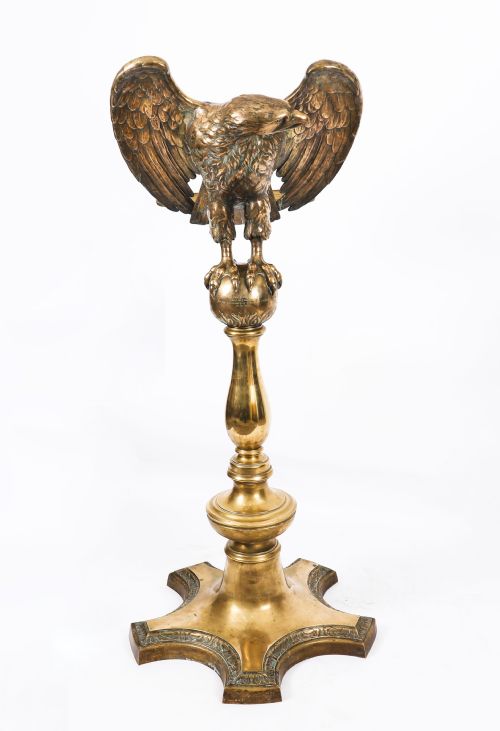
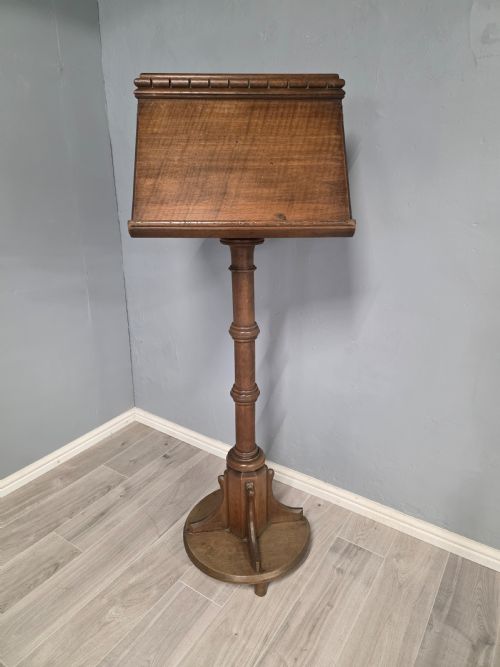
The selection ranges from ecclesiastical brass eagle figures and carved oak church desks to simpler pine reading tables and folding book rests. Stylistically, Gothic Revival, Arts and Crafts, and Victorian pieces dominate the inventory, often doubling as reception greeter stations or restaurant stands.
These stands vary from modest scholar reading pedestals to grand church podiums featuring intricate woodwork or polished metalwork. Buyers select them to anchor a study, library, or entrance hall with period character and functional surface space.
Materials and construction
Oak is the primary timber used for these pieces, often carved deeply with Gothic motifs, foliage, or structured panels. Pine and mahogany also appear in utility reading tables and pedestals, sometimes paired with gesso or gilt finishing.
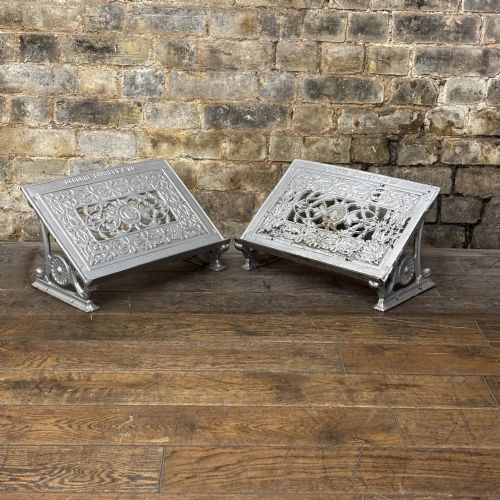
Cast iron and brass provide durable structure and striking detail, particularly in ecclesiastical eagle lecterns and adjustable desk mounts. Metal components are frequently joined to timber bases, combining heavy foundational support with articulated reading platforms.
Standing Bible Lectern Retail Price Guide 2026
Typical asking prices for standing bible lectern among the pieces listed under this phrase on Sellingantiques today, from the lower quarter to the upper quarter. They describe what is for sale here now, not the wider market.
Listings span the eighteenth, nineteenth, and early twentieth centuries, incorporating Victorian, Edwardian, and Arts and Crafts eras.
Assessing quality and execution
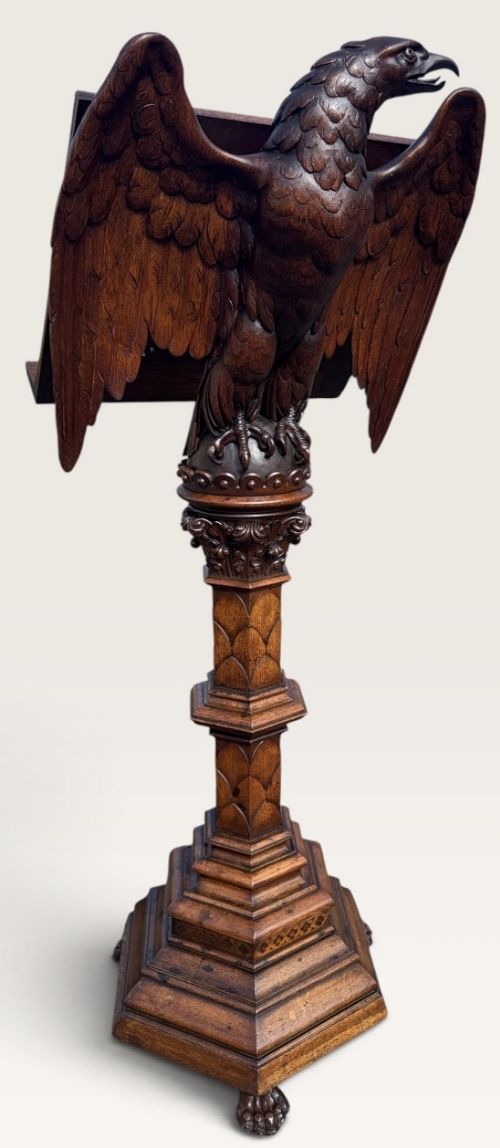
Quality rests in the crispness of the carving, especially on figurative works like eagle lecterns where wing feather detail and facial expression define the sculptor's skill. Solid timber construction with traditional joinery distinguishes superior pieces from lighter, utilitarian pine alternatives.
The integration of brass work and operating hinges on folding or adjustable stands marks the difference between standard production and exceptional workshop execution. Proportion, stability, and the preservation of original surface patination ultimately determine the standing of each piece.
Osborne Garrett and Co
The Standing Bible Lectern Glossary
- Gothic Revival
- An architectural and decorative style drawing on medieval forms, featuring pointed arches, tracery, and heavy carved woodwork. It heavily influences nineteenth-century ecclesiastical furniture.
- Missal stand
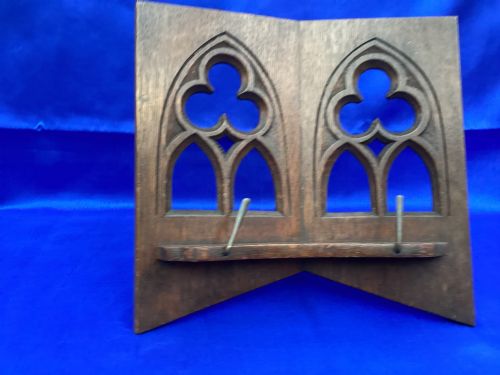
- A small portable or folding desk designed to hold a liturgical book on an altar or table. These often feature adjustable rests for varied reading angles.
- Eagle lectern
- A reading stand where the book rest is supported upon the outstretched wings of a carved wooden or cast brass eagle. This traditional church form symbolises Saint John the Evangelist.
- Arts and Crafts
- A design movement valuing handcraftsmanship, simple structural honesty, and traditional materials over mass production. Pieces from this tradition avoid excessive ornamentation in favour of exposed grain and solid construction.
Standing Bible Lectern: Frequently Asked Questions
How were standing bible lecterns originally used?
These lecterns were placed in churches, chapels, and monastic libraries to hold heavy service books, bibles, and missals at a readable height for clergy and scholars.
Over time, domestic versions also emerged for home libraries, allowing individuals to study large volumes while standing or seated at an elevated desk.
Where should I place a lectern at home?
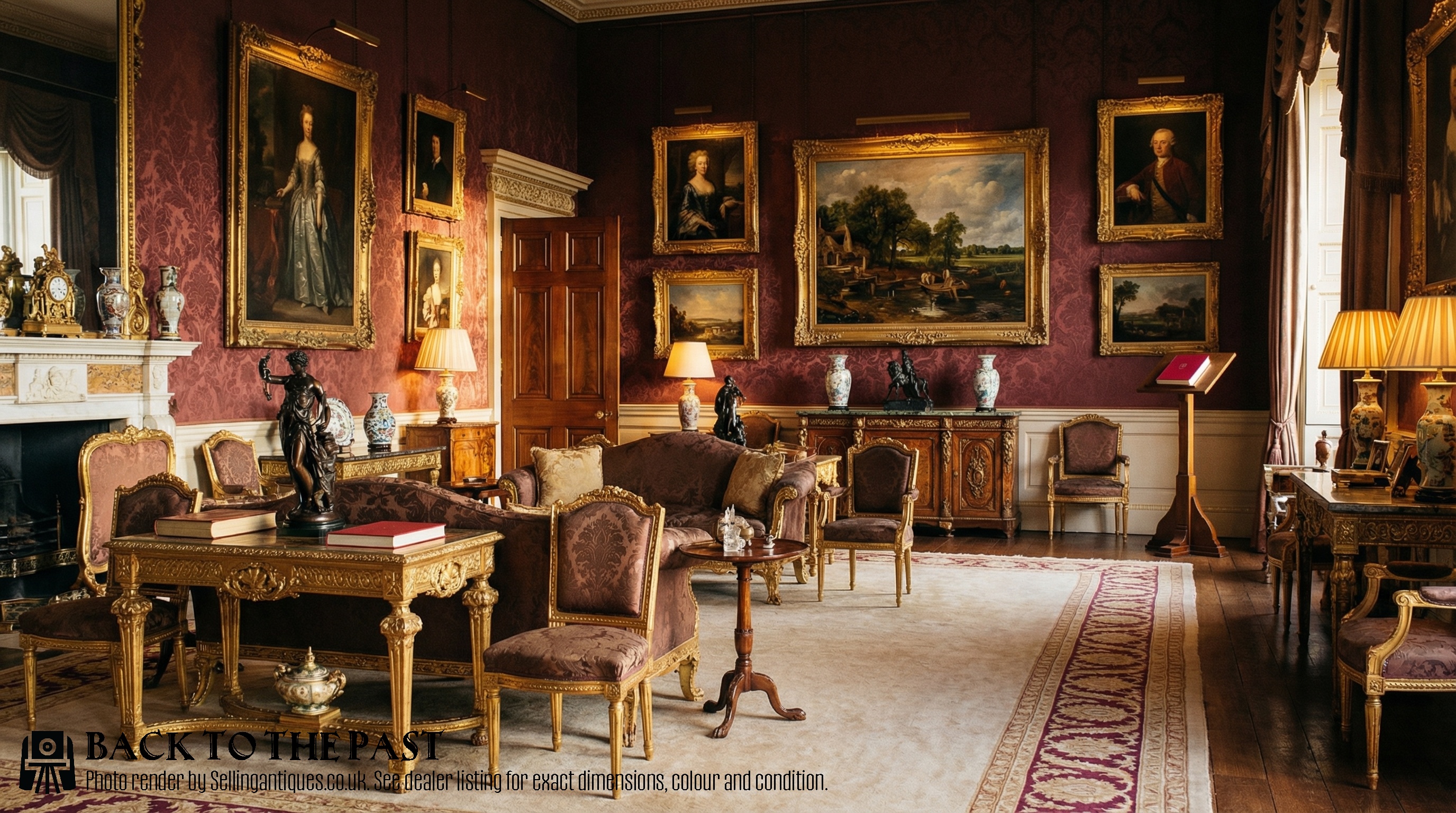
A standing lectern works effectively in a study, library, or large hallway as a focal point that can also display open art books or family bibles.
Commercial and hospitality settings also utilise them as reception greeting stations, restaurant menu stands, or Maitre d' podiums.
How do I distinguish Gothic Revival from Arts and Crafts pieces?
Gothic Revival lecterns display architectural motifs such as pointed arches, quatrefoils, and deeply carved ecclesiastical ornamentation derived from medieval buildings.
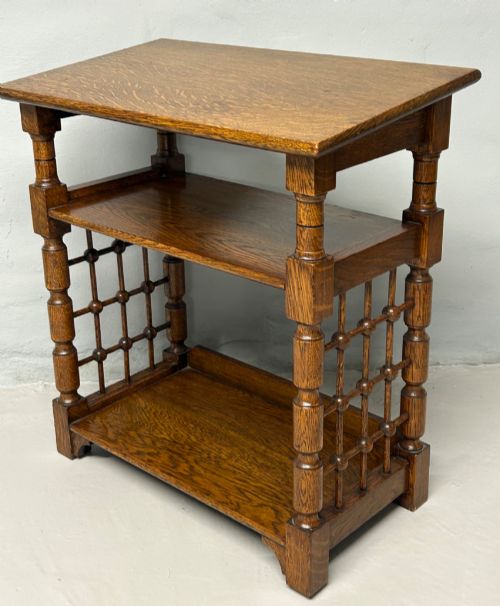
Arts and Crafts pieces emphasise honest construction, plain golden oak surfaces, and functional simplicity without heavy historical mimicry.
Are brass and iron lecterns stable?
Cast iron and brass components provide substantial weight and rigidity, ensuring the reading platform remains steady during heavy use.
Many of these metal and mixed-material stands were engineered specifically for demanding church environments, resulting in robust durability.