




Stamped Armchair
A stamped antique armchair bears the maker's mark, confirming its origin and adding notable provenance to a functional seat.
Stamped Armchair
When you search for a stamped antique armchair, you encounter seating featuring maker's marks, stamps or brands applied during production. These marks identify workshops and cabinetmakers ranging from provincial chair makers to renowned London firms.
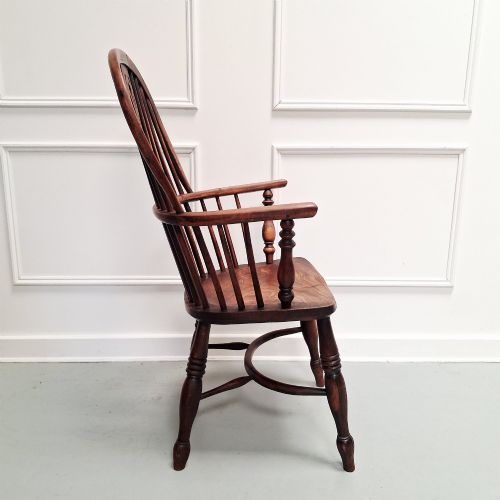
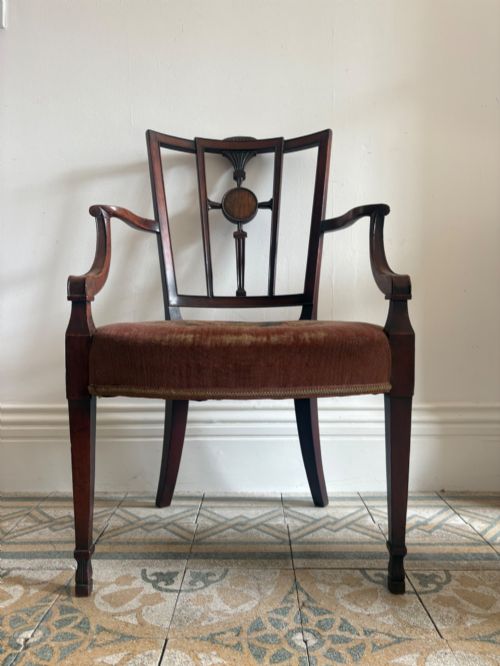
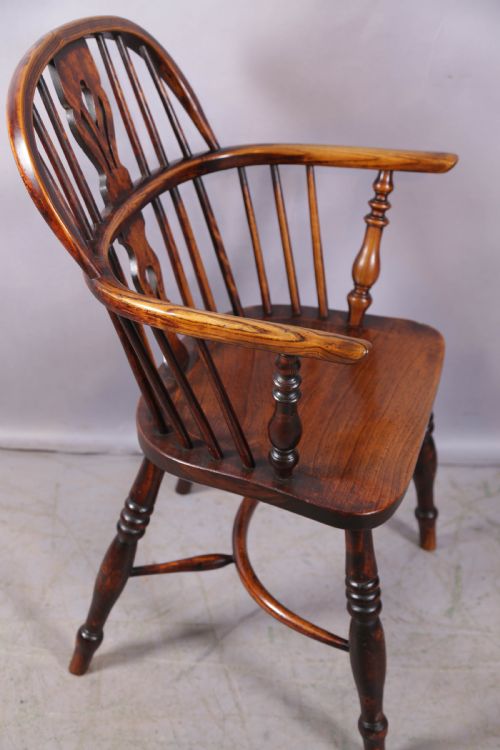
The selection includes open armchairs, desk chairs, spoon back chairs and Windsor chairs. You will find examples spanning the eighteenth, nineteenth and early twentieth centuries in styles such as Victorian, Georgian, Edwardian, and Arts and Crafts.
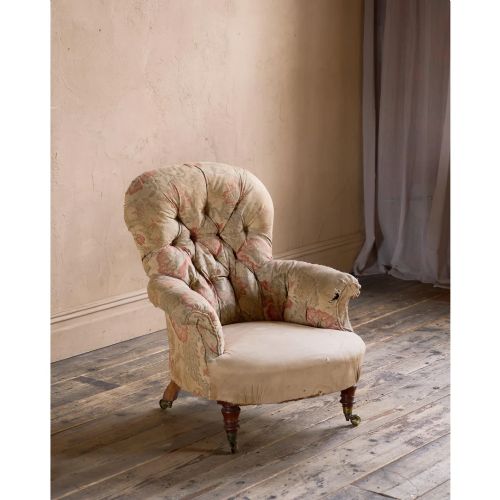
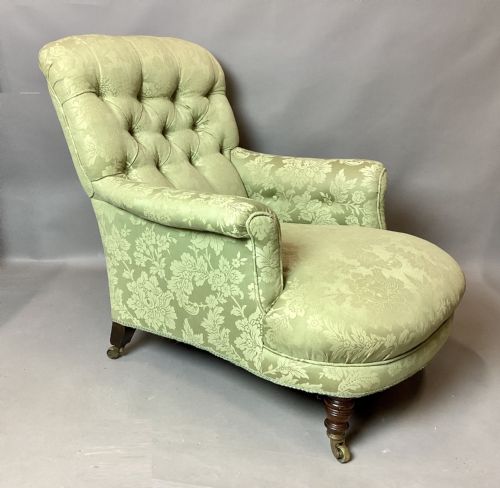
Country house styles and formal library seating appear frequently in mahogany, walnut, oak, ash, elm and beech. Upholstered models often feature fabric, velvet or leather, complemented by details like brass castors.
How they were made
Cabinetmakers utilised solid timbers such as mahogany, walnut and oak for frame construction, alongside regional woods like elm, ash and beech for country Windsor chairs. Joints were traditionally tenoned, dowsed or pinned to ensure structural longevity.
Upholstered versions relied on webbing, traditional stuffing materials and hand-stitching beneath outer coverings of fabric, velvet or leather. Maker's marks were typically punched directly into the timber frame or applied via paper labels.
Listings feature timbers including mahogany, walnut, oak, elm, ash, and beech, alongside upholstered finishes in leather, velvet, and fabric.
What varies in quality
The clarity and placement of the stamp influence desirability, with crisp, legible marks directly associated with documented makers commanding greater attention. Timber selection and the crispness of carved details set workshop standards apart.
Originality of components, including castors, timber frames and traditional upholstery foundations, distinguishes pieces that retain integrity from those subjected to extensive alterations or replacement parts.
J Spencer·Gillows·Edward Barnsley·Holland & Sons·Howard and Sons·Fred Walker·Johnstone & Jeanes·William Birch·J Fell·Ed Gardiner
The Stamped Armchair Glossary
- Maker's mark
- A stamp, brand or signature applied by the craftsman or firm to identify the maker of the piece. These marks provide historical attribution and verify authenticity.
- Carver
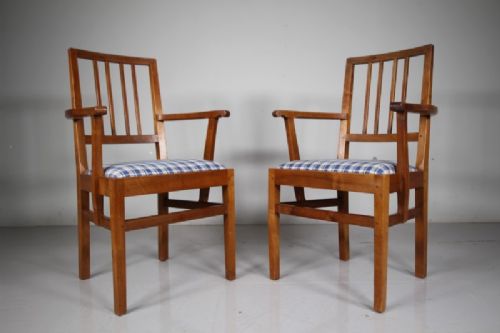
- An armchair, often designed to match a set of dining chairs, featuring arms. They frequently stood at the head of a table or served as desk chairs.
- Windsor chair
- A wooden chair constructed with a solid saddle-shaped seat into which pierced back staves and legs are wedged. Regional examples often combine ash, elm and beech.
- Spoon back
- An upholstered chair back shaped in a concave curve resembling the bowl of a spoon, popular during the Victorian period for ergonomic support.
- Castor
- A small wheel mounted in a swivel frame attached to the legs of chairs for mobility. Brass mountings often accompany nineteenth-century upholstered models.
Stamped Armchair: Frequently Asked Questions
Where do I find the maker stamp?
Maker stamps are usually located on the top edge of the seat rail, underneath the wooden frame, or occasionally on the rear legs.
Inspect these areas carefully in good light, as stamps can be faint or partially obscured by layers of old polish and upholstery webbing.
How do I care for the timber frame?
Dust the wooden framework regularly with a soft, dry cloth to prevent the accumulation of grit that can scratch antique finishes.
Apply a microcrystalline wax sparingly when the timber appears dry, avoiding any contact with the fabric or leather upholstery.
Can I use an antique desk chair daily?
Sturdy hardwood frames designed for libraries and offices handle regular daily use quite comfortably when structural joints remain secure.
Check that the seat frame and arm joints show no undue movement before subjecting the chair to heavy working hours.
How do I distinguish Victorian from Georgian models?
Georgian armchairs often display restrained classical proportions in mahogany with subtle carving, reflecting eighteenth-century design canons.
Victorian pieces tend to be heavier, utilising walnut or rosewood with more exuberant carving, spoon backs, or fully upholstered sprung frames.