





Stag Antlers
Stag antlers bring the weight of the forest and the sporting lodge directly into a room, offering striking taxidermy mounts and carved horn objects.
Stag Antlers
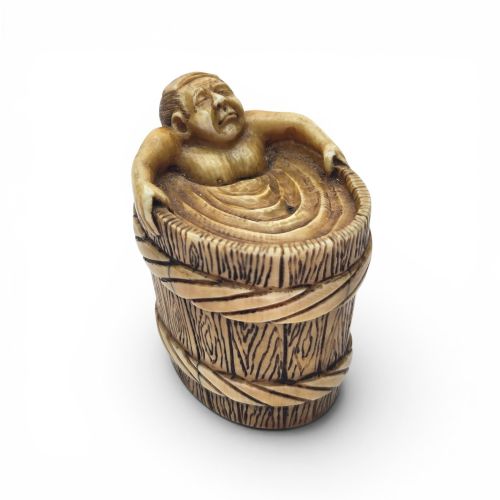
When you search for stag antlers, you enter a domain where natural history intersects with Victorian country house interior design and folk art craftsmanship. The pieces available range from massive taxidermy mounts and wall sculptures to intricate carved netsuke and functional items like hallstands and armchairs.
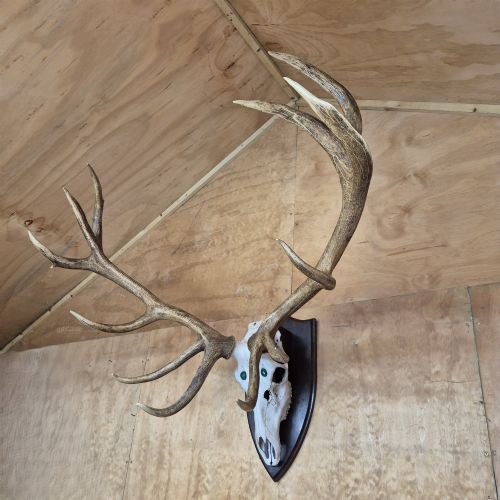
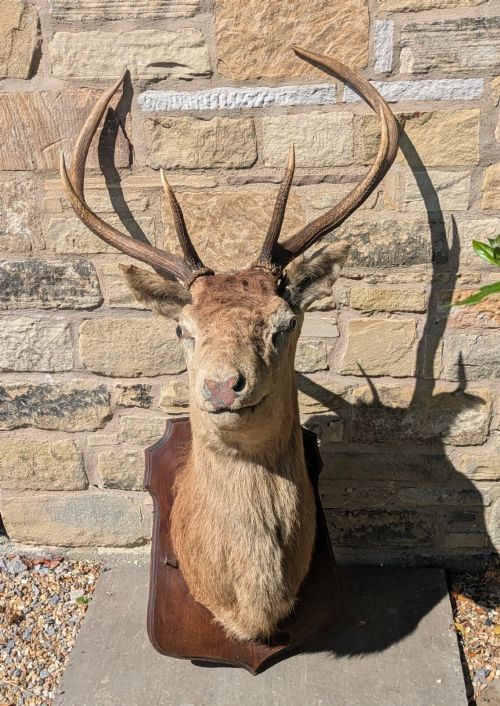
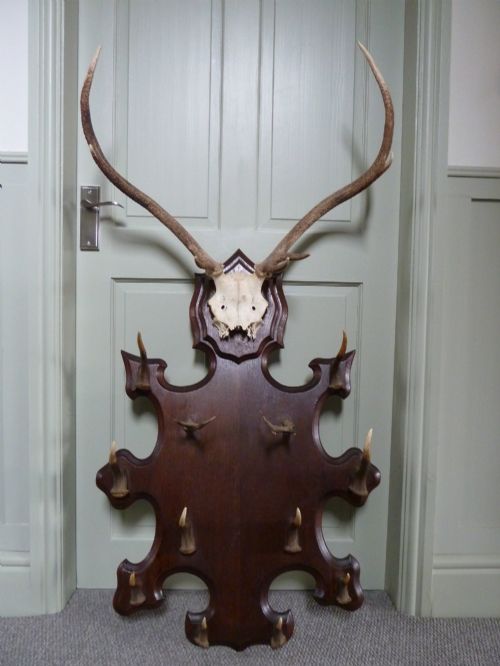
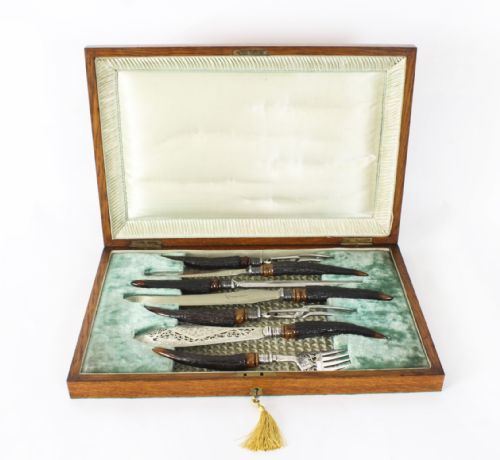
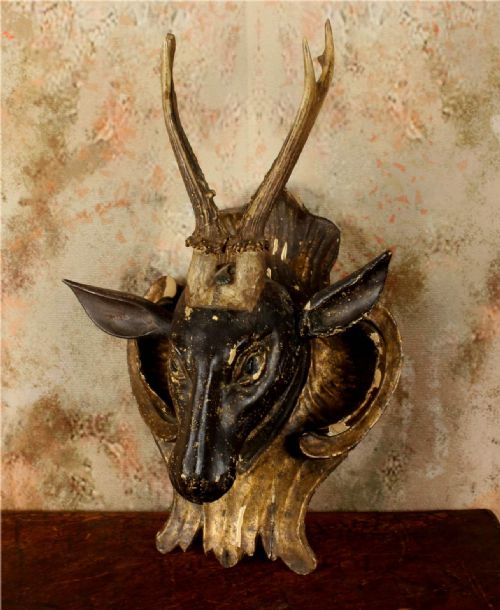
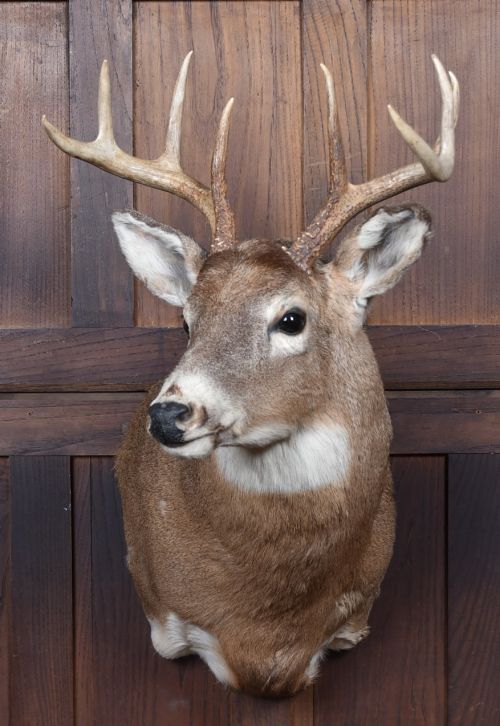
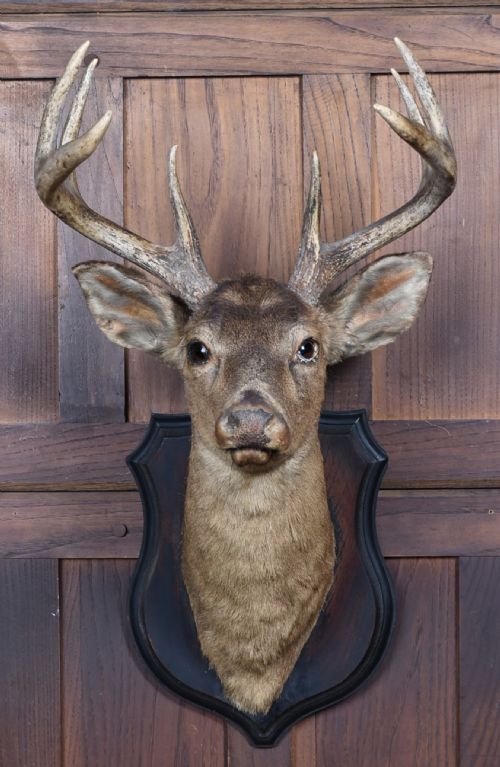
You are most likely to encounter nineteenth century taxidermy heads and mounted antlers displayed on carved wooden shields, alongside smaller carved horn objects such as handles and cutlery sets. These items span periods from the eighteenth century through the 1930s, incorporating Victorian sporting and Black Forest traditions.
The physical scale of these objects varies dramatically, from compact Japanese netsuke and cribbage boards to grand red deer stags spanning over a metre across. Whether found in a Swedish painted folk art figure or a large twentieth century trophy head, the material presence remains robust and tactile.
Materials and Techniques
Taxidermy mounts rely on the natural horn and skull plates of red deer, roebuck, and fallow deer, frequently secured to carved oak or pine shields. Artisans shape and polish the raw antler material for decorative items, combining it with wood, bone, silver plating, and hide.
Carved pieces demonstrate meticulous handwork, utilising the dense core of stag horn for items like walking stick handles, parasol grips, and love spoons. Black Forest examples combine taxidermy elements with elaborate carved woodwork to create furniture such as armchairs and hallstands.
An eighteenth century central European stag horn love spoon offers a tender domestic message carved entirely from forest bone.
Evaluating Quality
Quality rests upon the symmetry and point count of the antlers, the anatomical accuracy of the taxidermy work, and the crispness of any carved wooden shields or horn details. Superior taxidermy preserves the lifelike posture and expression of the animal without distortion.
Artisanal execution distinguishes mass-produced items from finer folk art and Black Forest creations, where deeply undercut carvings and clever structural construction reveal the hand of a skilled maker. The condition of the natural horn, free from excessive splitting or fading, maintains the integrity of the piece.
The Stag Antlers Glossary
- Netsuke
- A small carved toggle used in traditional Japanese dress to secure a pouch or small container. Stag horn and antler provide a durable medium for these miniature sculptures.
- Black Forest
- A nineteenth century style originating in the mountainous regions of central Europe, known for highly detailed wood carvings depicting animals and forest motifs.
- Taxidermy mount
- The preserved skin and antlers of an animal fitted over a form and mounted for display. These serve as traditional interior trophies.
- Folk art
- Utilitarian or decorative objects created by self-taught or local artisans using accessible materials like wood, bone, and antler.
- Cribbage board
- A scoring board used in the card game cribbage, often fashioned from turned wood, bone, or polished sections of stag horn.
Stag Antlers: Frequently Asked Questions
How do I hang a heavy antler mount?
Large taxidermy heads and mounted antlers require substantial wall anchors fixed directly into masonry or wooden wall studs. The weight of these pieces demands robust steel brackets or heavy-duty screws.
Position the mount at a height that clears household traffic while keeping the skull plate level. Checking the stability of the wooden shield before hanging ensures the piece supports its own weight safely.
How should I clean natural antlers?
Dust the surface regularly with a soft, dry cloth or a feather duster to prevent grime accumulation in the grooves. Avoid using water or chemical cleaners on taxidermy mounts, as moisture damages the bone and skin.
For polished horn objects like cutlery handles or walking sticks, a dry cloth suffices. Keeping pieces away from direct sunlight prevents the natural material from drying out and cracking over time.
What is a Black Forest antler chair?
Black Forest antler chairs are nineteenth century eccentric seating pieces constructed entirely or partially from natural stag antlers and carved wood. They reflect the romantic aesthetic of European hunting lodges and country houses.
These chairs combine structural woodwork with interlocking branches of horn to form backrests and armrests. They function as both decorative statements and practical seating.
How do I identify a Victorian taxidermy mount?
Victorian mounts typically feature dark oak shields, often carved with oak leaves or geometric borders. The taxidermy style of this era emphasises dramatic posture and traditional Scottish Highland themes.
Documentation or paper labels on the reverse of the wooden shield sometimes identify the taxidermist or location. Examining the method of mounting and the age of the wooden backing helps confirm the nineteenth century origin.