



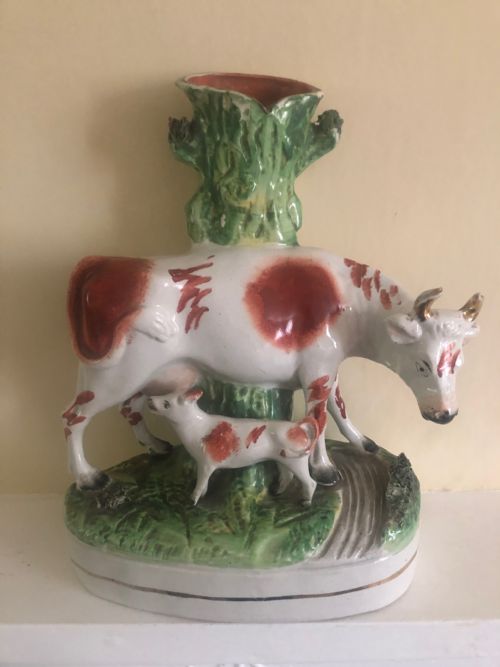


Staffordshire Pottery Cows
Staffordshire pottery cows are charming ceramic figures and creamers depicting cattle, prized for their rustic appeal and folk art character.
Staffordshire Pottery Cows
Staffordshire pottery cows are sculptural ceramic pieces that take the form of cattle, often accompanied by calves, milkmaids, or milkmen. When searching for staffordshire pottery cows, a buyer encounters practical creamers, spill vases, and decorative figures spanning the nineteenth century.
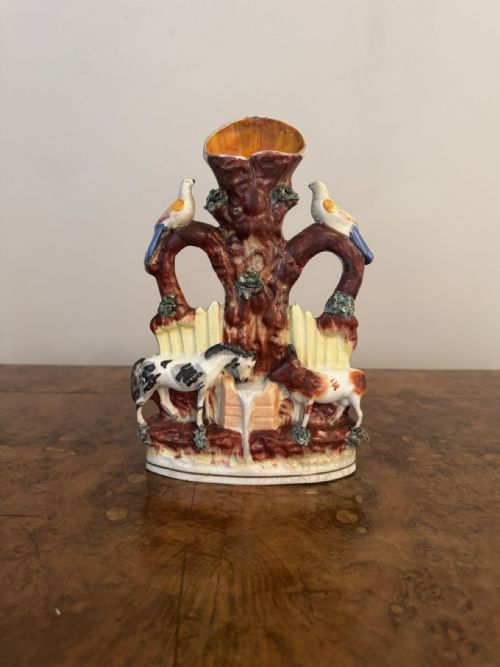
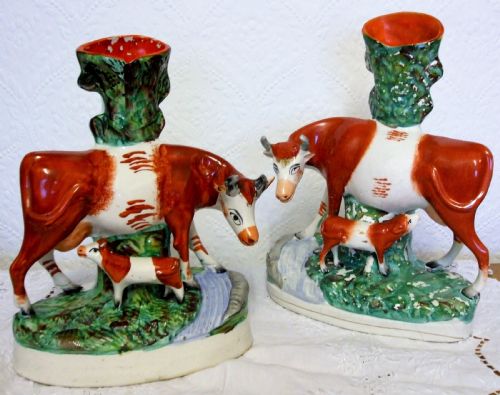
The most common examples on this page are Victorian spill vases and cow creamers originating from English and Welsh potteries. These pieces combine utilitarian service with domestic display, reflecting rural life through a folk art lens.
How they were made
Potters shaped these figures from earthenware and pearlware, applying glazes and enamels to surface details. Many pieces feature rich ceramic glazes with painted or gilded highlights that accentuate the form of the animal and its handler.
Staffordshire Pottery Cows Retail Price Guide 2026
Typical asking prices for staffordshire pottery cows among the pieces listed under this phrase on Sellingantiques today, from the lower quarter to the upper quarter. They describe what is for sale here now, not the wider market.
Listings feature nineteenth century earthenware, pearlware, and glazed ceramic bodies decorated with enamel and gilt.
What varies in quality
The depth and vibrancy of the enamel colours and the precision of the hand-painting determine visual appeal. Superior pieces retain crisp details in the moulding and smooth, even glaze application across the flat bases and spill holders.
The Staffordshire Pottery Cows Glossary
- Cow creamer
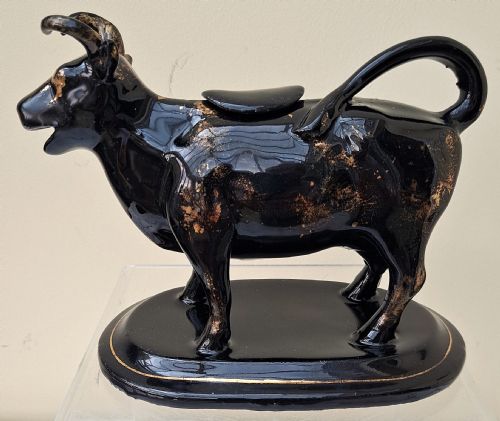
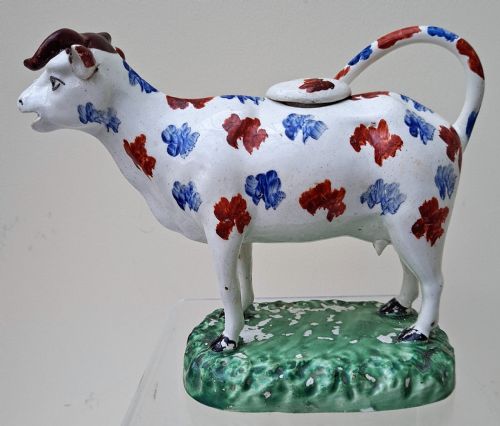
- A hollow ceramic vessel shaped as a cow with an opening on the back for milk and a pouring spout formed by the mouth. These functional pieces served dairy products at the table.
- Spill vase
- A hollow vertical holder designed to store taper candles used for lighting pipes or fires. These vessels often incorporate animal figures into the ceramic design.
- Pearlware
- A refined earthenware developed in the late eighteenth century featuring a subtle bluish glaze pooled in crevices. It provides a whiter ground for painted enamels than standard creamware.
- Jackfield
- A type of black-glazed pottery with a lustrous metallic sheen named after an English production site. These dark pieces often mimic Japanese lacquer.
- Flatback
- A figure moulded with a finished front and sides but a flat, unadorned rear designed to stand against a wall. This construction method saved weight and material.
Staffordshire Pottery Cows: Frequently Asked Questions
What is a cow creamer?
A cow creamer is a ceramic jug modelled in the shape of a cow, designed to hold and pour milk or cream from its mouth.
Users filled these vessels through an aperture on the animal's back, often featuring a lid or a decorative fly perched near the opening.
How were spill vases used?
Spill vases held thin wooden spills used to transfer flames from a fireplace to candles or lamps.
Placed on mantelpieces, these ceramic holders combined domestic utility with decorative animal figures.
How do I identify Georgian pieces?
Georgian pieces typically date from the late eighteenth or early nineteenth century and often exhibit folk art characteristics. They make use of pearlware bodies and softer enamel palettes.
Later Victorian examples tend to feature brighter colours, gilt highlights, and more standardised mould forms.
Are these figures glazed ceramic?
Yes, these items consist of fired earthenware or pearlware coated in transparent or coloured ceramic glazes. Artisans then added enamel paints and sometimes gilt over the glaze before a final low-temperature firing.
This technique protected the pigments and provided a glossy surface finish.
Where were these ceramics made?
Most of these pieces originated in the Staffordshire Potteries region of England, though regional workshops in Wales and Yorkshire also produced them. Makers ranged from large factories to smaller folk art potteries.
Geographic attribution often relies on distinctive glazing methods and clay bodies.