



Nineteenth Century Flatbacks
Nineteenth century flatbacks are moulded earthenware figures designed to stand against a mantelpiece, bringing portraiture and theatrical subjects directly into the Victorian parlour.
Nineteenth Century Flatbacks
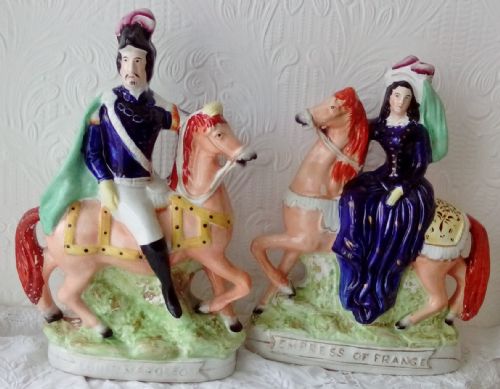
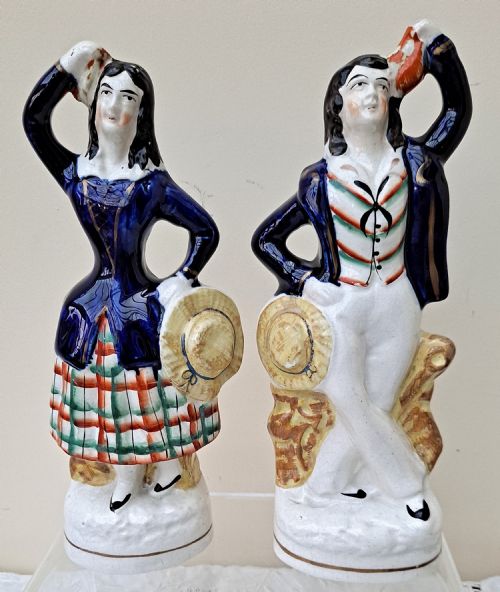
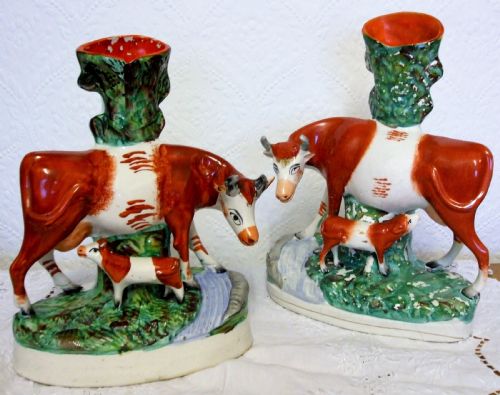
Nineteenth century flatbacks comprise earthenware pottery figures and spill vases shaped primarily for display against a wall, leaving the unglazed or simply painted back flat. The selection includes pairs depicting theatrical characters, royal portraits, and animals such as zebras and cows.
The subjects draw heavily on Victorian public life and popular culture, ranging from statesmen and royalty to religious revivalists and literary figures. Makers produced these pieces in substantial quantities during the nineteenth century, often grouped as matched pairs.
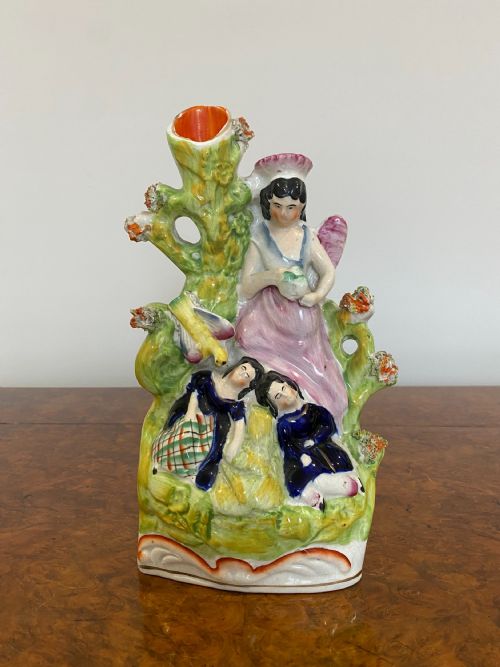
Moulded forms incorporate hollow interiors to reduce weight and prevent cracking during firing, while spill vases integrate a small cylindrical holder behind the main figural group for holding wooden matches.
How they were made
Potters utilised earthenware clay pressed into multi-part moulds to create the characteristic hollow bodies of nineteenth century flatbacks. Once removed from the mould, the pieces received hand-applied details before drying for the kiln.
Nineteenth Century Flatbacks Retail Price Guide 2026
Typical asking prices for nineteenth century flatbacks among the pieces listed under this phrase on Sellingantiques today, from the lower quarter to the upper quarter. They describe what is for sale here now, not the wider market.
Listings feature earthenware and toleware across the nineteenth century, encompassing spill vases, flour bins, and portrait figures.
What varies in quality
The vibrancy and precision of the enamel colours separate standard domestic production from finer examples. Careful brushwork on the facial expressions and costume details elevates the visual impact of the piece.
The Nineteenth Century Flatbacks Glossary
- Flatback
- A ceramic figure or vase moulded with a finished front and sides while the reverse remains flat and unadorned. This construction suited placement against cottage and parlour mantels.
- Spill vase
- A hollow cylindrical container attached behind a pottery figure to hold wooden spills for lighting pipes and candles. These functional additions formed popular pairings in Victorian households.
- Earthenware
- Porous pottery fired at lower temperatures than stoneware or porcelain. It requires a glaze to achieve a waterproof surface for everyday display and use.
- Toleware
- Painted or enamelled sheet metal items produced throughout the nineteenth century. These utilitarian domestic objects frequently mirror the decorative tastes of contemporary ceramics.
Nineteenth Century Flatbacks: Frequently Asked Questions
Where were nineteenth century flatbacks displayed?
These figures sat primarily on mantelpieces in Victorian parlours and sitting rooms, where their flat backs allowed them to rest securely against the wall.
They also occupied prominent positions on sideboard tops and chest of drawers within middle-class homes.
Why do some figures have holes at the back?
The cylindrical openings behind certain figures designate them as spill vases, designed to hold slender wooden splints used for transferring flames from hearth to lamp.
Figures lacking these holders served a purely decorative purpose as portrait or theatrical ornaments.
How are pairs identified?
Makers frequently produced figures representing complementary subjects, such as male and female harvesters or theatrical companions, designed to stand symmetrically on either side of a clock.
Matching stances and shared bases indicate pieces intended to remain together as a set.
What subjects appear most often?
Victorian portrait figures depict royalty, military commanders, and prominent evangelists, reflecting the public figures of the era.
Animal forms, including cows, zebras, and theatrical characters, make up the remainder of the domestic subjects.