




Staffordshire Ceramic Greyhounds
Staffordshire ceramic greyhounds bring the charm of nineteenth-century hunt life to a mantelpiece, offering enduring appeal through their expressive modelling and period character.
Staffordshire Ceramic Greyhounds
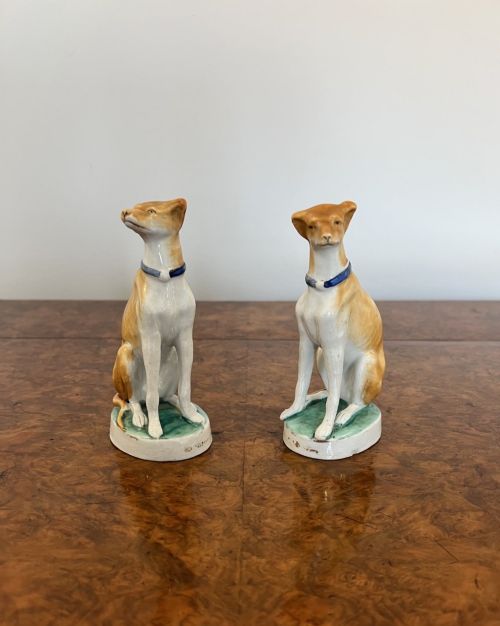
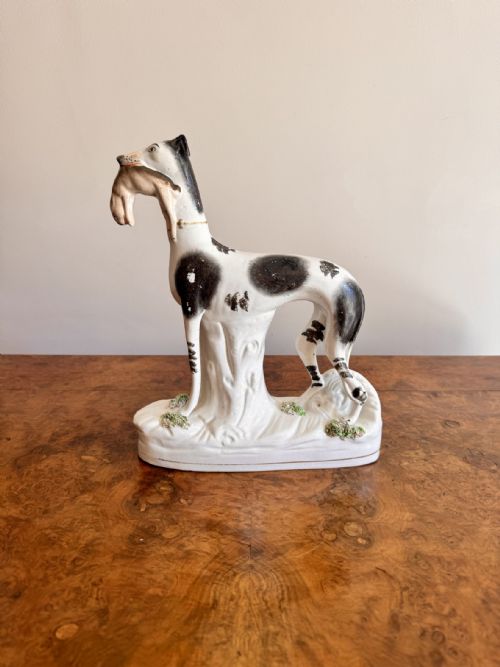
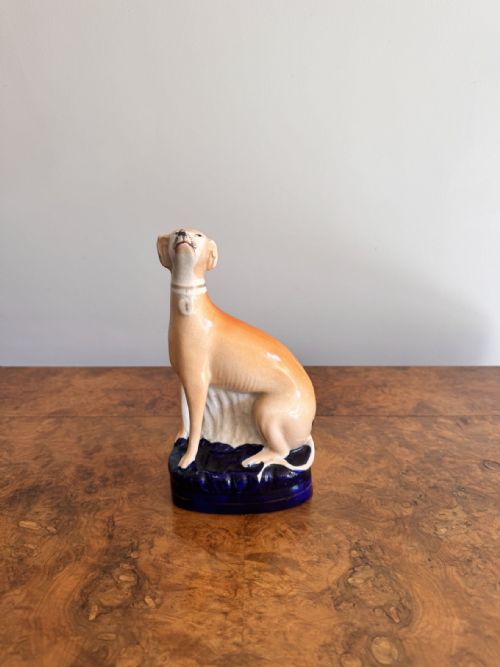
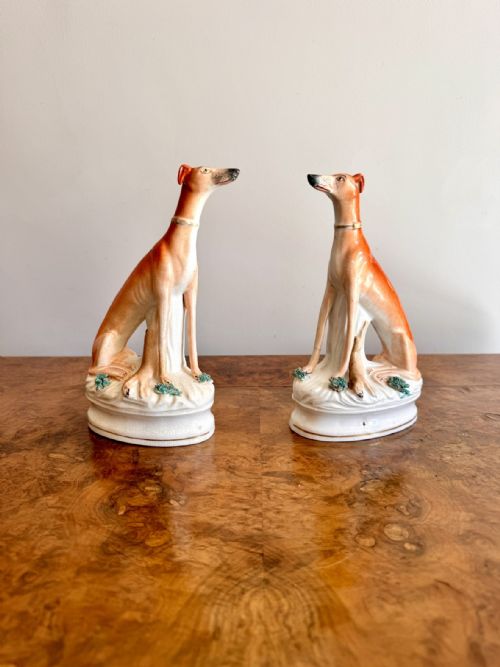
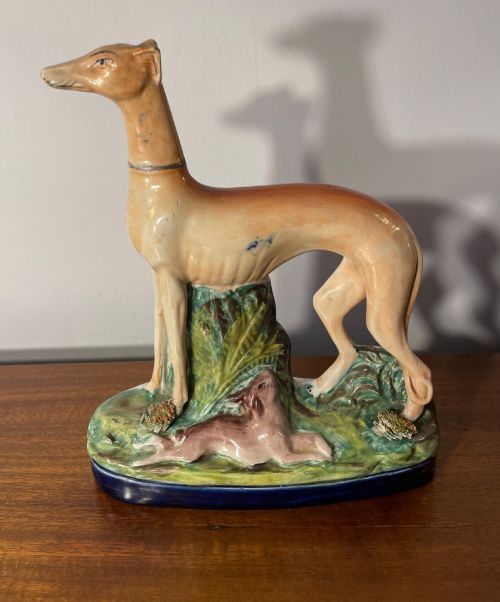
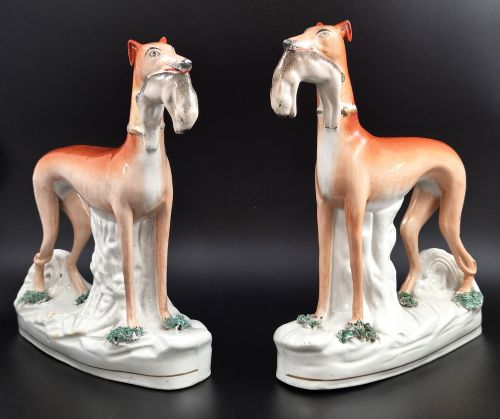
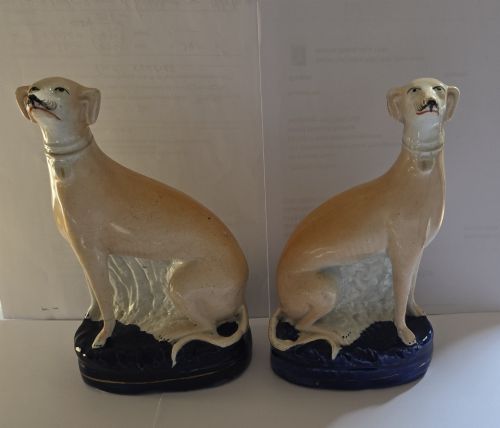
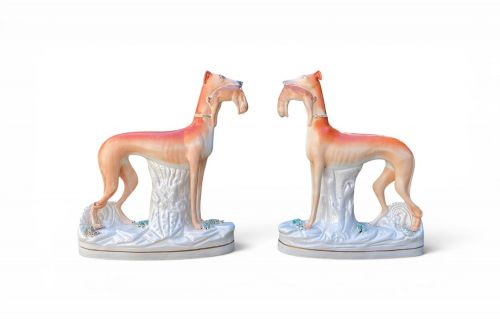
When you search for staffordshire ceramic greyhounds, you encounter sculptural figures and utilitarian objects shaped as whippets and hounds. The most common forms on this page are matched pairs of seated dogs, often accompanied by hares.
The objects originate primarily from the Victorian era, spanning decades from eighteen hundred through to eighteen eighty. Collectors find both single display figures and functional pieces such as inkwells and quill holders.
Pieces frequently reflect the aesthetic of Victorian country pottery, capturing domestic hound subjects with characteristic earthenware modelling. Makers ranged from local potteries to known operations like that of Thomas Parr.
Materials and manufacture
Makers shaped these figures using local earthenware, forming the ceramic bodies through traditional press-moulding techniques. Artisans then applied liquid lead glaze to seal the porous clay before firing.
Staffordshire Ceramic Greyhounds Retail Price Guide 2026
Typical asking prices for staffordshire ceramic greyhounds among the pieces listed under this phrase on Sellingantiques today, from the lower quarter to the upper quarter. They describe what is for sale here now, not the wider market.
Several hounds sit in patient pairs with hares, watching the room with wide painted eyes and gilded collars.
Assessing quality in the figures
Quality rests primarily on the crispness of the modelling and the preservation of the painted enamel surface. Finer examples display sharper anatomical definition in the muscles and paws, avoiding the softening typical of worn moulds.
The application of glaze and enamel paint also distinguishes standard output from finer work. Superior pieces retain rich, even gloss without heavy crazing, alongside clean brushwork on the eyes and collars.
Thomas Parr
The Staffordshire Ceramic Greyhounds Glossary
- Earthenware
- Porous pottery fired at lower temperatures than stoneware. It forms the standard ceramic body for these figures.
- Lead Glaze
- A glossy surface coating containing lead oxide. It provides a shiny protective layer over the earthenware body.
- Enamel Paint
- Vitreous coloured decoration applied over the fired glaze. It brings detail to the eyes, collars, and hares.
- Quill Holder
- A desktop accessory with a channel for writing feathers. These variants incorporate the dog figure as a functional base.
- Inkwell
- A small container for writing ink featuring a central opening. Ceramic versions integrate the hound sculpture directly into the ink reservoir design.
Staffordshire Ceramic Greyhounds: Frequently Asked Questions
Are these greyhounds or whippets?
Makers and historical descriptions use the terms interchangeably for these nineteenth-century ceramic dogs. Both breeds share the slender silhouette captured by Victorian potters.
Collectors generally focus on the overall form and modelling quality rather than strict breed accuracy. The pieces represent the broader category of nineteenth-century hound figures.
How were inkwells used?
These desk accessories held liquid ink for dip pens in nineteenth-century studies and offices. The dog figure served as an ornamental mount beside the ceramic ink reservoir.
Users dipped their quill pens directly into the central well while writing letters or documents. The surrounding ceramic base often caught stray drips.
Why do some dogs have hares?
The inclusion of hares reflects the popularity of coursing and hunting subjects in Victorian Staffordshire pottery. Hares appear beneath the dog's paw or as a companion piece in matched pairs.
This narrative detail links the decorative ceramic figures to rural sporting traditions of the period. It adds visual interest and dynamic composition to the mantelpiece display.
How do I date these figures?
Dating relies on stylistic markers, clay characteristics, and glaze types consistent with the nineteenth century. Victorian examples often show specific enamel palettes and moulding styles typical of eighteen fifty to eighteen eighty.
Comparing base construction and wear patterns helps establish the approximate decade of manufacture. Marked pieces or known attributions provide more precise chronological anchors.