





Stacking Tables Set
A stacking tables set offers clever tiered storage, sliding together neatly when floor space matters and separating easily for tea or guests.
Stacking Tables Set
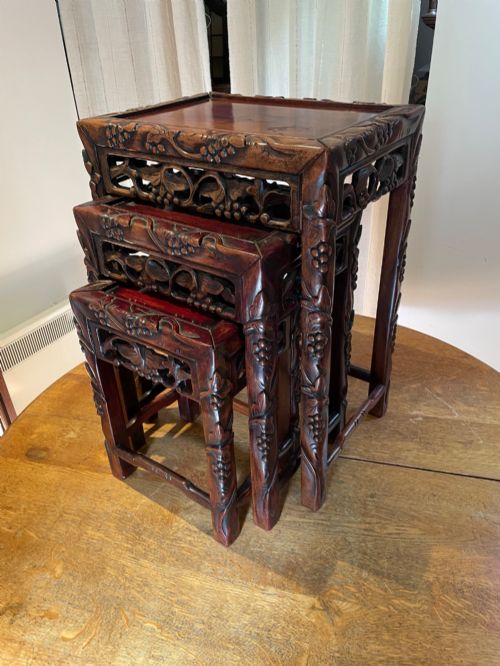
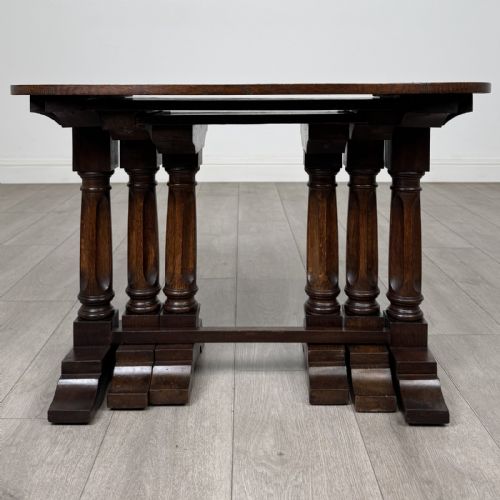
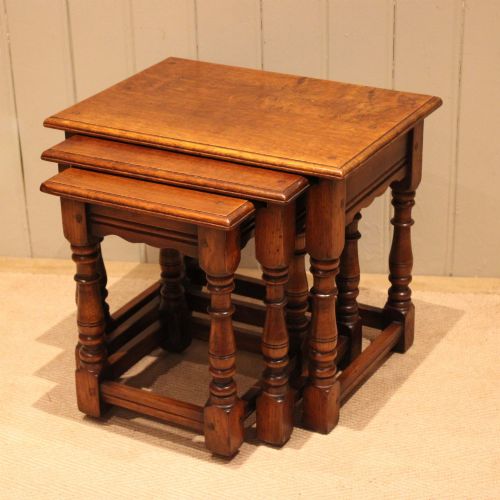
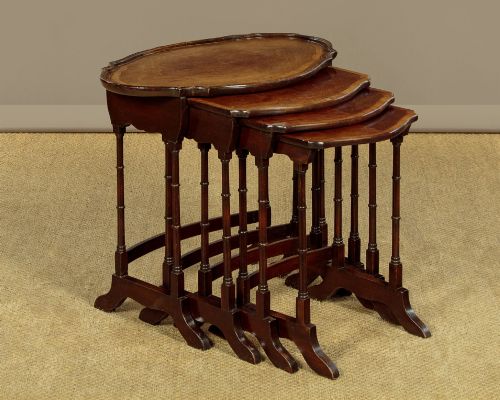
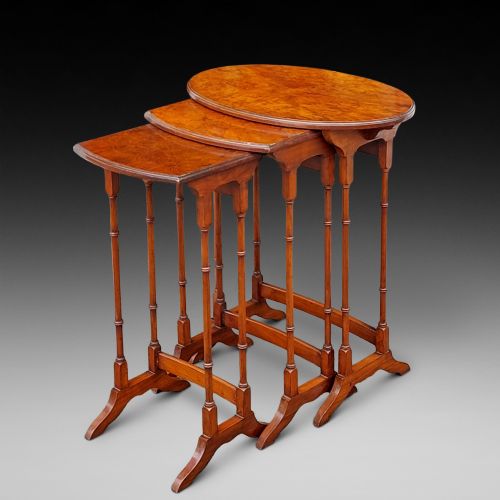
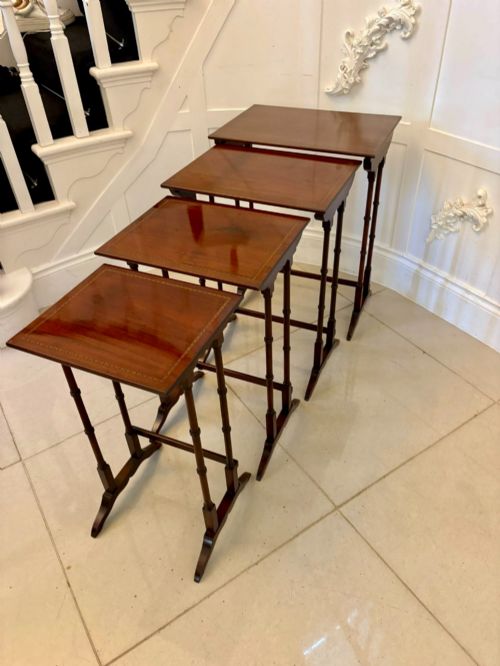
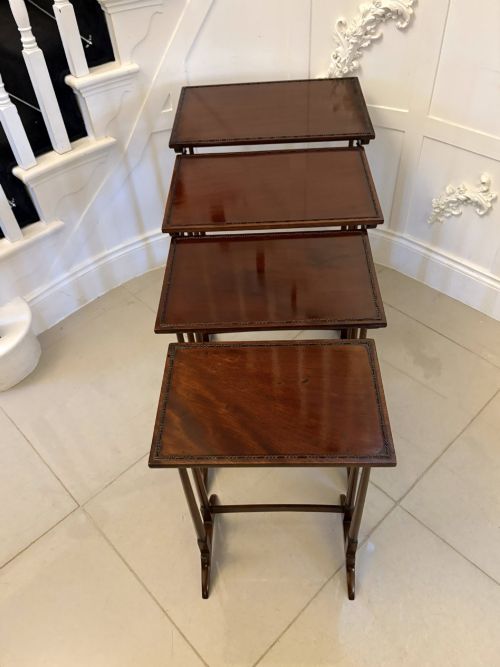
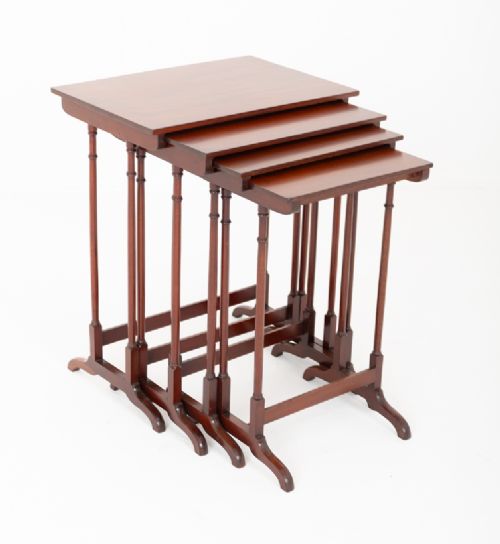
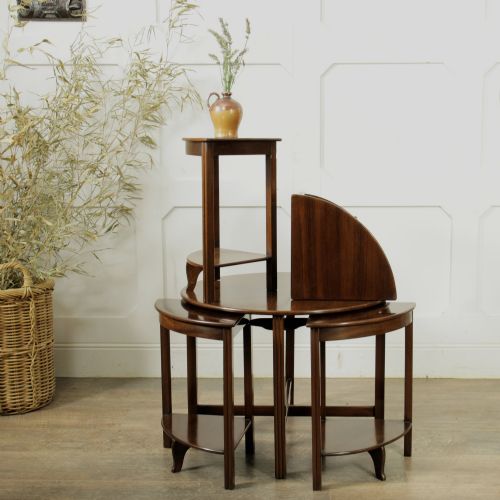
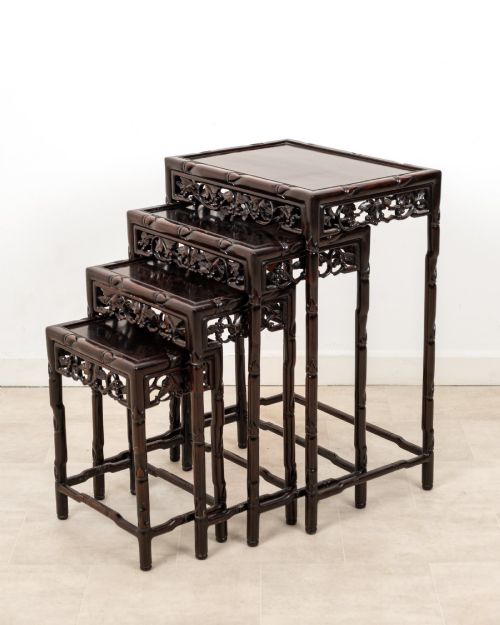
A stacking tables set, commonly encountered as a nest of tables or quartetto set, brings together multiple graduated pieces designed to tuck beneath one another. You will most frequently find Edwardian examples in mahogany or walnut, alongside Victorian and Regency pieces that utilise richer timbers.
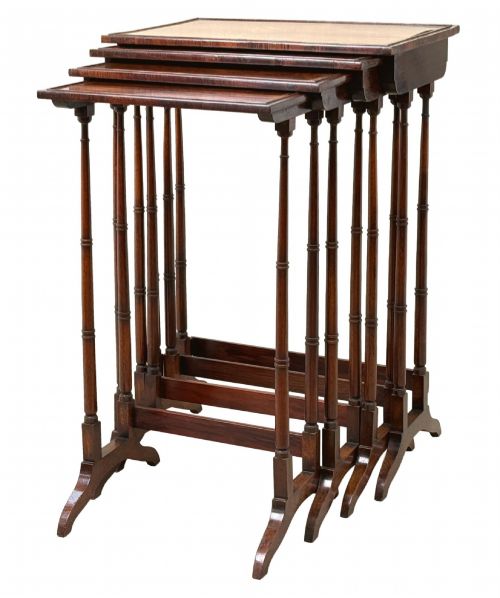
The layout typically ranges from sets of three up to five circular or rectangular tables. Makers arranged them so the smaller surfaces slide smoothly into the frame of the largest, keeping footprint minimal until needed for service.
Materials and Construction
Cabinetmakers built these sets primarily using solid and veneered timbers including mahogany, oak, rosewood, walnut, and satinwood. Finer examples incorporate decorative elements like satinwood inlay, brass stringing, parquetry, or Chinoiserie lacquer work.
Joinery focused on stability within restricted dimensions, relying on slender turned or column legs supporting graduated tops. The timber selection balanced lightness for frequent movement against structural integrity during daily use.
Stacking Tables Set Retail Price Guide 2026
Typical asking prices for stacking tables set among the pieces listed under this phrase on Sellingantiques today, from the lower quarter to the upper quarter. They describe what is for sale here now, not the wider market.
Assessing Craftsmanship
Quality rests in the precision of the graduated fit and the selection of timber figure, such as burr walnut or figured mahogany. Superior sets maintain rigid frames across all tiers without looseness in the joints despite repeated stacking.
The finesse of secondary details distinguishes the work, from hand-cut inlay and floral painting to the integrity of the lacquer. Better workshops ensured grain matching and smooth sliding action across every table in the set.
Heal's
The Stacking Tables Set Glossary
- Quartetto
- A set of four graduated occasional tables designed to stack inside one another. This form became particularly popular in British homes during the nineteenth and early twentieth centuries.
- Inlay
- The technique of embedding contrasting strips of wood, such as satinwood, into the primary timber surface to create decorative borders or motifs. It adds visual refinement to the top panel.
- Parquetry
- Geometric mosaic woodwork arranged in patterns like herringbone or cubes across the table surface. French walnut pieces frequently showcase this skilled geometric arrangement.
- Chinoiserie
- European imitation of traditional Chinese artistic styles, featuring painted lacquer and gilt motifs on wood. These decorated surfaces appear on select occasional sets from the nineteenth and early twentieth centuries.
Stacking Tables Set: Frequently Asked Questions
How were these tables used?
These sets served primarily as occasional furniture for holding tea cups, books, or lamps during social visits. Servants could easily separate the tables around a room and stack them away afterward.
Today they function flexibly as side tables, coffee table alternatives, or plant stands in compact spaces.
How do I date a set?
Dating relies on timber choices, leg turning styles, and decorative techniques like inlay or lacquer. Edwardian and Victorian pieces often show specific mahogany grains and satinwood stringing.
Earlier Regency examples tend to feature rosewood and classical columnar supports, whereas 1930s pieces adopt cleaner modernist lines.
Are these sets sturdy enough for daily use?
Solidly constructed antique and vintage sets remain robust for normal daily activities like holding drinks or reading materials. Their clever interlocking design actually protects the smaller frames when stored.
Care should be taken not to overload the smallest, most slender tables in the set.