
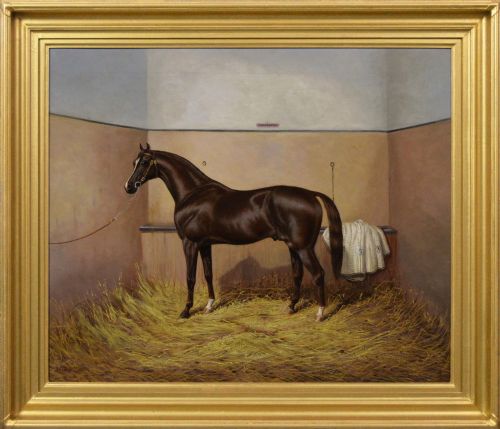
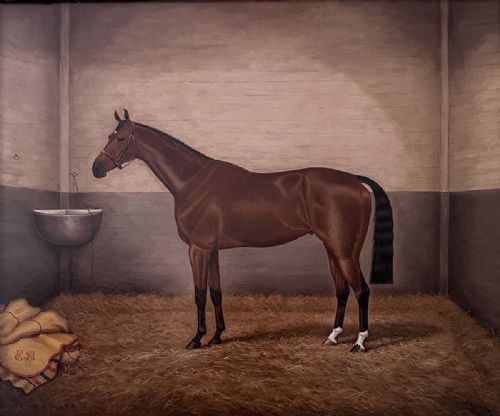


Stable Horse Oil Portrait
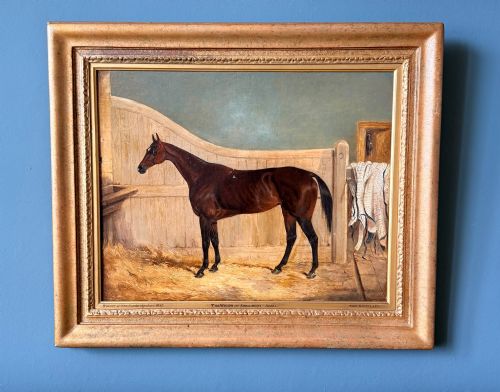
A stable horse oil portrait captures the character and muscle of prized equines, hanging as a centrepiece of period sporting art.
Stable Horse Oil Portrait
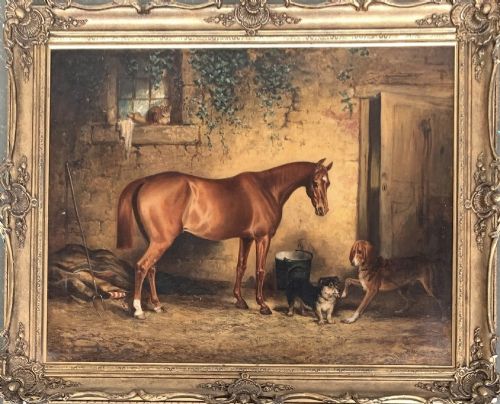
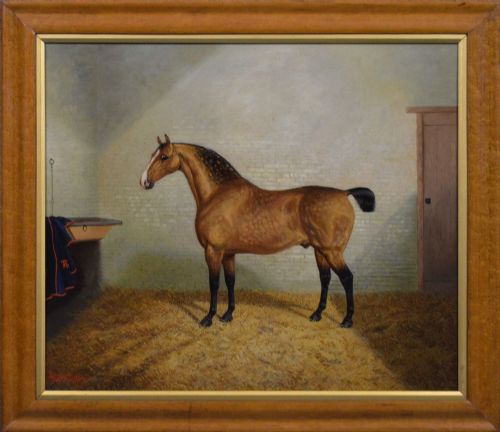
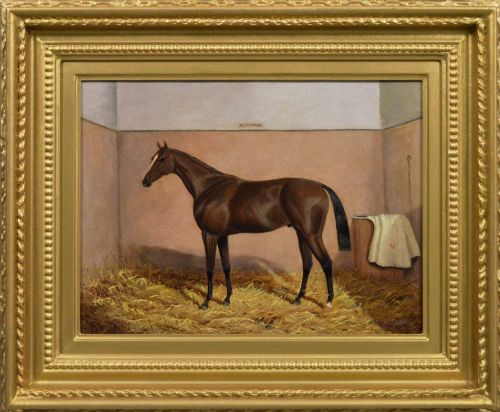
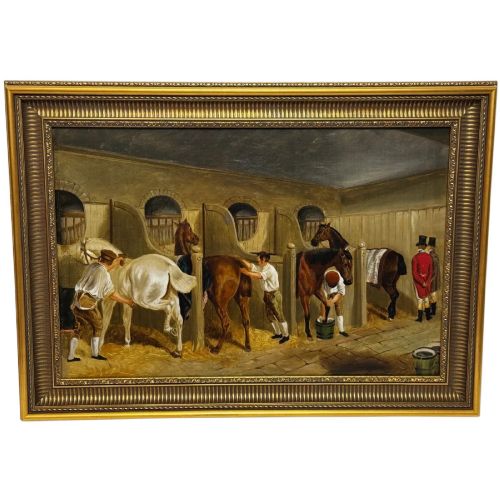
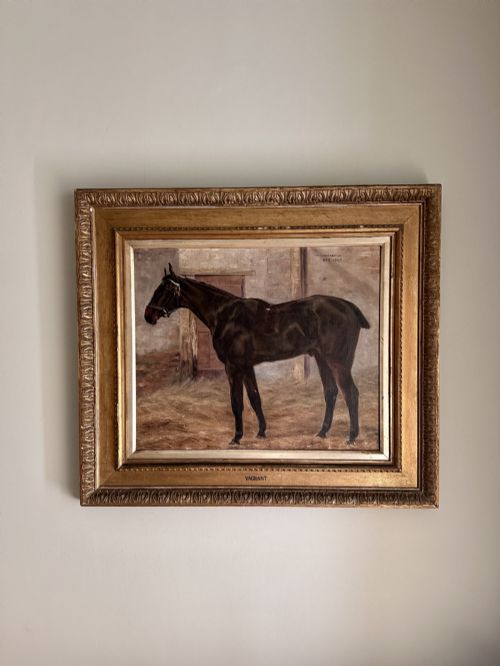
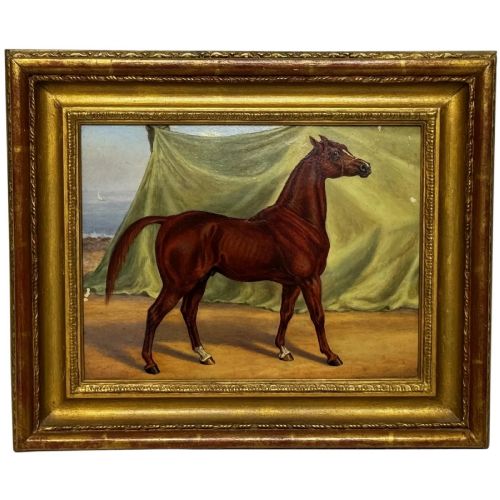
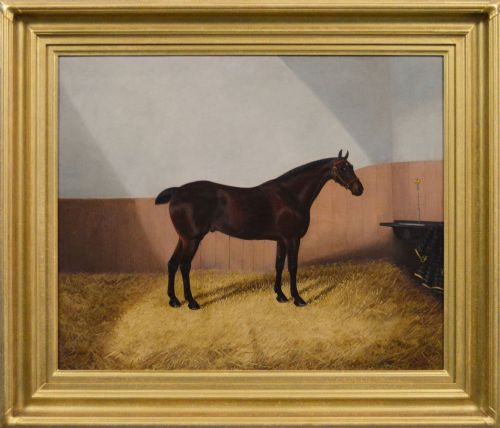
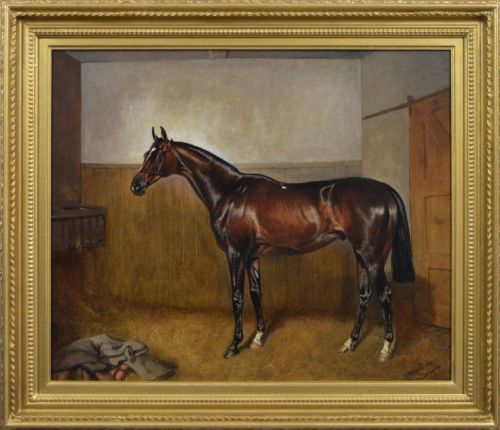
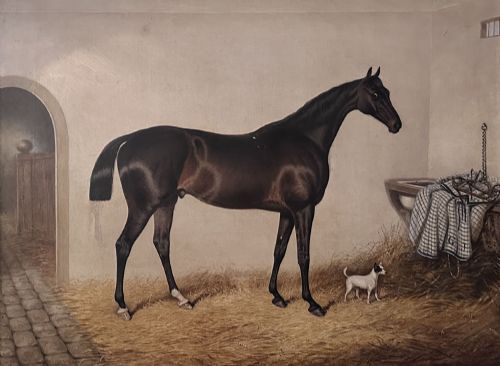
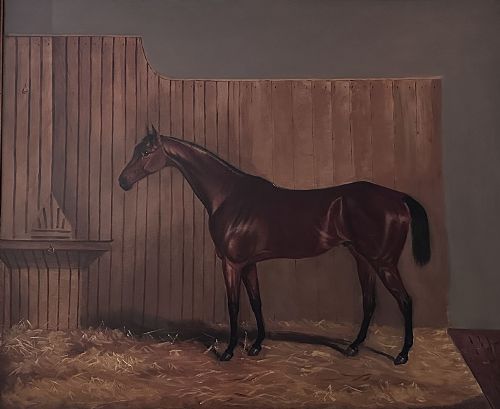
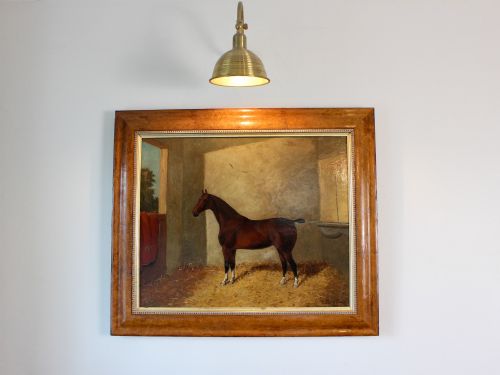
A stable horse oil portrait depicts hunters, racehorses, and prize studs within domestic stalls or stable yards. These works emerge predominantly from the nineteenth century and the Edwardian era, spanning Victorian sporting art and colonial British traditions.
Most examples present a side-profile or three-quarter view of a bay, chestnut, or grey horse, often accompanied by grooms or terriers. The compositions document named champions, hunting mares, and anonymous farm stock with equal attention to anatomy.
Materials and methods
Artists painted primarily with oil paint on stretched canvas, though surviving examples include works executed on oak panel and wood supports. Pigments were applied to build up the rich coats of bay and roan hunters against dark, enclosed timber interiors.
Many canvases are housed within their original giltwood or gold leaf frames, which accentuates the depth of the interior scenes through decorative moulding.
Materials recorded across the archive include oil paint, canvas, gold leaf, and giltwood frames.
Assessing quality in equine portraiture
Quality rests upon the artist's anatomical precision and the convincing rendering of the horse's musculature, sinew, and intelligent eye. Superior hands capture the specific conformation of a recognised racehorse or hunter rather than relying on a generic template.
The treatment of the stable environment also dictates worth, where skilful handling of shadow, straw texture, and harness gear elevates a background into an atmospheric space.
Henry Barraud·Albert Clark·Fred Fitzpatrick·John Alfred Wheeler·Thomas Walker Bretland·Edward Lloyd of Ellesmere·George E Sharpe·Samuel Spode·Benjamin Cam Norton·Edwin Frederic Holt·Alfred Moginie Bryant·Alfred Grenfell Haigh·Charles Bilger Spalding·John Nost Sartorius·John Ferneley Jnr·William Shayer Snr·R Cooper·John Herring Senior
The Stable Horse Oil Portrait Glossary
- Bay
- A horse coat colour characterised by a reddish-brown body with a black mane, tail, and lower legs. This coat appears frequently across nineteenth-century sporting canvases.
- Roan
- A horse coat pattern featuring an even mixture of white hairs with red, brown, or black hairs. Strawberry roan hunters are a distinct sub-category within Victorian equine art.
- Giltwood
- Wood carved and covered with a thin layer of gold leaf or metallic paint. These frames are standard for housing nineteenth-century oil paintings.
- Conformation
- The physical outline and bodily structure of a horse. Accurate depiction of conformation marks the work of a master equine painter.
- Equine art
- Depictions of horses in painting, drawing, or sculpture. This genre reached a height of popularity in Britain during the Victorian period.
Stable Horse Oil Portrait: Frequently Asked Questions
How do I date a horse oil portrait?
Dating relies on stylistic clues, framing, canvas preparation, and artist signatures or dated inscriptions on the reverse. Victorian works often carry specific biographical details of the horse or race.
Comparison with documented works by artists active in the nineteenth century helps narrow the decade of execution.
Where should I hang a stable portrait?
These works suit traditional panelled rooms, libraries, or dining spaces where heavy gilt frames complement period furniture. Keep them away from direct sunlight to protect the oil pigments.
Ensure the wall fixings can support the weight of the timber stretcher and heavy gilded frame.
Are these paintings of real horses?
Many depict named racehorses, prize studs, or specific hunters belonging to landed estates and hunts. Inscriptions on the canvas or stretcher often record the name of the animal and its owner.
Other canvases portray handsome anonymous hunters kept in stable yards during the Victorian era.
What frames are original to these pieces?
Giltwood and gold leaf frames with ornate moulded decoration are typical for nineteenth-century sporting art. These frames were designed to complement the dark interior tones of the stable scenes.
Retaining the original frame adds historical context to the painting.