



St Ives School Art
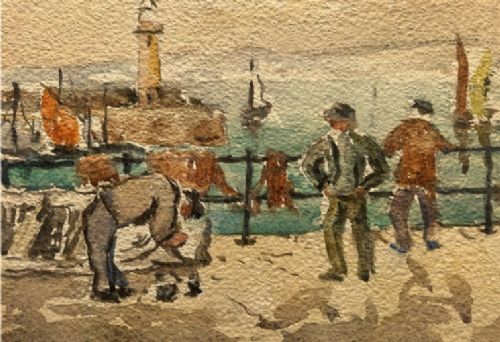
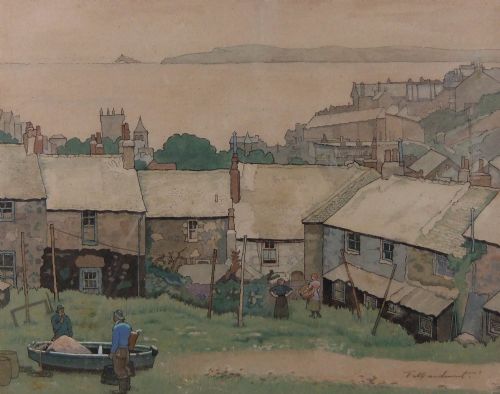
St ives school art captures the coastal light and modernist spirit of Cornwall through paintings and watercolours.
St Ives School Art
When buyers search for st ives school art, they encounter paintings and watercolours that reflect coastal landscapes and modernist explorations in Cornwall. These works emerge from distinct creative communities grounded in the West Cornwall peninsula.
The pieces on this page span several decades, featuring works from the early twentieth century through the middle decades. Watercolour and oil paint on canvas, board, and paper dominate the selection.
Early examples connect with impressionist and post-impressionist traditions, whilst later works move towards mid-century modernism and abstraction. Collectors find both framed watercolours and substantial oil paintings within these stylistic boundaries.
Materials and techniques
Artists utilise traditional supports including canvas, wooden board, and heavy paper for their watercolours and oils. Pigments are applied with varied brushwork, ranging from delicate washes to thick impasto on wood frames.
Works on paper rely on watercolour techniques to capture coastal atmospheres, whereas oil paintings employ canvas and board to build texture and depth. Many pieces retain their period wood frames, completing the physical object.
St Ives School Art Retail Price Guide 2026
Typical asking prices for st ives school art among the pieces listed under this phrase on Sellingantiques today, from the lower quarter to the upper quarter. They describe what is for sale here now, not the wider market.
Some coastal watercolours still carry the faint, salty scent of a Cornish studio.
Variations in quality
Quality rests upon the strength of composition and the surety of the painterly execution, separating routine topographical records from deeply considered artistic statements. The relationship between pigment and support reveals the confidence of the hand.
Works from an artist's established period demonstrate a more assured vision than tentative student pieces or routine commercial output. The resonance of the colour palette and the integration of surface texture define the upper tier.
Thomas Maidment·Joan Gillchrest·Tony Giles·Denis Mitchell·George Turland Goosey·Adrian Heath·Fred Mayor·Frederick William Jackson·Cuthbert Crossley·Henry Silkstone Hopwood·Terry Frost·J Titcomb
The St Ives School Art Glossary
- Watercolour
- A paint consisting of pigment suspended in a water-based solution, typically applied to paper. It allows for translucent washes and fluid effects.
- Impasto
- Paint applied thickly to a canvas or board, standing out from the surface so that the brush or palette knife marks remain visible.
- Post-Impressionism
- A predominantly French art movement that developed roughly between the late nineteenth century and the early twentieth century, extending impressionism while rejecting its limitations.
- Mid-Century Modern
- A stylistic development spanning roughly the middle decades of the twentieth century, characterised by a clean, modernist aesthetic in painting and design.
St Ives School Art: Frequently Asked Questions
What defines st ives school art?
These works are defined by their connection to the artistic communities of coastal Cornwall, spanning impressionist landscapes to mid-century modernism.
Painters drew direct inspiration from the unique light and landscape of the region across several decades.
How do watercolours and oils differ here?
Watercolours on paper offer translucent depictions of light and atmosphere, typically created with fluid brushwork.
Oils on canvas or board provide heavier textures, richer pigment layers, and often a more substantial presence within a wood frame.
How do I identify the period?
Dates emerge through stylistic shifts, moving from early twentieth-century impressionism to mid-century modern abstraction.
Materials, framing styles, and artist lifespans recorded in the titles provide further chronological markers.
How should I display these paintings?
Display works away from direct sunlight to protect watercolours and oil pigments from fading over time.
Matching the piece to a suitable wall space allows the period frame and canvas texture to become a natural focal point.