





St Ives Art
St ives art brings together coastal watercolours, modernist oils, and sturdy oak furniture rooted in Cornwall's historic creative community.
St Ives Art
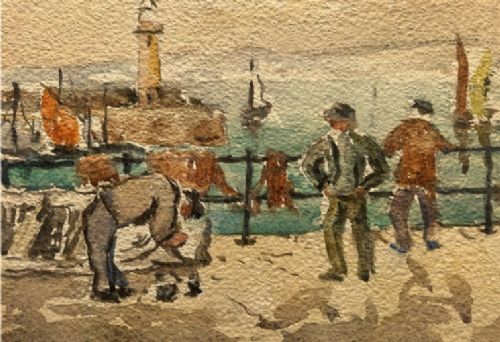
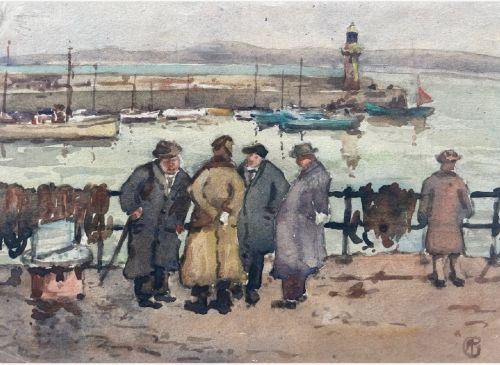
St ives art encompasses marine watercolours, harbour scenes, and modernist paintings created in the Cornish coastal town. Buyers exploring st ives art often encounter early twentieth-century watercolours depicting local fishermen and boats at low tide alongside mid-century abstract works.
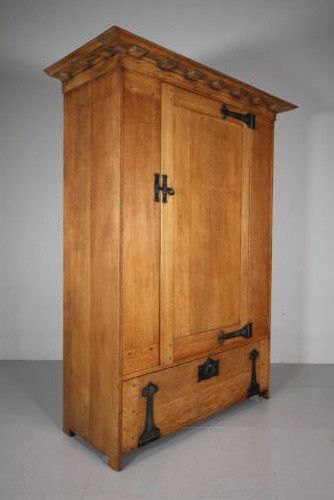
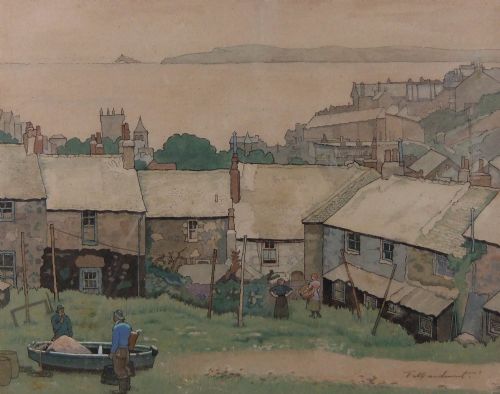
Watercolours and oil paintings dominate the selection, capturing the distinct light and maritime atmosphere of the harbour and surrounding fields. Alongside these framed works, the category includes occasional pieces of solid oak furniture linked to the area.
The objects span from the nineteenth century through the 1960s, reflecting both traditional landscape painting and the emergence of the St Ives School. Collectors find everything from detailed depictions of local inns and cottages to expressive modernist compositions on paper and canvas.
Materials and methods
Artists working within st ives art primarily utilised watercolour on paper and oil paint on canvas or wood panels. These traditional media were handled with varying techniques, from delicate washes recording harbour views to thick impasto capturing coastal forms and figures in overcoats.
Support materials range from stretched canvas to wood frames and sturdy timber for cabinet work. The construction of these pieces relies on period framing techniques and solid wood joinery, matching the nineteenth and twentieth-century origins of the works.
St Ives Art Retail Price Guide 2026
Typical asking prices for st ives art among the pieces listed under this phrase on Sellingantiques today, from the lower quarter to the upper quarter. They describe what is for sale here now, not the wider market.
Materials recorded in these listings include watercolour, oil paint, canvas, gouache, glass, paper, and oak.
Evaluating quality
Quality in st ives art rests upon the sureness of the brushwork and the artist's command of light and atmosphere. Stronger examples display a confident handling of marine subjects or distinct modernist abstraction rather than formulaic execution.
The integration of the frame and the preservation of the painted surface significantly influence the character of each piece. Works that retain their original context and bear clear signatures or attributions command greater attention from serious collectors.
George F Pennington·William Banks Fortescue·Thomas Maidment·Joan Gillchrest·Tony Giles·Denis Mitchell·Edward Matthew Elliott·George Turland Goosey·Ernest F Hill·Adrian Heath·David Woodlock·Fred Mayor·Frederick William Jackson·Cuthbert Crossley·Henry Silkstone Hopwood·Terry Frost
The St Ives Art Glossary
- St Ives School
- A group of artists based in Cornwall associated with modernist developments in British art from the mid-twentieth century onwards. They embraced abstraction while maintaining a deep connection to the coastal landscape.
- Watercolour
- A painting method in which the paints are made of pigments suspended in a water-based solution. This technique was widely utilised by artists recording rapid changes in light around the Cornish harbour.
- Oil on Canvas
- A traditional painting medium using pigments bound with a drying oil applied to a woven fabric support. This combination allows for rich texture and depth, frequently seen in works from the early twentieth century.
- Impasto
- The process of applying paint thickly on the canvas so that it stands out from the surface. This technique adds tactile dimension to modernist and impressionist coastal scenes.
- Gouache
- An opaque water-based paint medium used on paper to achieve solid flat areas of colour. It appears in modernist works focusing on abstracted maritime subjects.
St Ives Art: Frequently Asked Questions
What defines st ives art?
St ives art centres on paintings and watercolours depicting the Cornish coast, harbour life, and subsequent modernist developments. The works reflect the distinct geography and light that drew generations of painters to the area.
Items range from traditional Victorian and Edwardian watercolours to mid-century abstracts and oak furnishings associated with local workshops.
How do I date a st ives art painting?
Dating relies on stylistic shifts from nineteenth-century marine realism through early twentieth-century impressionism to 1960s modernism. Signatures, monograms, and artist biographical dates provide further chronological anchors.
Framing materials and paper types also offer clues to the period of creation.
Were these pieces created outdoors?
Many marine watercolours and harbour views were painted plein air to capture immediate atmospheric conditions. Studio work became more common with the development of abstract and modernist compositions in the mid-twentieth century.
Artists frequently observed local scenes directly before finishing works in their studios.
How should I display st ives art at home?
Watercolours and works on paper require protection from direct sunlight to prevent fading of pigments. Framing with conservation-grade materials helps preserve the paper and paint over time.
Oil paintings on canvas tolerate standard indoor environments better but benefit from stable humidity levels.