



Square Wooden End Tables
Square wooden end tables are compact tables built for sitting beside armchairs, bringing useful surface space and timber character to a room.
Square Wooden End Tables
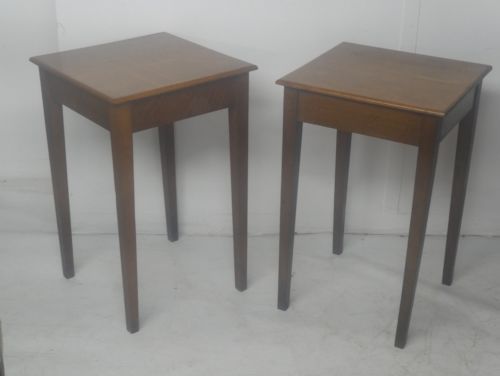
Square wooden end tables emerge across multiple eras, ranging from eighteenth-century designs to later twentieth-century iterations. These pieces function primarily as side tables, occasional tables, and lamp tables positioned beside seating.
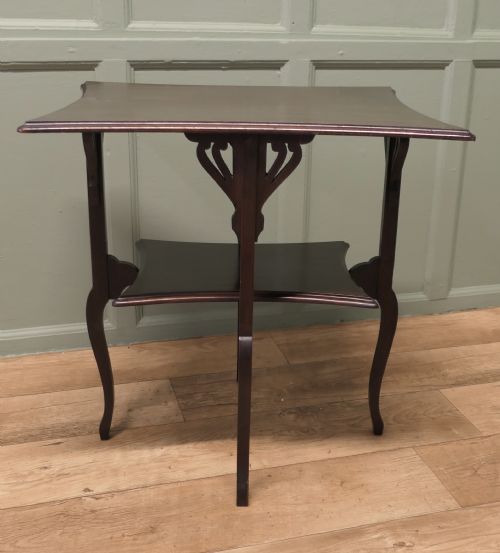
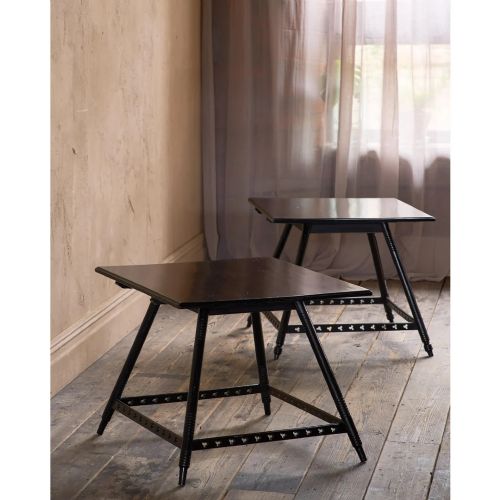
The selection on this page relies heavily on Edwardian examples alongside pieces from the nineteenth and early twentieth centuries. Makers applied styles such as Arts and Crafts, Aesthetic Movement, and Jacobean Revival to timber frames.
How they were made
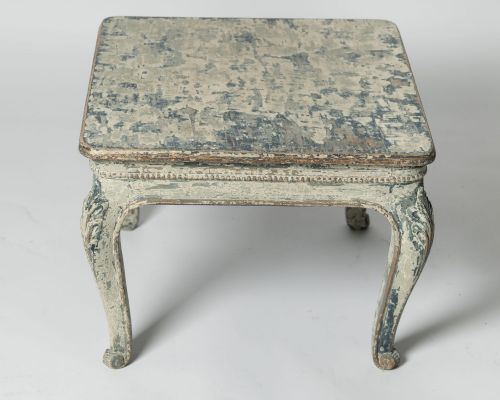
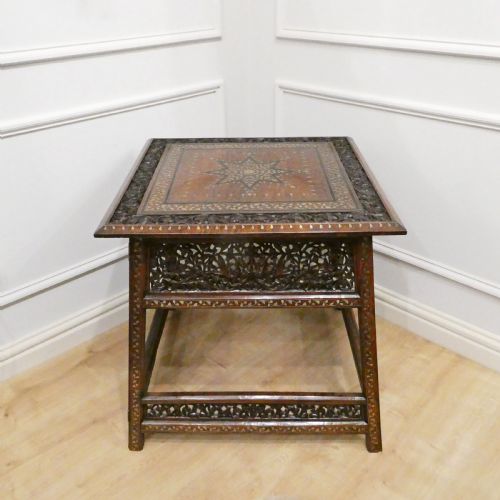
Carpenters utilised durable hardwoods including mahogany, oak, satinwood, and rosewood, often pairing them with contrasting inlay work. Certain pieces incorporate brass inlay or painted and ebonised finishes to alter the surface texture.
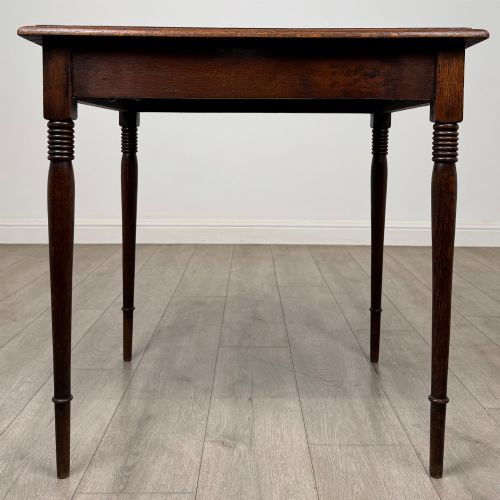
Construction techniques include hand carving, turned legs such as barley twist supports, and functional additions like lift-up tops. Workshops selected specific grain patterns like burr elm to accentuate the visual weight of the top.
Lift-up tops hide away small secrets from prying eyes.
What varies in quality
The standard of a table rests on the selection of timber and the precision of decorative details like stringing and marquetry. Finer examples display balanced proportions and careful integration of brass or contrasting wood inlays.
Execution of structural elements, from hand-carved details to the turning of legs, separates workshop output. Flimser construction or hurried assembly lowers the integrity of the piece over decades of use.
Baillie Scott
The Square Wooden End Tables Glossary
- Side table
- A small table designed to stand against a wall or beside seating. These items provide a convenient surface for lamps and small objects.
- Occasional table
- A movable table brought out for specific uses in a room. They appear in various timber forms and revival styles.
- Inlay
- A technique where pieces of contrasting material are inserted into a recessed surface to form a pattern. Satinwood and brass frequently serve this decorative function.
- Barley twist
- A type of turning shaped like a spiral rope, popular on table legs. This form adds visual movement to wooden furniture frames.
- Lamp table
- A low table specifically proportioned to hold a lighting fixture. They often feature compact square tops suited to corners.
Square Wooden End Tables: Frequently Asked Questions
Where should I place a square wooden end table?
These pieces fit naturally beside armchairs, sofas, or in corners where surface space is limited. Their compact footprints allow them to serve as functional lamp stands or resting spots for books.
Matching the timber tone to existing room furnishings helps integrate the piece smoothly. Pairing oak or mahogany versions with compatible period decor maintains visual harmony.
How do I identify an Edwardian wooden end table?
Edwardian tables often feature lighter timbers, delicate inlay work, and refined proportions characteristic of the early twentieth century. Many incorporate satinwood stringing or crossbanding.
Construction methods from this era balance domestic utility with decorative refinement. Examining the interior timber and joinery helps confirm the period of manufacture.
What woods were commonly used for these tables?
Cabinetmakers relied heavily on durable timbers like mahogany and oak for structural stability and rich grain texture. Satinwood, rosewood, and burr elm appear frequently for decorative surfaces and tabletops.
Some examples utilise ebonised wood or painted finishes to mimic exotic materials or suit specific aesthetic tastes. Each timber responds differently to polishing and daily wear.
How do I care for an antique wooden table?
Maintaining these surfaces requires keeping them away from direct heat sources and extreme humidity fluctuations. Regular dusting with a soft cloth preserves the polish without building up residue.
Applying occasional appropriate wax feeds the timber and protects the grain. Avoiding harsh chemical cleaners safeguards the original finish and inlay details.