
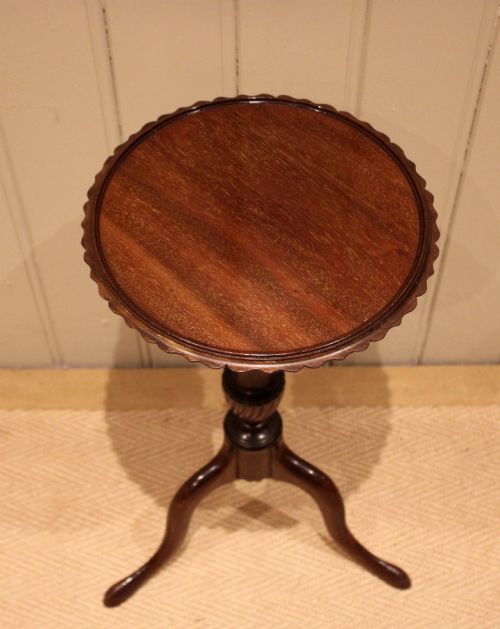
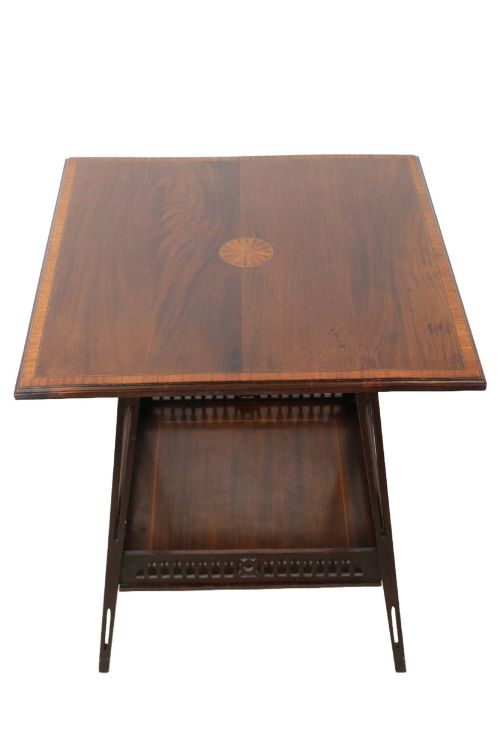

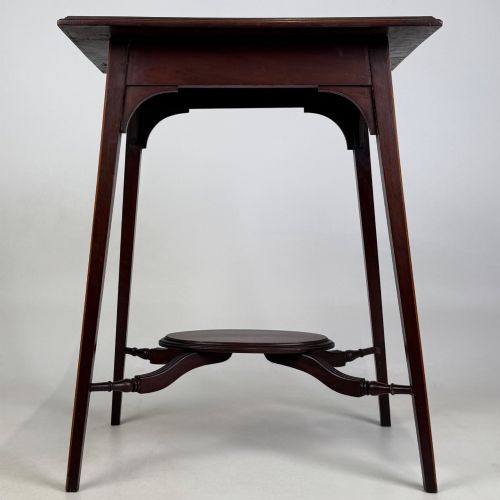
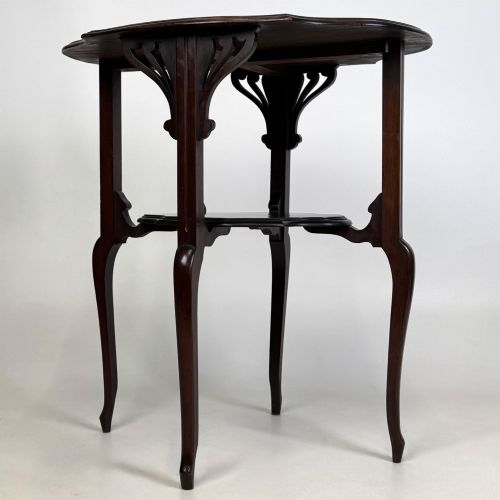

Edwardian Mahogany Plant Table
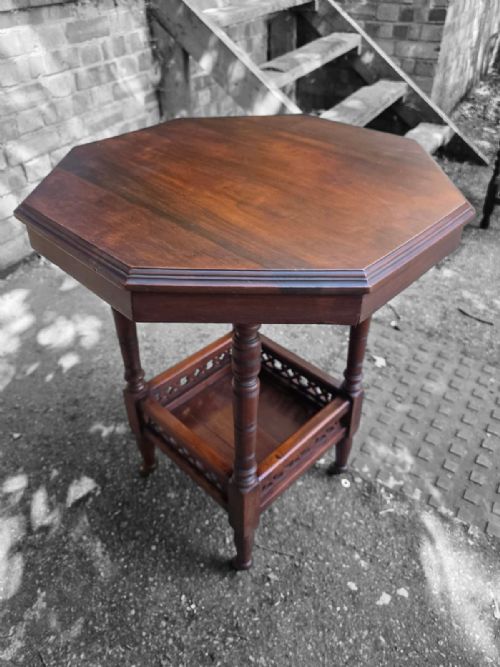
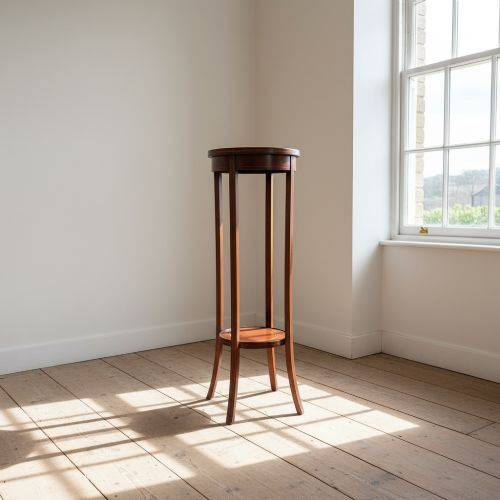
An edwardian mahogany plant table brings refined timber and slender height to a corner, holding greenery or a lamp with quiet grace.
Edwardian Mahogany Plant Table
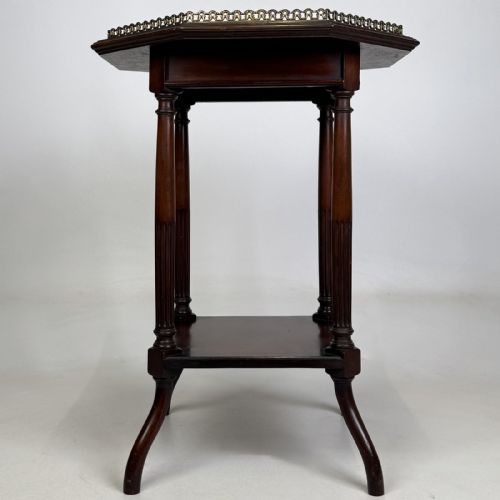
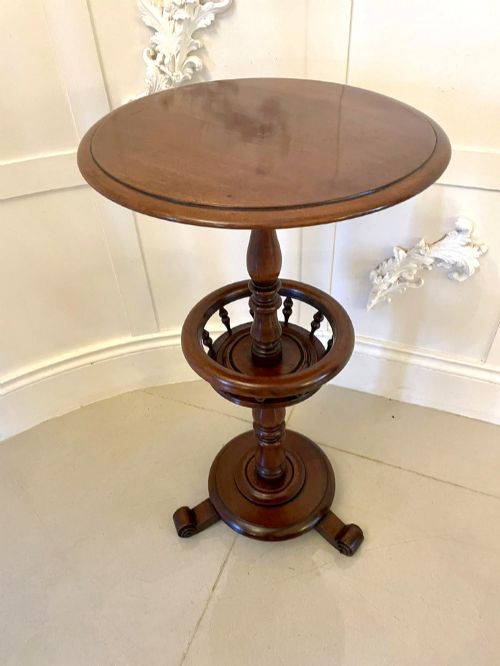
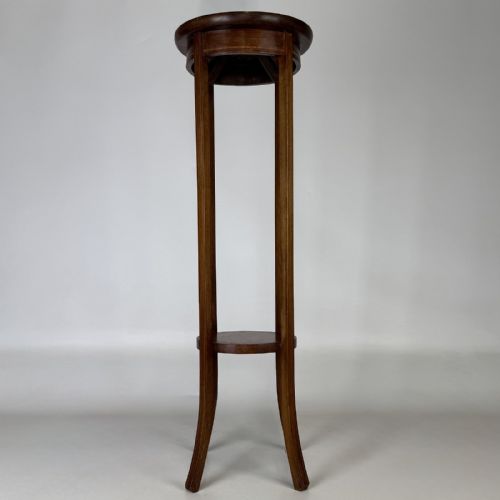
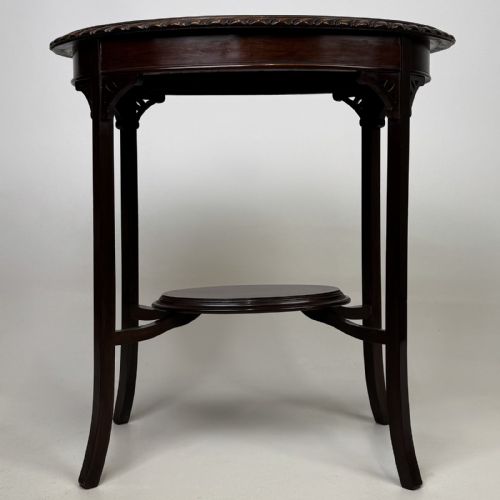
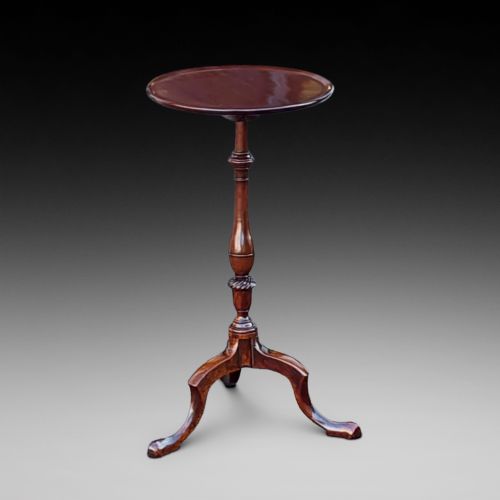
An edwardian mahogany plant table is primarily encountered from the early decades of the twentieth century, often sharing forms with wine tables, lamp tables, and small occasional stands. These pieces frequently appear with tall, slender profiles designed to elevate potted plants or jardinieres within a drawing room or hallway.
While the Edwardian period dominates the selection, related examples emerge from late Victorian years and the early twentieth century. Makers of the time adopted revival styles, producing pieces that echo Sheraton, Chippendale, and French Empire motifs alongside clean Arts and Crafts designs.
Materials and Technique
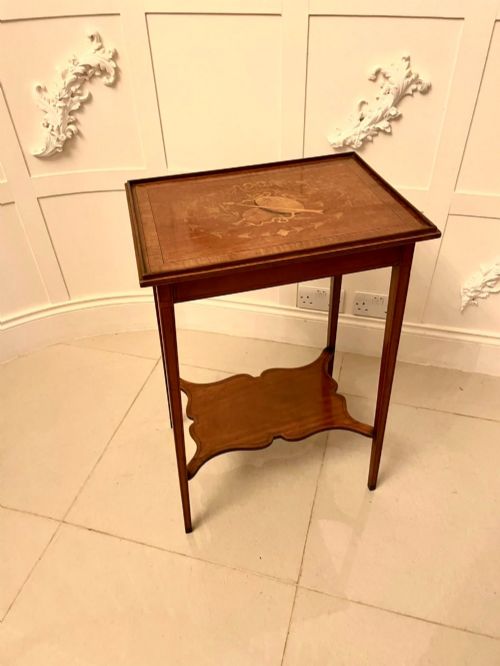
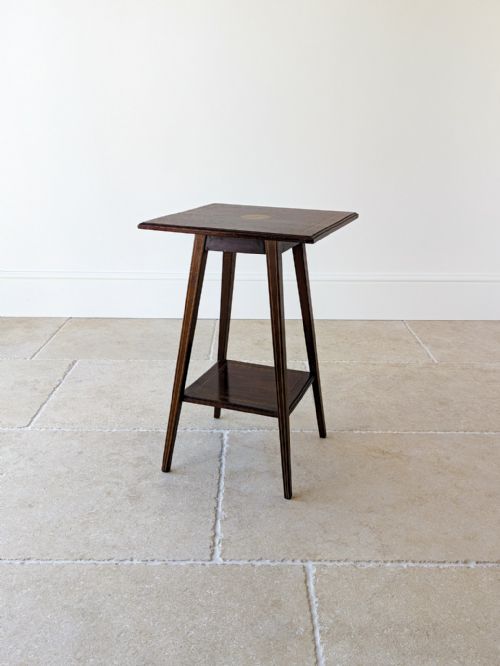
Cabinetmakers relied heavily on solid mahogany and mahogany veneers, often enhanced by contrasting stringing and banding in satinwood and boxwood. Inlaid details bring delicate linear patterns to tabletops and tapering legs.
Construction techniques include precise joinery for tripod bases, multi-tiered platforms, and occasional brass mounts or ormolu accents. Carved fretwork and turned columns further distinguish the finer examples in this category.
Some Edwardian examples double as cake stands, proving that past generations took tea and ferns with equal seriousness.
Assessing Quality
The distinction between ordinary production and superior craftsmanship rests in the crispness of the wood inlay and the balance of the proportions. Finer stands display tightly grained mahogany, precise boxwood and satinwood stringing, and stable tripod or four-legged bases that sit firmly without wobble.
Details such as hand-carved mouldings, well-chosen timber figuring, and intact original surfaces elevate a piece above standard utility items. Maker attribution, where present through stamps or paper labels, also signals higher workshop standards.
Trevor Page & Co·Druce & Co London·Shapland and Petter·Liberty and Co
The Edwardian Mahogany Plant Table Glossary
- Jardiniere
- A decorative pot or stand designed to hold a plant or floral arrangement. These often take elevated forms to display indoor greenery.
- Stringing
- A narrow line of contrasting wood inlay used to outline panels, tabletops, or legs. It adds delicate visual definition to mahogany furniture.
- Tripod base
- A three-legged support structure commonly found on small occasional tables and plant stands. This design ensures stability on uneven floors.
- Urn stand
- A small, tall table historically used for holding tea urns, sharing similar dimensions and slender proportions with plant tables.
- Sheraton Revival
- A late nineteenth and early twentieth century style replicating the neoclassical designs of Thomas Sheraton. It incorporates satinwood inlay, tapered legs, and graceful geometric forms.
Edwardian Mahogany Plant Table: Frequently Asked Questions
What is an edwardian mahogany plant table used for?
These tall, compact tables were originally built to display potted plants, ferns, or trailing foliage in principal rooms. Their modest footprints also suit them for holding lamps, small decorative objects, or tea services.
Today, they serve similar functions in modern interiors, fitting neatly into corners, beside armchairs, or in narrow hallways where larger furniture will not fit.
How do I date an edwardian mahogany plant table?
Dating relies on examining construction methods, timber choices, and stylistic cues such as inlay patterns and leg shapes. Edwardian examples often feature lighter framing, satinwood banding, and influences from Sheraton or Arts and Crafts revivals.
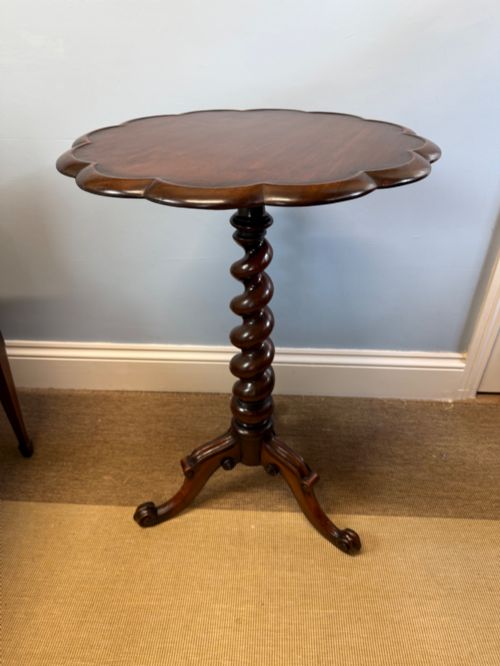
Earlier Victorian precursors tend to show heavier proportions, simpler turned columns, or variations like barley twist supports. Maker marks or retailer labels can also narrow down the exact decade of manufacture.
Are plant tables sturdy enough for daily use?
Most plant tables are structurally sound for supporting lamps, books, or potted plants, provided the joints remain tight. Tripod bases and slender legs require gentle handling when moving the furniture across carpeted or uneven floors.
Placing heavy ceramic pots with damp soil requires a protective saucer to prevent water rings or moisture damage to the polished mahogany surface.
What is the difference between a plant table and a wine table?
While both share compact circular or occasional tops supported by central pillars or slender legs, plant tables often feature taller profiles or multiple tiers. Some incorporate metal liners or waterproof wells specifically intended for holding foliage.
Wine tables generally prioritize lower, portable surfaces designed to sit directly beside seating for holding drinks or small books during the evening.