



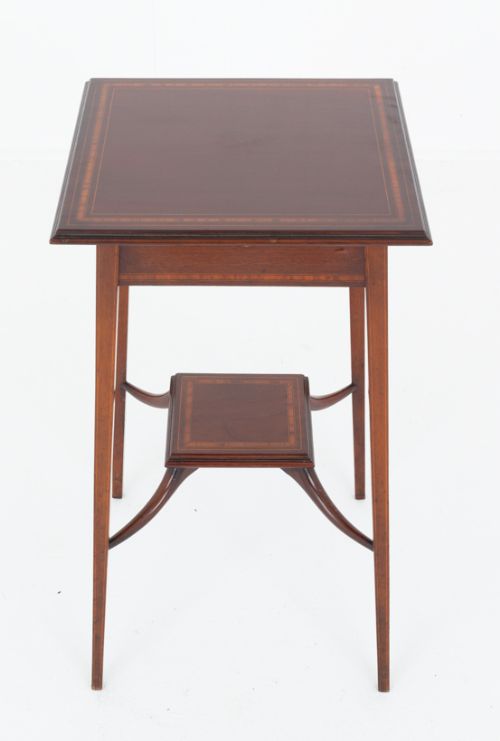

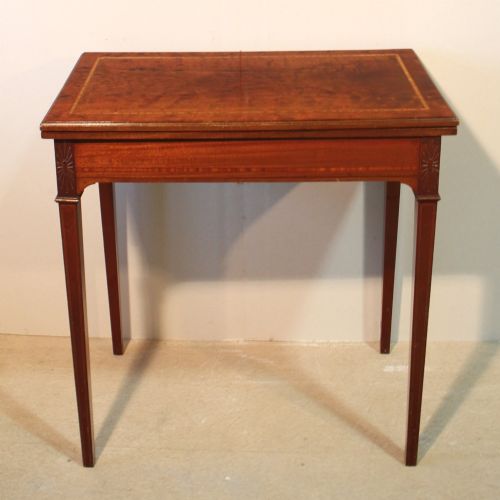

Square Satinwood Tables
Square satinwood tables bring a luminous warmth to a room, offering compact utility alongside fine timber grain and delicate inlay work.
Square Satinwood Tables
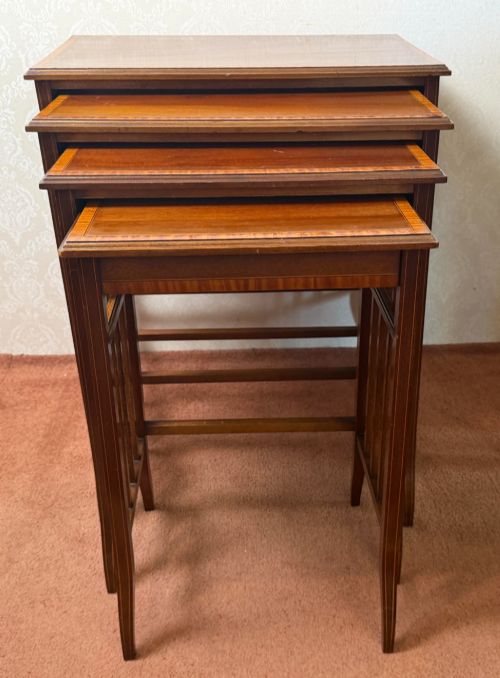
Square satinwood tables encompass a variety of forms, from compact side pieces and lamp stands to games tables and nests. The material appears frequently across Edwardian pieces, along with examples from the Georgian, Regency, and Art Deco periods.
Makers utilised satinwood both for solid construction and as a striking veneer, often contrasting it with darker timbers such as mahogany and harewood. Buyers encounter these pieces in styles ranging from Neoclassical and Sheraton Revival to clean-lined twentieth-century designs.
How they were made
Cabinet makers applied fine satinwood veneers over stable secondary woods like mahogany, securing the surfaces with traditional animal glues. Cross-banding in contrasting timbers and precise boxwood stringing defined the square edges of tops and shelves.
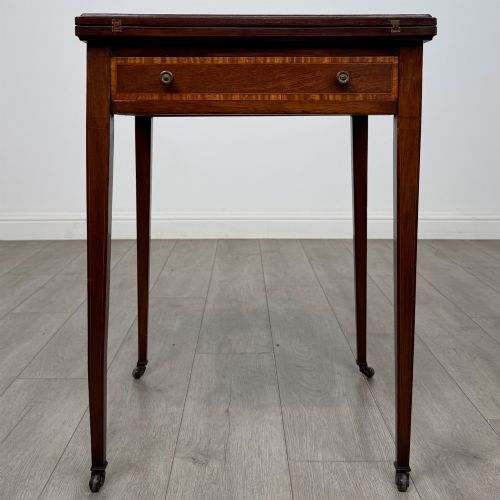
Marquetry inlay and painted ornamentation decorated the surfaces of finer examples, while brass fittings provided functional accents on drawers and castors. Joinery relied on traditional methods, ensuring structural stability for slender legs and folding table tops.
What varies in quality
Quality rests in the selection of the timber and the crispness of the inlay work rather than the mere presence of satinwood. Finer pieces display deliberate grain matching and intricate marquetry that remains flush with the surrounding surface.
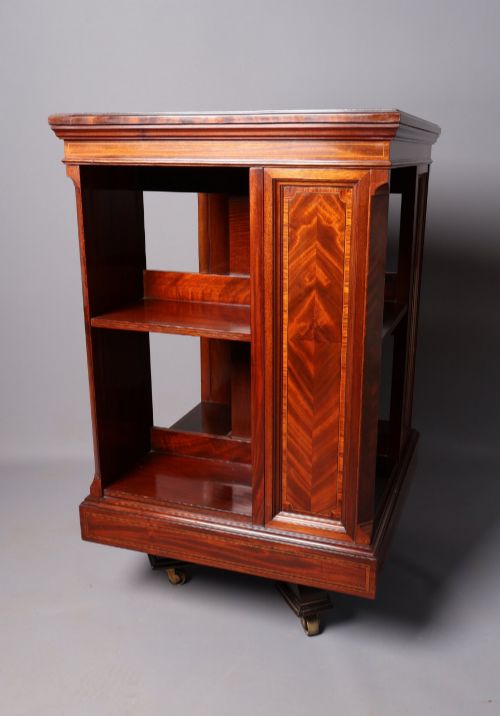
Structural refinement also separates standard production from exceptional work, visible in the taper of square legs and the smooth operation of folding leaves or revolving tiers. The longevity of the finish depends on how evenly the polished surface has aged over the decades.
The Square Satinwood Tables Glossary
- Satinwood
- A dense, lustrous timber prized for its golden-yellow sheen and smooth grain. It served as the primary surface veneer on many eighteenth and nineteenth-century decorative tables.
- Marquetry Inlay
- The art of forming decorative patterns using thin slices of various coloured woods and other materials. Craftsmen fitted these pieces precisely into prepared recesses on the table top.
- Cross Banding
- A border technique where thin strips of veneer are laid around the perimeter of a table top so the grain runs perpendicular to the centre. This frames the main panel and protects vulnerable edges.
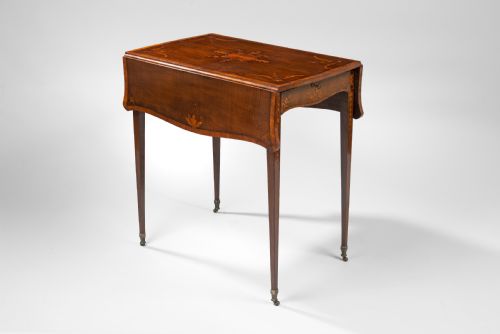
- Pembroke Table
- A small rectangular table featuring two hinged drop leaves on opposing sides. It often includes a single drawer and slender tapered legs.
- Envelope Card Table
- A clever games table design with a square top that unfolds like an envelope to reveal a baize-lined playing surface. The rotating leaves rest on hinged supports.
Square Satinwood Tables: Frequently Asked Questions
How do I care for satinwood?
Keep these tables out of direct sunlight to prevent the golden timber from darkening or bleaching unevenly over time. Dust gently with a dry cloth and apply a quality furniture wax sparingly to nourish the polished surface.
Avoid placing damp items or hot cups directly on the wood, as moisture and heat can penetrate the polish and leave lasting marks. Use coasters and mats to protect the delicate veneer and inlay work.
Where should I place a square table?
A square satinwood table fits neatly into corners, beside armchairs, or as a central lamp stand in a modest hallway. Their compact footprints make them versatile additions to both traditional and contemporary interiors.
Avoid areas subject to sudden temperature shifts or radiator heat, which can cause timber to dry out and veneers to lift. Stable room conditions ensure the joints and polished surfaces remain undamaged.
How do I tell Edwardian pieces apart?
Edwardian interpretations often draw inspiration from earlier Sheraton designs, featuring lighter frames, restrained stringing, and bright mahogany contrasts. These pieces frequently rely on machine-assisted precision alongside traditional hand finishing.
Earlier examples from the eighteenth century tend to show greater depth in the hand-cut marquetry and heavier structural framing. Examining the secondary woods underneath helps clarify the manufacturing era.
Were these tables used daily?
Many card tables, pembroke tables, and occasional stands served active roles in period drawing rooms for writing, gaming, and tea service. Their folding leaves and drawers accommodated changing domestic needs throughout the day.
Despite their delicate appearance, the construction was sturdy enough for regular use by families. Today, they transition easily from functional surfaces to display pieces for decorative objects.