
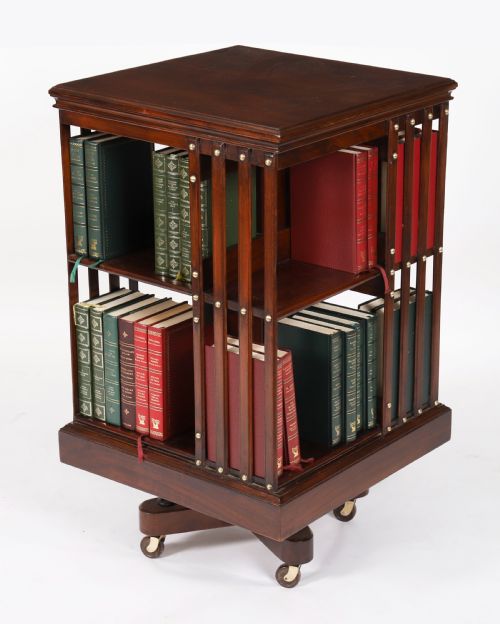


Square Revolving Table
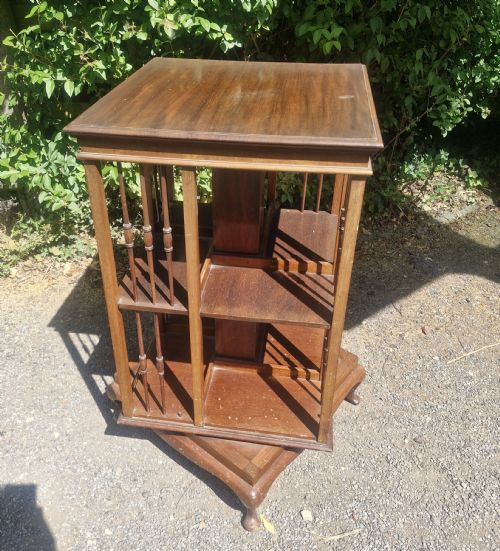
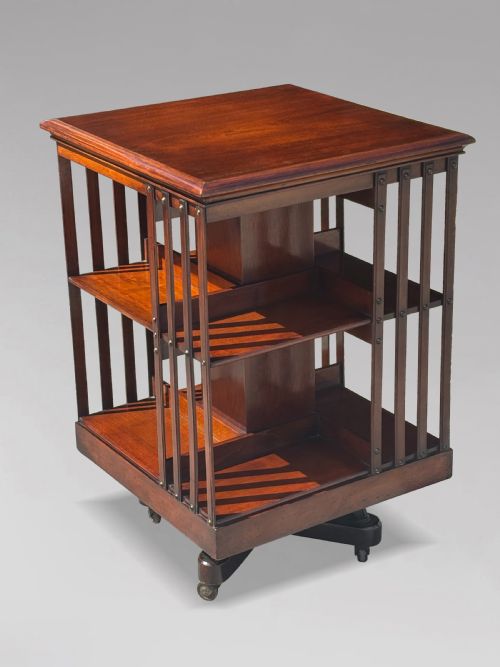
A square revolving table, seen here as a revolving bookcase, is a clever rotating stand that keeps volumes close at hand.
Square Revolving Table
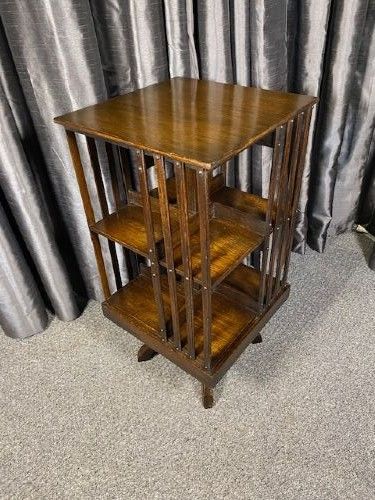
A square revolving table takes the form of a rotating bookcase, designed to sit beside a desk or chair for easy access to volumes. When you search for a square revolving table, you are looking at rotating tiered furniture meant to hold books upright within reach. These practical stands turn smoothly on a central pivot.
The versions met most often on this page date from the Victorian and Edwardian periods, stretching from the late nineteenth century into the early twentieth century. They appear in compact single tier forms as well as taller four shelf variations. Origins span English workshops and French provincial designs.
Makers utilised various timbers for these pieces, producing both small oak examples and larger inlaid models. The revolving mechanism allows a reader to browse an entire collection from a single seated position. Every piece combines sturdy timber construction with functional rotational hardware.
How they were made
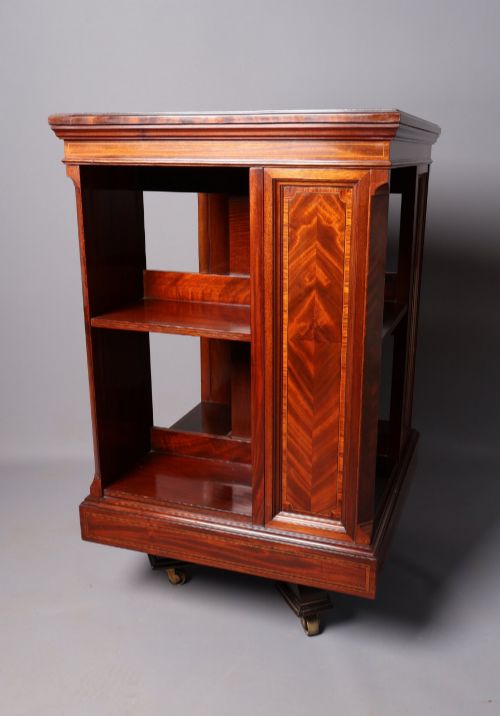
Cabinet makers constructed these revolving units using solid hardwoods and veneers, selecting mahogany, walnut, and oak for their strength and grain. Timber panels form the slatted or panelled sides that keep volumes secure during rotation. Satinwood inlay frequently decorates the top surfaces and borders of finer Edwardian examples.
Internal mechanisms rely on metal components, including brass and cast iron pivots that bear the weight of heavy books while permitting smooth turning. Joinery methods connect the tiers securely to the central turning post. Iron and brass hardware also appears on structural supports and decorative trims.
A good spin test reveals a quiet, balanced turn that makes selecting your next evening reading feel like a game show.
What varies in quality
The distinction between standard examples and superior pieces rests on the choice of timber and the precision of the turning mechanism. Finer items display carefully selected mahogany or walnut veneers, accompanied by crisp satinwood inlay. Simpler pieces rely on plain oak or standard timber without decorative embellishment.
Mechanical execution separates ordinary stands from exceptional ones through the silence and balance of the rotation. A well-adjusted brass or cast iron pivot allows the tier to turn without wobbling or sticking. The density of the wood and the tightness of the joinery determine the longevity of each rotating stand.
Maple & Co
The Square Revolving Table Glossary
- Revolving bookcase
- A tiered rotating stand designed to hold books within arm's reach. These pieces turn on a concealed central pivot.
- Satinwood inlay
- A decorative technique using contrasting light timber veneer to create patterns on furniture surfaces. It appears frequently on Edwardian pieces.
- Cast iron
- A heavy, durable metal alloy utilised for internal structural components and turning mechanisms. It provides stability to the rotating base.
- Chippendale style
- A decorative aesthetic drawing on eighteenth century English furniture designs. Pieces in this style feature characteristic carved details and proportions.
Square Revolving Table: Frequently Asked Questions
How do I date a revolving bookcase?
Dating these pieces involves examining the timber selection, decorative techniques, and hardware construction. Edwardian examples often feature satinwood inlay and lighter mahogany tones, while earlier Victorian pieces tend to be heavier.
The materials used in the internal pivot mechanism also offer clues to the period. Cast iron and brass components evolved over the nineteenth century, reflecting changing manufacturing methods.
Where should I place one?
These rotating stands suit studies, libraries, and living rooms where books need to be kept close to seating areas. Their ability to turn means they fit comfortably beside armchairs or corner desks without blocking access.
Because all four sides hold volumes, they work effectively when placed slightly away from walls. This positioning allows the revolving action to be used to its full capacity.
Are French provincial models different?
French provincial revolving bookcases offer distinct regional interpretations of the rotating furniture form. They share the core functional mechanics of English pieces while displaying lighter proportions and continental detailing.
These variations provide alternative aesthetic choices for interiors while retaining the practical tiered storage of standard models.