
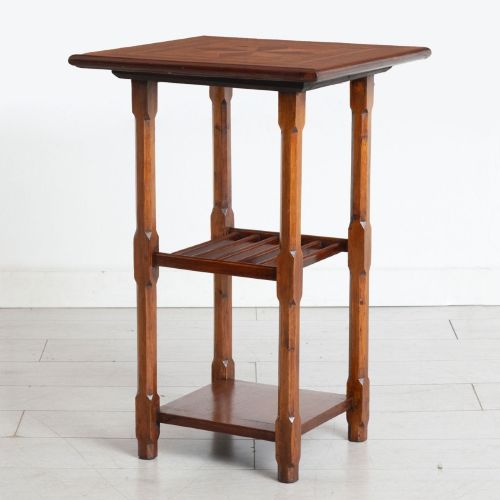
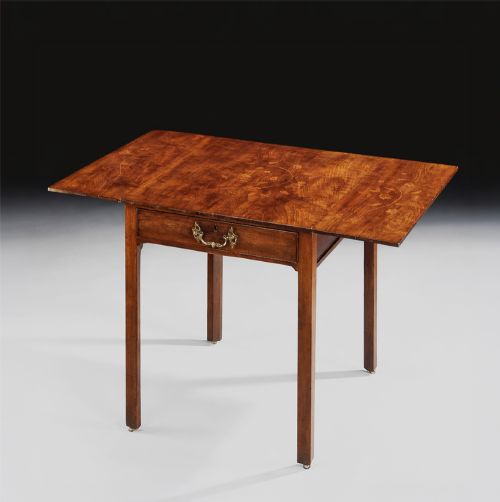
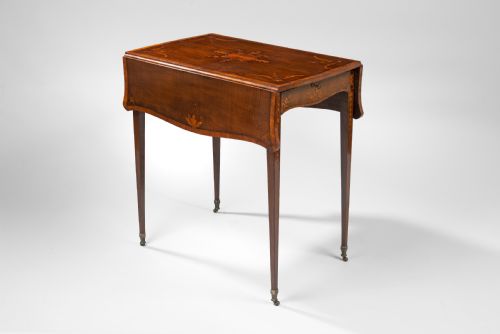


Square Marquetry Table
A square marquetry table brings geometric precision and detailed wood veneers into a room, offering surface pattern and period charm.
Square Marquetry Table
A square marquetry table takes several historical forms, appearing most frequently on this page as an Edwardian occasional, card, or lamp table. These pieces span from the 18th century through the Edwardian era to the 1920s, incorporating Georgian and Sheraton revival designs alongside Arts and Crafts or Louis XV styles.
Makers utilised various timber types to achieve contrasting tones across the top surface, creating geometric or pictorial inlay. Beyond standard occasional tables, the inventory includes specific functional forms such as envelope card tables, games tables, and coffee tables.
Materials and Technique
Carpenters constructed these tables using solid framework timbers like mahogany, walnut, and rosewood, applied with finer wood veneers such as satinwood and harewood. Boxwood inlay and boxwood stringing frequently define the borders and geometric panels of the top surface.
Marquetry technique involves cutting contrasting veneers by hand and assembling them into intricate pictorial or patterned compositions before fixing them to the carcase. Additional detailing sometimes incorporates brass mounts or bone inlay, depending on the regional origin of the piece.
One exceptional Ceylonese specimen games table hides its origins in intricate woods, while another Damascus piece uses mother of pearl for tiny geometric stars.
What Varies in Quality
The refinement of the veneer work dictates the standing of a piece, distinguishing simple linear stringing from elaborate pictorial marquetry compositions. Precision in the cutting and fitting of individual wood elements prevents gaps and lifting along the surface.
The choice of primary timber and secondary woods affects the structural integrity and visual depth of the table. Sustained stability in the joints and preservation of the original polished finish separate superior examples from standard production.
The Square Marquetry Table Glossary
- Marquetry
- Decorative veneer applied to wood structures in patterns or pictures. This technique uses thin slices of various timbers to create tonal contrast on the tabletop.
- Satinwood
- A durable hardwood with a natural golden sheen. Cabinet makers prized this material for its bright surface reflection in decorative inlay.
- Envelope table
- A card table with a four-flap folding top that opens like an envelope. The hinged leaves reveal a lined playing surface when unfolded.
- Pembroke table
- A drop-leaf table with hinged flaps on two opposing sides. These versatile pieces often feature single drawers and slender legs.
Square Marquetry Table: Frequently Asked Questions
How do I date a marquetry table?
Dating relies on identifying the underlying furniture style, secondary woods, and construction methods. Pieces from the 18th century often show Georgian or Sheraton proportions, while Edwardian versions utilise lighter satinwood veneers and simpler turned or tapered legs.
Revival pieces from the 1920s emulate earlier French or English designs but utilise machinery-cut veneers and distinct internal framing. Examining the underside and drawer linings confirms the period of manufacture.
Where were these tables made?
The listings show English workshops producing the majority of Sheraton and Edwardian pieces, alongside French makers producing Louis XV style tables. Other regional origins include Italian, Ceylonese, and Anglo-Indian workshops.
Each region utilised native timbers and characteristic inlay techniques, such as sandalwood and bone work on Moorish or Anglo-Indian examples.
How should I care for a veneered surface?
Veneered and marquetry surfaces require protection from direct sunlight and extreme humidity changes to prevent the wood from warping or the glue from drying. Regular dusting with a soft, dry cloth maintains the polished finish without damaging the delicate wood pieces.
Avoid placing damp items or hot cups directly on the timber. Applying appropriate wax occasionally preserves the lustre of the satinwood and mahogany.