




Square Cluster Ring
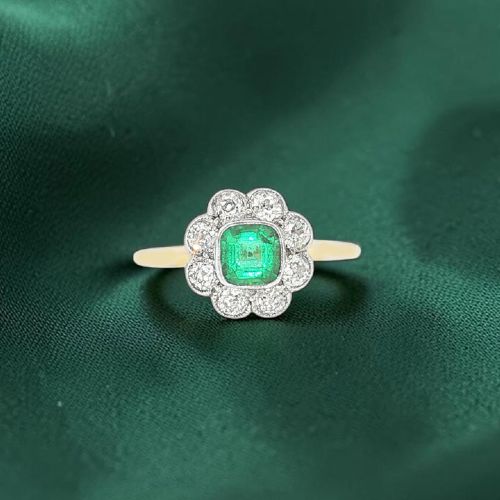
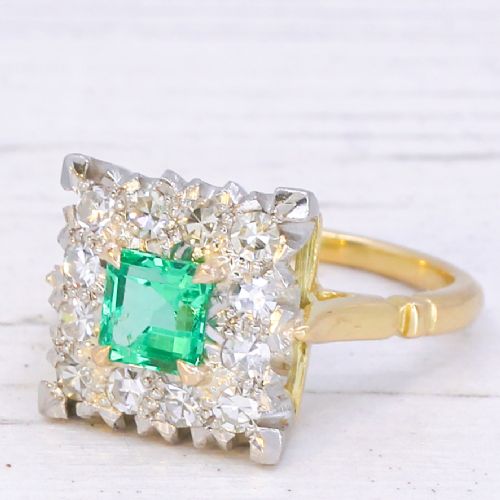
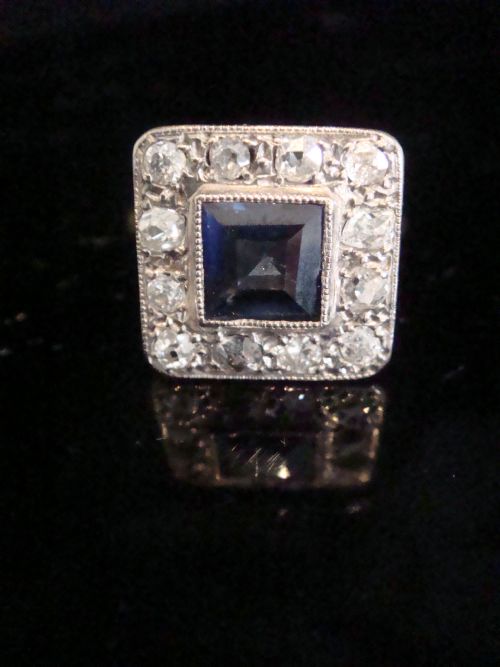
A square cluster ring brings geometric symmetry to the hand, combining a central gemstone with a tight border of sparkling diamonds.
Square Cluster Ring
A square cluster ring presents a distinct geometric silhouette, arranging stones in a neat angular form rather than the traditional oval or round shape. When you search for a square cluster ring, you encounter pieces spanning from the Edwardian era through the Art Deco period and into the mid-century decades.
The Art Deco examples dominate the selections, favouring sharp lines, platinum settings, and precise checkerboard or panel arrangements. Alongside these, Edwardian interpretations appear with softer yellow gold bands, seed pearls, and old-cut diamonds.
Engagement rings and cocktail pieces both populate this group, utilising central stones such as emeralds, rubies, sapphires, and aquamarines framed by borders of smaller diamonds. Platinum and eighteen-carat gold serve as the primary foundations for these geometric designs.
Materials and Construction
The makers of these rings relied heavily on platinum and eighteen-carat gold, often combining yellow gold shanks with platinum-topped settings to enhance the brilliance of white diamonds. Platinum offered the structural strength required for the delicate millegrain edges and intricate geometric galleries characteristic of the Art Deco period.
Central gemstones - including emeralds, rubies, sapphires, and aquamarines - were selected for vibrant colour and paired with old-cut, princess-cut, or baguette diamonds. Metalwork techniques included precision claw settings, channel work, and hand-pierced galleries that allowed light to pass through the cluster.
Some Edwardian rings tucked tiny seed pearls right beside fiery rubies, proving Victorians and Edwardians loved an unexpected textural contrast.
Assessing Quality
Quality in these rings rests upon the precision of the geometric arrangement and the integrity of the stone setting. A superior piece displays tight, uniform alignment among the surrounding diamonds, with no visible gaps or uneven spacing in the border.
The depth of colour and clarity in the central stone - whether emerald, ruby, sapphire, or aquamarine - dictates the overall distinction of the piece. Master craftsmanship shows in the crispness of the millegrain work and the retention of original metal thickness along the shoulders and band.
The Square Cluster Ring Glossary
- Cluster ring
- A ring design featuring a central gemstone encircled by a group of smaller stones, typically diamonds.
- Carré cut
- A square step-cut diamond or coloured gemstone with straight sides and sharp corners, frequently utilised in Art Deco geometry.
- Millegrain
- A decorative technique creating a fine border of tiny raised metal beads along the edges of a setting.
- Panel cluster
- A flat or slightly domed geometric grouping of stones arranged to create a solid visual surface on the finger.
- Old-cut diamond
- A hand-faceted diamond shape common in antique jewellery, characterised by a smaller table and higher crown.
Square Cluster Ring: Frequently Asked Questions
What periods do square cluster rings come from?
These rings originate primarily from the Edwardian era and the Art Deco period, with additional examples from the mid-century decades. The geometric aesthetic aligns closely with nineteen-twenties and nineteen-thirties design.
Later interpretations also appear from the nineteen-fifties and nineteen-sixties, maintaining the angular cluster format using updated stone cuts.
Are these rings suitable for daily wear?
Many buyers select these pieces for engagement rings, though antique and vintage settings require thoughtful care during daily activities. Platinum and eighteen-carat gold provide durable foundations for regular use.
Certain softer central stones, such as emeralds or seed pearls, need gentle handling compared to diamonds and sapphires.
What gemstones are found in these rings?
Diamonds form the essential border or central focus of nearly every cluster, paired frequently with emeralds, rubies, sapphires, and aquamarines. Natural emeralds and sapphires appear alongside older diamond cuts like old European and single cuts.
Occasional pieces introduce alternative elements such as seed pearls alongside rubies and diamonds.