

Sporting Landscape
Sporting landscape works capture the energy of rural pursuits, horses, and hounds across centuries of British painting and printmaking.
Sporting Landscape
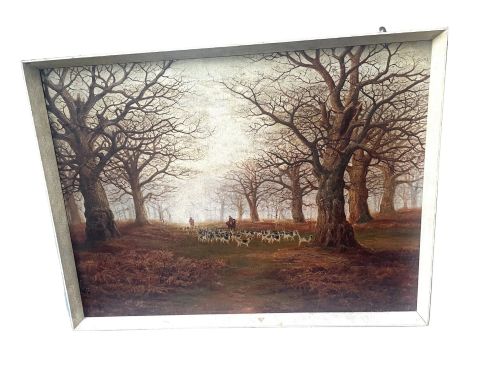
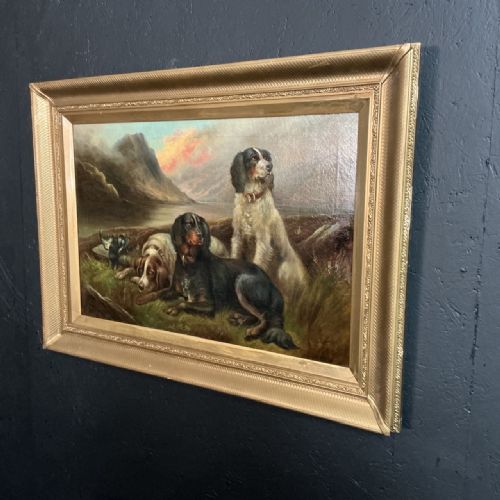
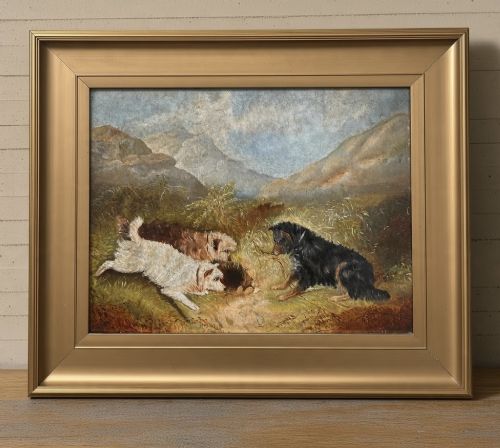
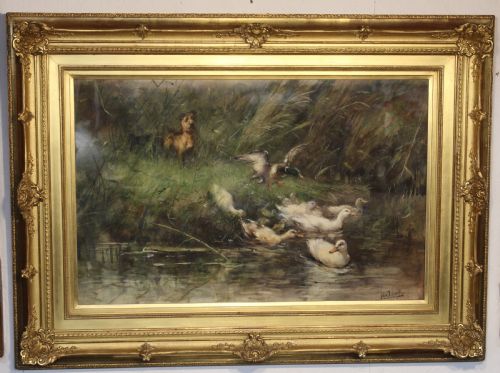
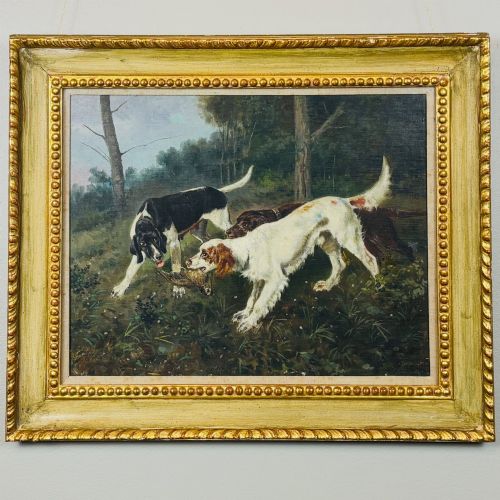
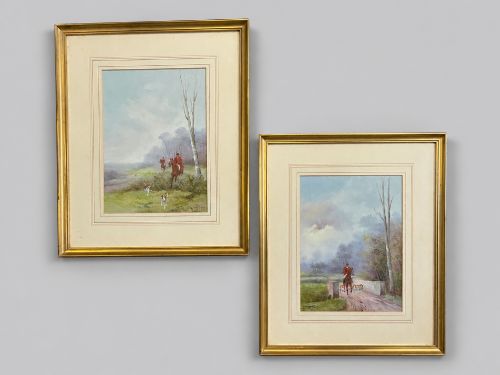
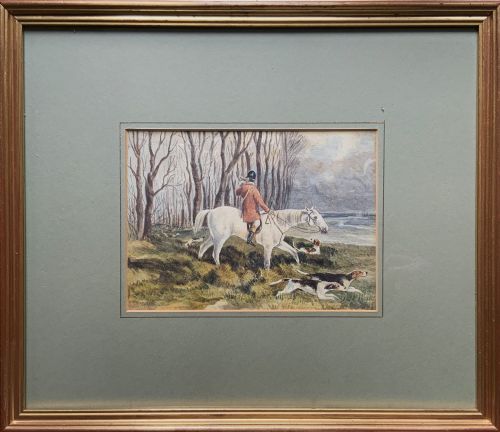
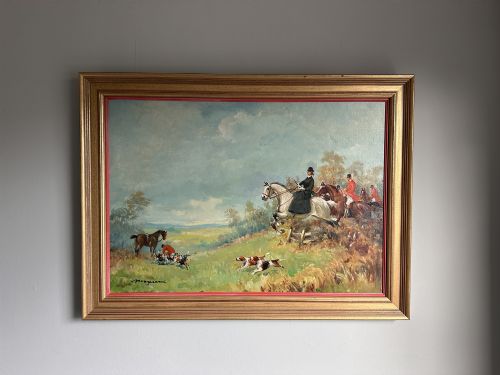
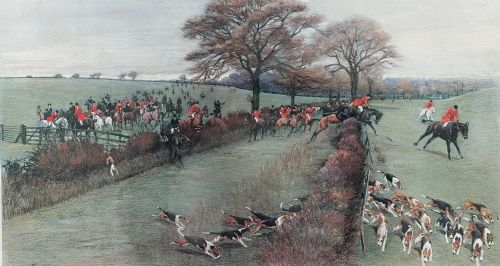
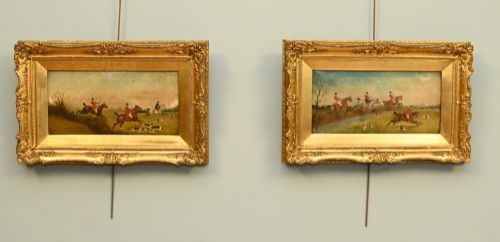
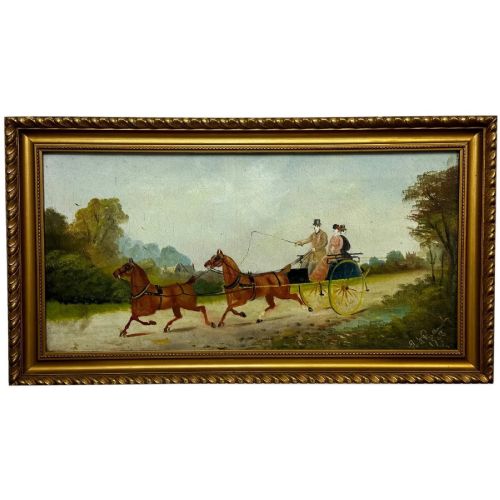
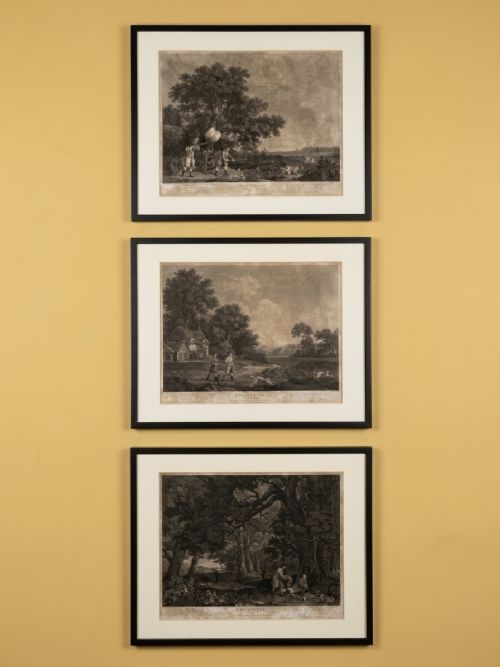
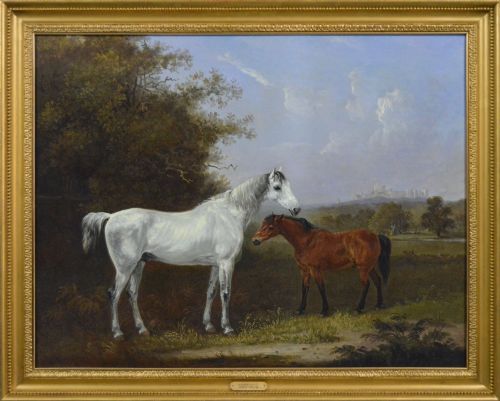
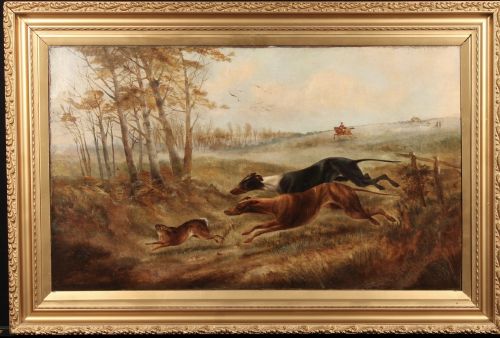
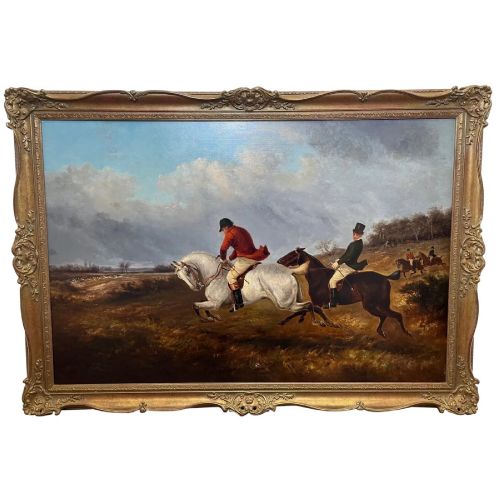
A sporting landscape brings together the traditions of field sports, equestrian portraiture, and open-air scenery. These works record horses, hunting hounds, gun dogs, and coaching scenes set within defined British countryside views.
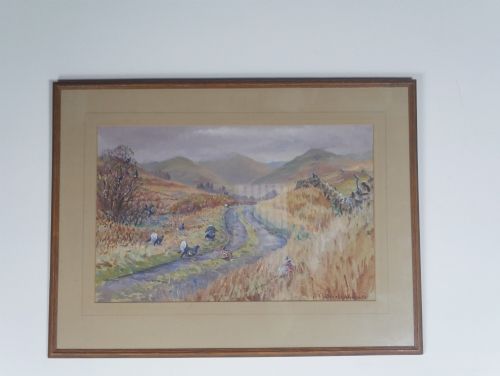
The selections encountered here span from the Georgian period through the Victorian era and into the Edwardian years. Oil paintings on canvas dominate the selection, alongside paper prints, posters, and watercolours.
Makers and painters range from notable animal and sporting artists to regional practitioners of the nineteenth and early twentieth centuries. Each canvas or print reflects the prevailing tastes of landowners, hunts, and rural communities of its time.
How they were made
Artists applied oil paint to stretched canvas or prepared panels, building up layered compositions of animals, figures, and atmospheric skies. Finer works relied on detailed brushwork to capture the sheen of a horse coat or the texture of a hound fur.
Framing often involved carved wood and gesso frames finished with gold leaf or giltwood, serving to protect and define the edge of the canvas. Paper prints and posters utilised contemporary reproductive techniques of the nineteenth and early twentieth centuries.
Sporting Landscape Retail Price Guide 2026
Typical asking prices for sporting landscape among the pieces listed under this phrase on Sellingantiques today, from the lower quarter to the upper quarter. They describe what is for sale here now, not the wider market.
Steam locomotives occasionally share the rural horizon with galloping horses and hunting hounds.
What varies in quality
Anatomy and movement separate accomplished painting from stiff execution, particularly in the rendering of horses and hounds in action. The best works show a precise understanding of animal posture and interaction with the surrounding terrain.
Compositional balance determines the visual success of the piece, with superior artists integrating sky, landscape, and subjects into a unified scene. The handling of light and distance adds depth to the painted countryside.
Cecil Charles Windsor Aldin·Philip H Rideout·Edmund Bristow·George Stubbs·George Armfield·Thomas Smythe·John Sargent Noble·Sir Edwin Henry Landseer·George Wright·Edward Priestley·C R Breytle·John Emms·John Ferneley Senior·John Frederick Herring Senior·Arthur Wardle·C W Tuck·John Sanderson Wells·William Barraud·Fannie Moody·Colin Graeme Roe·John Frederick Herring Jnr·Clifton Tomson·Paul Jones·Samuel Henry Alken·John Charles Tunnard
The Sporting Landscape Glossary
- Oil on Canvas
- A painting medium where pigments suspended in drying oils are applied to a woven fabric support. This surface allowed artists to achieve rich textures and deep colour blending.
- Giltwood
- Wood carved and coated with gold leaf or metallic paint for decorative framing. It provided a traditional, reflective border for oil paintings.
- Gesso
- A plaster mixture applied to wood or canvas as a base for paint or gilding. It created a smooth surface for detailed decorative work on frames.
- Equestrian
- Pertaining to horses, their riding, or depiction in art. This genre formed a major component of British rural painting.
- Engraving
- A printmaking technique where an image is incised into a metal plate with a cutting tool. The resulting lines held ink to produce detailed impressions on paper.
Sporting Landscape: Frequently Asked Questions
What is a sporting landscape painting?
A sporting landscape combines traditional rural scenery with subjects such as horses, hounds, shooting parties, or coaching scenes. These works reflect the recreational pursuits and agricultural life of the British countryside during the eighteenth, nineteenth, and early twentieth centuries.
Artists focused heavily on the accurate depiction of animals and the specific topography of regional hunts and estates. They served as both records of prized animals and celebrations of rural traditions.
How can I date a sporting painting?
Dating relies on stylistic clues, clothing fashions of any human figures, transport types such as stagecoaches or early locomotives, and artist signatures or biographical dates. Canvas stamps and frame construction also offer reliable chronological markers.
Victorian and Edwardian works often feature brighter palettes and looser brushwork compared to stiffer Georgian compositions. Comparing the subject matter to known historical hunt records can narrow down the creation period further.
Where were these paintings displayed originally?
These works hung primarily in country houses, estate libraries, and the reception rooms of rural gentry and hunt masters. They celebrated local packs, prized hunters, and successful days out in the field.
Later, smaller prints and canvases found their way into suburban homes as public interest in equestrian art and rural nostalgia expanded. Today, they suit traditional studies, hallways, and living spaces.
What subjects appear most often?
Fox hunting scenes, portraits of individual horses and dogs, and coaching journeys dominate the surviving inventory. Landscapes featuring gun dogs with game bags or horses resting near country rivers also recur frequently.
Each subject reflects the close relationship between humans, animals, and the working British landscape across different eras. The inclusion of recognizable local landmarks sometimes links a painting to a specific geographic estate.