


Split Military Chest Drawers
Split military chest drawers are portable campaign chests made in two sections for officers on the move, offering modular storage with enduring utility.
Split Military Chest Drawers
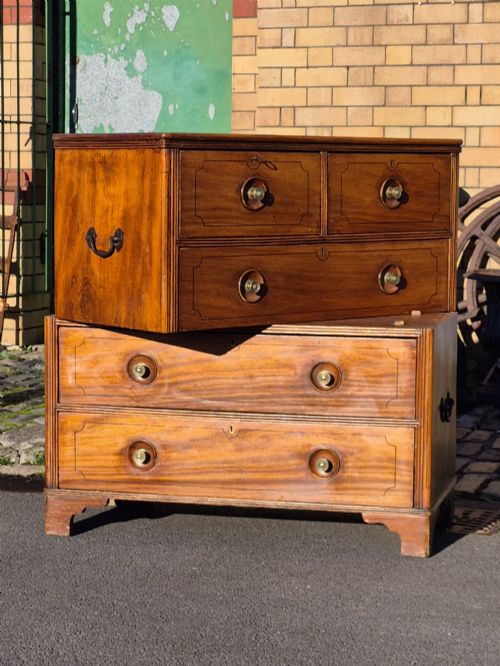
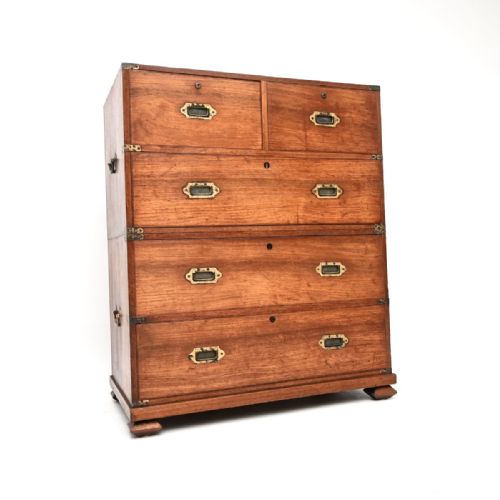
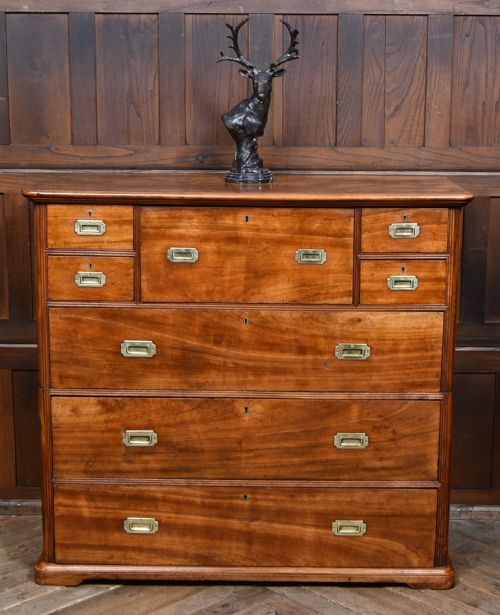
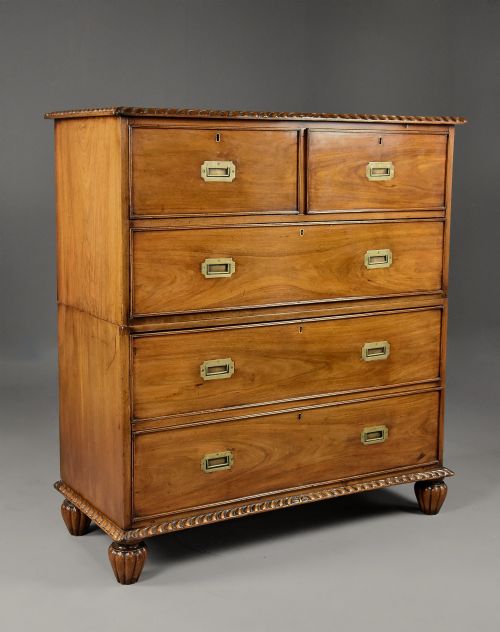
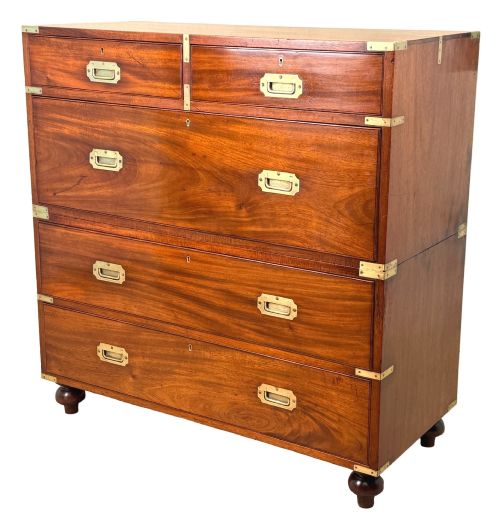
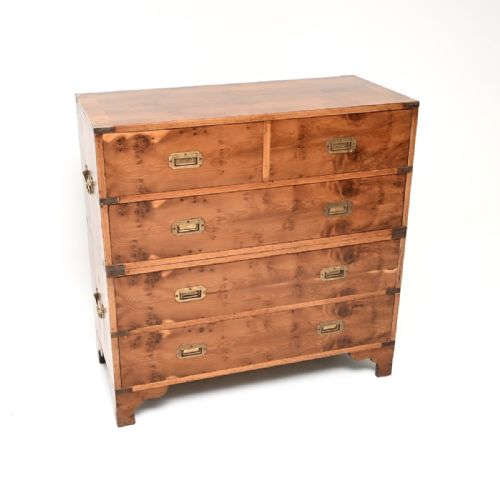
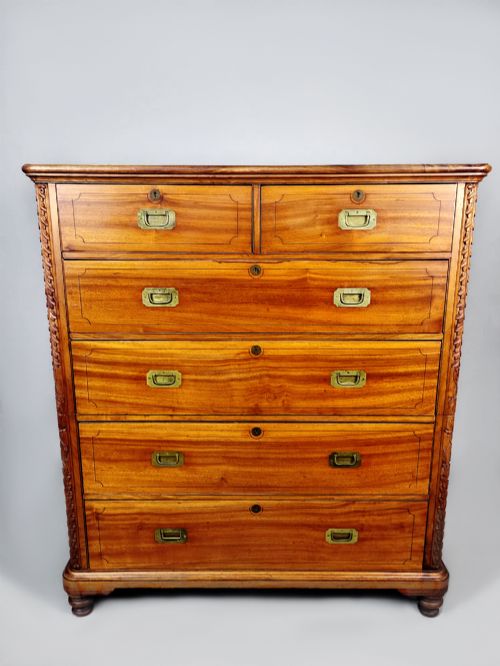
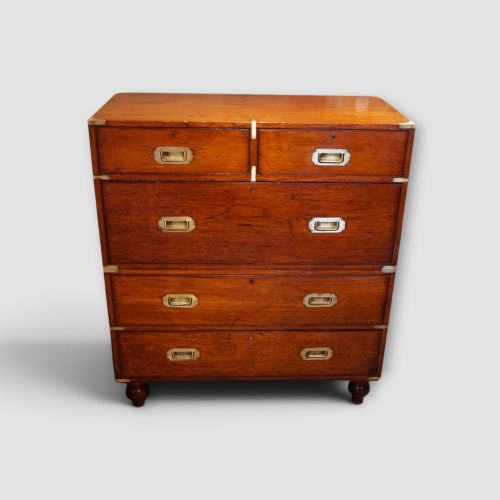
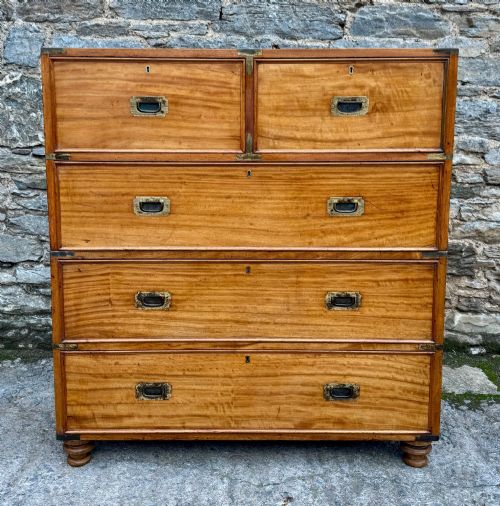
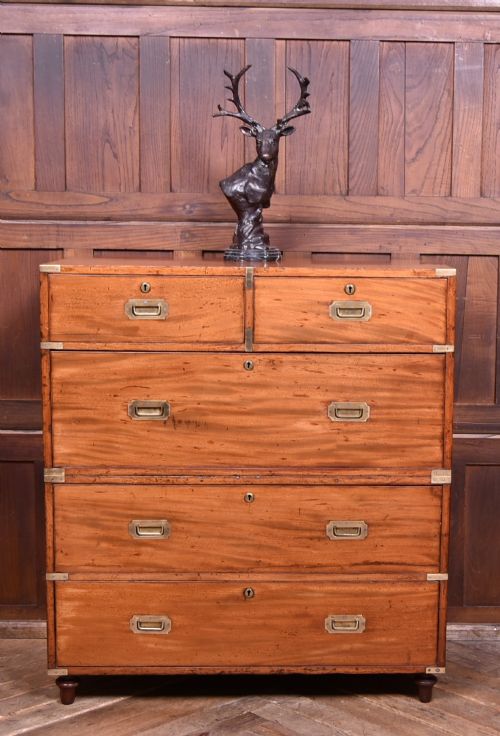
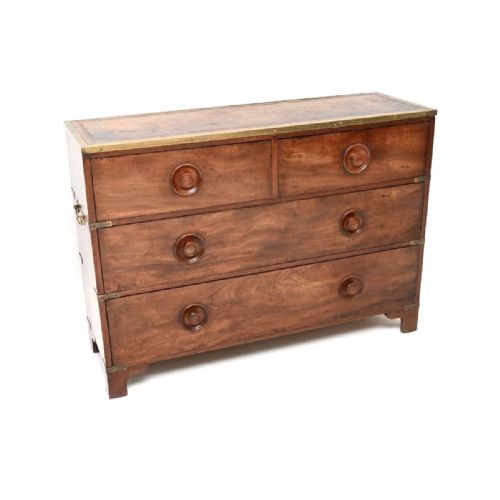
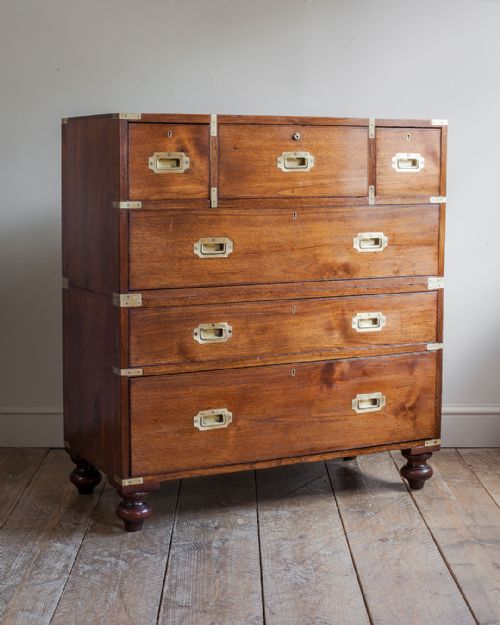
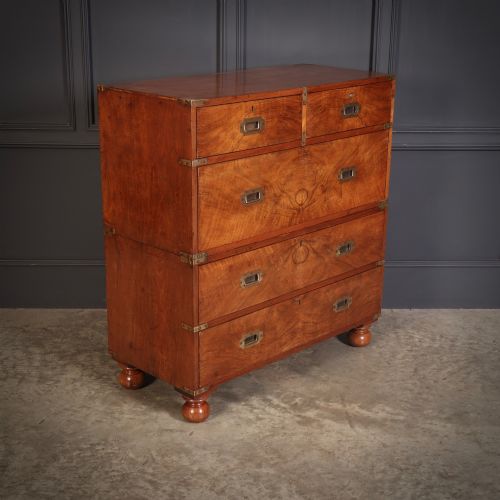
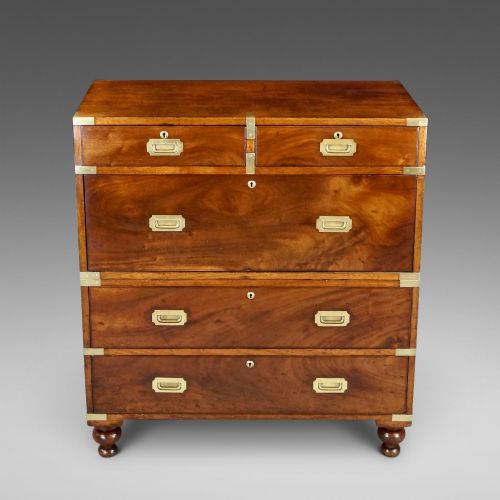
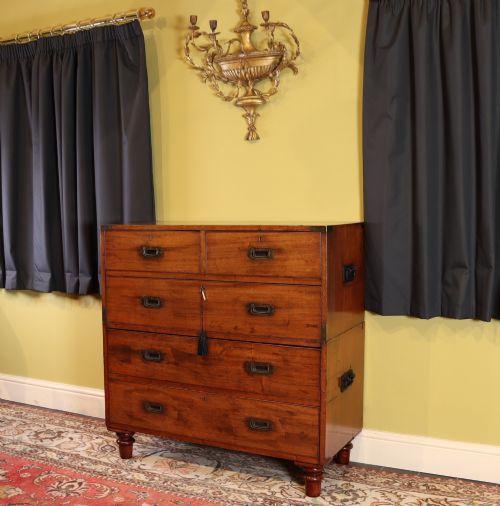
Split military chest drawers are utilitarian storage pieces designed to be dismantled into two separate modular sections for straightforward transport during military campaigns. The version most commonly encountered on this page is the Victorian mahogany or teak chest, constructed in two stacking halves with inset brass handles.
These chests originate primarily from the nineteenth century, spanning periods from the Georgian era through to the early twentieth century. Makers built them for officers who needed robust furniture that could withstand long journeys by ship and wagon.
The form typically comprises multiple drawers, sometimes featuring a secretaire top drawer with a fitted writing desk interior. Regional variations include Anglo-Indian padouk or rosewood examples and Chinese export camphor wood chests.
Materials and Construction
Craftsmen built split military chest drawers using dense hardwoods such as mahogany, teak, padouk, and camphor wood to resist warping and tropical humidity. These timbers were selected for their structural stability and resilience under demanding travel conditions.
Metalwork played a critical structural role, employing brass binding on the corners and edges to protect the wood from heavy knocks during transit. Recessed brass carrying handles on the sides allowed the two sections to be lifted independently.
Joinery had to remain precise and secure, often incorporating flush-fitting components and secret compartments within secretaire drawers. The two sections were typically held together by internal brass securing pins or side brackets.
Split Military Chest Drawers Retail Price Guide 2026
Typical asking prices for split military chest drawers among the pieces listed under this phrase on Sellingantiques today, from the lower quarter to the upper quarter. They describe what is for sale here now, not the wider market.
Listings feature woods including mahogany, teak, camphor wood, oak, padouk, and rosewood, spanning periods from the Georgian era to the 1930s.
Standards of Execution
Quality in these chests rests upon the selection of timber figure, the precision of the brass hardware fittings, and the integrity of the original joints. Superior examples feature well-figured mahogany or solid camphor wood paired with heavy gauge brass corners.
The sophistication of the internal fittings distinguishes finer pieces, particularly those with complex secretaire drawers containing pigeonholes and small drawers. The neatness of the dismantling mechanism and the alignment of the two stacking sections indicate the level of original workshop skill.
S. W. Silver & Co. London & Liverpool·Army & Navy
The Split Military Chest Drawers Glossary
- Secretaire chest
- A chest of drawers featuring a top drawer that pulls down to reveal a writing surface and small internal compartments. This fitted drawer combines desk space with standard storage.
- Campaign chest
- Modular furniture designed to dismantle into sections for military transport. These pieces utilise brass corners and flush handles to prevent snagging.
- Two-part chest
- A piece constructed as two separate stacking halves rather than a single solid carcase. This configuration facilitates easier carriage on campaigns.
- Brass binding
- Flat strips of brass screwed around the edges and corners of chest sections to reinforce the wood. It absorbs impacts during transit.
Split Military Chest Drawers: Frequently Asked Questions
Why do these chests split into two?
Officers on the move required luggage that could be packed and loaded onto pack animals, wagons, or ships without sustaining heavy damage. Splitting the carcase into two manageable sections made transit much easier.
The modular design also allowed servants and baggage handlers to stack and secure the units quickly upon arrival at a new camp or garrison.
How are secretaire drawers used?
The drop-front top drawer functions as an impromptu writing desk for drafting letters, keeping journals, and managing correspondence. Small internal compartments store paper, ink, and pens.
When not in use, the flap locks shut to conceal the writing surface and secure the contents just like a standard drawer.
What woods were used for campaign chests?
Cabinetmakers utilised durable hardwoods such as mahogany, teak, padouk, and camphor wood. These timbers endured tropical climates and resisted splitting during rough journeys.
Camphor wood was particularly favoured for export pieces because its natural scent helped repel insects during long sea voyages.
How do you date a campaign chest?
Dating relies on timber choices, construction methods, and hardware styles, with the nineteenth century producing the highest volume of surviving examples. Earlier Georgian pieces show different dovetailing and simpler brasswork.
Makers' stamps, trade labels, or specific regional characteristics like Anglo-Indian carvings also help narrow down the period of manufacture.