
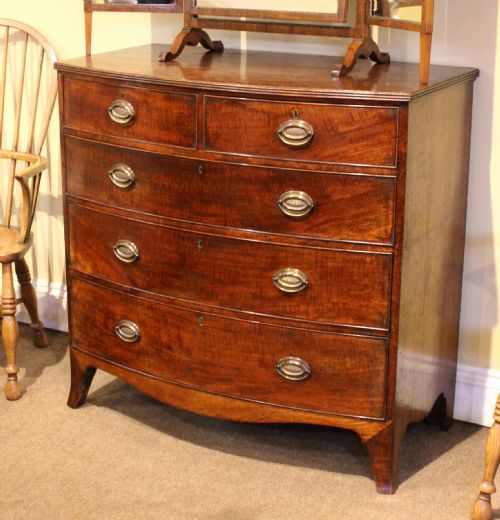


Splay Foot Chest of Drawers
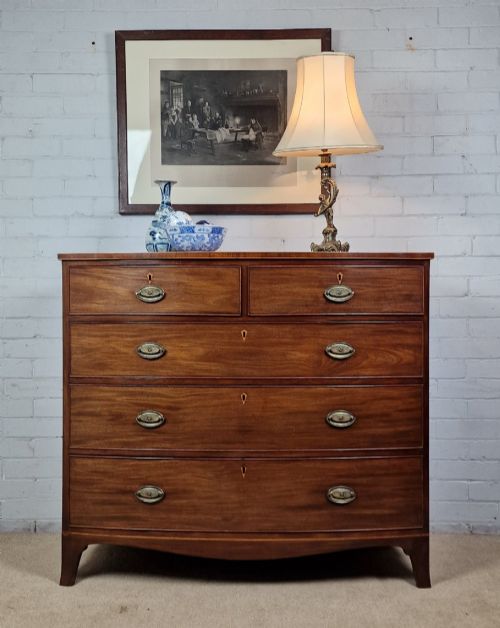
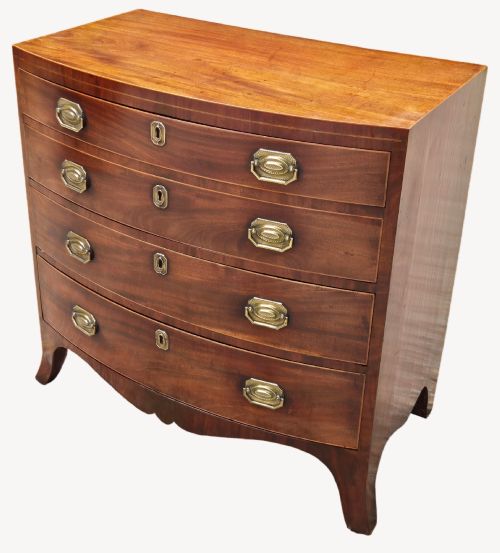
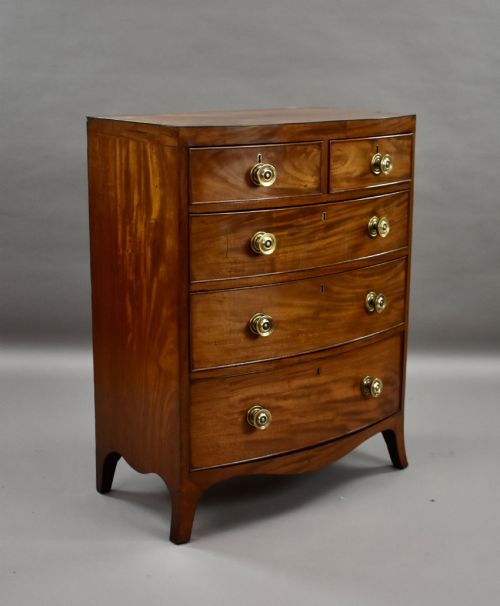
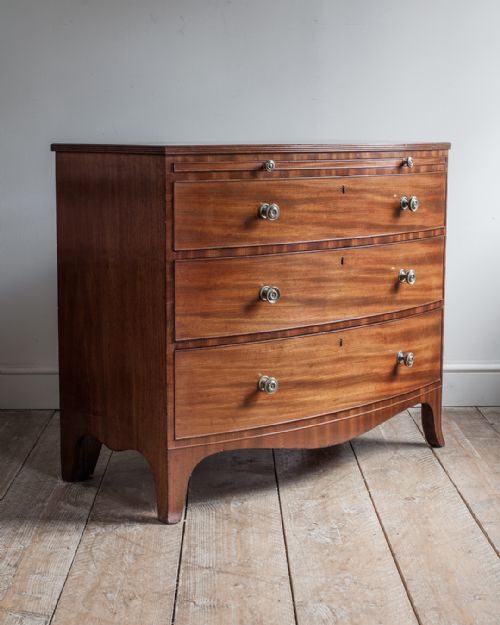
A splay foot chest of drawers is a storage piece defined by its outward-angled feet, offering period character and practical depth for the bedroom.
Splay Foot Chest of Drawers
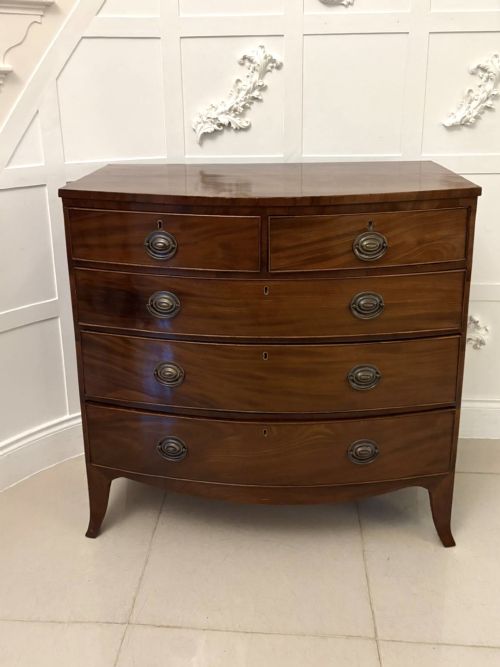
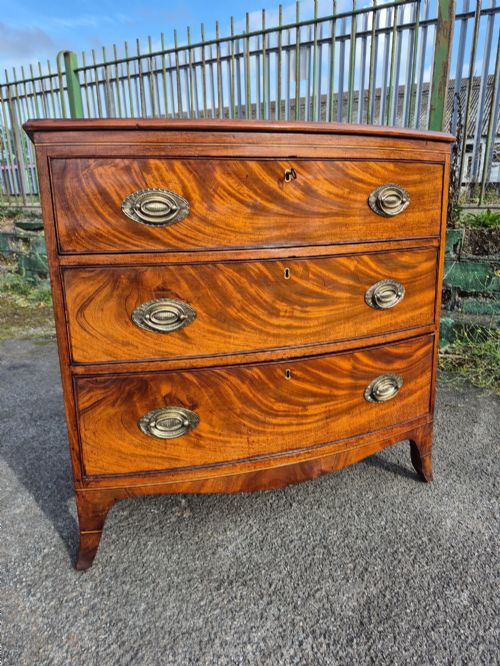
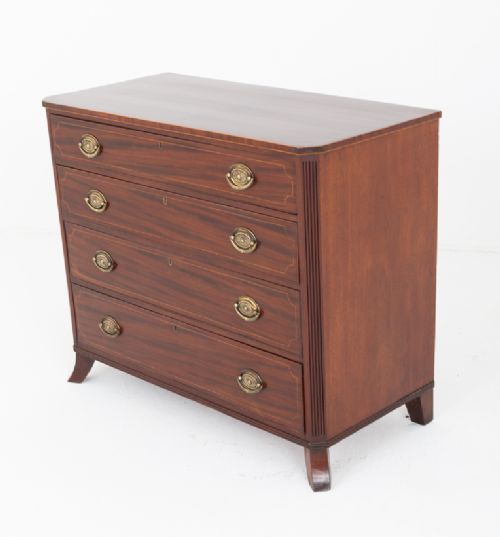
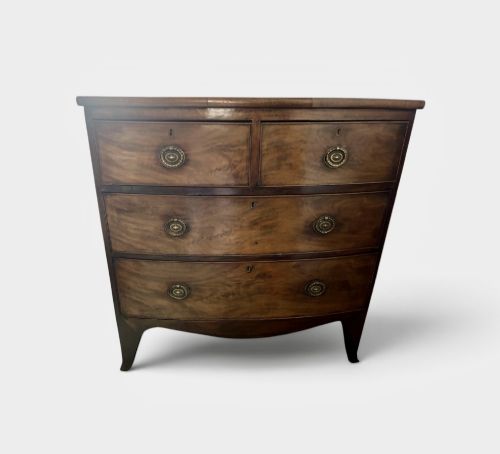
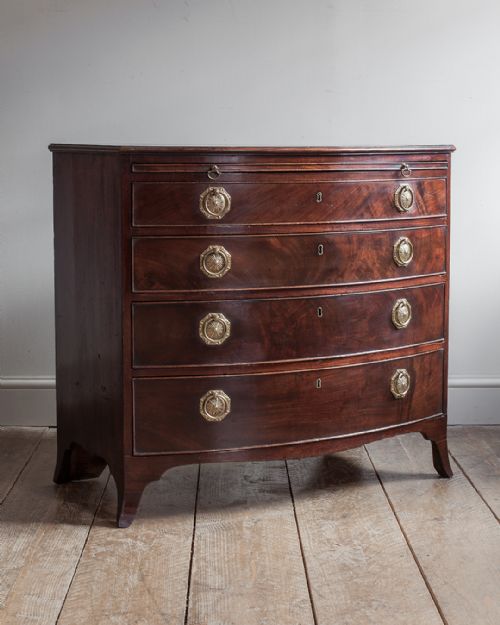
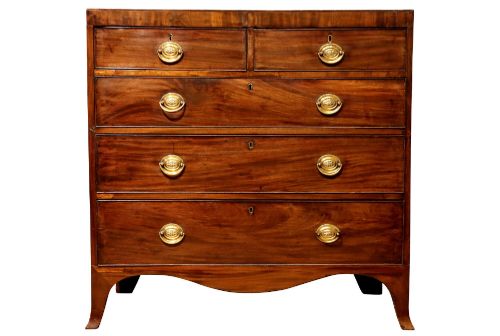
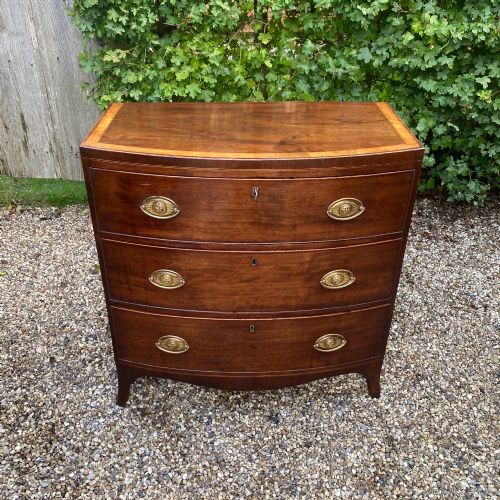
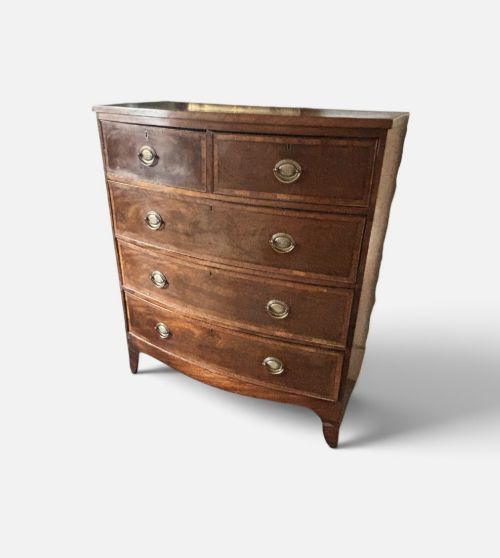
When you search for a splay foot chest of drawers, you encounter pieces primarily from the Georgian, Regency, and 19th-century periods. The selection on this page largely consists of mahogany examples, often featuring bow fronts or narrow proportions suited to domestic spaces.
Makers and cabinetmakers of the 18th and 19th centuries utilised distinctive regional designs, ranging from straightforward oak storage units to refined Hepplewhite and Sheraton creations. These chests balance functional drawer counts with stylistic details like bracket feet and splayed supports.
Materials and construction
Cabinetmakers relied heavily on solid mahogany and oak for the primary carcase and drawer construction, ensuring structural endurance. Secondary woods and decorative veneers such as satinwood, harewood, and boxwood inlay added subtle contrast to drawer fronts and top edges.
The characteristic splayed feet were often integrated directly into the lower frame or attached with robust joinery to support the weight of multiple drawers. Brass hardware, including drop handles and escutcheons, completed the construction alongside hand-cut dovetails on the drawer sides.
Listings feature mahogany, oak, and satinwood across Georgian, Regency, and Edwardian periods.
Judging quality and craftsmanship
Quality rests primarily in the crispness of the timber selection, such as figured mahogany and sharp boxwood stringing, compared to plain or heavily restored surfaces. The integrity of the internal drawer linings and the subtlety of the splay on the feet distinguish superior workshop output from standard production.
Proportion also defines the upper tier of these chests, where narrow or bachelors formats display balanced proportions rather than clumsy alterations. Original brasses and minimal timber replacement elevate an example far above one with heavy structural repairs.
The Splay Foot Chest of Drawers Glossary
- Splay foot
- A foot that spreads outward from the vertical base for stability and style. This form appears frequently on Georgian and provincial pieces.
- Bow front
- A convex curved front that swells outward from the centre. This shape became popular during the late 18th and early 19th centuries.
- Crossbanding
- A strip of veneer applied to the border of a surface with the grain running perpendicular to the centre. It creates a neat framing effect on drawer fronts.
- Dovetail
- A joint formed by interlocking wedge-shaped fingers, securing drawer corners. Hand-cut examples indicate earlier period manufacture.
- Tallboy
- A tall chest of drawers consisting of one chest stacked upon another, or upon a stand. These maximise vertical storage in smaller rooms.
Splay Foot Chest of Drawers: Frequently Asked Questions
Where should I place a splay foot chest?
These chests suit hallways, bedrooms, and living spaces where their compact depth and angled feet provide stability and presence without blocking walkways.
Keep them away from direct heat sources and strong sunlight to protect the mahogany veneer and polish from drying out.
How do I maintain the wood surface?
Dust the timber regularly with a soft, dry cloth and apply a quality beeswax periodically to nourish the grain.
Avoid silicone-based polishes, which build up over time and dull the natural patina of the antique finish.
Are these drawers suitable for daily use?
Period drawers function well for storing folded clothes or linens if opened with care and kept balanced.
Older drawer runners can wear down, so pulling from the centre rather than the side prevents sticking.
How can I date my chest of drawers?
Examine the timber species, handle style, and construction methods like hand-cut dovetails to narrow down the decade.
Georgian and Regency pieces typically show different secondary woods and hardware fixings compared to later Edwardian reproductions.