

Splat Back Carver
These splat back carver chairs combine sturdy timber frames and central back splats to provide supportive seating for dining rooms and desks.
Splat Back Carver
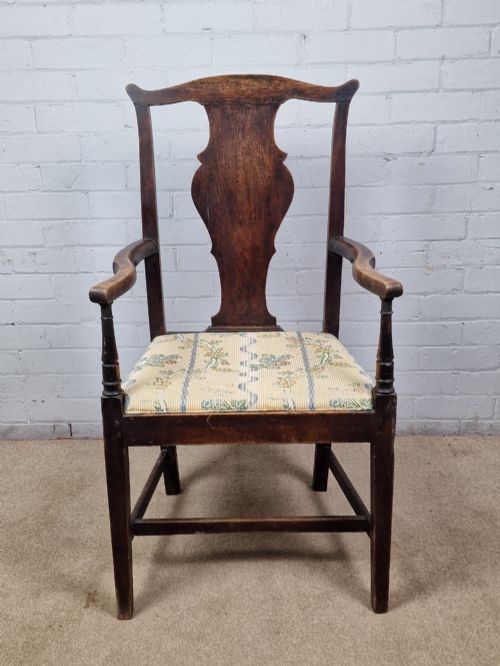
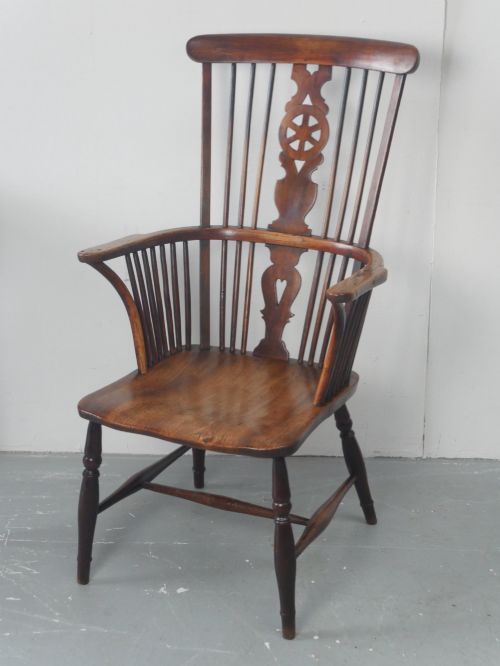
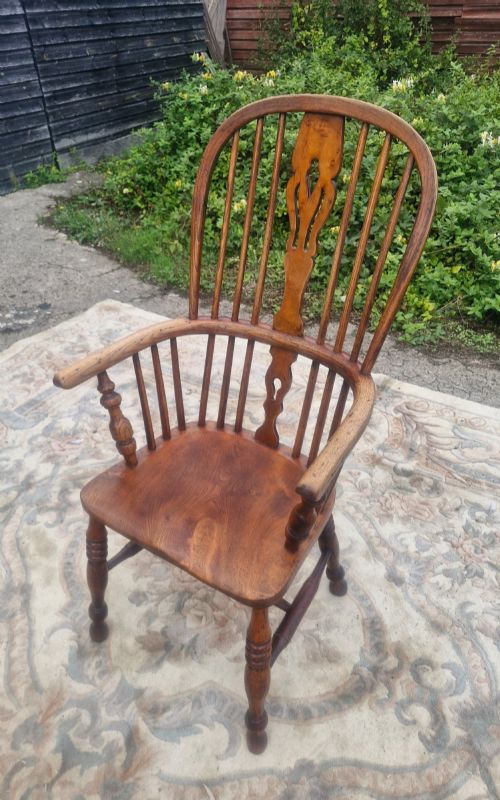
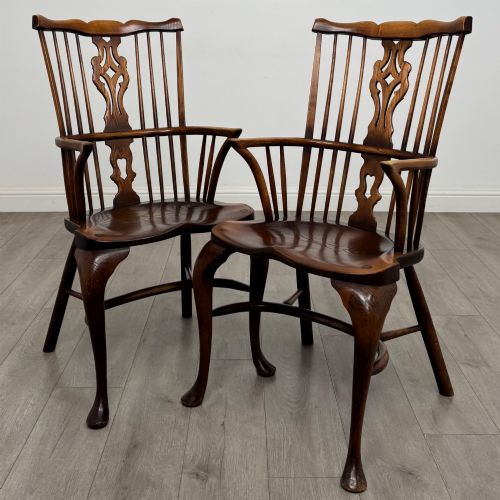
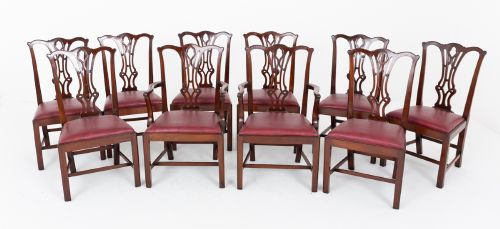
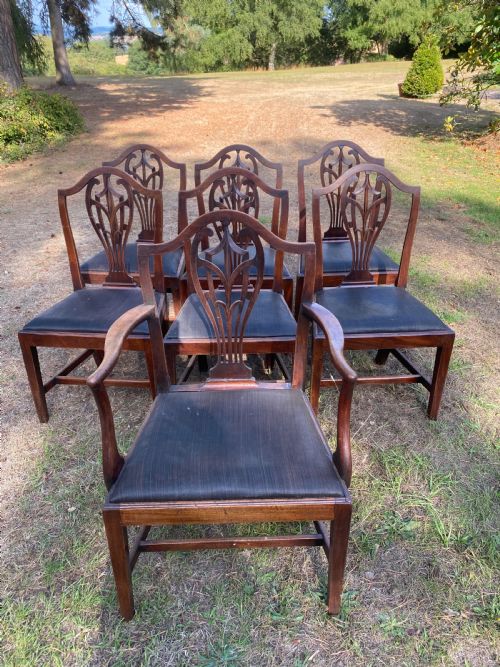
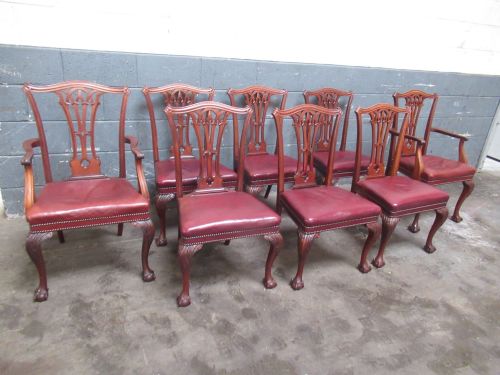
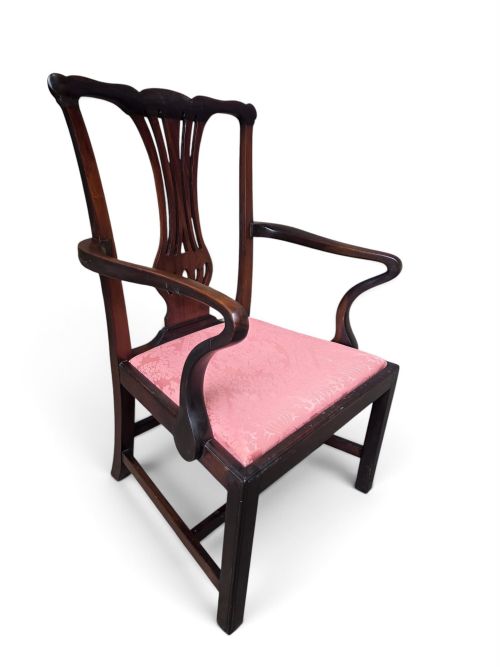
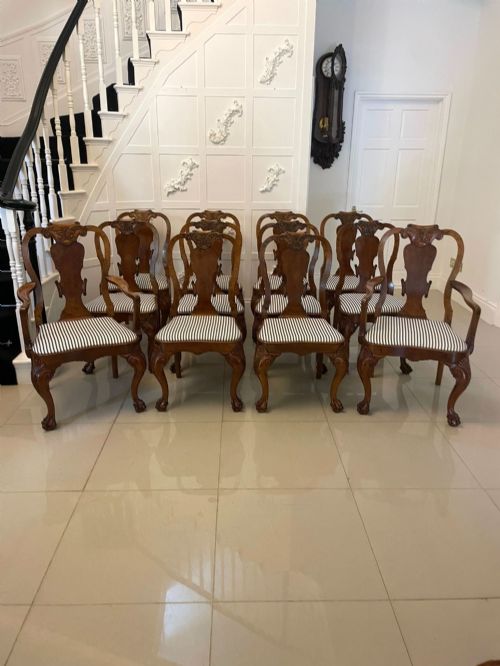
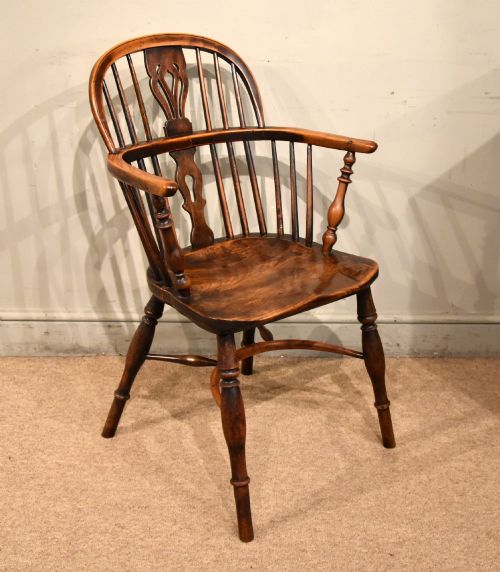
A splat back carver is an armchair featuring a solid central upright piece, known as a splat, running from the seat up to the top rail. You will frequently encounter dining chairs, desk chairs, and country windsor armchairs built in this configuration across the 18th, 19th, and early 20th centuries.
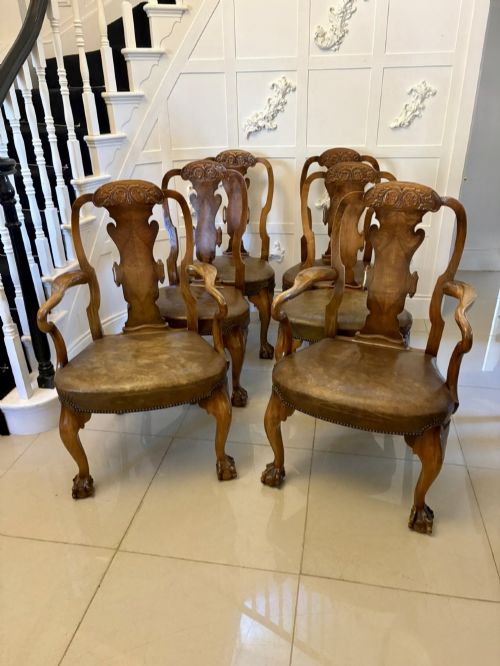
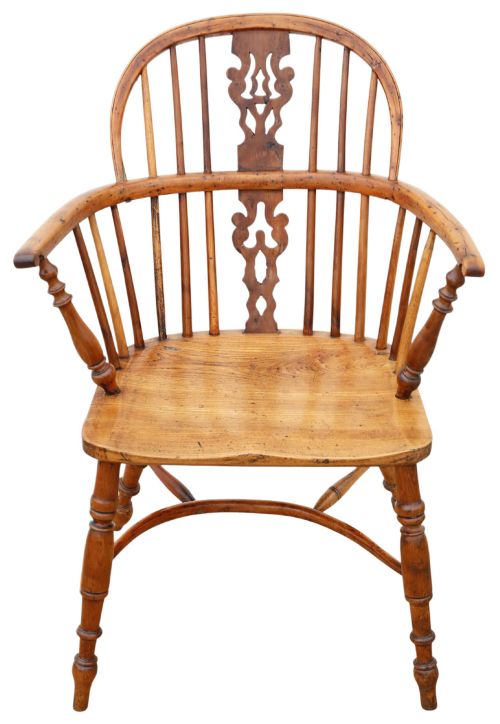
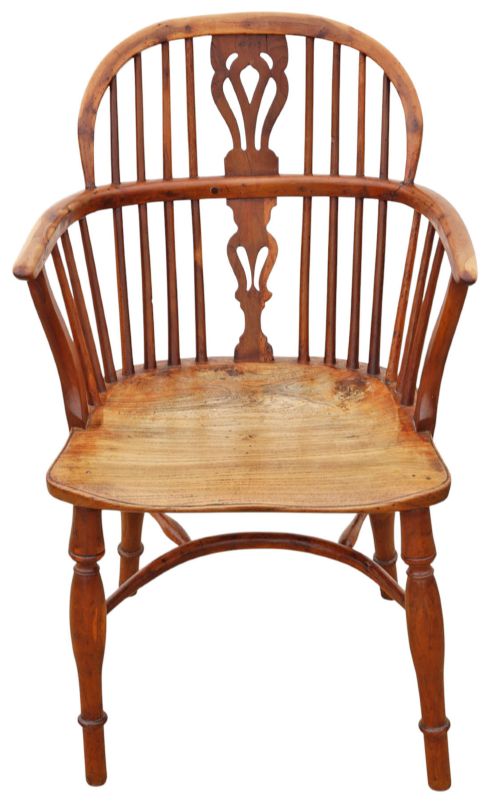
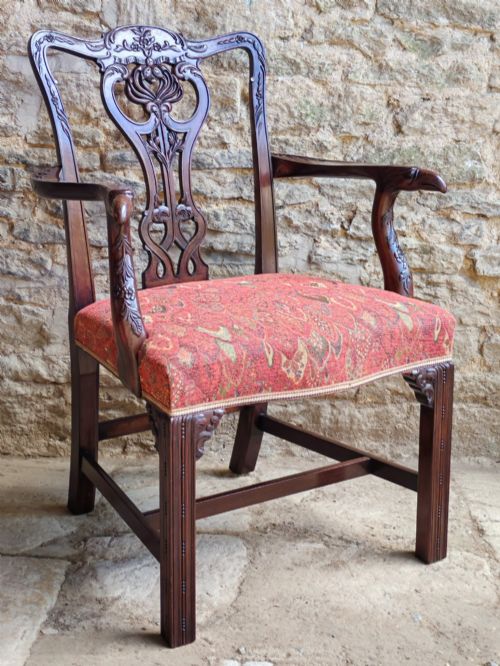
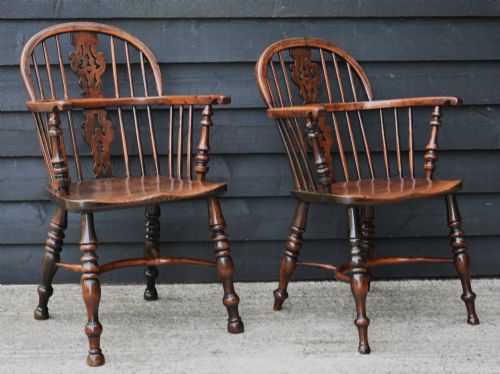
The selections span formal mahogany Chippendale style designs and robust English country vernacular yew and elm windsor armchairs. These seating options served dining rooms, libraries, and morning rooms as principal armchairs or matching ends to dining sets.
Materials and construction
Cabinet makers and vernacular joiners utilised native hardwoods such as mahogany, elm, yew, ash, beech, and walnut. Mahogany suited formal carved dining chairs, while combinations of yew and elm provided the flexible strength required for traditional windsor armchairs.
Joinery methods combined traditional mortise and tenon joints for frame stability with steam-bent components for hoops and arms. Many country windsor examples incorporate crinoline stretchers for added leg rigidity, while formal chairs often display intricately carved backsplats and upholstered seats.
Listings feature pieces spanning the 18th century through to the Edwardian period, utilising native timbers including mahogany, elm, yew, ash, beech, and walnut.
Quality variations
Quality rests in the crispness of timber carving, the selection of figured grain, and the integrity of the original construction. Formal mahogany pieces depend on finely executed vase or pierced splats and balanced proportions, whereas country examples rely on the pleasing contrast of yew wood against elm seats.
Undamaged timber joints and minimal replacement parts distinguish better surviving pieces. Chairs retaining their original patination and uncompromised structural frames sit at the upper end of the range.
Howard and Sons·Wheelers of Arncroach
The Splat Back Carver Glossary
- Splat
- The vertical wooden upright in the middle of a chair back, frequently shaped as a vase or pierced in the Chippendale manner. It provides lumbar support while defining the stylistic period of the seating.
- Carver
- An armchair, usually designed to match a set of smaller dining chairs and placed at the head of a table or used as a desk seat. These pieces feature integrated armrests to support the sitter.
- Windsor
- A traditional chair construction method where legs and back spindles are fitted directly into a solid wooden seat rather than a joined frame. Common regional variations include hoop backs, comb backs, and low backs.
- Crinoline stretcher
- An arched or curved wooden brace connecting the legs of a chair beneath the seat to improve structural stability. It is frequently found on 18th and 19th century country windsor armchairs.
- Vase splat
- A central back panel shaped to resemble the silhouette of a classical vase. This form appeared widely on Georgian and Regency mahogany dining and desk chairs.
Splat Back Carver: Frequently Asked Questions
How do I tell an 18th century chair from a 19th century revival piece?
Eighteenth-century examples display period-specific carving techniques, hand-cut joinery, and natural timber patination developed through centuries of use. Revival pieces from the Victorian and Edwardian eras often utilise machine-assisted production methods and denser factory finishes.
Examining the underside of the seat and the wear patterns around the stretchers helps reveal the true age of the timber frame.
Where should I place a carver chair in a home?
Carver chairs suit placement at the heads of dining tables, beside desks, or as standalone accent seating in hallways and bedrooms. Their armrests provide additional comfort compared to standard side chairs.
Ensure adequate clearance around tables or desks to accommodate the wider wooden arms of the chair.
What is the difference between a windsor carver and a dining carver?
Windsor carvers feature distinct construction where spindles and legs fit directly into a solid elm or wooden seat, often with a bentwood hoop back. Dining carvers are typically framed joinery pieces with upholstered or cane seats and carved mahogany backs.
Windsor styles originate from English country traditions, while dining carvers align with formal Georgian and Victorian interior fashions.