
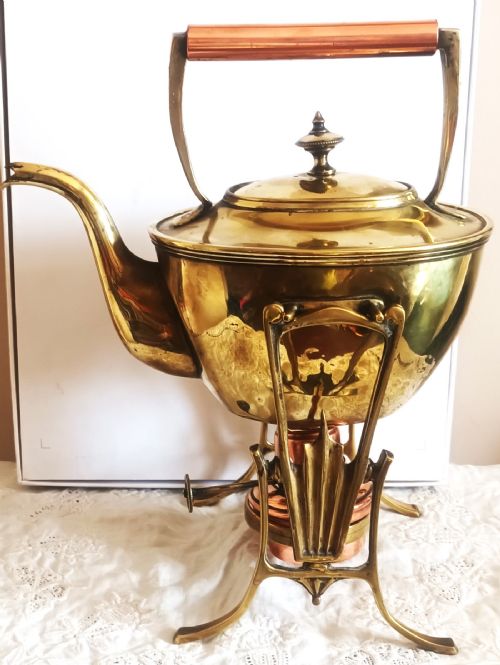

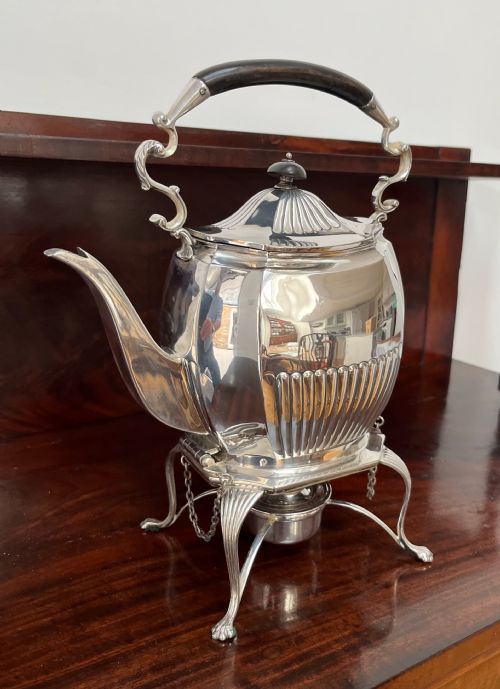


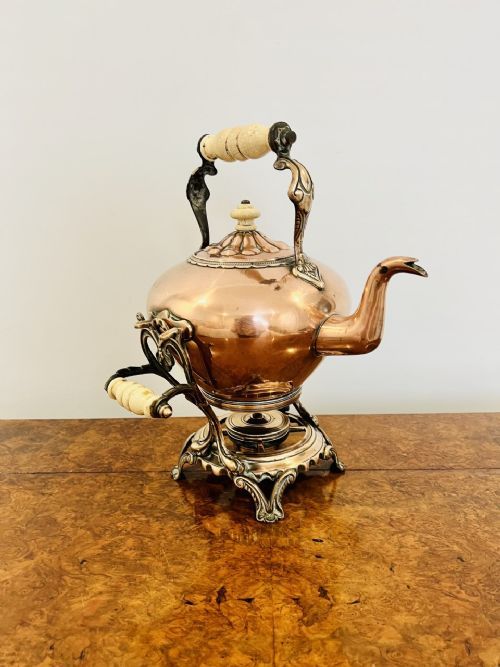


Spirit Kettle on Stand
A spirit kettle on stand brings the ritual of the Victorian tea table right into your home with style and warmth.
Spirit Kettle on Stand
A spirit kettle on stand is a self-contained brewing vessel raised above a small burner, designed to keep water hot throughout a long afternoon tea service. These pieces mostly date from the nineteenth and twentieth centuries, spanning periods from the Victorian era through the Edwardian years and into the nineteen-twenties.
Most examples encountered here are formed in silver plate, brass, or copper, often complete with their original burner nestled within the framework. Makers applied various historicising tastes to these items, ranging from Georgian Revival to Aesthetic Movement and Arts and Crafts designs.
How they were made
Silversmiths and metalworkers shaped these vessels from sheets of copper and brass, or applied silver plating over a base metal foundation. Handles frequently incorporate insulating spacers of wood, bone, or ebony to protect fingers from heat.
Stands were constructed to cradle the tilting kettle securely above its fuel source, utilising wrought iron in some utilitarian versions or matching plated metals in more formal examples.
Some kettles feature tiny bone insulators on the handles, proving that Victorians took their tea protection very seriously.
What varies in quality
The distinction between ordinary utility wares and exceptional pieces rests upon the weight of the metal and the crispness of the chasing. Superior examples display balanced proportions in the stand and secure joints where handles meet the body.
Refinement in the burner mechanism and the presence of fully matched components throughout the kettle, stand, and burner elevate certain pieces above standard production items.
William Soutter And Sons·Fenton Brothers·Frederik Ellis Tim And Co·Mappin And Webb·Elkington·WMF·Christopher Dresser·Goodfellow And Son
The Spirit Kettle on Stand Glossary
- Spirit burner
- A small metallic reservoir positioned beneath the kettle to hold liquid fuel, which feeds a wick to maintain the water temperature. This burner sits snugly within the lower ring of the stand.
- Silver plate
- A thin layer of silver fused or electroplated onto a base metal such as brass or copper. This technique offered the visual appeal of solid silver at a lower cost.
- Aesthetic Movement
- A late nineteenth-century design approach that emphasised visual beauty over narrative or moral purpose, often drawing inspiration from Japanese art. Objects in this style show clean lines and stylised motifs.
- Arts and Crafts
- A design movement valuing visible handcraftsmanship and simple construction over mass production. Pieces from this tradition typically highlight the natural texture of hammered copper or brass.
- Wrought iron
- Iron heated and hammered into shape by a smith, used to form sturdy and resistant frameworks. This material appears on utilitarian stands designed for heavy daily use.
Spirit Kettle on Stand: Frequently Asked Questions
How were spirit kettles used?
These vessels provided a continuous supply of boiling water at the tea table without requiring trips to the kitchen. Hot water was drawn from the kettle directly into the teapot as needed.
The burner beneath kept the water at a steady simmer throughout the afternoon visit. Tilting handles allowed guests to pour water safely from the seated position.
How do I date a spirit kettle?
Dating relies on stylistic clues, materials, and any maker stamps found on the base or mounts. Victorian pieces often display heavier cast mounts and ornate chasing.
Edwardian and later examples tend toward simpler lines or specific revival styles like the Georgian Revival. Silver plated pieces frequently carry registry marks or maker ciphers that narrow down the production decade.
Can I still burn spirit in the burner?
Many burners survive in usable condition, though modern safety guidelines suggest caution with liquid fuels. Collectors generally treat them as display components rather than functioning appliances.
If you intend to light the burner, check the wick and reservoir for integrity. Denatured alcohol or standard chafing fuel serves as a suitable modern substitute for historical spirits.
How do I clean brass and copper?
Maintenance depends on whether you prefer a bright polished surface or a warm natural patina. Gentle washing with warm soapy water removes dust and oils from handling.
Harsh abrasive cleaners should be avoided, particularly on silver plated items where aggressive rubbing can wear through the plating. Soft cloths and mild metal polishes preserve the underlying detail.