


Spindle Wall Shelf
These spindle wall shelf pieces provide practical display space with distinctive turned supports, bringing architectural character to any room.
Spindle Wall Shelf
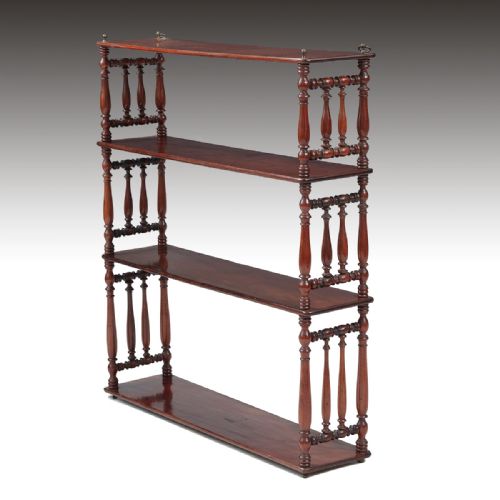
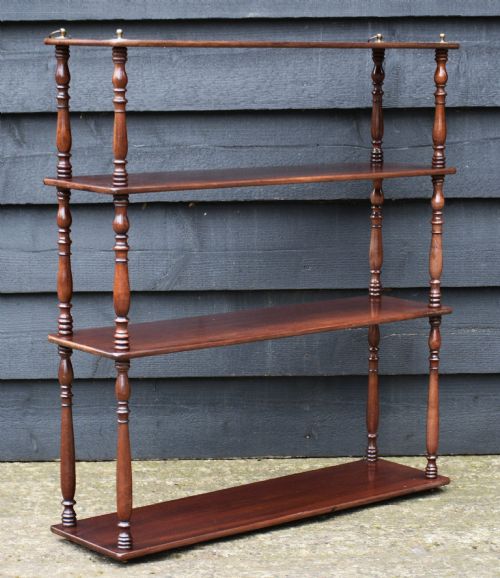
A spindle wall shelf provides elevated storage and display using timber tiers fixed to vertical supports. Buyers seeking a spindle wall shelf will encounter various configurations designed for domestic utility.
The selections span the nineteenth century, including Victorian examples alongside Regency and Arts and Crafts pieces. Common forms range from open hanging shelves to wall cabinets and display units featuring integrated magazine racks.
Origins vary across English country house aesthetics and French chateau styles. Pieces utilise multiple tiers to hold books, ceramics and decorative objects upon walls.
How they were made
Cabinet makers utilised a diverse range of timbers including mahogany, walnut, oak, cherry wood, satin birch and painted wood. Ebonised wood and brass elements also appear across the surviving inventory.
Construction methods rely on traditional joinery to secure shelves to uprights and wall mounts. Turned spindles provide structural division and decorative detail between the tiers.
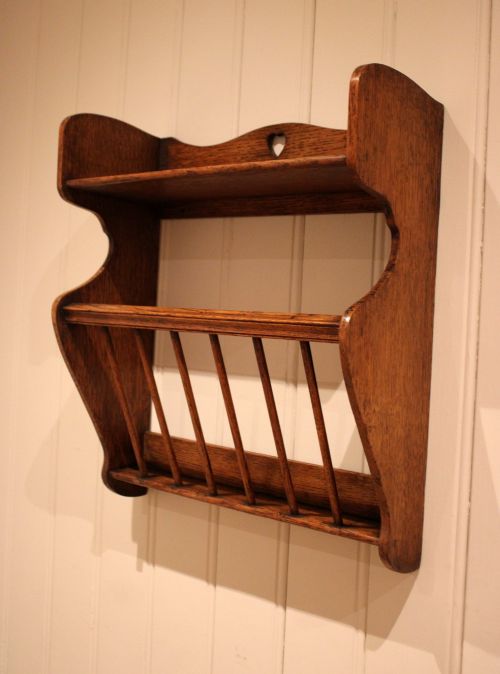
One cheerful variation incorporates a dedicated magazine rack right into the oak framework.
What varies in quality
The choice of timber and complexity of the turnery separate standard examples from finer works. Richly figured mahogany or walnut elevates a piece above basic painted wood variants.
The Spindle Wall Shelf Glossary
- Spindle
- A slender, turned wooden rod used as a structural and decorative divider between shelves. These elements define the characteristic silhouette of the furniture.
- Whatnot
- A piece of furniture consisting of several open shelves for displaying small objects. They are frequently designed to be mounted directly onto walls.
- Satin Birch
- A pale, lustrous hardwood utilised for decorative cabinet work during the nineteenth century. Its distinctive grain offers a bright surface appearance.
- Ebonised Wood
- Timber treated to resemble ebony through a dark staining or finishing process. This technique provides stark contrast against lighter interiors.
Spindle Wall Shelf: Frequently Asked Questions
How do I hang a wall shelf safely?
Ensure the fixings match the weight of the timber and the type of wall construction. Locate secure anchor points behind the plaster to support the loaded tiers.
Check that the hanging brackets or screw eyes integrated into the back frame remain firm before loading books or display items.
What rooms suit a wall shelf?
Kitchens, studies and living areas benefit from the extra display surface without taking up floor space. Smaller formats fit well in hallways for daily essentials.
Open tiers allow quick access to frequently used volumes or decorative ceramics in domestic settings.
How do I clean nineteenth century wood?
Dust regularly with a dry, soft cloth to prevent grime accumulation on the turned spindles and flat surfaces. Avoid modern silicone sprays that damage historic polishes.
Apply a microcrystalline wax occasionally to feed dry timber and maintain the natural lustre of mahogany or walnut.
Are these shelves original?
Period pieces display age-appropriate patina and construction techniques consistent with nineteenth-century workshop practices. Timber movement and wear patterns indicate genuine historic use.
Examine the backboards and fixing points to understand how the piece has survived across different interiors.