
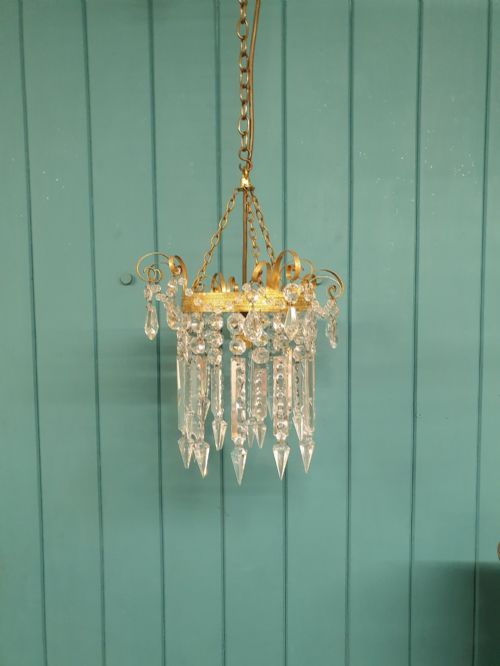

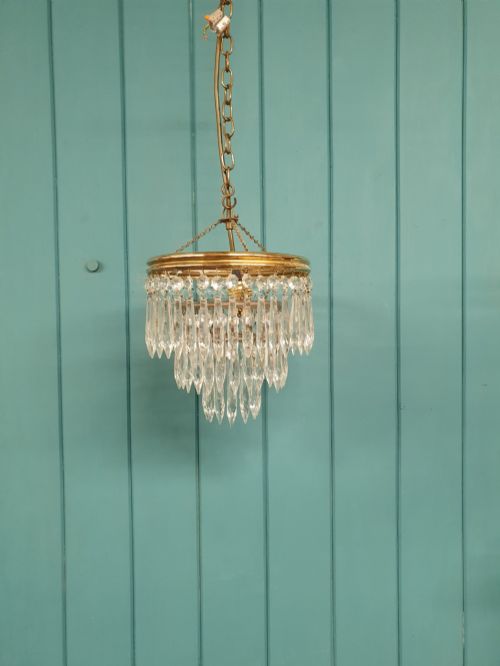


Spike Glass Chandelier
These spike glass chandeliers are striking overhead fixtures distinguished by their projecting crystal points, offering brilliant illumination and traditional decorative presence.
Spike Glass Chandelier
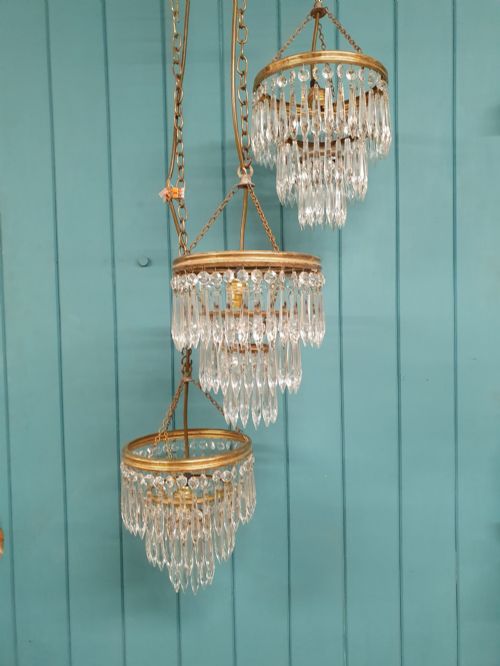
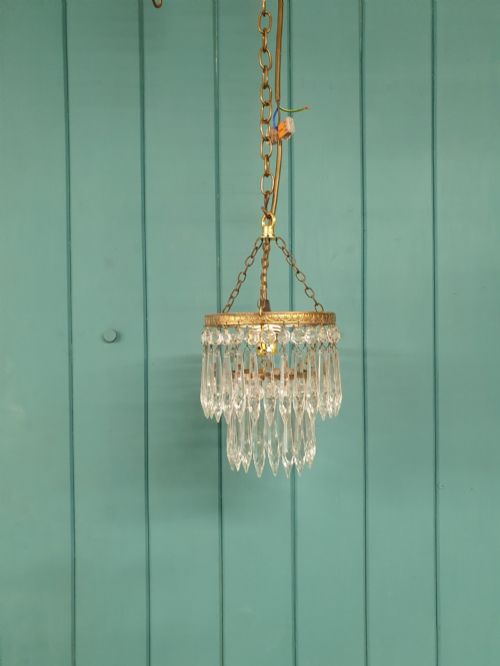
A spike glass chandelier is an overhead lighting fixture characterised by sharp, projecting crystal or glass points known as spikes. These pieces appear primarily in Edwardian and 1930s forms, spanning compact small examples to large multi-tiered designs.
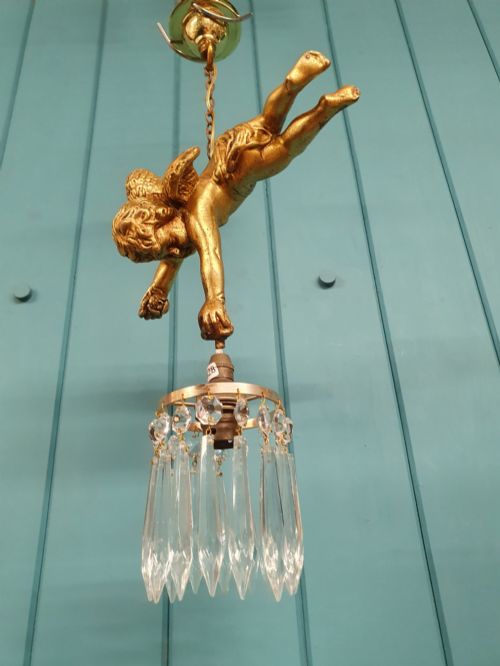
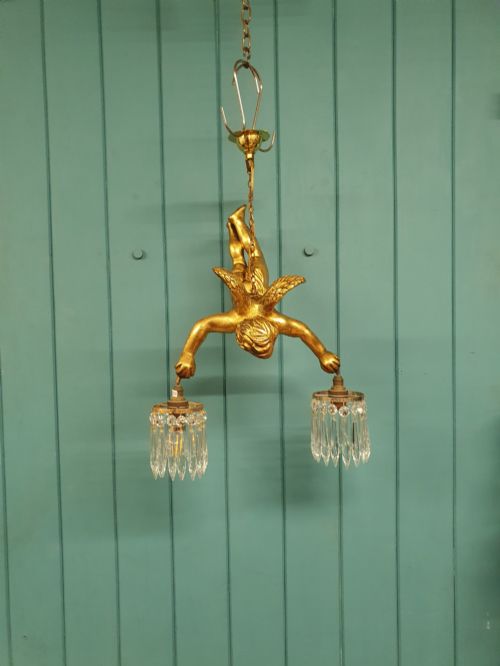
The selections available here showcase various configurations, including dome top formations, swag chandeliers decorated with cherubs, and smaller pendant lights. They function as dramatic central ceiling lights designed to catch and refract light through cut glass and crystal components.
How they were made
Makers constructed the primary frames using metals such as brass, gilt brass, spelter, and gilt metal to support the heavy glass elements. These structural components frequently incorporate decorative details like flying cherubs and finials.
The hanging elements utilise cut glass and crystal glass, shaped into distinct spikes, beads, and swags. Individual glass pieces are wired or pinned to the metal armature to form structured tiers, dome tops, and cascading waterfall arrangements.
Object types seen across the inventory include chandeliers, ceiling lights, and pendant lights.
What varies in quality
Quality in these fixtures rests upon the density and clarity of the crystal components and the weight of the metal framework. Superior examples feature heavier brass or gilt metal structures paired with deeply cut glass that maximises light refraction.
The complexity of the design also distinguishes finer pieces, such as those incorporating detailed figural elements like cherubs, multiple tiers, and elaborate top swags, compared to simpler single-tier arrangements.
The Spike Glass Chandelier Glossary
- Spike
- A sharp, projecting piece of cut glass or crystal used to decorate the perimeter or base of a chandelier. These elements create a spiky silhouette.
- Spelter
- A zinc alloy frequently utilised as a base metal for cast decorative figures and mounts on lighting fixtures, often given a gilt finish.
- Swag
- A decorative chain or festoon of glass beads and crystals draped across the upper portion of a chandelier. It adds graceful movement to the rigid frame.
- Finial
- A decorative terminal ornament positioned at the lowest point of the chandelier body. It provides a neat visual conclusion to the hanging fixture.
Spike Glass Chandelier: Frequently Asked Questions
How do I clean a spike glass chandelier?
Maintenance involves gentle cleaning of the individual glass spikes and crystal drops using a mild cleaning solution while the fixture hangs securely. Careful handling prevents chipping the delicate cut glass points.
Power to the ceiling light must remain switched off throughout the process. Technicians or owners often clean intricate drops in situ to protect the original brass or gilt metal wiring framework.
What periods do these chandeliers come from?
The examples available span the Edwardian era and the 1930s, reflecting early twentieth-century design preferences. These periods favoured decorative cut glass and ornate metal framing.
Stylistic influences range from traditional Edwardian aesthetics to French Rococo Revival and mid-century modern interpretations. Each period brings distinct metalwork and glass-cutting techniques to the fixtures.
Where should I hang a spike glass chandelier?
These ceiling lights suit rooms with sufficient vertical clearance, such as formal dining spaces, entrance halls, or living rooms. Their reflective crystal spikes demand placement where they can adequately catch ambient and natural light.
Smaller six-inch to ten-inch variants fit modestly proportioned spaces, whereas large multi-tier waterfall chandeliers require higher ceilings to balance their substantial visual weight.
How are spike chandeliers mounted?
Mounting requires securing the fixture directly to a ceiling joist or an approved electrical box capable of supporting the combined weight of the metal frame and glass components. Professional installation ensures the brass, gilt metal, or spelter structure hangs safely.
Wiring must accommodate the specific electrical demands of the pendant light, integrating safely with modern domestic circuits while preserving the historical integrity of the metalwork.