

Specimen Storage Cabinet
A specimen storage cabinet organises natural history finds and small antiquities in shallow wooden drawers.
Specimen Storage Cabinet
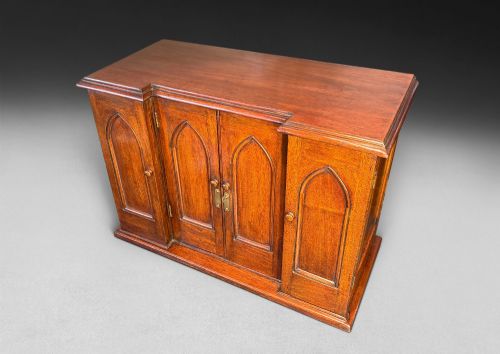
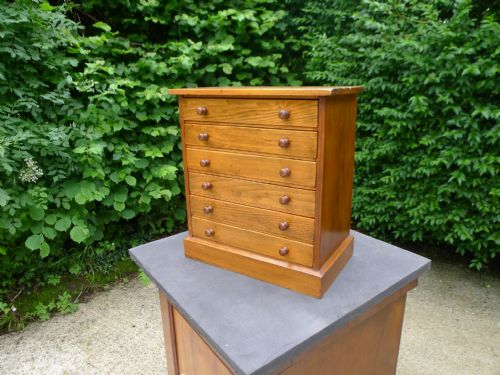
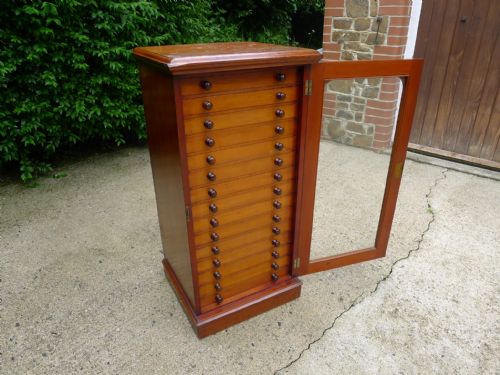
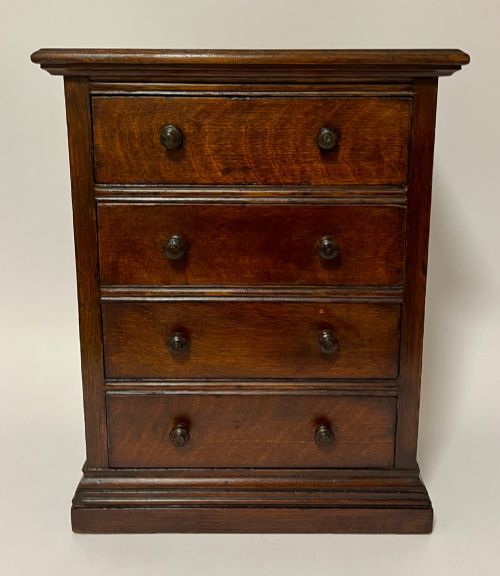
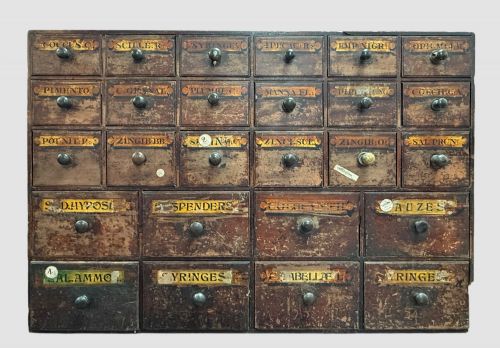
A specimen storage cabinet is designed to house natural history items, coins, or microscope slides in banks of shallow drawers. You will frequently encounter mahogany, oak, and pine examples dating from the Georgian and Victorian periods.
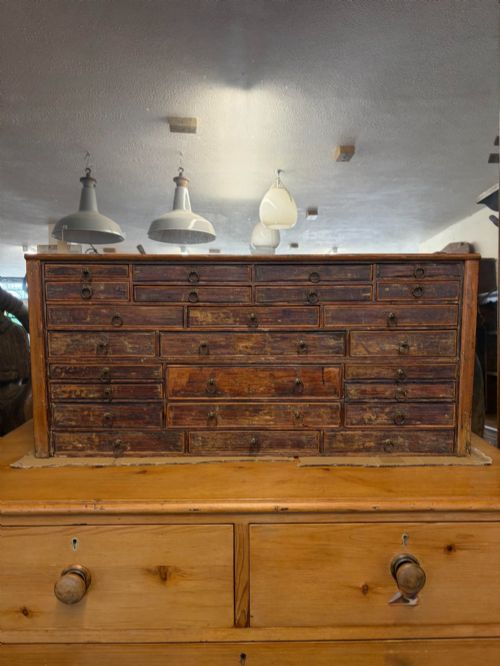
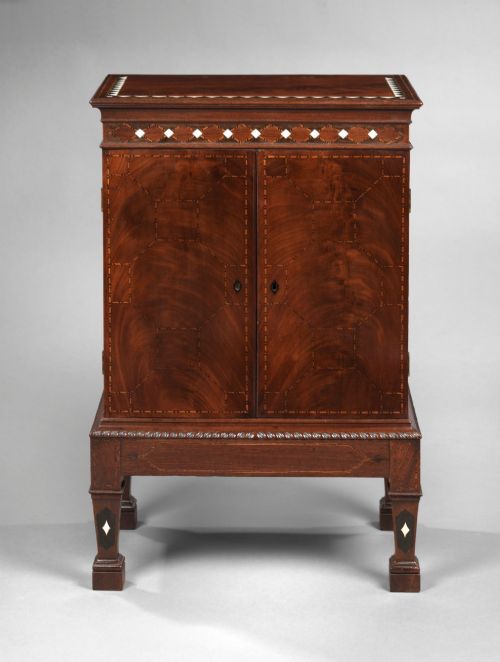
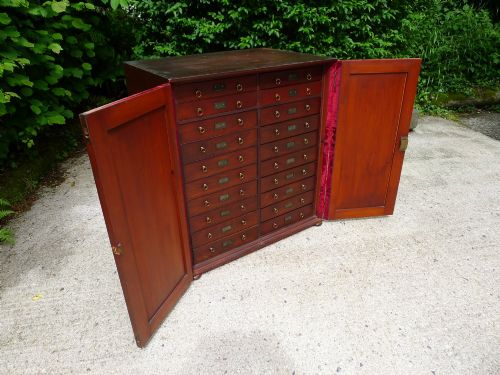
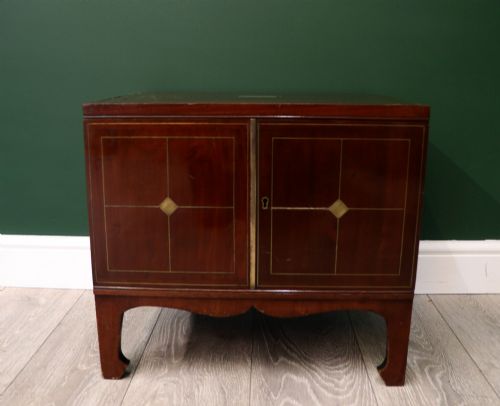
The format ranges from compact tabletop chests to massive multi-drawer units built by specialist makers like Brady or Watkins and Doncaster. Many pieces feature fitted glass doors or locking panel doors to protect delicate contents from dust.
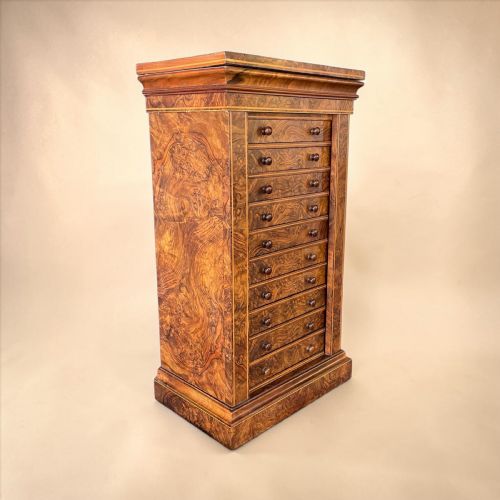
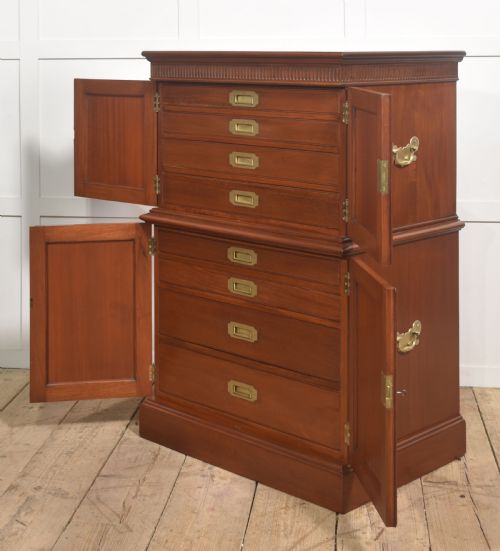
The form intersects with apothecary chests, Wellington chests, and campaign furniture fitted with brass handles. The common thread is the dense arrangement of internal drawers scaled for systematic sorting.
Materials and construction
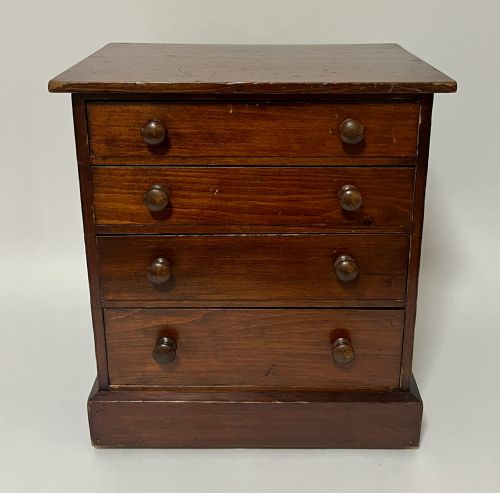
Makers relied on dense hardwoods such as mahogany, walnut, and oak to construct the carcasses and drawer frames. Deal, pine, and stained wood appear in utility pieces and smaller regional workshop items.
Brass fittings, including campaign drop handles, hinges, and escutcheons, provide functional strength and secure closure. Drawer interiors frequently utilise softwoods or secondary timbers, joined with precise dovetails to withstand heavy daily use.
Microscope slide cabinets often retain handwritten paper index labels naming long-forgotten botanical specimens.
Evaluating craftsmanship
Quality rests in the precision of the drawer fit and the selection of timber. Dense mahogany and burr walnut veneers demonstrate an ambitious commission compared to stained deal or plain pine.
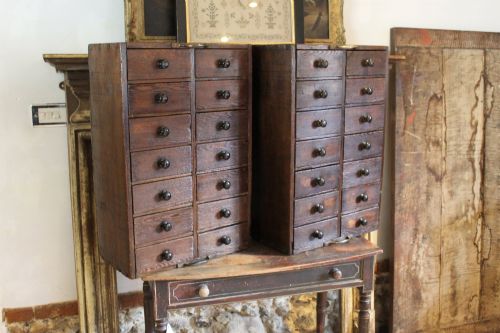
Specialist maker attribution elevates a piece, as seen in institutional cabinets by Brady or entomological storage by Watkins and Doncaster. The complexity of the internal arrangement, from twenty-five drawer banks to specialised microscope slide slots, dictates the standard of manufacture.
Luxmore of Ilfracombe·Watkins and Doncaster·Brady of Edmonton·D Napier and Sons
The Specimen Storage Cabinet Glossary
- Wellington chest
- A tall, narrow chest of drawers secured by a hinged locking stile on one side. This mechanism fastens over the drawer edges to lock the entire stack simultaneously.
- Campaign style
- Furniture designed for portability, incorporating recessed brass handles, reinforced corners, and flush fittings. It allows secure transport across long distances.
- Tabletop cabinet
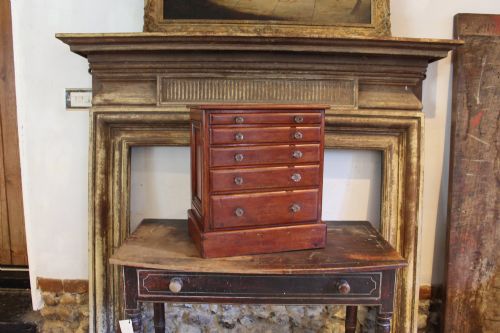
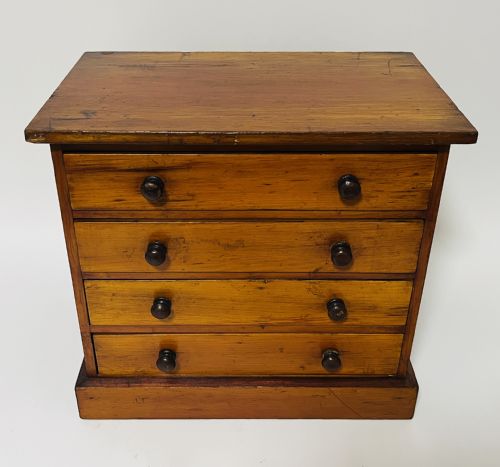
- A miniature chest intended to sit on a desk or table rather than rest on the floor. These pieces typically contain between three and six shallow drawers.
- Microscope slide cabinet
- A specialist storage unit fitted with ultra-thin slots designed to hold glass slides flat. They often feature numbered indices inside the door.
- Bank of drawers
- A configuration featuring multiple stacked or side-by-side drawers designed for high-density filing. Apothecaries and naturalists utilised these for efficient sorting.
Specimen Storage Cabinet: Frequently Asked Questions
What fits inside these cabinets?
The shallow drawers suit small artefacts, coins, minerals, insects, and microscope slides. Naturalists used the compartments to organise classified reference collections.
Today, the drawers accommodate jewellery, stationery, and miniature collectibles. The shallow depth prevents items from getting lost beneath one another.
How do I date a cabinet?
Georgian and Victorian pieces display distinct timber choices and construction signatures. Mahogany and satinwood predominate in earlier centuries, while pine and deal scale up in late nineteenth-century utility work.
Hardware offers another clue, as campaign brasses and mortise locks evolve across decades. Maker stamps inside drawer runners provide definitive chronological markers.
Are locking doors common?
Many examples incorporate locking side stiles or hinged front doors to secure the contents. This protected fragile specimens from environmental disturbance and theft.
Keys are frequently missing on antique specimens, but the locking mechanisms remain a hallmark of quality construction. They indicate the piece was meant for serious scientific or institutional study.
Where should I place one?
Tabletop versions suit desks, sideboards, and study tables where the drawers remain accessible. Larger floor-standing banks require stable placement away from direct heat sources.
Because the wood and joints react to humidity, stable indoor environments preserve the drawer movement. Keeping them out of strong sunlight protects polish and secondary veneers.