

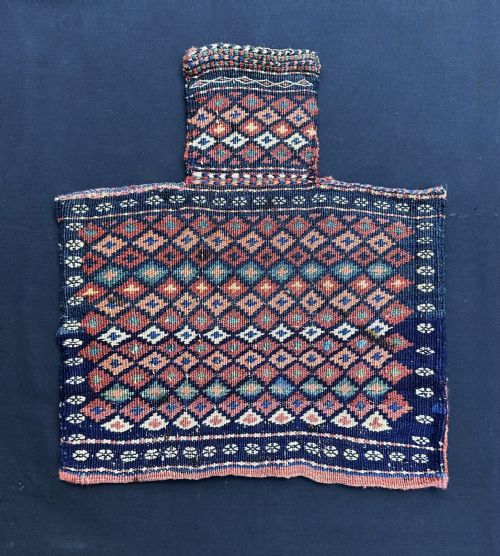

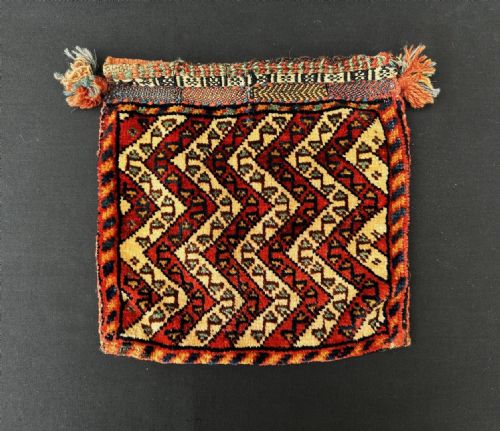

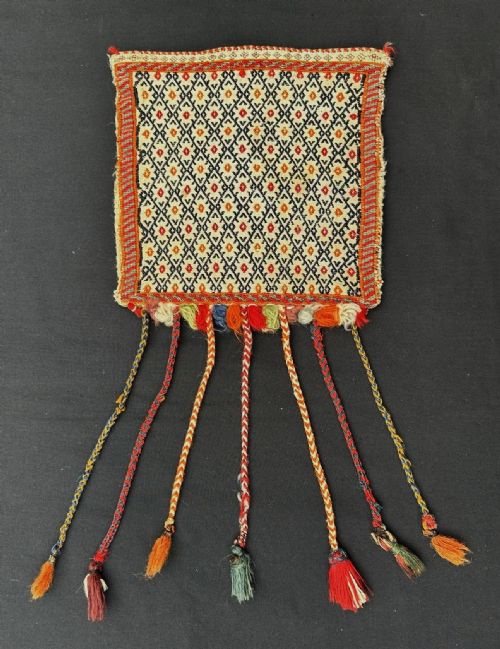
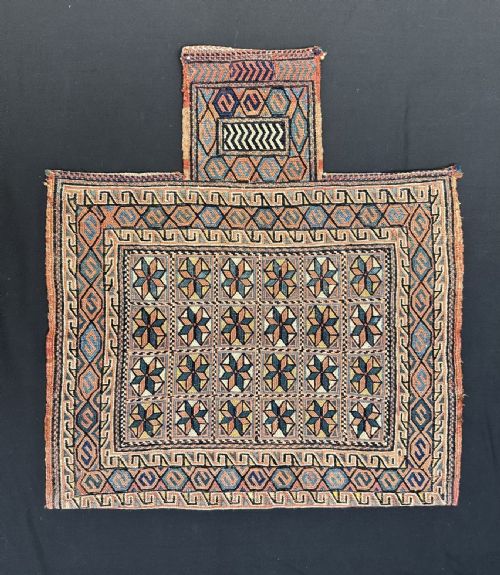




South Persian Bag
These south persian bag examples are hand-knotted nomadic textiles made for daily utility, offering collectors rich tribal patterns and authentic materials.
South Persian Bag
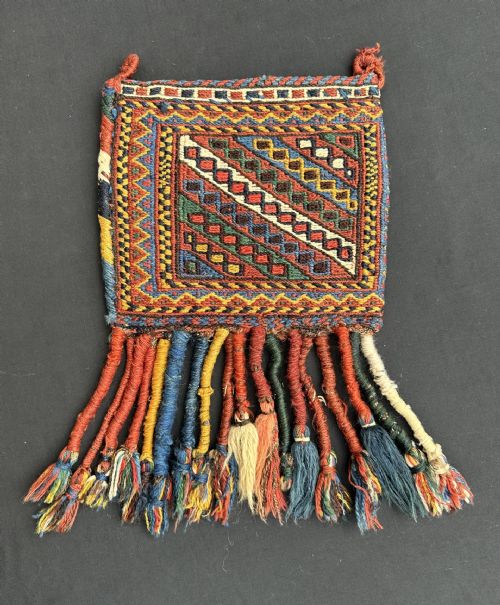
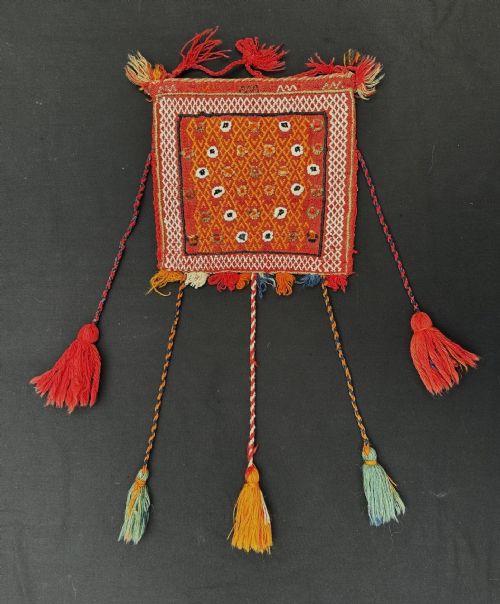
A south persian bag is a woven nomadic textile originating from tribal confederacies and provinces such as Fars and Kerman. These pieces include utilitarian forms like vanity bags, salt bags, storage pouches, and saddlebags produced by weavers on portable looms.
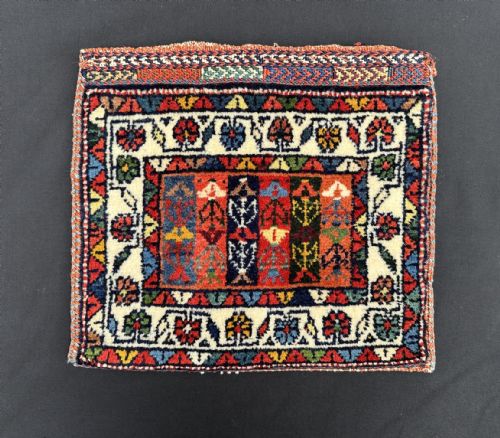
The objects on this page span from the mid-nineteenth century through the early twentieth century, reflecting the traditional output of tribal groups. Buyers frequently encounter bag faces and complete saddlebags attributed to confederacies like the Qashqa'i and Afshar tribes.
Specific sub-tribes and clans, including the Bolvardi, Kashkuli Tayefeh, Shekarlu Tayefeh, and Darrehshuri, produced distinct designs tied to their regional territories. These items served practical functions in nomadic life while expressing the visual culture of each specific group.
How They Were Made
The construction relies heavily on hand-spun wool and cotton foundations, utilising hand-knotting techniques to create dense, durable pile surfaces. Some examples incorporate natural dyes that produce deep, varied tones across the woolen yarns.
Certain functional textiles incorporate supplementary decorative elements such as cowrie shells applied to the surface. These materials reflect the accessible resources of the nomadic environment and the traditional methods employed by tribal makers.
South Persian Bag Retail Price Guide 2026
Typical asking prices for south persian bag among the pieces listed under this phrase on Sellingantiques today, from the lower quarter to the upper quarter. They describe what is for sale here now, not the wider market.
Listings for south persian bag examples span the period from the 1860s through the 1930s, constructed primarily from wool, cotton, and natural dyes.
What Varies in Quality
Quality in a south persian bag relates to the fineness of the knotting and the handling of the wool. Lustrous, luminous wool yields a more tactile surface and allows the natural dyes to express greater depth.
The precision of the tribal geometry and the preservation of original structures, such as complete backs or paired faces, influence the character of the piece. Intricate iconography, including large boteh motifs or central medallions, demonstrates the weaver's skill within traditional formats.
Afshar Tribes·Khamseh Tribes·Bolvardi Sub-Tribe·Kashkuli Tayefeh
The South Persian Bag Glossary
- Khorjin
- The traditional Persian term for a saddlebag used by nomadic tribes for transport and storage. These were typically woven as a pair joined by a central web.
- Boteh
- A floral motif resembling a stylised almond or paisley shape, frequently appearing in Afshar and other tribal weaving. It is one of the most enduring designs in Persian textile history.
- Bag Face
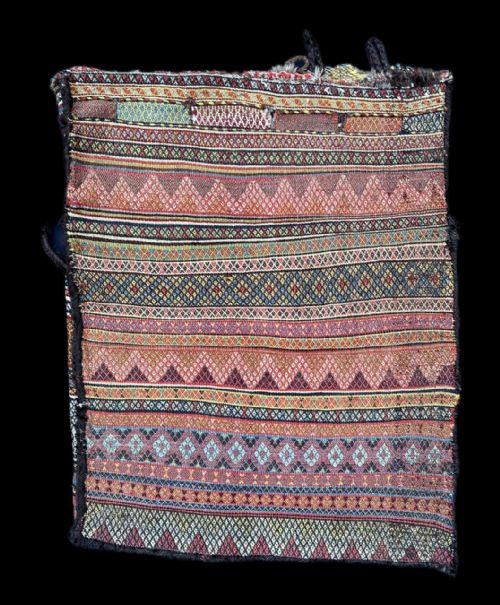
- The decorative piled portion of a storage or saddlebag, often separated from its plain-weave or goat-hair back over time. Many surviving examples exist solely as these individual decorative panels.
- Natural Dyes
- Colourants derived from plant, insect, and mineral sources prior to the widespread adoption of synthetic alternatives in the late nineteenth century. They contribute to the varied, organic palette seen in antique tribal pieces.
- Confederacy
- A large sociopolitical grouping of nomadic tribes and subtribes, such as the Qashqa'i, sharing common leadership and regional migration routes. Each confederacy developed distinct weaving traditions and palette preferences.
South Persian Bag: Frequently Asked Questions
What is a south persian bag?
A south persian bag is a hand-knotted tribal textile created by nomadic confederacies such as the Qashqa'i, Afshar, and Khamseh in regions including Fars and Kerman.
These pieces served functional roles in daily nomadic life, functioning as containers for salt, water-pipes, vanity items, or general storage, as well as riding gear.
How were saddlebags used?
Nomadic weavers produced saddlebags in pairs joined by a central web to sling across animals during seasonal migrations. They transported personal possessions, household goods, and provisions.
Over decades, many complete pairs were separated into individual bag faces for display or easier transport by later collectors.
How do I identify an Afshar piece?
Afshar pieces originating from the Kerman province often feature distinct tribal iconography, including prominent boteh motifs, structured medallions, and specific geometric border arrangements.
The materials typically involve hand-spun wool and natural dyes, sometimes accented with decorative cowrie shells sewn onto the textile.
How should I care for tribal bags?
Display these textiles away from direct sunlight to protect the natural dyes from fading and to preserve the integrity of the hand-spun wool fibres.
Gentle vacuuming with a mesh screen covering the nozzle helps remove dust without disturbing the pile or the foundational cotton and wool structure.