

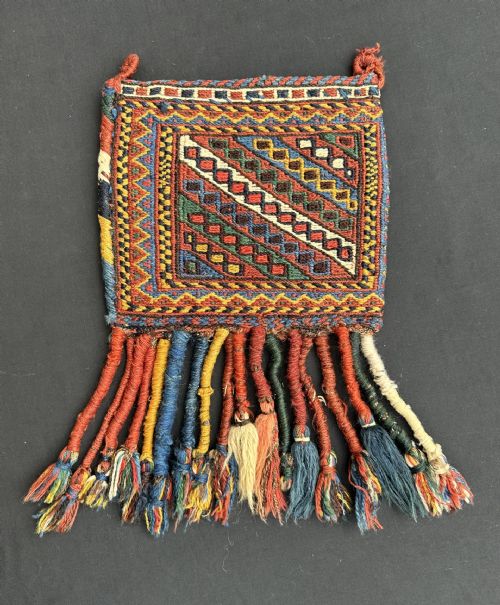


South Persian Afshar Weaving
South persian afshar weaving comprises tribal rugs, bags, and storage pouches originating from the kerman province.
South Persian Afshar Weaving
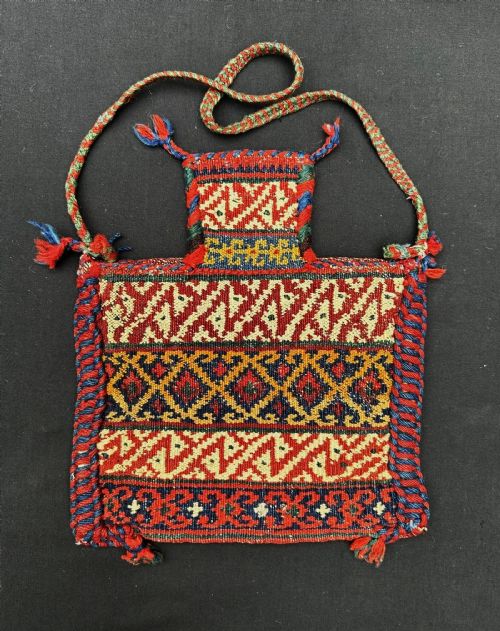
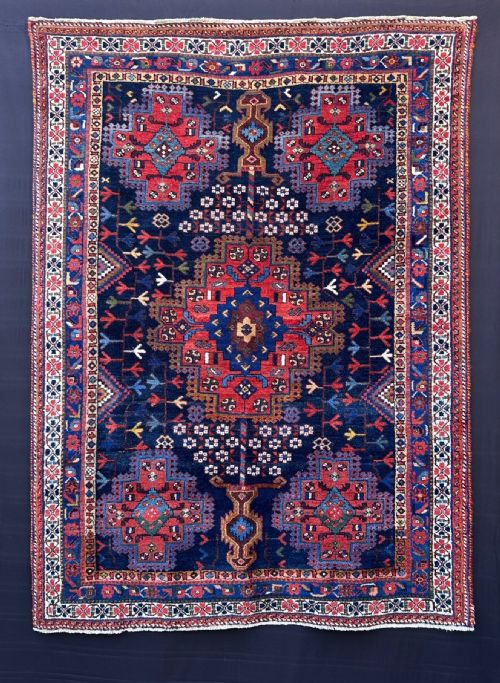
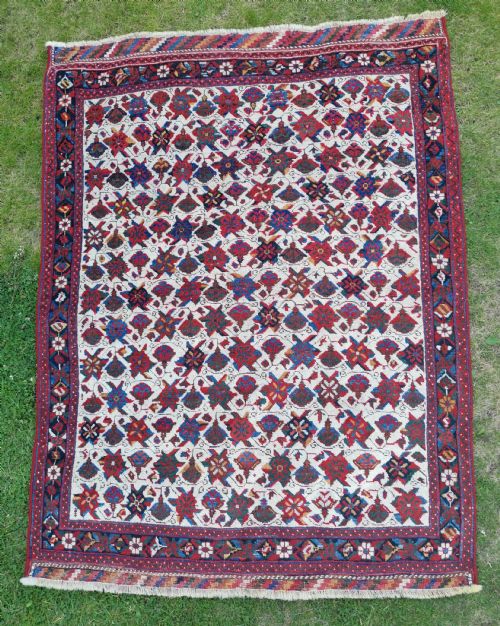
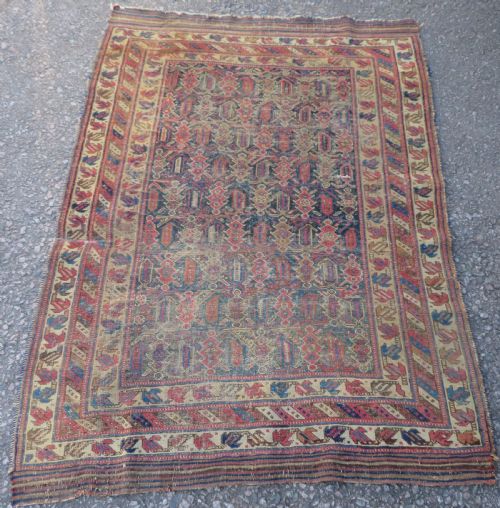
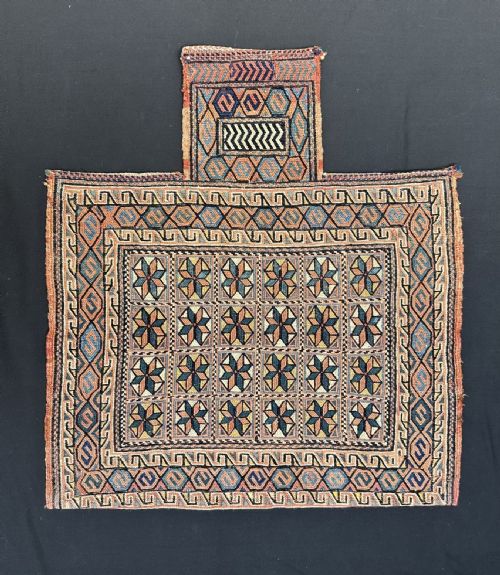
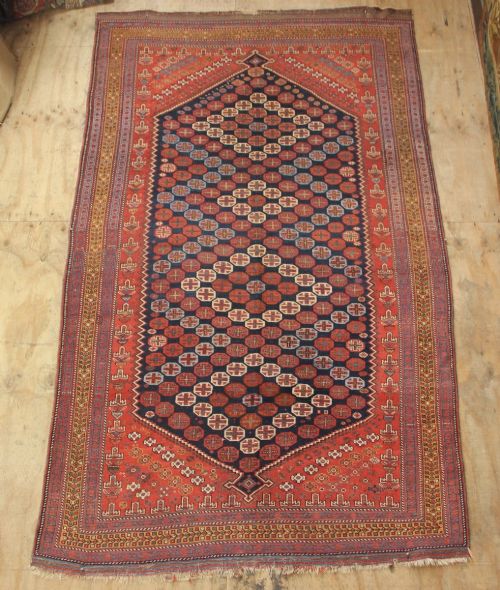
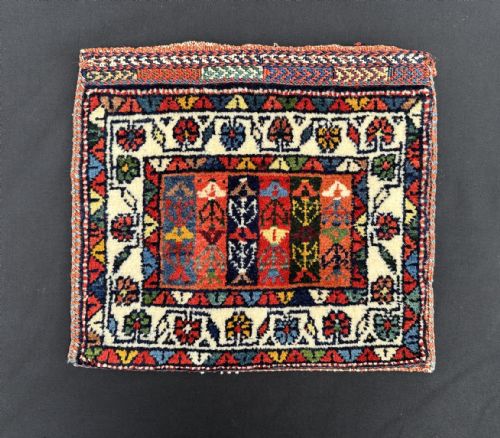
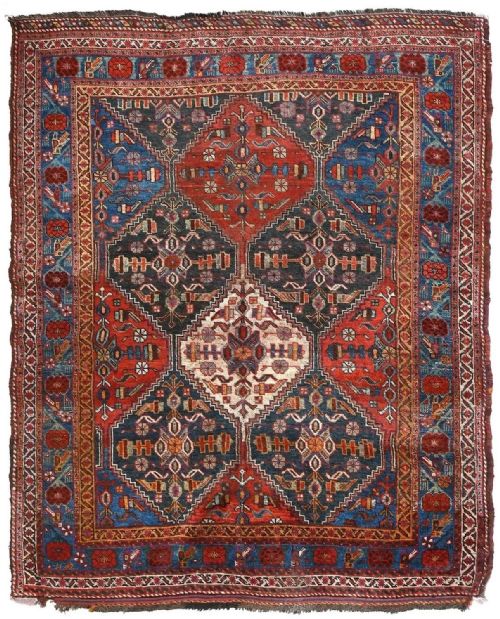
South persian afshar weaving encompasses a diverse range of tribal items made by nomadic and village groups in the kerman province and surrounding regions like neiriz and bardsir. You will frequently encounter floor rugs, runners, and carpets alongside smaller utilitarian objects such as vanity bags, salt bags, saddlebag faces, and bread sofrehs. These textile forms reflect the nomadic lifestyle of the afshar tribes who settled or moved through south-west persia.
The objects span from the mid-nineteenth century through the early decades of the twentieth century, capturing a period of traditional tribal production. Rugs range from modest square formats to larger room-size carpets, while smaller pouches served specific domestic functions within the camp. The designs draw upon regional motifs including large boteh patterns and repeat heratti layouts.
Tribal storage pouches and chantehs represent a significant portion of these items, retaining their original utilitarian character as containers for personal items or provisions. Whether viewing a flatweave rug or a piled carpet, you are looking at the material culture of south persian nomads from specific tribal sub-groups like the kuhi afshars and qorab'i tribe.
What varies in quality
The handle and density of the wool create distinct gradations in quality, with lustrous luminous wool marking superior examples. Finer knot counts and precise execution of intricate motifs such as the boteh or heratti pattern distinguish masterwork carpets from standard utilitarian pieces.
Structural integrity and the preservation of original edges and end finishes influence the standing of an individual textile. The depth and clarity of natural dye colours further separate exceptional weaving from more ordinary production.
Several bags retain stray cowrie shells stitched directly into the wool, once thought to ward off the evil eye.
The South Persian Afshar Weaving Glossary
- Sofreh
- A woven spread or cloth used for dining, handling bread, or preparing food within the nomadic tent.
- Chanteh
- A small personal bag or vanity pouch woven by tribal groups for carrying small possessions.
- Soumak
- A flatweaving technique involving coloured supplementary wefts wrapped around the warp threads to create a textured surface.
- Boteh
- A stylised floral motif resembling a bent almond or pear, frequently repeated across field designs.
- Heratti
- A repeating geometric pattern composed of a central rosette enclosed by leaves and flanked by fish or leaf motifs.
South Persian Afshar Weaving: Frequently Asked Questions
What is an afshar salt-bag used for?
These small utilitarian pouches were woven by nomadic women to store rock salt or personal provisions within the tent.
They often feature specialised neck constructions and hanging loops designed for suspension from tent poles.
How do you identify a neiriz region rug?
Neiriz pieces originate from a specific district in the kerman province and frequently display distinctive blue and red colour combinations.
They tend to feature geometric formats and tribal iconography associated with local afshar sub-groups.
Are bread sofrehs used on floors?
These flatwoven or piled cloths served as clean surfaces for kneading dough and sharing meals on the ground.
Today they function primarily as wall hangings or decorative textiles due to their pictorial and geometric designs.
What distinguishes a chanteh from a saddlebag?
A chanteh is an individual personal carrying bag made for daily use, whereas saddlebags were produced as pairs for transport on animals.
Many surviving saddlebags appear today as single faces separated from their original connecting web.