


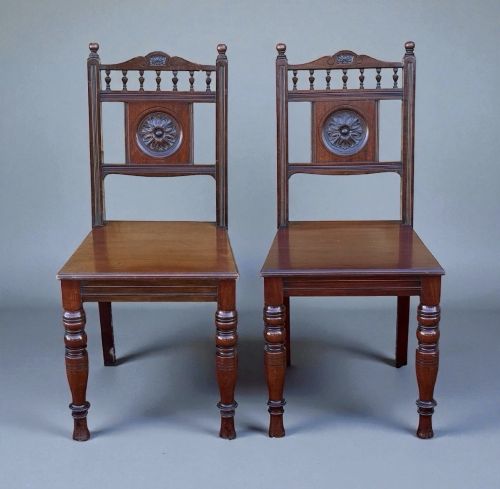


Solid Wood Hallway Chair
These solid wood hallway chair options offer sturdy seating solutions for narrow spaces, crafted from substantial timber.
Solid Wood Hallway Chair
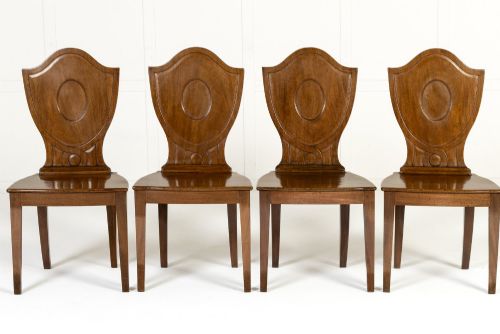
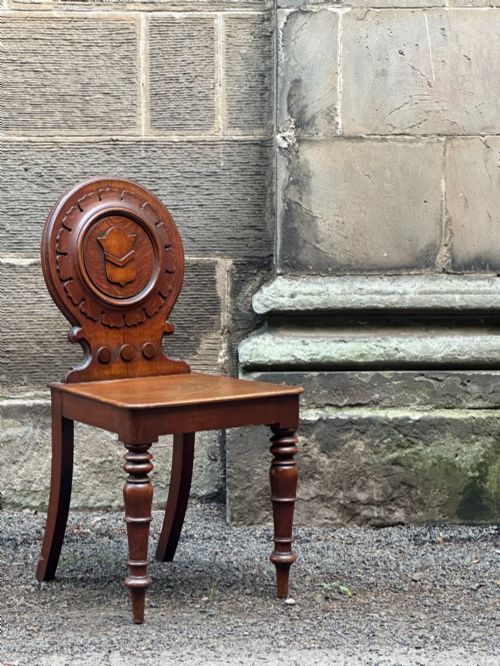
A solid wood hallway chair serves as a practical seat in a narrow entrance space, utilising minimal floor area while providing a firm perch. Most examples encountered here date from the Victorian and Georgian periods.
How they were made
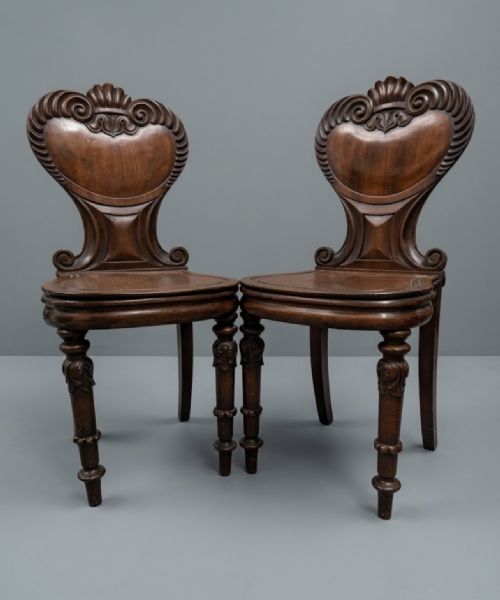
Cabinetmakers utilised dense hardwoods like mahogany and solid oak to withstand heavy daily traffic in busy entrances. These timbers were selected for their strength and ability to hold crisp, carved detail.
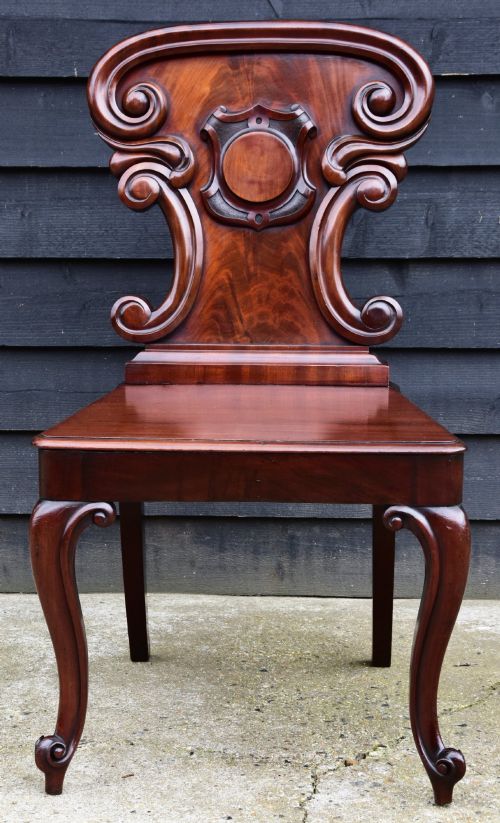
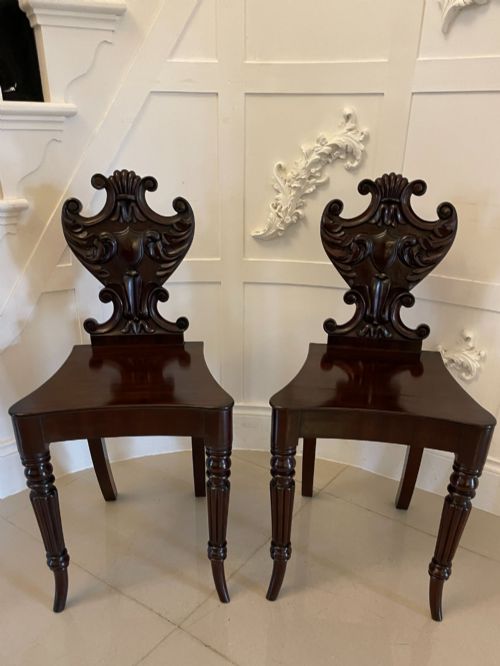
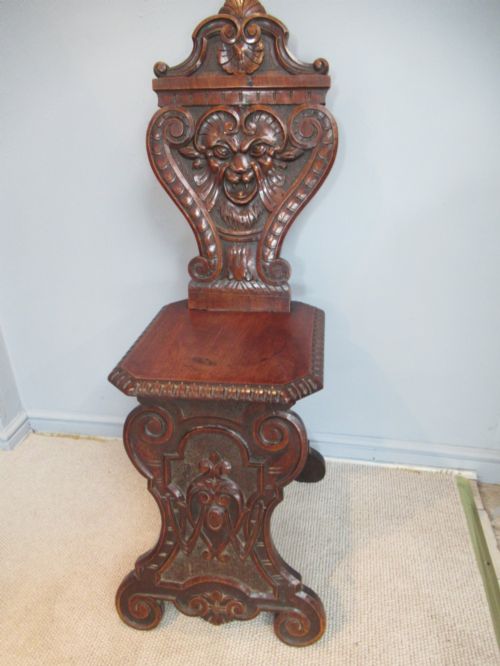
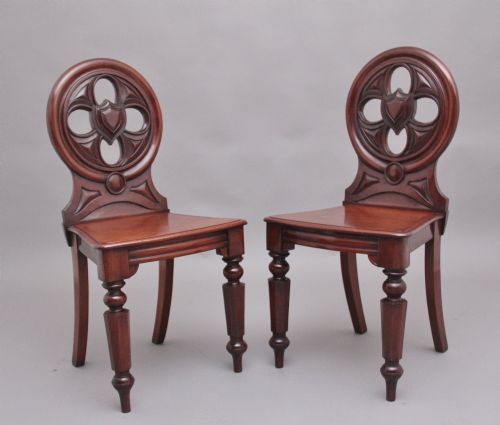
Joinery techniques relied on sturdy frame construction and shaped wooden seats rather than upholstery. Backrests frequently feature carved shields, shells, or fretwork patterns integrated directly into the timber.
Solid Wood Hallway Chair Retail Price Guide 2026
Typical asking prices for solid wood hallway chair among the pieces listed under this phrase on Sellingantiques today, from the lower quarter to the upper quarter. They describe what is for sale here now, not the wider market.
Several chairs feature carved wooden seats that defy expectations of comfort by offering all the cushioning of a tree trunk.
What varies in quality
The depth and clarity of the wood carving separate standard examples from finer works. Master craftsmen achieved sharp relief on shield and shell backs that simpler production lacked.
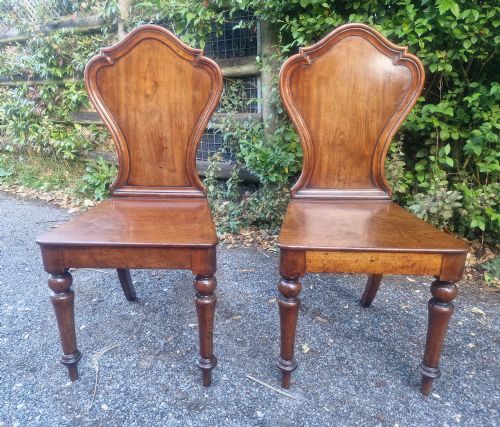
Timber selection dictates the visual weight of the piece, with well-figured mahogany and richly grained oak commanding greater presence. The integrity of the original solid wood structure underpins the overall standard.
The Solid Wood Hallway Chair Glossary
- Shield back
- A chair back shaped in the outline of a heraldic shield. This form appeared frequently on Victorian and Georgian hall seating.
- Fret back
- An openwork design cut through the flat wooden splat of a chair. This technique lightened the heavy appearance of solid timber.
- Cabriole leg
- A furniture leg that curves out and then in, resembling an animal's leg. It appears on mid-to-late period seating in this selection.
Solid Wood Hallway Chair: Frequently Asked Questions
Where should I put a hall chair?
These chairs fit well in narrow entryways, corridors, or landings where space remains limited. Their upright posture suits areas meant for brief transitions rather than relaxed sitting.
Because they feature solid wood seats without upholstery, they handle dust and foot traffic near exterior doors easily.
Are hall chairs comfortable to sit on?
Solid timber seats and upright backs encourage proper posture for short durations. They were originally designed for servants waiting in halls or guests removing boots.
Adding a loose cushion can soften the wooden seat if you intend to sit for longer periods.
How do I date a mahogany hall chair?
Examining the carved motifs and leg styles helps determine the era of production. Georgian pieces often display restrained classical lines, while Victorian examples embrace Gothic revival or heavily carved shield designs.
Timber density and construction marks underneath also offer clues regarding the century of manufacture.
What is the difference between oak and mahogany versions?
Oak chairs often present a heavier, more rustic appearance with visible grain patterns typical of Gothic revival or earlier Victorian pieces. Mahogany versions tend to display darker, smoother surfaces with refined reddish tones suited to formal Regency or Georgian interiors.
Both timbers provide the structural rigidity required for daily use in busy entranceways.