



Mahogany Foyer Seating
Mahogany foyer seating brings formal timber presence to a grand entrance, offering sturdy hall chairs designed to impress visitors.
Mahogany Foyer Seating
When you search for mahogany foyer seating, you encounter robust hall chairs designed for grand entrances, reception rooms, and hallways. These timber seats served visitors waiting in large homes and public spaces.
The pieces on this page span several key periods, including Georgian, Regency, and Victorian eras, alongside specific regional interpretations such as Irish and Scottish examples. Forms range from single reception seats to matching pairs and sets of four.
You are most likely to meet Victorian and Regency mahogany hall chairs featuring carved wooden backs and solid timber seats. These objects survive from the eighteenth and nineteenth centuries in various states of decorative elaboration.
How these pieces were made
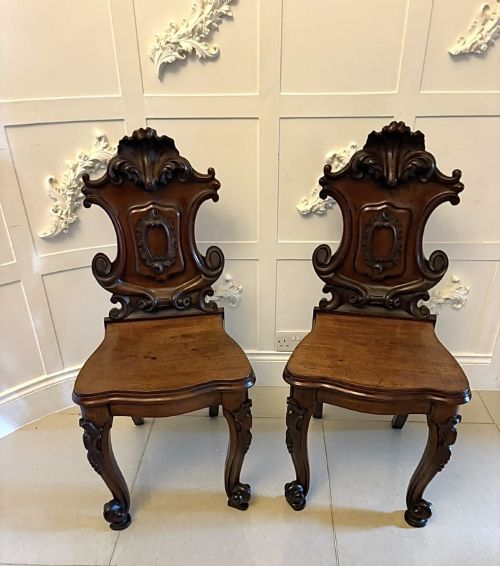
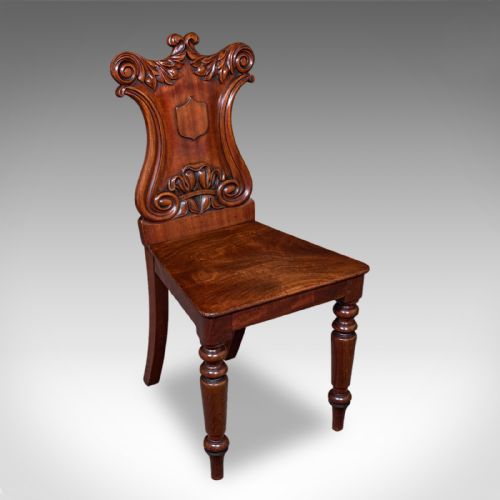
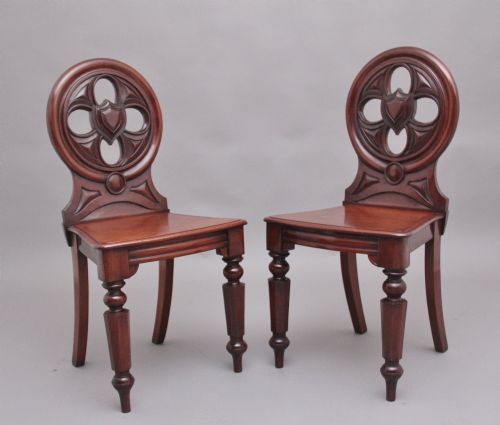
Cabinet makers utilised dense tropical mahogany to construct these rigid seats, often pairing the dark timber with brass details or fixings. Wood carving formed the primary method of ornamentation, yielding sculptural pelta backs and oval designs.
Joinery techniques focused on durability to withstand placement in high-traffic hallways and reception areas. Workshops employed hand-carving methods to shape elaborate motifs into the solid wood frames without relying on upholstered padding.
Mahogany Foyer Seating Retail Price Guide 2026
Typical asking prices for mahogany foyer seating among the pieces listed under this phrase on Sellingantiques today, from the lower quarter to the upper quarter. They describe what is for sale here now, not the wider market.
What varies in quality
The distinction between standard examples and superior pieces rests upon the depth and ambition of the timber carving. Highly carved items display crisp detailing across the backrests, whereas simpler versions rely on plain wooden surfaces.
Execution of regional styles and specific maker attribution elevate certain sets above ordinary production. Cohesion within pairs and larger sets also determines distinction, alongside the natural grain and rich colour of the mahogany used.
Holland & Sons
The Mahogany Foyer Seating Glossary
- Hall Chair
- A wooden seat intended for an entrance hall or reception space, typically featuring a solid timber seat and a carved back rather than upholstery. These chairs were built to impress arriving guests.
- Pelta Back
- A chair back shaped like a classical shield or crescent, often seen in Regency designs. This distinctive contour draws inspiration from ancient Greek and Roman architecture.
- Regency
- An English design period spanning the early nineteenth century, known for neoclassical lines and classical motifs. Furniture from this era often incorporates clean architectural proportions.
- Georgian
- The overarching stylistic period covering the reigns of the four Georges, spanning the eighteenth and early nineteenth centuries. Pieces from this time demonstrate balanced proportions and quality timber selection.
Mahogany Foyer Seating: Frequently Asked Questions
What is mahogany foyer seating?
Mahogany foyer seating primarily consists of antique wooden hall chairs made during the Georgian, Regency, and Victorian periods. These rigid seats were placed in grand entrances to accommodate visitors.
They generally feature solid timber seats and intricately carved wooden backs rather than soft upholstery. The category includes single chairs, matched pairs, and larger sets.
How were these chairs used?
These seats stood in hallways, lobbies, and reception rooms of large residences to provide brief seating for guests or callers. They were built for formal display rather than prolonged lounging.
Because they occupied entrance spaces, their designs aimed to impress visitors with the owner's taste and the rich grain of the mahogany timber.
How do I live with hall chairs?
Hall chairs function well as sculptural accent pieces in modern entryways, corridors, or dining spaces. Their narrow, upright profiles allow them to sit flat against walls without obstructing movement.
Maintenance involves regular dusting and occasional treatment with appropriate wood care products to preserve the natural finish of the mahogany.
How can I tell the periods apart?
Georgian and Regency pieces often exhibit cleaner classical lines, sculptural forms, and restrained ornamentation. Victorian examples frequently display heavier proportions and deeper, more elaborate carving.
Regional variations, such as nineteenth-century Irish or Scottish items, introduce distinct regional craftsmanship and specific backrest shapes like the pelta design.