



Solid Silver Wine Chalice
A solid silver wine chalice brings ceremony to the table, taking the form of a stemmed cup in sterling silver.
Solid Silver Wine Chalice
A solid silver wine chalice takes the form of a stemmed drinking vessel, often catalogued alongside goblets, barware, and Kiddush cups. These pieces span Georgian, Victorian, and later periods including Art Deco, showing how traditional forms persisted across centuries.
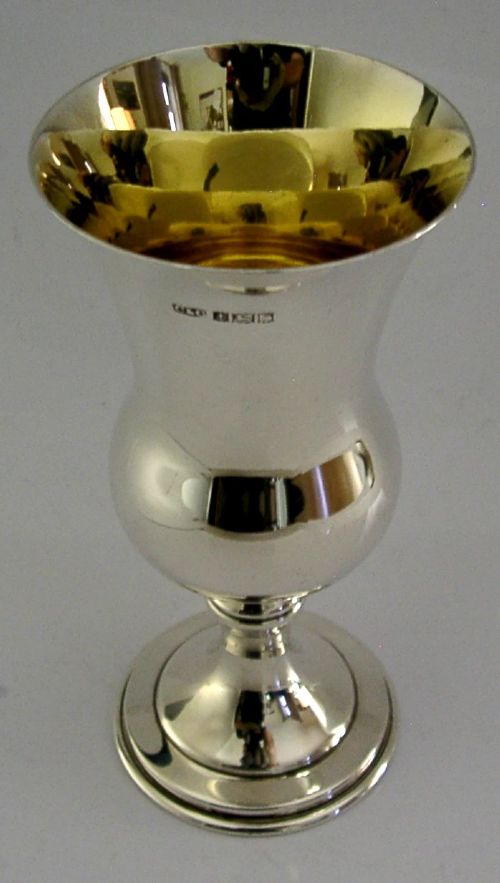
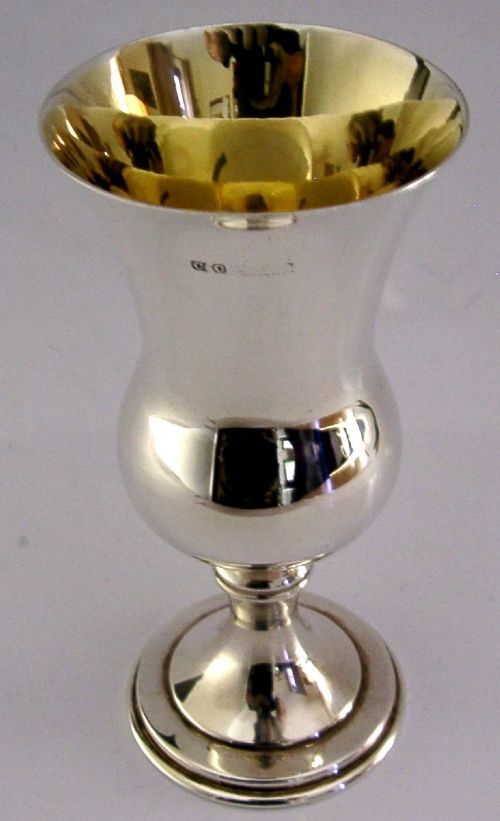
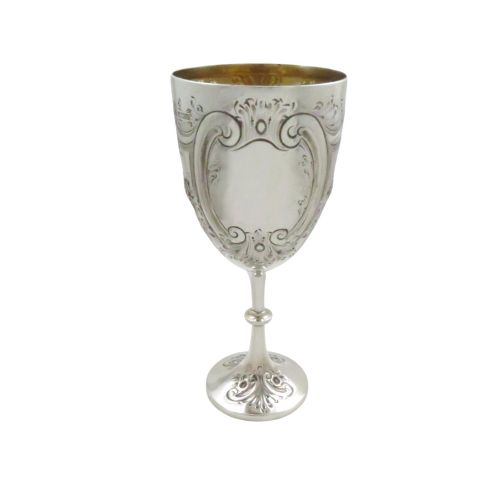
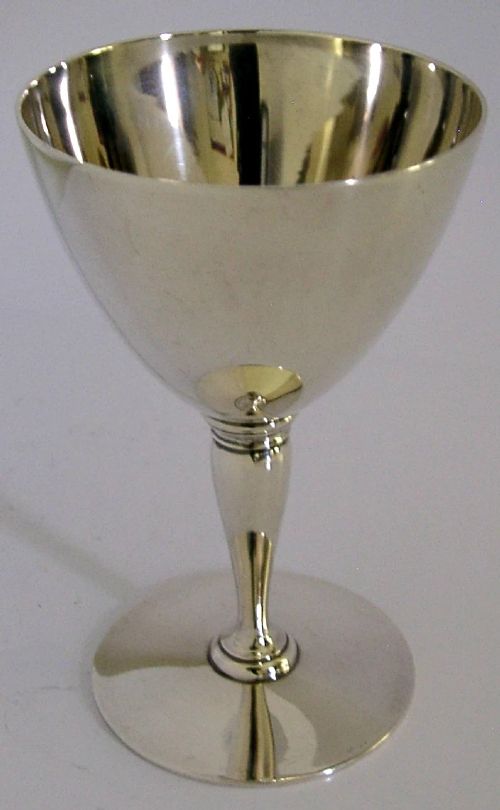
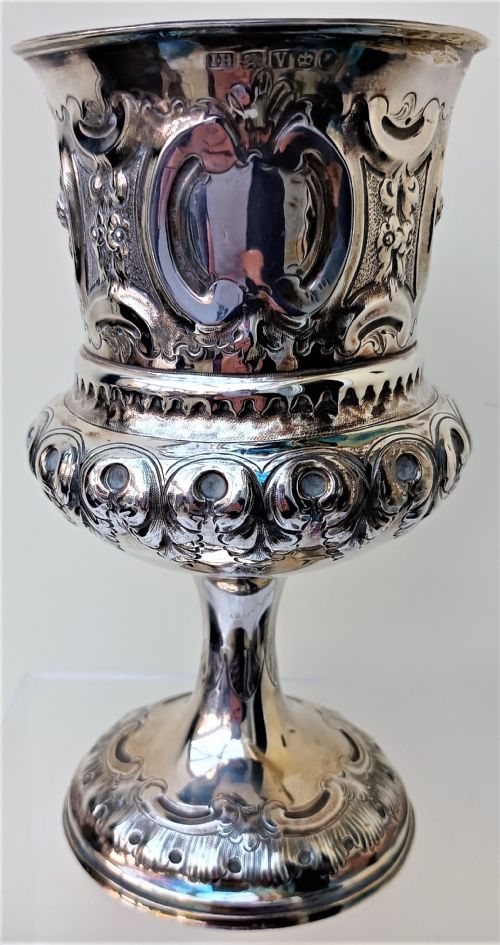
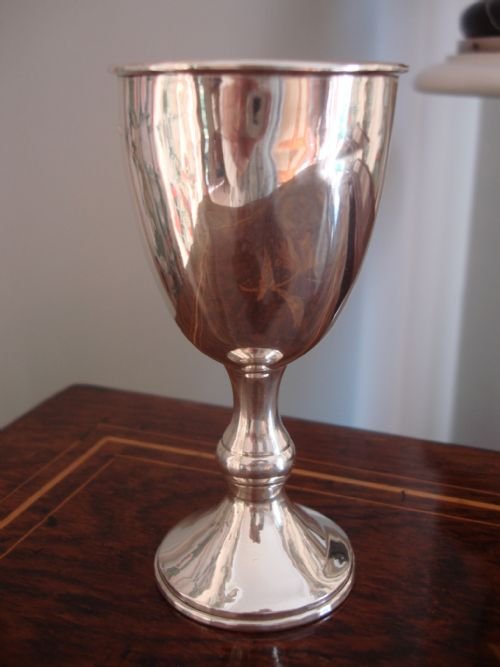
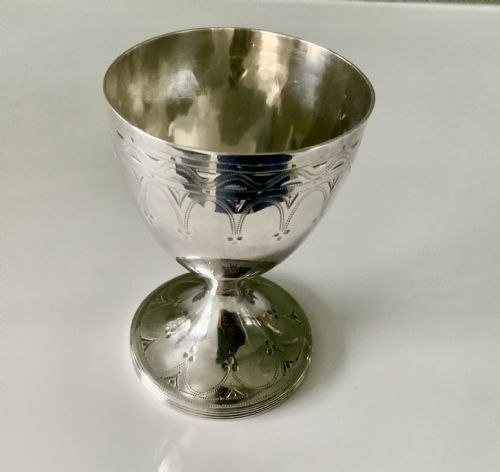
The objects seen here range from simple vase-shaped bodies to parcels gilt versions and bright-cut examples. Most commonly, a buyer encounters Victorian and Georgian pieces alongside twentieth-century items from makers such as Tiffany and Co or George Unite.
Origins stretch from English provincial assay offices to London and beyond, including Chinese export examples. The forms serve both decorative display and ceremonial drinking functions, utilising traditional vessel shapes.
How they were made
Construction relies primarily on sterling silver, sometimes enhanced with gold gilt or silver-gilt interior and exterior washes. Metalsmiths shaped the bodies through hammering, spinning, and casting, soldering stems and bases to the main bowl.
Decoration techniques include bright-cut engraving, which removes thin slivers of metal to form geometric or floral patterns. Parcel gilt examples selectively apply gold to the silver surface to create contrast between the bowl interior and exterior.
Solid Silver Wine Chalice Retail Price Guide 2026
Typical asking prices for solid silver wine chalice among the pieces listed under this phrase on Sellingantiques today, from the lower quarter to the upper quarter. They describe what is for sale here now, not the wider market.
Listings include sterling silver, gold gilt, and silver-gilt materials across Georgian, Victorian, and Art Deco styles.
What varies in quality
Quality rests on the weight of the metal and the crispness of any engraved or bright-cut decoration. Substantial gauge silver provides a heavier feel in the hand, separating utilitarian vessels from lighter presentation pieces.
The clarity of hallmarks stamped into the metal indicates the precision of the silversmith and the authority of the assay office. Finer examples retain sharp borders on maker marks, lion passant, and date letters without excessive wear from polishing.
Tiffany and Co·George Unite·William Eaton·James Deakin and Sons
The Solid Silver Wine Chalice Glossary
- Sterling silver
- An alloy comprising ninety-two point five percent silver by mass, with the remainder usually copper. This standard underpins British silverware and guarantees metal purity.
- Bright-cut
- An engraving technique using faceted cuts that reflect light from different angles. It creates sparkling geometric or floral borders on Georgian silver.
- Parcel gilt
- A decorative method where only part of an object receives gold plating. On these chalices, the interior of the bowl often shows gold against a silver exterior.
- Kiddush cup
- A ritual goblet used for sanctifying wine on the Sabbath and festivals in Jewish tradition. They share the same cup and stem form as standard wine chalices.
- Assay office
- A body that tested precious metals and stamped official hallmarks onto items. Towns such as London and Sheffield ran these offices.
Solid Silver Wine Chalice: Frequently Asked Questions
What is a solid silver wine chalice?
A solid silver wine chalice is a stemmed drinking vessel fashioned from sterling silver. They appear in styles ranging from Georgian vase-shaped bodies to Art Deco cocktail cups.
These pieces function as both display items and drinking vessels for wine or ceremonial use. Their forms connect historical dining customs with precious metalwork.
How old are these chalices?
The pieces span from the late eighteenth century through the Georgian and Victorian eras up to the mid-twentieth century. Hallmarks stamped into the metal provide exact years and assay towns.
Earlier examples often feature bright-cut engraving, while later pieces show Art Deco influences or simpler twentieth-century lines. Each period brings distinct manufacturing traits.
Are these chalices safe to drink from?
Sterling silver serves as a traditional material for dining and drinking vessels. Many historical examples saw active use at the table for wine and other drinks.
Owners today often choose to use them for special occasions or display them as barware. Regular gentle cleaning maintains the silver surface.
How do I identify the maker and date?
British pieces carry a series of hallmarks stamped directly into the silver. These typically include a maker mark, a purity mark such as the lion passant, and a date letter.
Reference books match these punch marks to specific assay offices and silversmiths. International pieces, such as Chinese export items, carry alternative stamp conventions.