



Solid Silver Matchbox
A solid silver matchbox, more properly called a vesta case, is a pocket essential for carrying matches safely and keeping them dry.
Solid Silver Matchbox
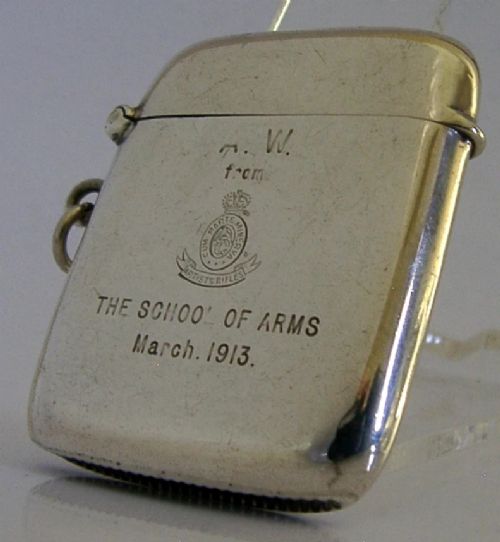
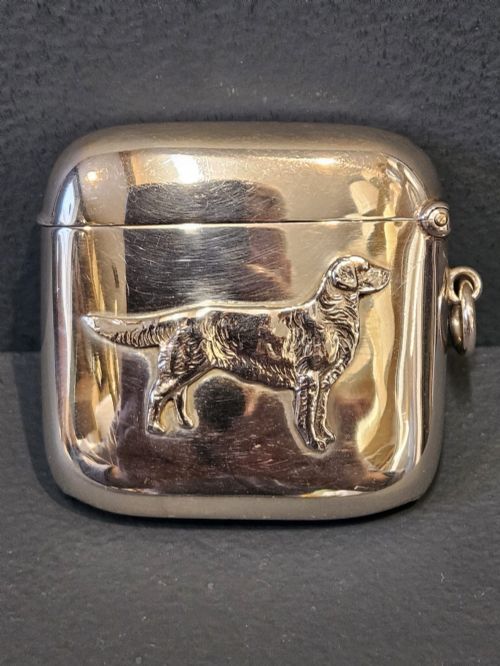
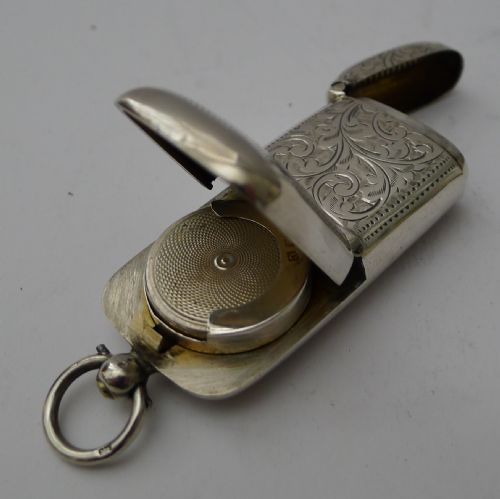
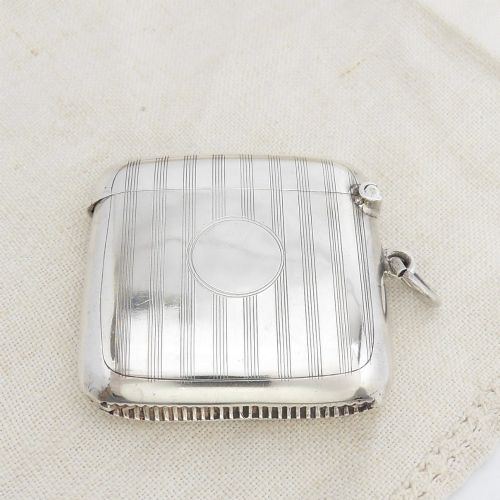
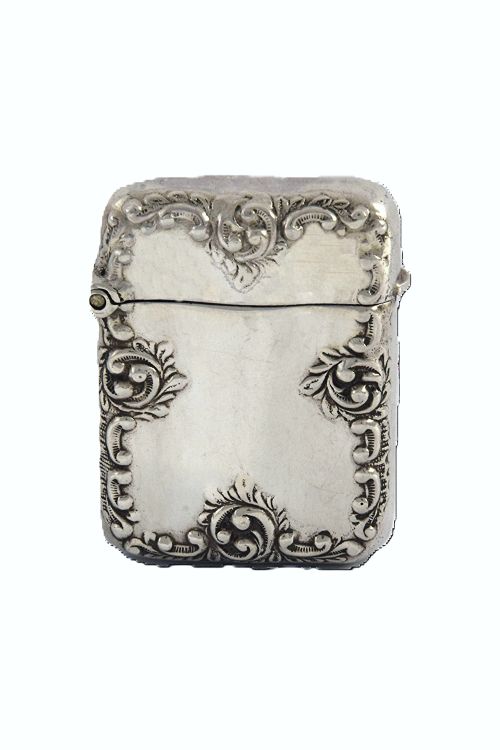
A solid silver matchbox, known period-correct as a vesta case or match safe, is a small pocket container designed to hold matches and strike them on an integrated abrasive strip. Collectors encounter these primarily in Victorian, Edwardian, and George V styles, spanning the late nineteenth and early twentieth centuries.
The pieces listed on this page range from plain pocket accessories to curved examples designed to fit comfortably against the body and novelty shapes including a boar. Originating largely from Birmingham and London assay offices, these containers reflect the everyday smoking habits of past decades.
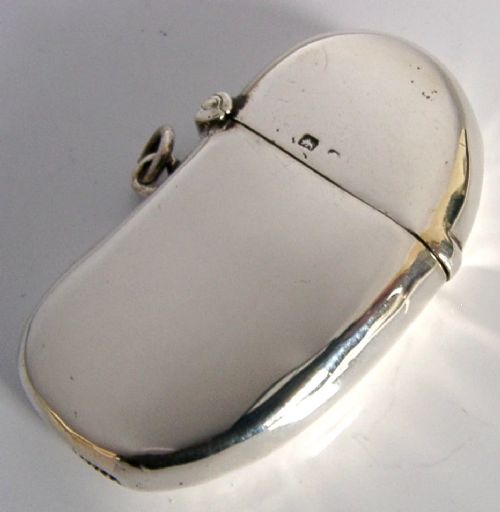
Most examples take the form of small rectangular boxes with hinged lids, though kidney bean shapes and combined sovereign cases also appear in the record. The survival of these objects depends on the resilience of sterling silver, which protected fragile matches from moisture and pressure in the pocket.
How they were made
Makers fashioned these pieces from sterling silver, shaping the metal through stamping, folding, and soldering to create a snug, protective housing for matches. Hinges were carefully fitted to lids to withstand repeated opening and closing during daily use.
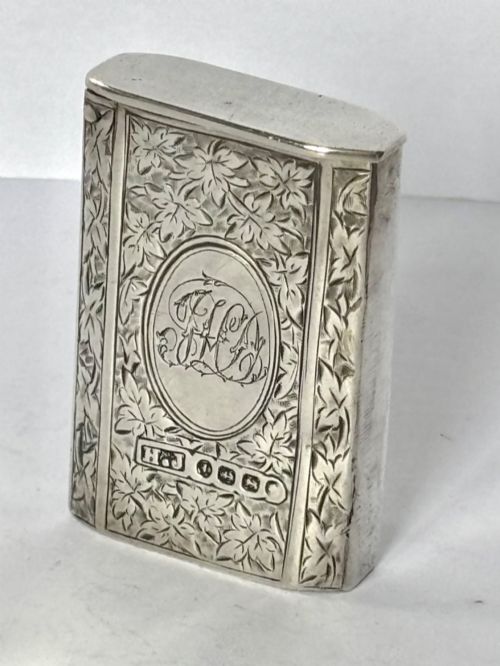
Decoration was applied by hand engraving, utilising techniques such as leaf and scroll patterns or geometric Art Deco lines. Assay marks, including town marks, date letters, and the lion passant, were stamped into the metal to certify the sterling standard.
Solid Silver Matchbox Retail Price Guide 2026
Typical asking prices for solid silver matchbox among the pieces listed under this phrase on Sellingantiques today, from the lower quarter to the upper quarter. They describe what is for sale here now, not the wider market.
Recorded materials on this site consist entirely of sterling silver, spanning Victorian, Edwardian, and George V periods.
What varies in quality
Quality in a vesta case rests on the crispness of the engraving and the structural integrity of the hinge. Sharp, deep leaf and scroll work shows the hand of a skilled engraver, whereas worn patterns suggest heavy use or over-cleaning.
Novelty forms, such as animal shapes or Japanese export pieces incorporating jade, demand greater technical skill from the maker and command higher distinction among collectors than standard rectangular boxes.
HOWARD JAMES·Goldsmiths and Silversmiths Co·DEAKIN AND FRANCIS
The Solid Silver Matchbox Glossary
- Vesta
- A short match tipped with phosphorus, named after the Roman goddess of the hearth. These cases were specifically designed to carry them safely.
- Match safe
- The American term for a vesta case, frequently used in nineteenth-century trade. Both terms describe the same pocket container.
- Sterling silver
- An alloy consisting of ninety-two point five percent silver and seven point five percent other metals, typically copper. This standard was legally enforced by British assay offices.
- Assay mark
- A stamp applied by an official body to indicate the purity of the metal, the town of testing, and the year of manufacture. These marks allow precise dating of British silver.
- Sovereign case
- A small pocket container made to hold gold sovereign coins, sometimes combined with a vesta compartment for matches. They represent a dual-purpose accessory of the Edwardian period.
Solid Silver Matchbox: Frequently Asked Questions
What is the difference between a vesta and a match safe?
A vesta is the traditional British term for a match, while a match safe is the term more commonly used in America for the same container. Both words refer to the small pocket boxes listed here.
In British usage, the case itself is almost universally called a vesta case, regardless of whether it held wax or wooden matches.
How do I know the date of my silver matchbox?
British silver matchboxes carry hallmarks stamped directly into the metal. These marks include a date letter corresponding to the specific year of assay.
Additional marks indicate the city of testing, such as Birmingham or London, alongside the maker's mark and the sterling silver standard mark.
Were these matchboxes used only by men?
While pocket vestas were standard equipment for gentlemen carrying cigars or cigarettes, women also used smaller decorative versions kept in handbags or chatelaines.
Curved designs were made specifically to fit into waistcoat pockets without creating an unsightly bulge, suiting the tailoring of the period.
Why do some matchboxes have a textured panel at the bottom?
The textured panel, often cross-hatched or milled into the silver, serves as the striking surface for the matches. Users rubbed the vesta against this rough patch to ignite it.
This integrated feature meant the smoker had a self-contained lighting system within the single pocket case.