




Solid Silver Desk Ornament
A solid silver desk ornament brings heft and character to a writing table, taking the form of animals, vehicles, and inkstands.
Solid Silver Desk Ornament
A solid silver desk ornament serves as a functional or purely decorative desk piece, ranging from diminutive animal figures to substantial inkstands. When searching for a solid silver desk ornament, buyers encounter items fashioned in styles from Victorian and Edwardian periods through to Mid-Century British design.
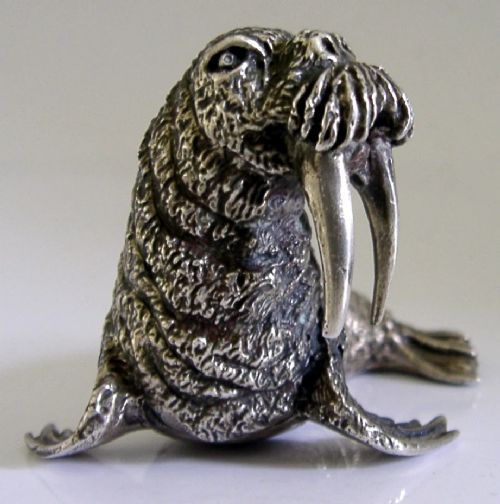
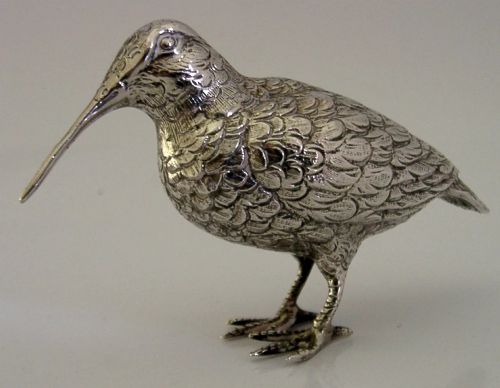
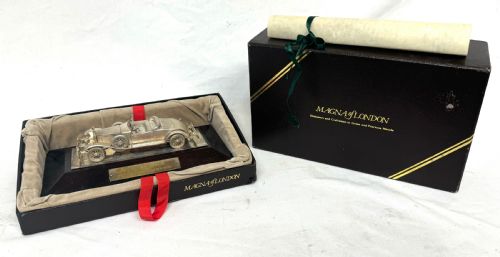
The selection includes sculptural paperweights, miniature models of cars and biplanes, and detailed animal figurines such as foxes, walruses, and birds. These objects reflect the tastes of their respective eras, utilising sterling silver, 830 silver, and silver gilt alongside supporting materials like wood and glass.
Makers applied these designs across desk accessories, creating novelty items like folding chairs on plinths and pen wipes alongside traditional inkstands. Each piece occupies a space between utility and display, designed to anchor papers or adorn a study.
How they were made
Silversmiths employed casting and hand-finishing techniques to shape sterling silver and 830 silver into lifelike animal forms and intricate mechanical models. Details on figures such as feathers on birds and fur on animals were rendered through chasing and engraving directly onto the metal surface.
Composite pieces combine solid silver with wooden bases, glass inserts, or velvet linings to provide weight and contrast for desk use. Vitreous enamel adds colour to specific highlights, fusing powdered glass to the silver base under high heat.
Materials utilised across the collection include sterling silver, 830 silver, silver gilt, wood, glass, and vitreous enamel.
What varies in quality
Quality rests in the crispness of the casting and the depth of the hand-chased detail across the silver surface. Substantial weight and balanced proportions distinguish superior models from lighter, simpler stampings.
The integration of secondary materials, such as fitted wooden plinths or applied enamel work, dictates the execution level of the piece. Well-preserved hallmarks and maker marks confirm the origin and silver standard, anchoring the piece within its period.
The Solid Silver Desk Ornament Glossary
- Sterling silver
- An alloy containing ninety-two point five percent silver by mass, with the remainder being other metals, usually copper. This standard is denoted by specific hallmarks on British pieces.
- 830 silver
- A silver standard containing eighty-three point zero percent pure silver, commonly found in Scandinavian and continental European silverwork. It offers a slightly different tone and malleability compared to sterling.
- Silver gilt
- Silver that has been coated with a thin layer of gold on its surface, often referred to as vermeil. This technique provides the rich appearance of solid gold while utilising a silver base.
- Inkstand
- A desk stand holding one or more inkwells, often incorporating pen rests and sanders. Edwardian and Victorian examples frequently integrate heavy silver trays with glass containers.
- Vitreous enamel
- A material made by fusing powdered glass to a substrate by firing, usually at high temperatures. It creates a smooth, durable, and brightly coloured decorative layer on metal.
Solid Silver Desk Ornament: Frequently Asked Questions
How do I clean a silver desk ornament?
Use a soft microfiber cloth and a mild silver polish specifically formulated for precious metals to remove tarnish. Avoid harsh abrasive cleaners that can wear away fine chased details and hallmarks.
Take care around inset elements like enamel, wood, or glass to prevent cleaning agents from seeping into joints. Regular, gentle dusting preserves the natural patina built up over decades of display.
What periods do these desk ornaments cover?
The available selection spans from the Victorian era through the Edwardian period and the George V years, extending into Mid-Century designs. Each era brings distinct stylistic traits, from ornate Victorian pen wipes to streamlined Art Deco and Mid-Century models.
Craftsmanship shifted over these decades, moving from elaborate traditional casting toward cleaner modernist lines while retaining solid silver construction.
Were these items meant for actual desk use?
Many pieces served a direct practical function on a writing table, such as inkstands, pen wipes, and paperweights that held documents in place. Other items, like miniature biplanes, cars, and animal figurines, were produced purely as decorative desk ornaments.
Even functional pieces were designed with aesthetic appeal in mind, acting as conversation starters in studies and offices.
How can I tell the age of a silver ornament?
Hallmarks stamped onto the silver provide the most reliable indicator of origin and date for British pieces, referencing specific assay offices and year letters. Stylistic clues, such as the distinct aesthetics of Arts and Crafts or Art Deco design, also help narrow down the period.
Secondary materials like original wooden bases and glass components often align with the manufacturing techniques of the era in which they were made.