
Solid Oak Seating
Solid oak seating spans centuries of English country and town craftsmanship, offering heavy timber forms built to endure daily use.
Solid Oak Seating
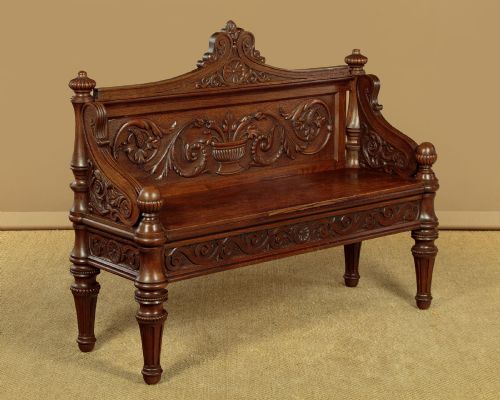
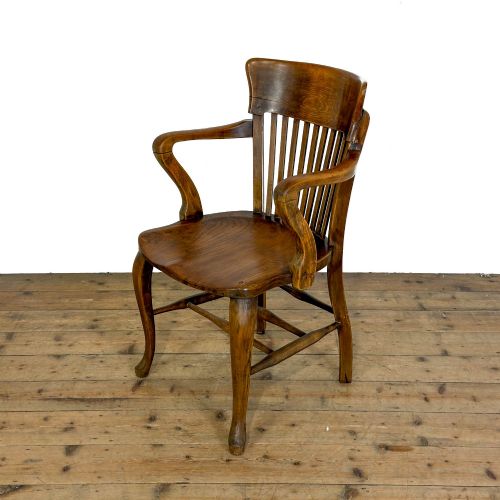
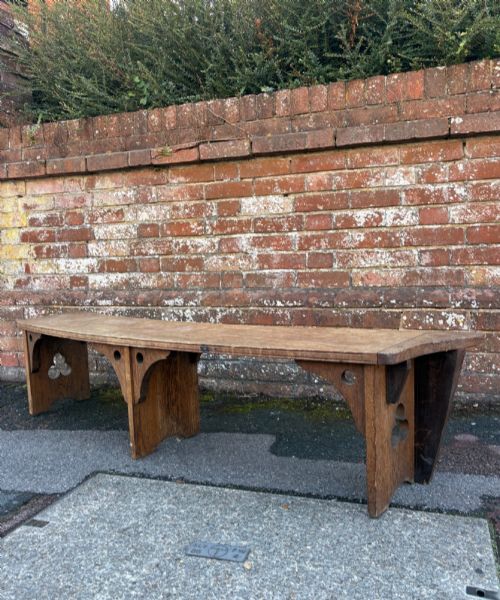
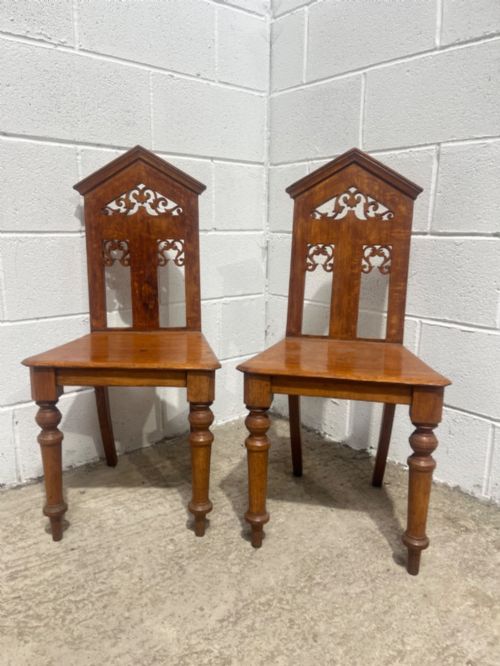
Solid oak seating encompasses robust items like hall chairs, dining chairs, armchairs, benches, settles and joint stools found across the seventeenth, eighteenth, nineteenth and early twentieth centuries. Buyers seeking solid oak seating most frequently encounter Victorian and Edwardian examples alongside Arts and Crafts productions and earlier farmhouse forms.
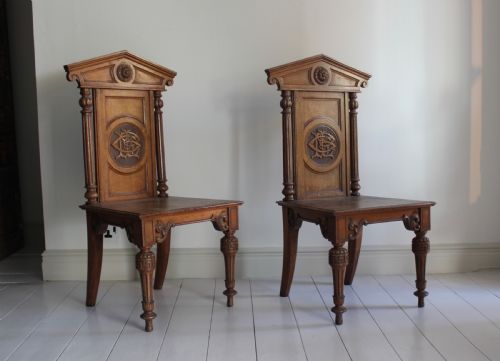
The inventory ranges from tall-backed hall chairs with heraldic shields to refectory benches, desk chairs and heavy monk's benches with convertible tops. Regional styles include English country pieces, Gothic Revival designs and Welsh variants utilising mixed timber frames.
Earlier periods yield panel-backed Windsor chairs, wainscot armchairs and joint stools constructed with pegged mortise and tenon joints. Later nineteenth-century items introduce architectural carved details, curved Pugin supports and upholstered elements in leather and velvet.
Materials and construction methods
Joiners built these chairs, benches and stools primarily from native timber, pairing solid oak with supporting elements of elm, beech and ash. Timbers were split or sawn by hand, seasoned, and joined using pegged mortise and tenon construction rather than modern metal fasteners.
Carving, turning and panel-shaping defined the surface work, utilising simple chisels and drawknives on heavy stock. Secondary materials like brass fittings, leather upholstery and velvet pads appeared on desk chairs, reclining armchairs and formal dining sets.
Listings feature solid oak seating spanning the 17th, 18th, 19th and early 20th centuries, alongside elm, beech, ash, leather and brass.
Distinctions in craftsmanship and survival
Quality rests upon the integrity of the timber selection and the tightness of the original joinery. Pieces fashioned from thick, quarter-sawn oak retain their structural rigidity far better than those built from thin boards or substituted secondary woods.
Proportion and restraint in decorative carving separate standard production items from workshop pieces bearing maker stamps or specific architectural intent. Original surfaces, untouched patination and complete sets of matched chairs carry greater weight among collectors than mismatched harlequin groupings.
Strahan of Dublin·Jack Grimble
The Solid Oak Seating Glossary
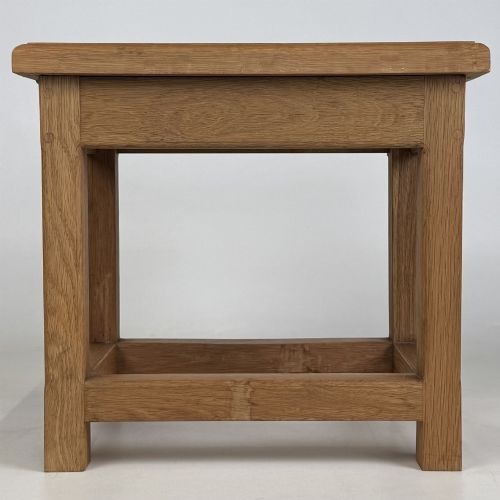
- Joint stool
- A low wooden stool constructed with pegged mortise and tenon joinery rather than turned legs inserted into a seat. These sturdy items served various household seating and utility functions from the seventeenth century onward.
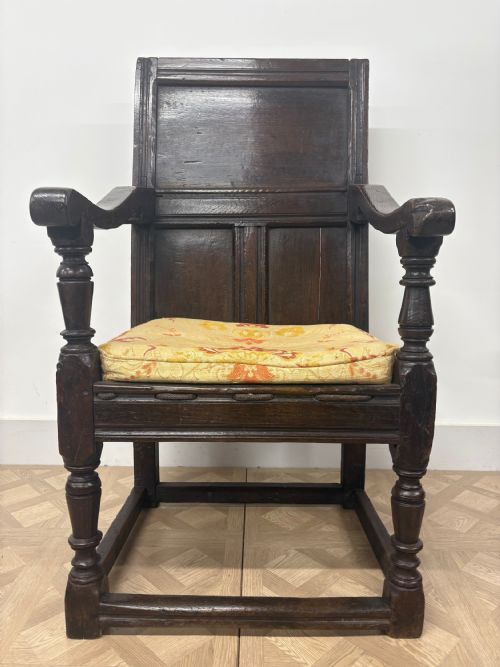
- Wainscot armchair
- A heavy seventeenth-century wooden armchair featuring a solid panelled back and panelled seat base. They represent high status domestic seating before upholstered armchairs became common.
- Refectory bench
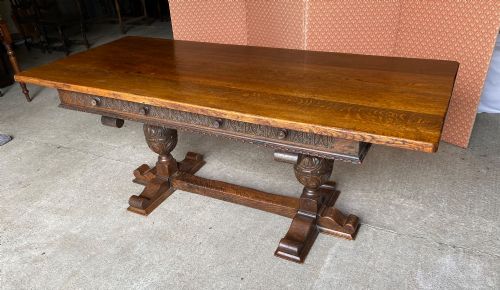
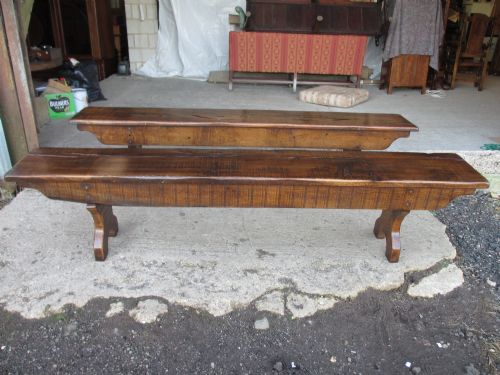
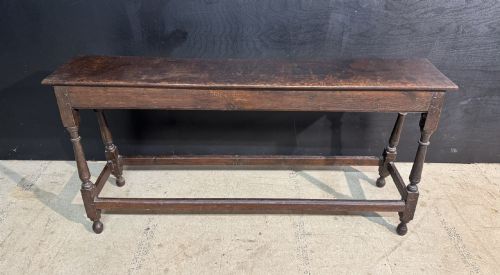
- A long, narrow bench designed to accompany large dining tables in halls and kitchens. They typically feature heavy trestle ends or four turned legs joined by stretchers.
- Monk's bench
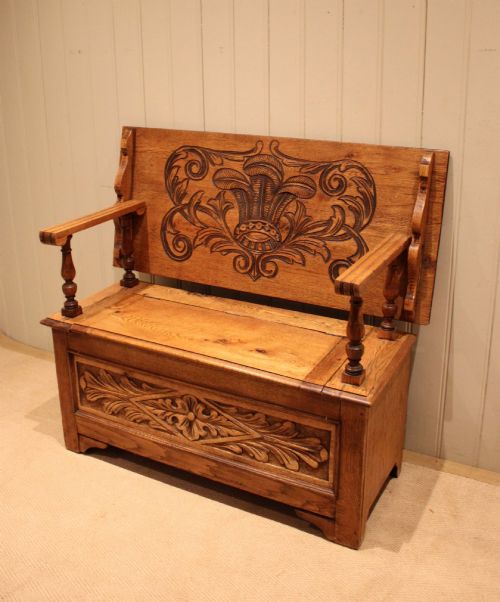
- A multi-functional piece of furniture featuring a hinged back that folds down over the seat to form a small table. They gained popularity during the Edwardian period alongside revivalist interior trends.
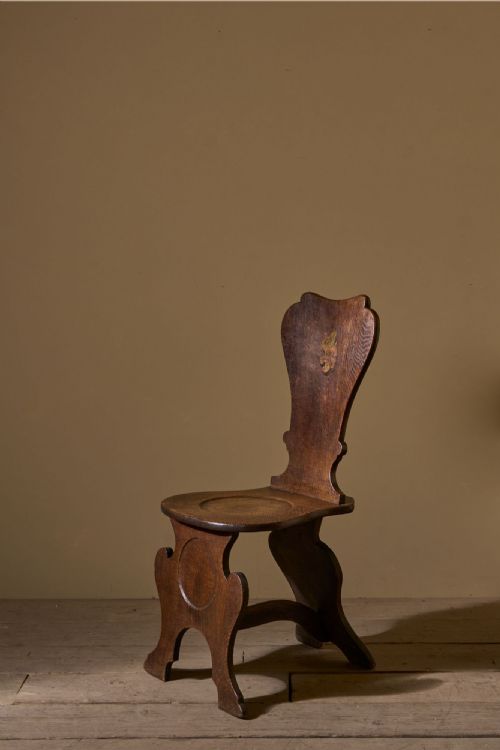
- Sgabello
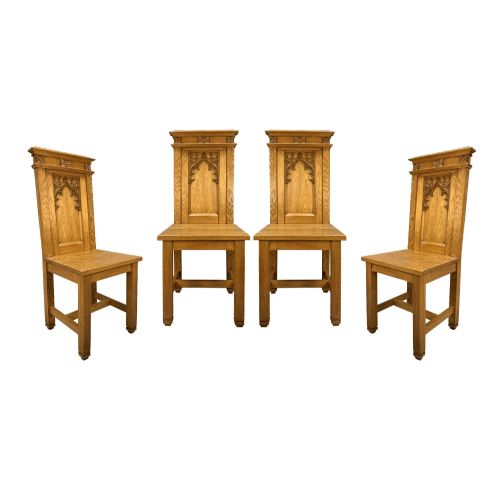
- A light, portable Renaissance-style chair featuring solid carved board sides instead of four conventional legs. English makers adopted this Italian form during the Gothic Revival for hallway placement.
Solid Oak Seating: Frequently Asked Questions
How do I date a solid oak chair?
Dating relies upon examining construction marks, tool traces, joint types and timber preparation methods. Hand-riven oak boards, pegged joints and simpler tool marks generally point to earlier centuries.
Later Victorian and Edwardian pieces often display machine-sawn components, standardised screw fixings and revivalist decorative motifs that copy historical styles without achieving true early construction.
What is a harlequin set of chairs?
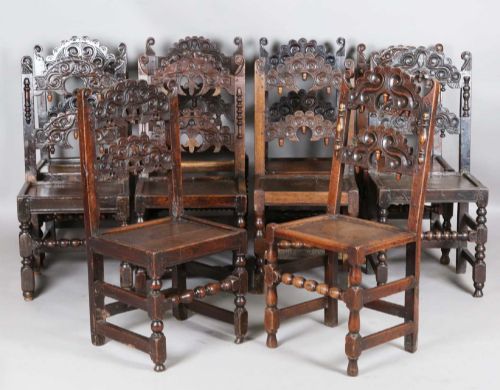
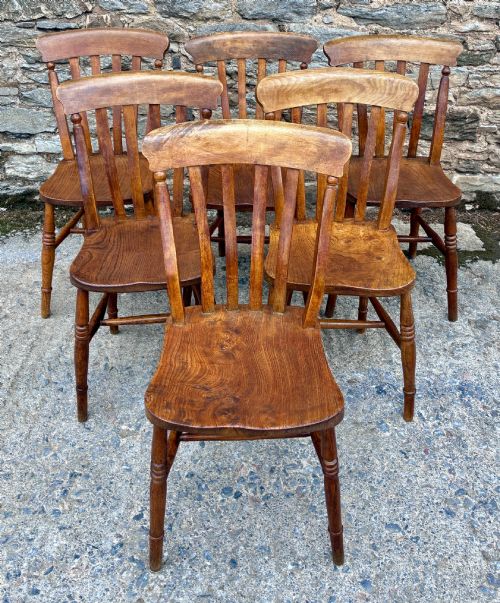
A harlequin set comprises a group of dining chairs that match in general style, timber or period but were not originally manufactured together as a single suite. Dealers and families assembled these sets over time to match surrounding furniture.
Buyers appreciate harlequin sets for their varied character while retaining a harmonious visual presence around a kitchen or dining table.
Where should I place a heavy oak bench?
Heavy oak benches suit entrance halls, boot rooms, long corridors and large country kitchens where their substantial weight and architectural forms provide solid function. They offer durable seating near entryways for removing footwear.
Placing them away from direct heat sources and strong sunlight preserves the moisture content and natural patination of the timber over decades.
Are these chairs comfortable for daily use?
Solid wood chairs from earlier centuries were built with upright postures and rigid wooden seats designed for formal dining or working tasks rather than lounging. Adding loose squab cushions provides extra comfort without altering the underlying antique frame.
Upholstered desk chairs, reclining armchairs and padded dining variants offer softer support while maintaining structural timber integrity.