
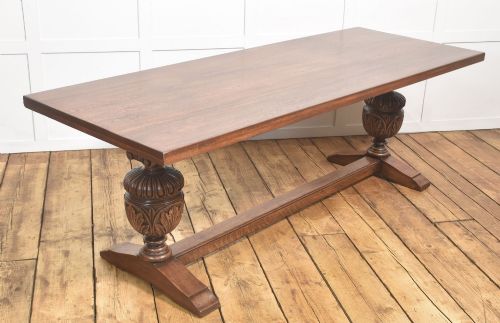
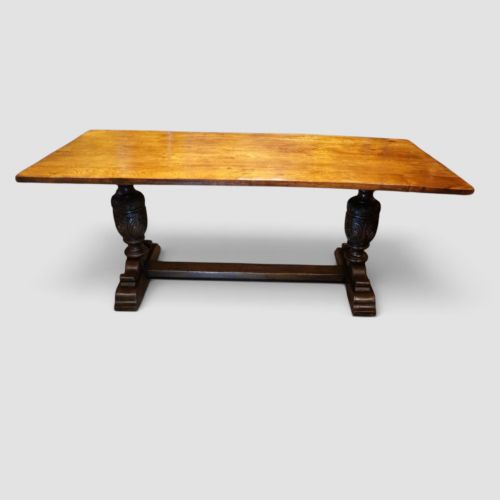
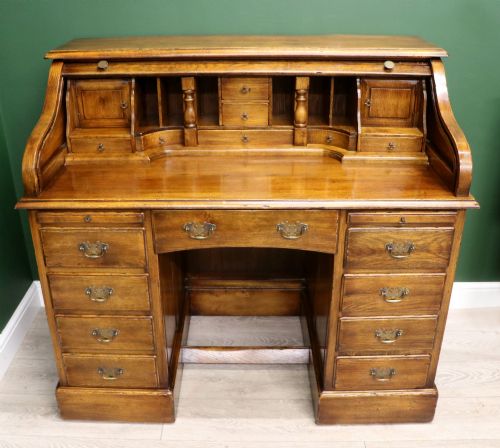
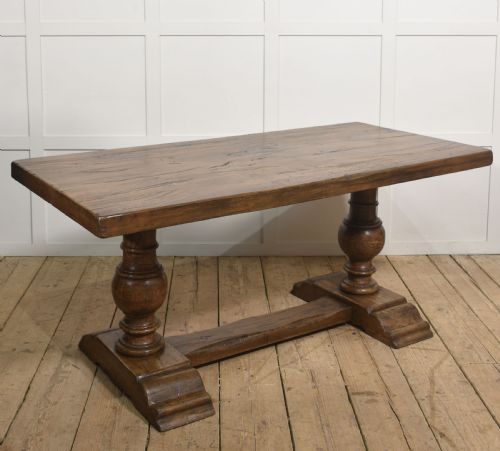


Solid Oak Pedestal Table
A solid oak pedestal table brings stubborn timber and sturdy single-pillar architecture straight into daily domestic traffic.
Solid Oak Pedestal Table
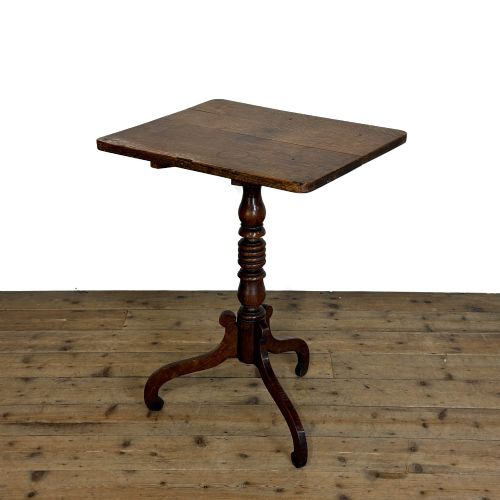
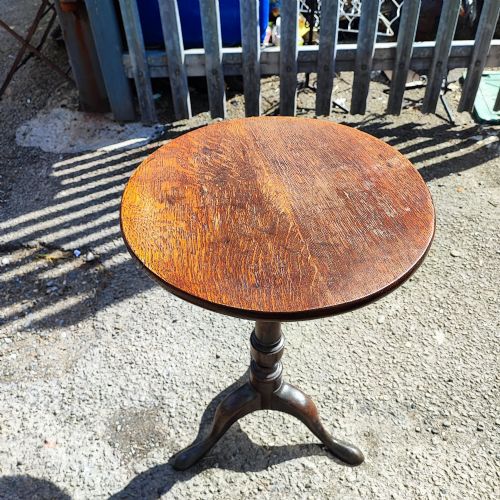
A solid oak pedestal table stands on a central column or tripod base rather than traditional corner legs, concentrating weight squarely in the middle. When searching for a solid oak pedestal table, buyers encounter formats ranging from compact wine tables and tilt-top drinking pieces to large circular dining designs and heavily carved office desks. The selection spans Georgian tripod examples, Victorian parlour items, and early twentieth-century interpretations, showing how makers adapted the central pillar across diverse domestic functions.
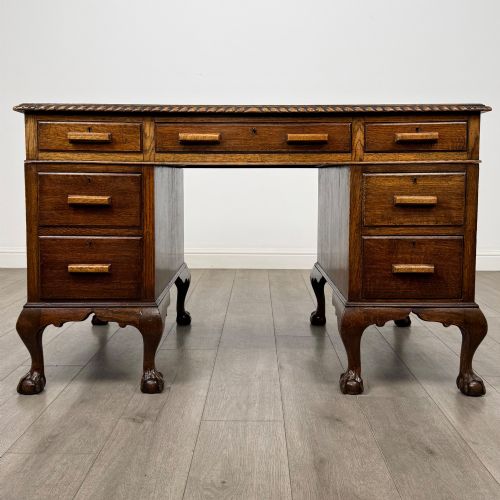
Dining tables, occasional pieces, and writing desks dominate the available forms, often utilising robust oak timbers paired with iron, brass, or leather details. Pieces from the Victorian and Edwardian eras sit alongside earlier 19th-century models and 1930s revivals, revealing a continuous preference for heavy wood construction. Buyers frequently find circular formats resting on cruciform or multi-footed supports designed to maximise legroom around the central column.
Judging quality in oak tables
Quality rests on the density and selection of the timber, the stability of the central pedestal connection, and the precision of the joinery. Superior examples maintain rigidity across wide circular tops without wobble at the pillar junction, demonstrating careful timber seasoning and balanced weight distribution.
Refinement shows in the execution of carved details, the smooth operation of tilt-top mechanisms or drawers, and the preservation of mellow natural colour in the oak. Lesser pieces may exhibit stiffness in mechanical parts or heavier, less balanced proportions between the top and the base support.
Scottish oak makes an appearance in the parlour drinking tables, proving that northern trees enjoyed a stiff drink just as much as the English ones.
The Solid Oak Pedestal Table Glossary
- Pedestal table
- A table supported by a single central pillar or column resting on feet or a cruciform base. This design removes corner legs to improve seating access.
- Tilt top
- A tabletop hinged to the pedestal column so it can pivot vertically for storage against a wall. This mechanism appears frequently on smaller 19th-century wine and parlour tables.
- Refectory table
- A long, narrow dining table traditionally built with heavy wooden planks and sturdy stretcher supports. Versions in the listings utilise solid oak timbers.
- Linenfold
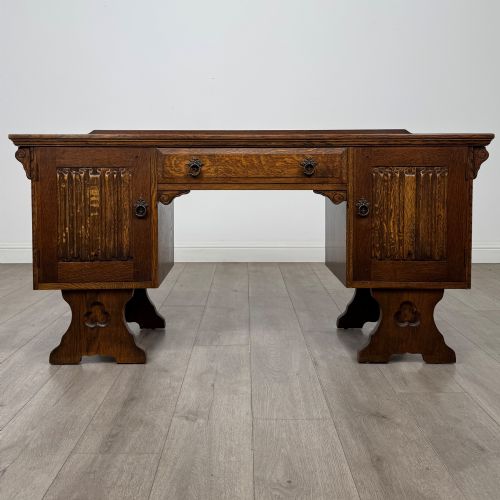
- A style of wood carving that mimics folded fabric, commonly seen on panels of early 20th-century desks and cabinets. It adds texture to flat wooden surfaces.
- Tripod base
- A three-legged support structure attached to the bottom of a central pillar. It provides stable ground contact on uneven period floors.
Solid Oak Pedestal Table: Frequently Asked Questions
What rooms suit a pedestal table?
Circular pedestal formats fit comfortably in dining rooms or central entrance halls where traffic flows around all sides. Their lack of corner legs allows flexible seating arrangements.
Smaller wine tables and occasional pieces work well beside armchairs or in corners, providing stable surface space without dominating a room.
How do I care for solid oak?
Solid oak responds best to dry dusting with a soft cloth and occasional treatment with suitable natural waxes to nourish the grain. Avoiding direct sunlight and extreme heat prevents the timber from drying out or splitting.
Keep liquids away from unsealed surfaces and use mats beneath glasses or hot items to protect the polish from water rings.
Are tilt mechanisms sturdy?
Original tilt-top mechanisms use wooden catches or metal latches designed to lock the surface securely horizontal during use. When properly maintained, these pivots hold firm without dropping.
Testing the catch ensures the top engages solidly in the flat position before placing heavy items on the surface.
How do I date an oak table?
Dating relies on observing construction marks, hardware types, timber thickness, and stylistic clues such as Jacobean revival carvings or Art Deco lines. Examining the underside reveals tool marks and joinery methods specific to eras like the Victorian period or the 1930s.
Comparing the legs, pedestal turnings, and overall proportions against documented period examples helps confirm the decade of manufacture.