
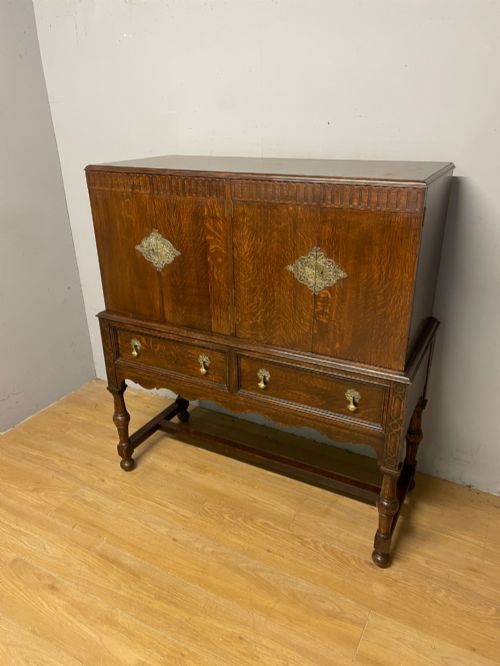
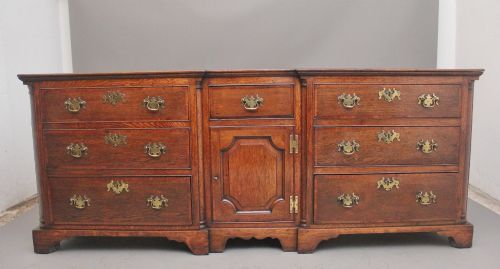


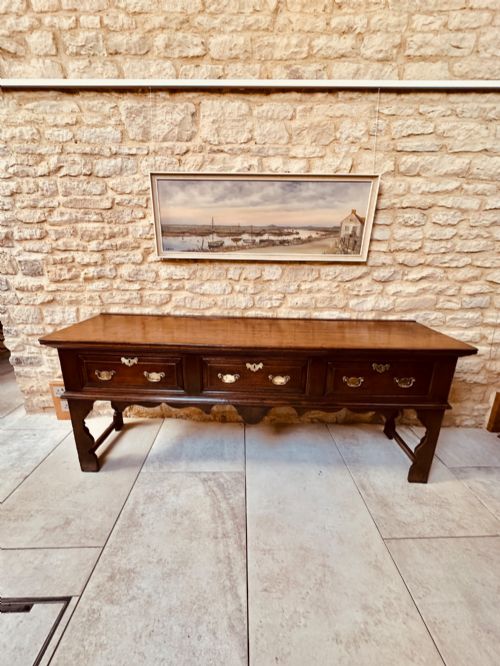


Solid Oak Dresser Base
These heavy solid oak dresser base pieces give a room genuine weight and grounded utility, offering deep storage built to last centuries.
Solid Oak Dresser Base
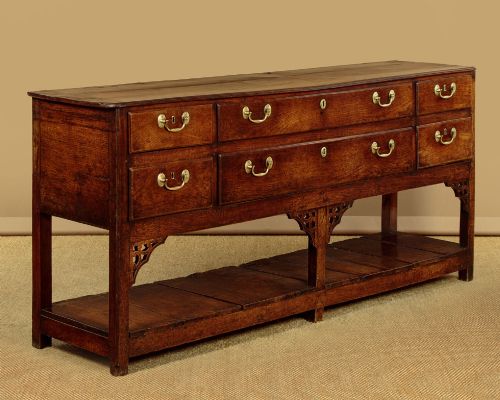
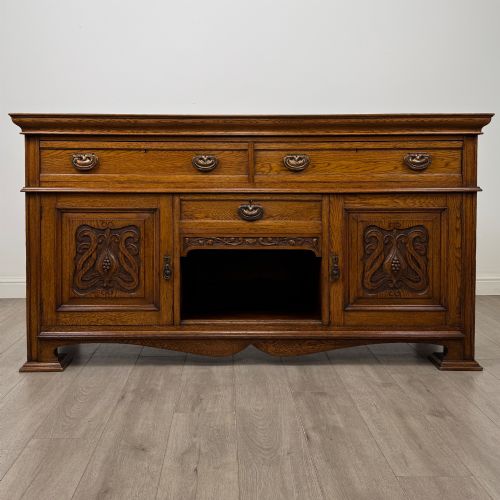
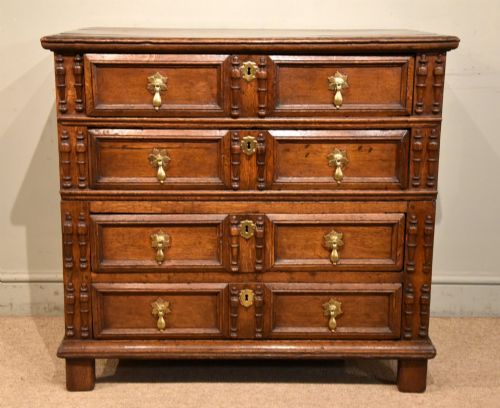
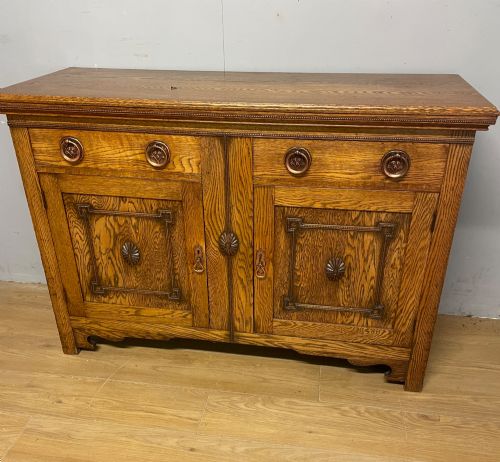
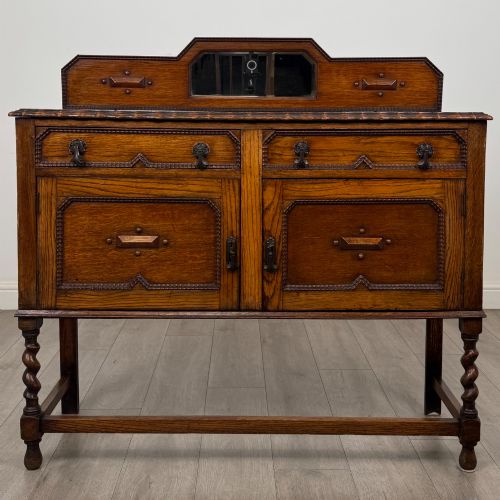
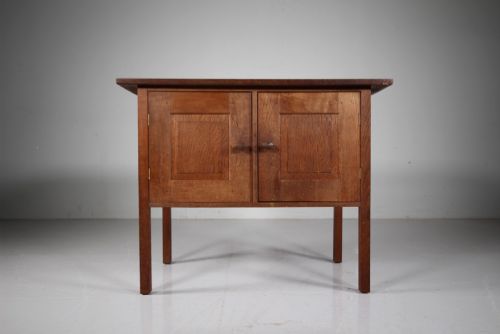
A solid oak dresser base forms a low, heavy sideboard built primarily for practical storage in country houses and large kitchens. When searching for a solid oak dresser base, you encounter everything from austere seventeenth-century low cupboards to eighteenth-century Georgian country servers and early twentieth-century Arts and Crafts reinterpretations. These pieces function as workhorses of domestic interiors, traditionally providing a wide timber top for food preparation alongside deep drawers and enclosed lower cupboards.
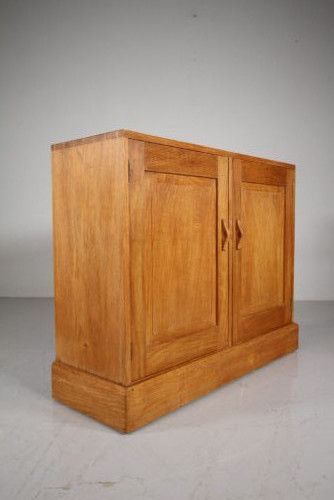
The examples on this page span several centuries, reaching from the seventeenth century through Georgian and Victorian periods into the nineteen-twenties and thirties. Many retain their original brass or iron hardware, while others present simpler panelled doors or blind silhouette legs. Whether you find an eighteenth-century country piece with a potboard or a Cotswold School cupboard, each item prioritises unyielding timber construction and utilitarian honesty.
How they were made
Craftsmen built a solid oak dresser base using heavy framing timbers joined with traditional pegged mortise and tenon construction. English oak provides the dense, durable structure, often quarter-sawn to reveal striking medullary rays across the thick top boards.
Makers integrated brass drop handles, iron hinges, and copper fittings to secure the doors and drawer fronts. Hand-planed surfaces and tongue-and-groove panel doors complete the traditional construction methods seen across these periods.
The listings on this page span the seventeenth, eighteenth, and twentieth centuries, using solid English oak alongside brass, copper, and iron hardware.
What varies in quality
Quality in a solid oak dresser base rests in the thickness of the timber, the integrity of the structural joints, and the retention of original surfaces. Pieces featuring heavy, unwarped top boards and deep, hand-dovetailed drawer construction sit at the upper end of the scale.
The subtlety of hand-carved mouldings and the presence of period-appropriate brass hardware further elevate an individual piece. Lesser examples often show excessive modern timber replacement or overly aggressive cleaning that strips away centuries of accumulated patina.
Peter Waals
The Solid Oak Dresser Base Glossary
- Potboard
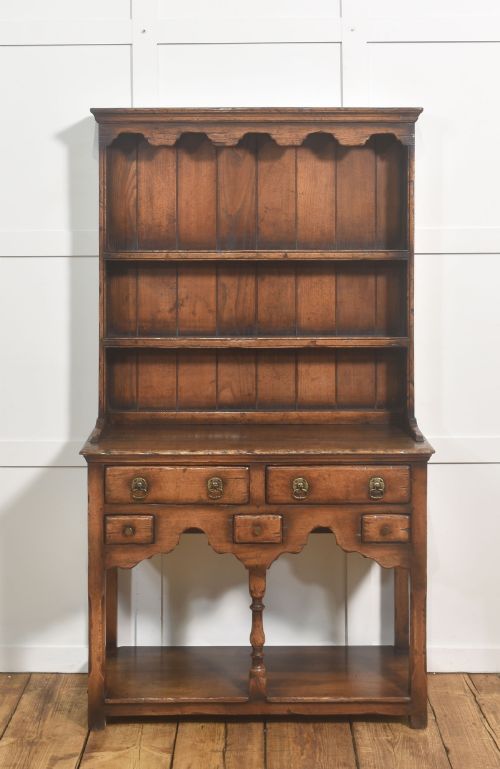
- An open lower shelf built into a dresser base designed to hold heavy ceramic platters and pots. This lower tier provides structural stability to the legs while keeping everyday kitchenware within arm reach.
- Cotswold School
- A twentieth-century design movement focusing on simplified, honest furniture made by hand from solid English oak. Makers associated with this style prioritised visible construction details and unadorned utility.
- Jacobean Revival
- A nineteenth and early twentieth-century stylistic movement copying the heavy turned legs, geometric moulding, and sombre dark finishes of the seventeenth century. Furniture in this manner borrows heavily from earlier seventeenth-century forms.
- Blind silhouette legs
- Shaped or profiled upright supports cut to create a decorative outline without piercing the timber entirely. You spot this detail on eighteenth-century country pieces supporting the weight of the main body.
Solid Oak Dresser Base: Frequently Asked Questions
What is the difference between a dresser base and a sideboard?
A dresser base traditionally originates from a kitchen or pantry context, often featuring an open potboard beneath the main drawers and cupboards. Sideboards generally emerged later for formal dining rooms, favouring enclosed storage and decorative backsplashes.
Both serve similar functional roles in modern homes, but dresser bases usually carry a more rustic, substantial country aesthetic compared to refined dining room sideboards.
How do I date an antique oak dresser base?
Dating relies on examining tool marks, drawer construction methods, and the style of the hardware. Seventeenth-century examples show hand- cleft timber and heavy frame-and-panel doors, whereas eighteenth-century pieces often feature hand-cut dovetails on the drawer sides.
Later revival pieces from the twentieth century display more uniform machine sawing and standardised fixings even when built in an older style.
Can I use a dresser base in a modern kitchen?
These pieces function exceptionally well as kitchen islands, coffee stations, or supplementary storage units because the thick oak tops withstand heavy daily use. Their deep drawers and cupboards easily swallow modern cookware, table linen, or dry goods.
Ensure you measure your floor space carefully, as seventeenth and eighteenth-century country pieces often feature generous proportions and heavy overhangs.
Why do some dresser bases have plate racks?
Plate racks formed the upper superstructure designed to display pewter and ceramic plates upright against the wall while allowing wet tableware to drain safely after washing. Many surviving country pieces retain this rack, though others lost their upper sections over time.
When a base survives without its rack, it functions entirely as a low sideboard or serving table.