
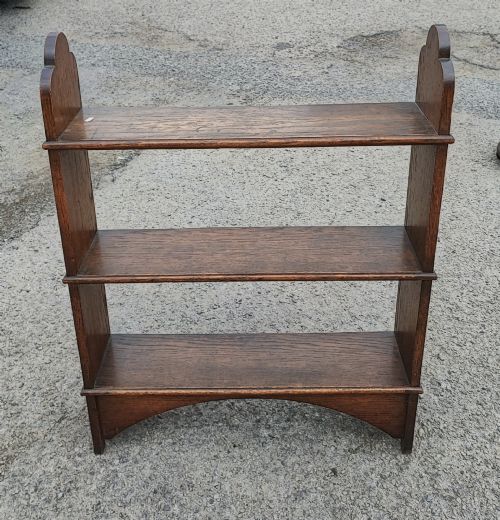
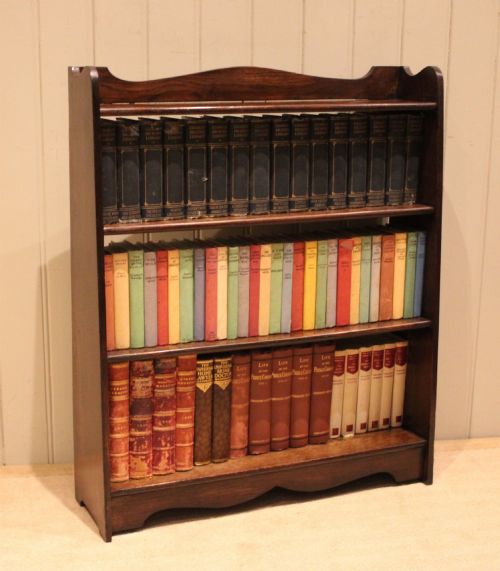
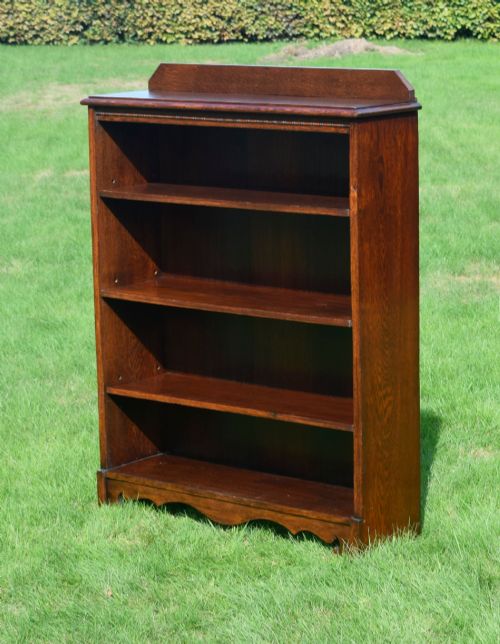
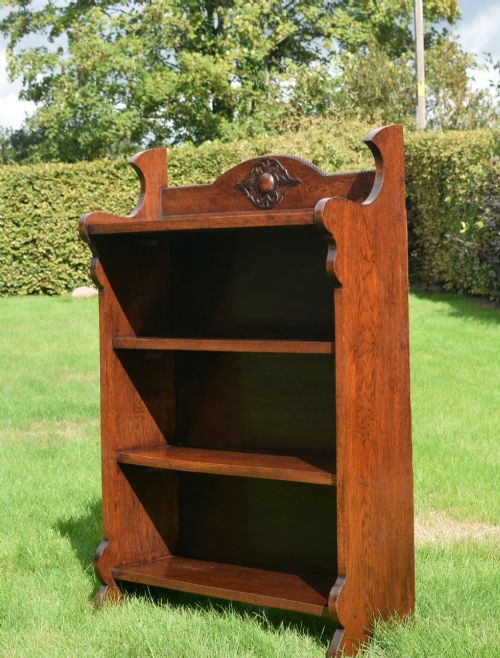
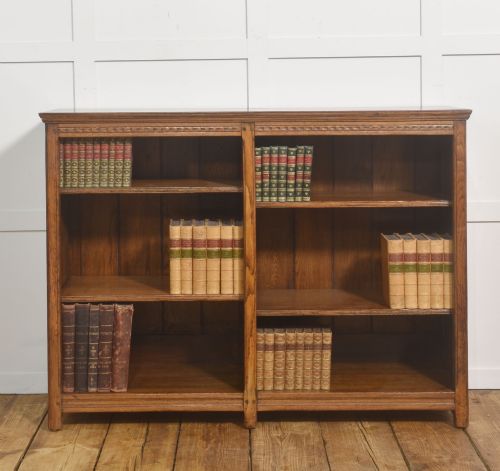
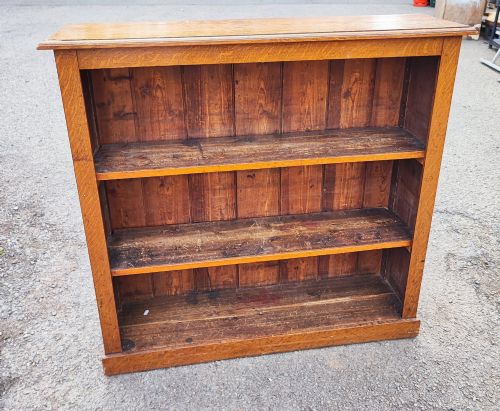
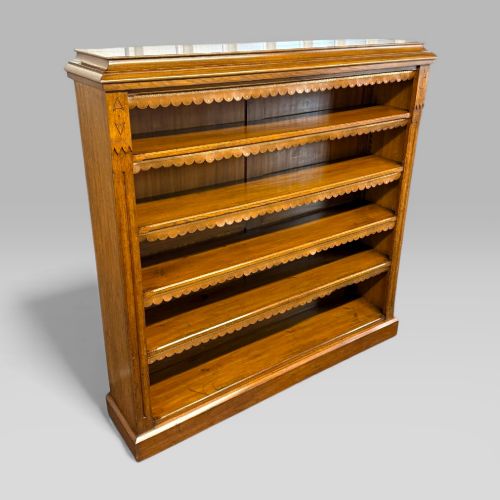
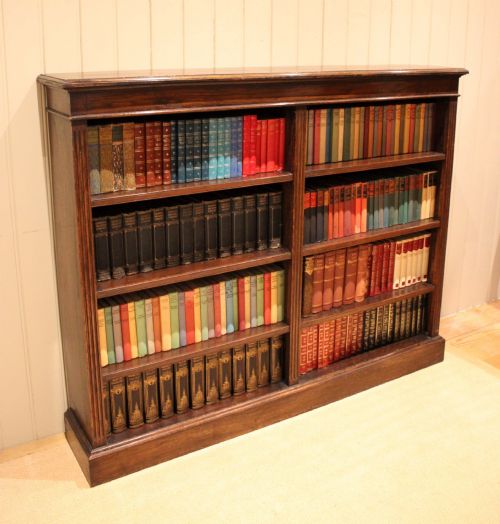
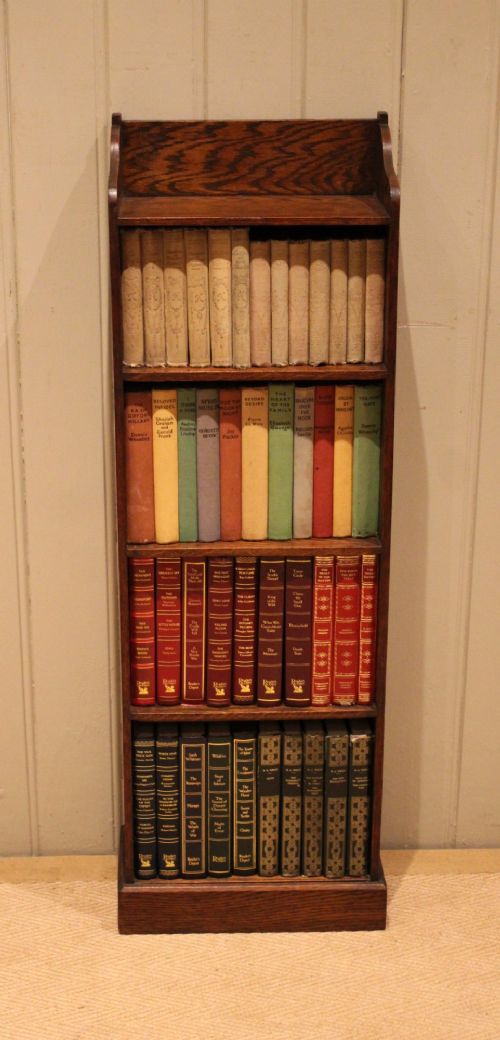
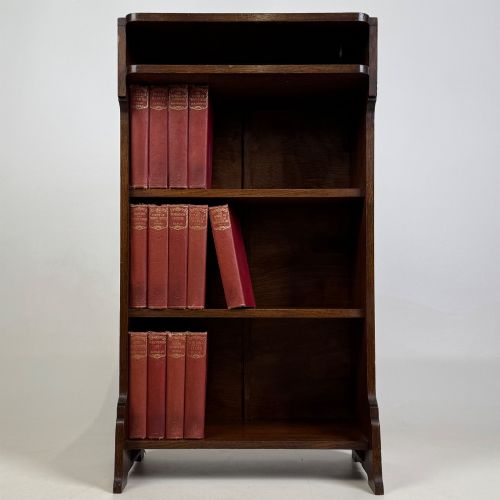
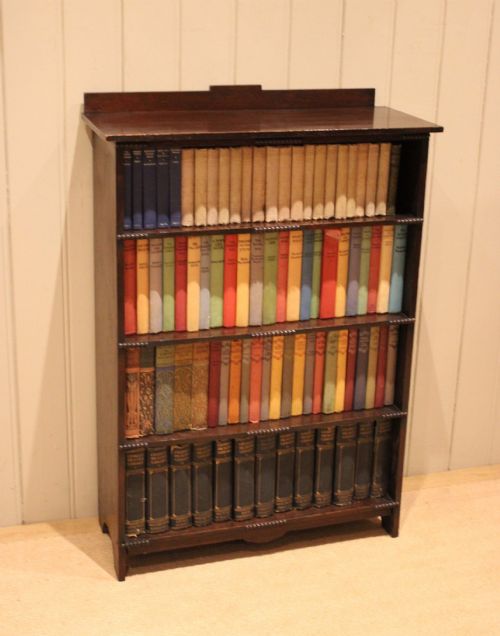
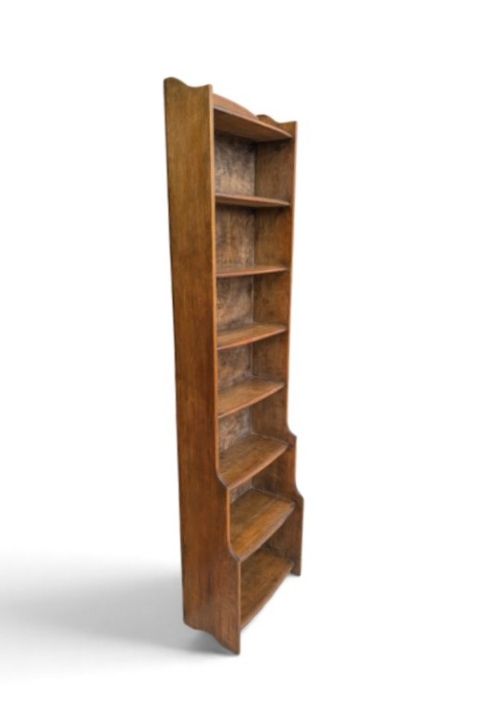
Solid Oak Bookcase Unit
A solid oak bookcase unit brings honest timber and sturdy shelving into a room, offering a practical home for a growing library.
Solid Oak Bookcase Unit
When you search for a solid oak bookcase unit, you encounter pieces built primarily during the Victorian and Edwardian eras, alongside later pieces from the nineteen twenties and thirties. These items span open formats, fitted cupboards, and library shelving designed to hold heavy volumes securely.
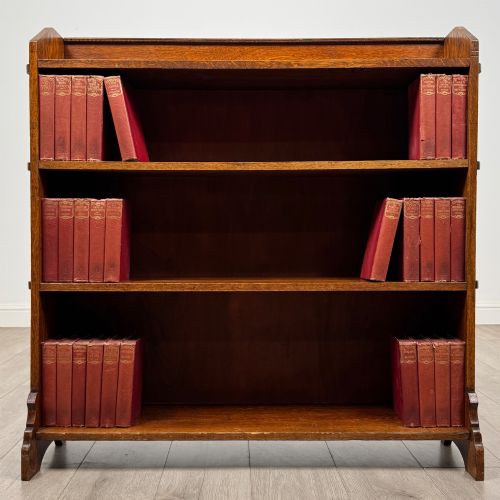
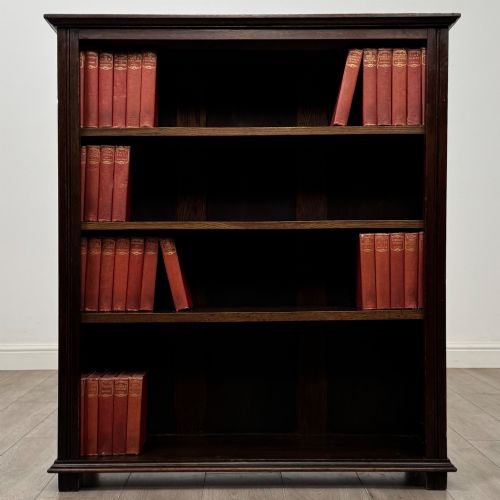
The version you are most likely to meet on this page is the open oak bookcase from the Edwardian period or nineteen ten. These examples often feature adjustable shelves and straightforward construction suited to everyday domestic use.
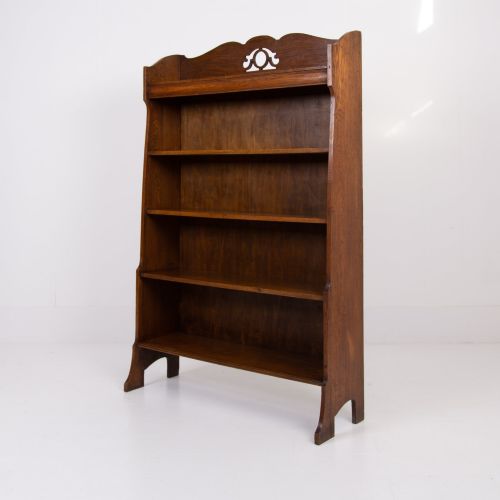
Makers such as Heal's and Wylie and Lochhead contributed distinct Arts and Crafts and Art Deco designs to this tradition. Such pieces bring architectural movement and decorative cut-outs into the traditional storage category.
How they were made
Makers constructed these units using solid oak, often highlighted by dark oak finishes or golden oak tones that emphasise the natural grain of the timber. Brass and iron hardware appear as functional hinges and pulls, while occasional marquetry and inlay work mark more decorative pieces.
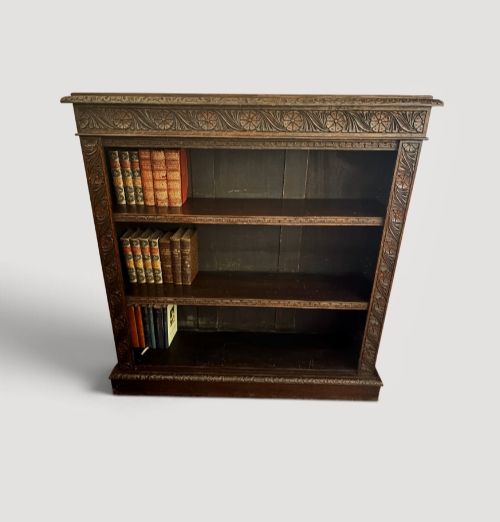
Joinery methods focused on durability, allowing for adjustable shelves within open fronts or fitted cupboard sections. Beaded edges and carved detailing provided subtle ornamentation without compromising the structural integrity of the shelving units.
The listings span from eighteen eighty through the nineteen thirties, encompassing Victorian, Edwardian, Arts and Crafts, and Art Deco styles.
What varies in quality
The calibre of a solid oak bookcase unit rests upon the selection of the timber and the depth of the carving. Heavier library bookcases and designated maker pieces display finer hand-finished details and more robust proportions than simpler utility shelving.
Proportion and decorative restraint set apart the finer examples. Pieces bearing specific stylistic traits like Arts and Crafts cut-outs or Aesthetic Movement lines command attention through purposeful design rather than mere bulk.
Wylie and Lochhead·E.A. Taylor
The Solid Oak Bookcase Unit Glossary
- Arts and Crafts
- A design movement prioritising traditional craftsmanship, visible construction, and simple forms. This style frequently used solid oak with minimal applied ornament.
- Adjustable shelves
- Shelving supported by pegs or ratchets allowing variable vertical spacing. This feature accommodates books of differing heights.
- Golden oak
- A bright, warm timber finish popular during the late nineteenth and early Edwardian periods. It highlights the natural medullary rays in quarter-sawn oak.
- Aesthetic Movement
- A late Victorian design style emphasising visual beauty over narrative content. Pieces from this movement often feature refined proportions and dark polished wood.
- Waterfall bookcase
- A stepped shelving unit where each tier recedes from the one below. This form creates a cascade effect popular in smaller Edwardian rooms.
Solid Oak Bookcase Unit: Frequently Asked Questions
How do I date a solid oak bookcase unit?
Dating relies on stylistic clues, hardware, and construction methods. Edwardian and Victorian pieces often display distinct period carving, specific oak tones, and traditional jointing techniques.
Examining the backboards and shelf supports helps differentiate nineteenth-century library furniture from later twentieth-century production.
Are the shelves usually adjustable?
Many of the listed bookcases feature adjustable shelving systems using wooden tracks or metal pins. This adaptability allows storage for larger volumes and folio editions.
Fixed shelves remain common in smaller or earlier pieces where structural rigidity took precedence over modular layout.
What is the difference between Victorian and Edwardian bookcases?
Victorian bookcases tend to be heavier, featuring deeper carved oak and darker finishes associated with formal libraries. Edwardian examples often embrace lighter golden oak and simpler Arts and Crafts lines.
Both periods relied on solid timber construction, but Edwardian designs favoured brighter, more open domestic interiors.
How do I care for solid oak furniture?
Maintaining solid oak requires stable room humidity to prevent the timber from splitting or warping. Occasional application of appropriate wax polish nourishes the grain and preserves the finish.
Direct sunlight should be avoided to prevent fading the natural golden or dark oak tones over time.