





Solid Gold Albert Necklace
A solid gold albert necklace offers substantial historical weight and craftsmanship, bringing nineteenth and early twentieth-century pocket watch chains into contemporary wear.
Solid Gold Albert Necklace
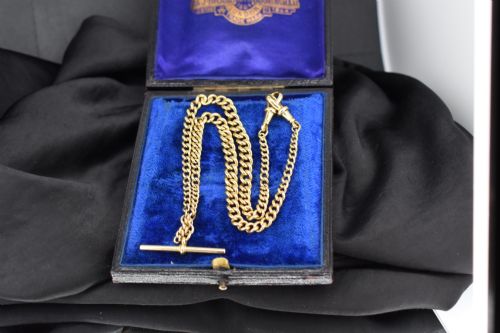
A solid gold albert necklace originates from nineteenth and early twentieth-century gentlemanly attire, specifically adapted from pocket watch chains into wearable neckpieces. These pieces span the Victorian, Edwardian, and George V eras, reaching into the Art Deco period of the 1920s.
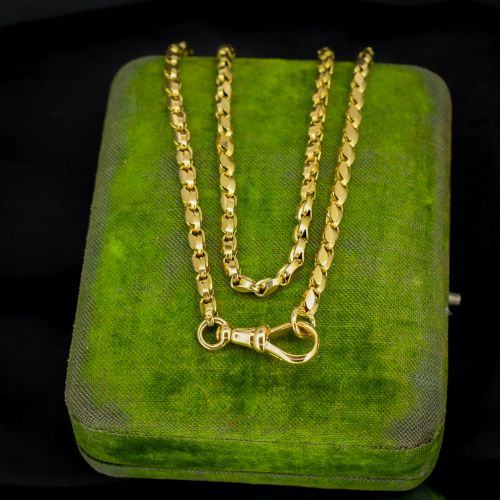
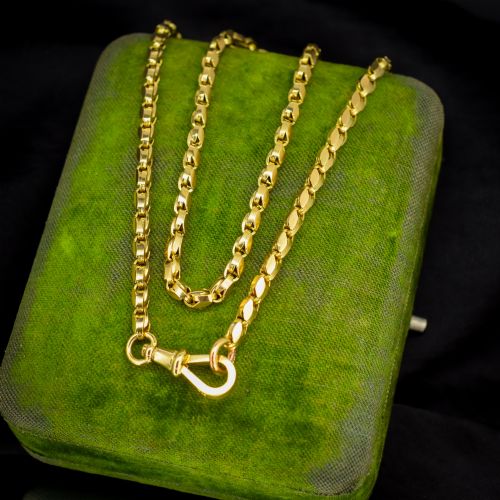
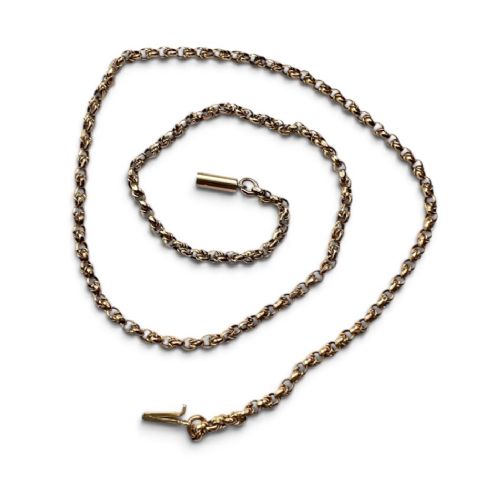
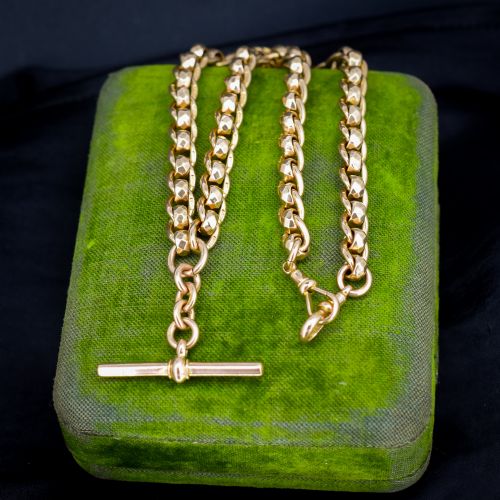
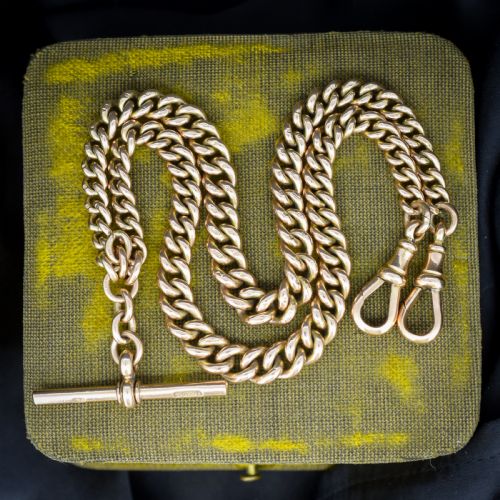
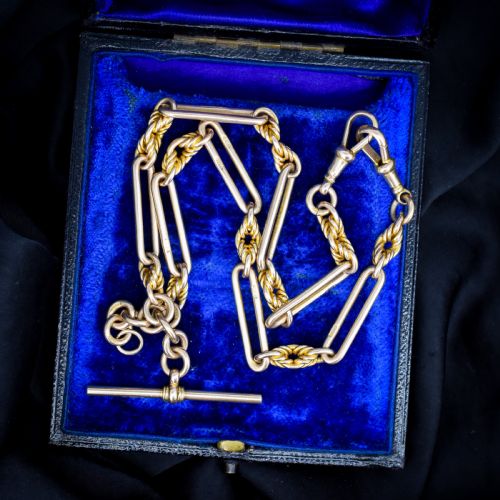
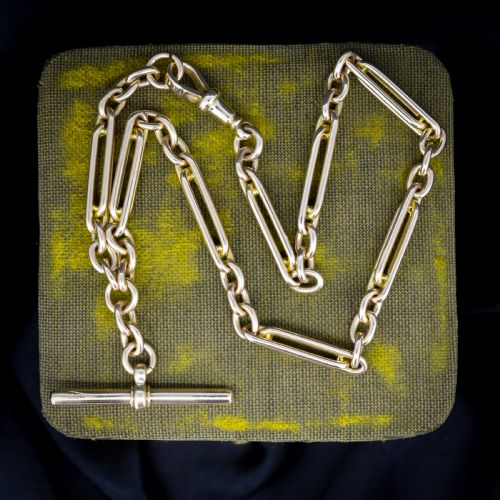
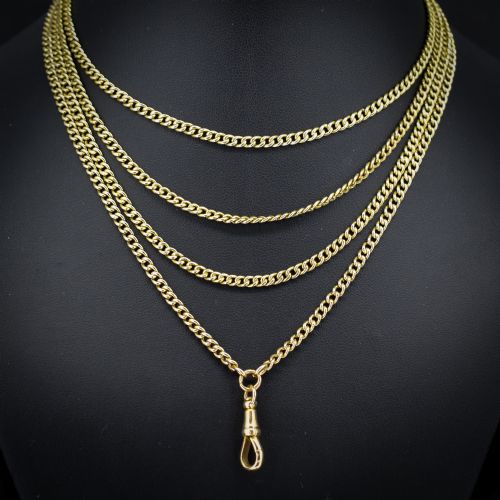
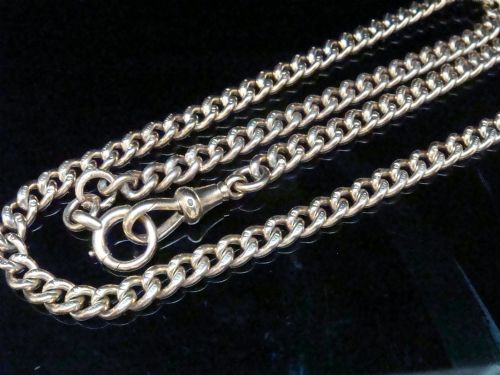
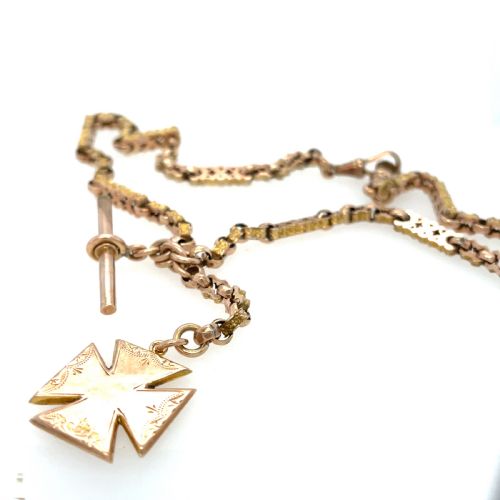
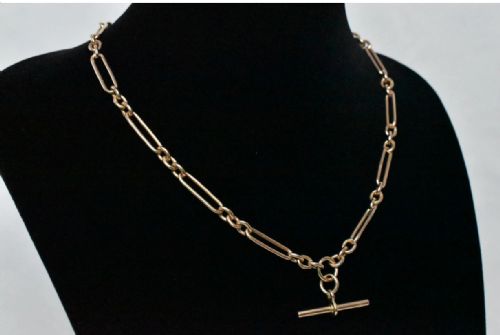
The most common forms found here include curb link, trombone link, and fancy link chains, frequently accompanied by original dog clips and T-bars. Lengths vary widely from shorter chokers to long guard chains.
Originating primarily from British workshops, these necklaces carry traditional hallmarks denoting their gold purity and assay office origins.
Materials and construction
Construction relies upon solid gold alloys, predominantly seen in 9ct, 15ct, and 18ct varieties, spanning both yellow and rose gold tones. Goldsmiths fabricated each link individually, often soldering and hallmarking every component by hand.
Functional hardware such as dog clips, swivel hooks, and T-bars were integrated securely into the design to hold pocket watches or fobs, demonstrating durable mechanical engineering alongside decorative appeal.
Solid Gold Albert Necklace Retail Price Guide 2026
Typical asking prices for solid gold albert necklace among the pieces listed under this phrase on Sellingantiques today, from the lower quarter to the upper quarter. They describe what is for sale here now, not the wider market.
Several heavy chains retain their original miniature T-bars, once intended to anchor pocket watches safely against a nineteenth-century gentleman's waistcoat.
Markers of quality and preservation
Quality rests upon the uniformity of the links, the crispness of the individual hallmarks stamped across the components, and the rigidity of the dog clip springs. Graduated chains require precise scaling from the centre to the ends.
Substantial gram weight relative to length indicates superior metal density, while intact original T-bars and fobs elevate the historical completeness of the piece.
The Solid Gold Albert Necklace Glossary
- T-bar
- A short transverse bar attached to the centre of the chain, originally designed to slip through a buttonhole to anchor the pocket watch. It hangs decoratively when worn as a necklace.
- Dog clip
- A spring-loaded snap hook attached to the end of the chain, used originally to fasten to a pocket watch. It allows the necklace to be secured to itself or to pendants.
- Trombone link
- A distinctive watch chain link pattern consisting of alternating long rectangular bars and small round connecting rings. It borrows its visual rhythm from musical instruments of the period.
- Graduated link
- A design where the links increase in size progressively towards the centre of the chain. This technique creates a balanced visual taper typical of quality watch chains.
Solid Gold Albert Necklace: Frequently Asked Questions
How do I wear an albert necklace?
These pieces function as necklaces by wrapping them around the neck, often securing the dog clip directly onto the chain links or a central ring. The remaining T-bar and any attached fob hang distinctively at the front.
Lengths range from shorter choker styles to long guard chains that permit doubling around the neck. The robust construction allows for everyday wear with proper care.
What is the difference between 9ct, 15ct, and 18ct gold?
Gold purity determines the classification, with 9ct containing lower gold content alloyed with other metals for durability. Higher purities like 15ct and 18ct display a richer colour and higher precious metal content.
British pieces usually feature clear hallmarks indicating the exact fineness standard used by the maker.
Are all links hallmarked?
Many British pieces feature individual hallmarks stamped onto every single link and onto the dog clip. This practice ensures authenticity and allows accurate dating through assay office marks.
Pieces without every link marked still carry standard assay stamps on the main components like the T-bar and clip.