



Small Wooden Tea Table
A small wooden tea table brings compact warmth and centuries of domestic craft into a room.
Small Wooden Tea Table
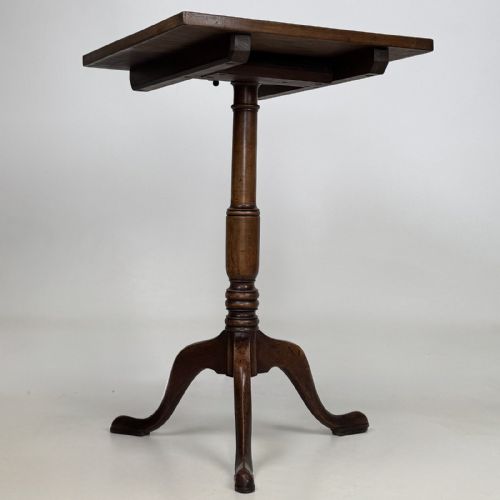
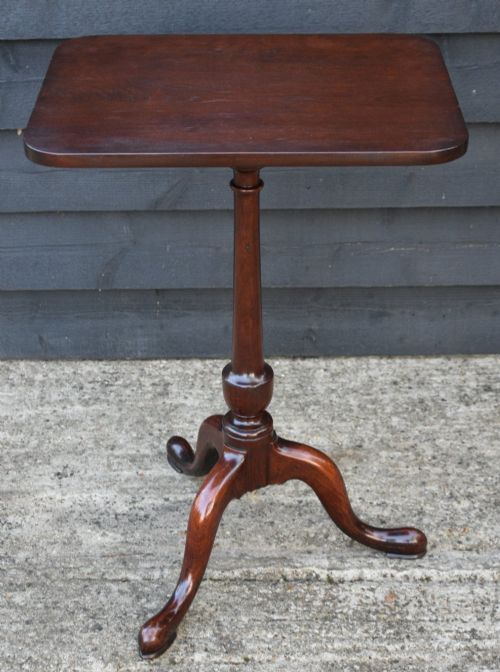
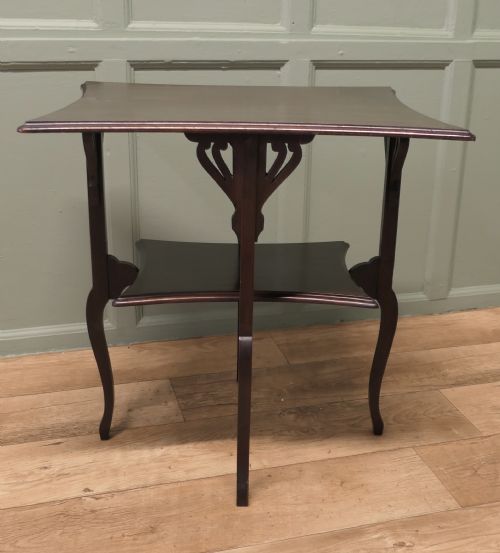
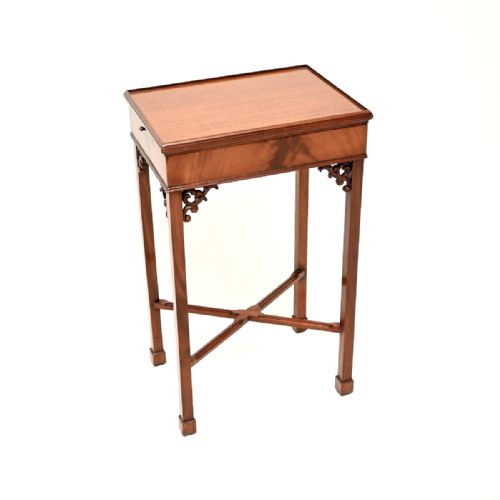
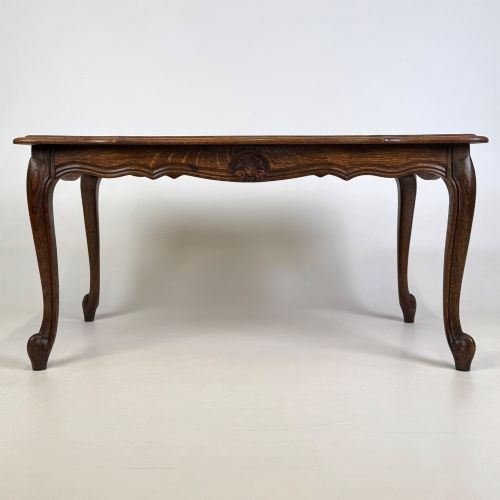
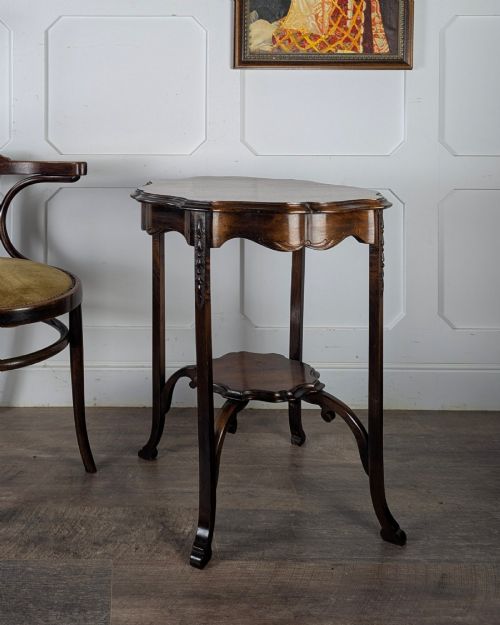
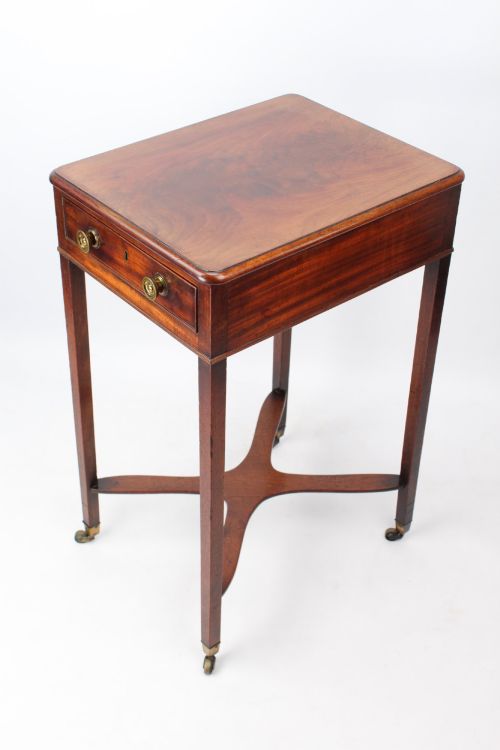
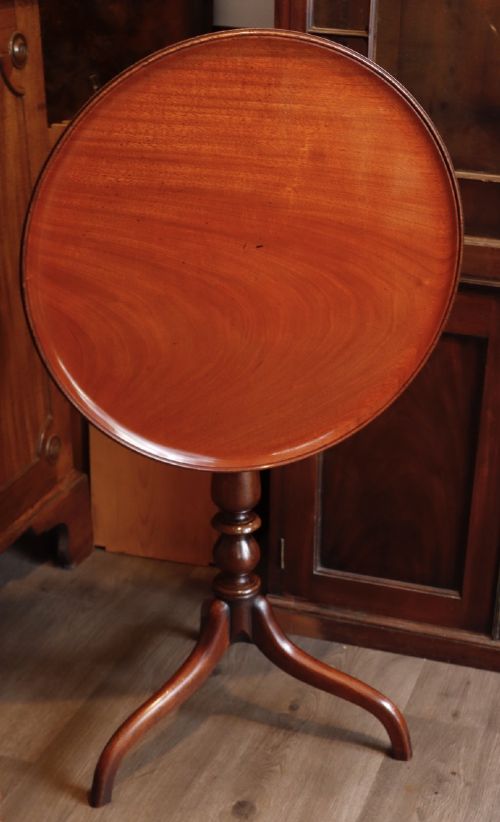
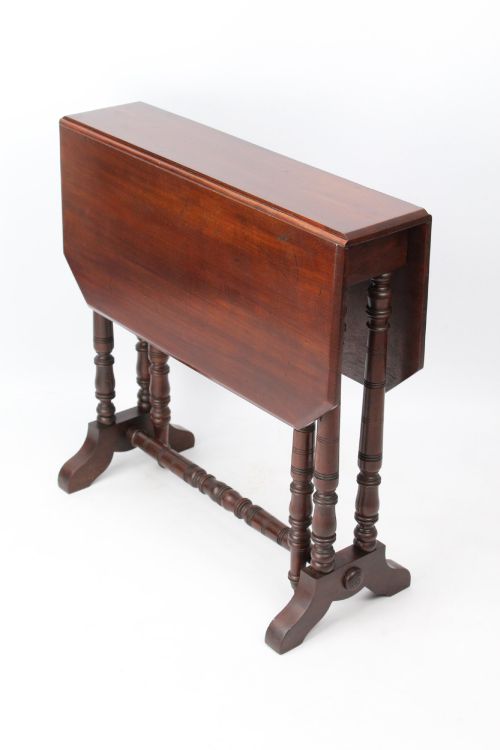
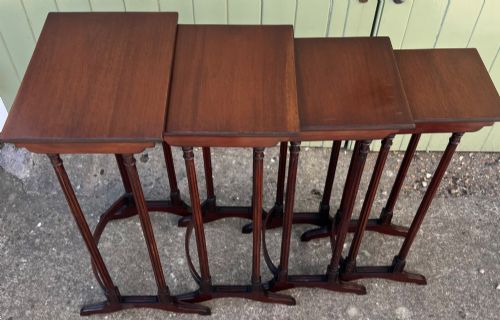
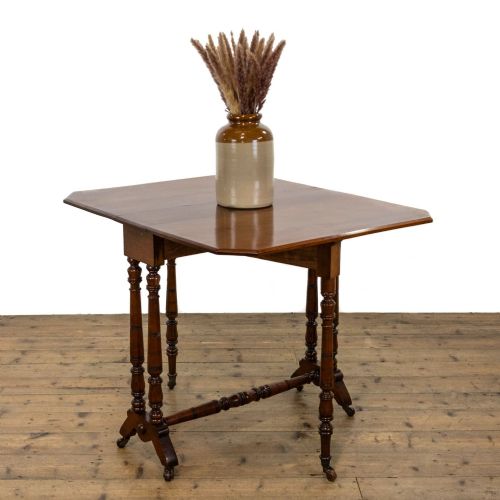
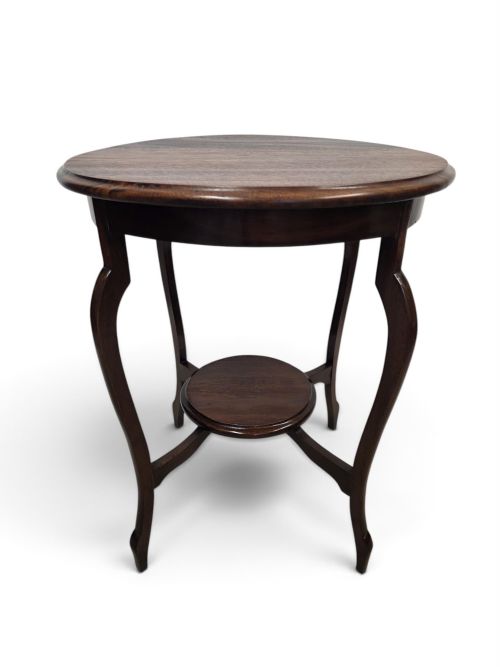
A small wooden tea table encompasses versatile occasional forms, from Pembroke and tripod designs to drop-leaf Sutherland models and nest tables. These pieces served past households for serving tea, holding lamps, or displaying ornaments in drawing rooms and parlours.
The most common examples on this page date from the Georgian, Victorian, and Edwardian eras, reflecting the domestic expansion of those periods. Formats range from folding table tops and tilting pedestals to multi-tiered stands suited for compact modern spaces.
Materials and Construction
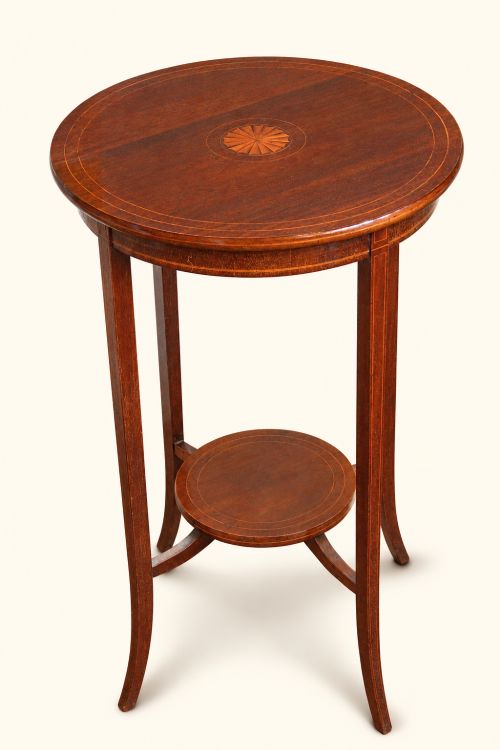
Cabinetmakers built these tables primarily using mahogany, oak, and walnut, often accentuating the timber with satinwood inlay, boxwood stringing, or brass mountings. Heavier hardwoods provided sturdy frames for folding leaves and central pedestals.
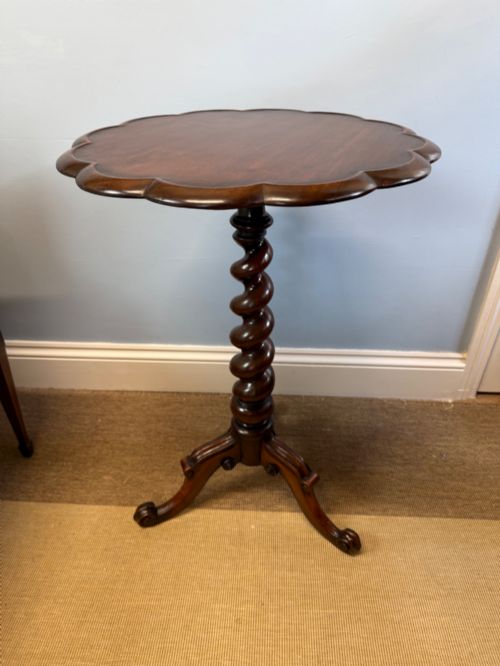
Joinery methods varied according to the period and form, including turned legs, bobbin turnings, barley twist supports, and tripod bases with snake or pad feet. Surfaces received polished finishes that highlighted natural grain patterns and crossbanded borders.
Small Wooden Tea Table Retail Price Guide 2026
Typical asking prices for small wooden tea table among the pieces listed under this phrase on Sellingantiques today, from the lower quarter to the upper quarter. They describe what is for sale here now, not the wider market.
Listings feature oak, mahogany, and walnut woods across Georgian, Victorian, and Edwardian periods.
Judging Quality
Quality rests in the selection of timber figures and the crispness of carved or inlaid details rather than mere age. Finer pieces display harmonious proportions, substantial secondary timbers, and well-integrated mechanisms for drop leaves or tilt tops.
Workmanship shows in the stability of pedestal joints, the precision of dovetails within drawers, and the subtlety of decorative veneers. Lesser examples rely on plain stock and simpler assembly without the refinement seen in cabinet-made pieces.
The Small Wooden Tea Table Glossary
- Pembroke table
- A small table with hinged drop leaves on either side, often featuring a single drawer. It gained popularity during the 18th century for breakfast or tea service in smaller parlours.
- Sutherland table
- A narrow drop-leaf table where the leaves are supported by swing-out gate legs. When folded down, it occupies minimal floor space.
- Tripod table
- A small table supported by a central pillar resting on three spreading legs. Many examples feature a tilting mechanism to store flat against a wall.
- Urn stand
- A small, tall occasional table designed specifically to hold a hot water urn for tea. They frequently feature pull-out slides for cups.
- Crossbanding
- A narrow strip of veneer applied to the edge of a table top so that the grain runs perpendicular to the central panel. This technique creates a distinct visual border.
Small Wooden Tea Table: Frequently Asked Questions
What is a small wooden tea table used for today?
These tables function well as bedside stands, lamp tables next to armchairs, or display surfaces for books and plants.
Their compact footprints allow them to fit into tight corners where standard furniture cannot go.
How do I identify a Georgian tea table?
Georgian examples often feature solid mahogany or oak construction with tripod pedestal bases, birdcage mechanisms, or slender tapered legs.
Look for hand-cut joinery and understated decorative carving rather than heavy factory production.
What makes an Edwardian tea table different?
Edwardian tables frequently incorporate satinwood inlay, crossbanding, and lighter frames suited to the decorative tastes of the early 20th century.
Drop-leaf Sutherland tables and nested sets became particularly widespread during this era.
How should I care for a vintage wooden table?
Keep wooden tables away from direct sunlight and heat sources to prevent the timber and veneer from drying out or splitting.
Regular polishing with traditional beeswax maintains the lustre of the finish without building up synthetic residues.