




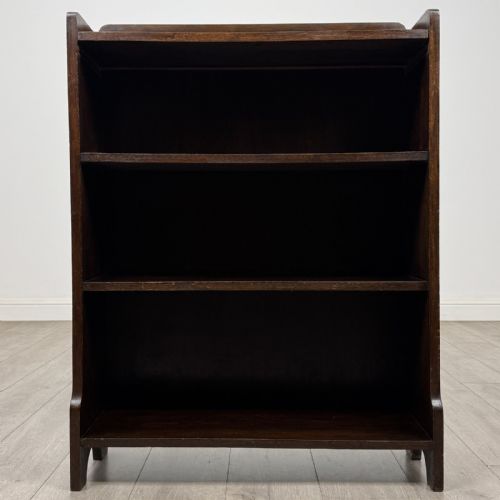
Small Wooden Shelves
Small wooden shelves bring compact utility and period character to narrow hallways, alcoves and bedrooms.
Small Wooden Shelves
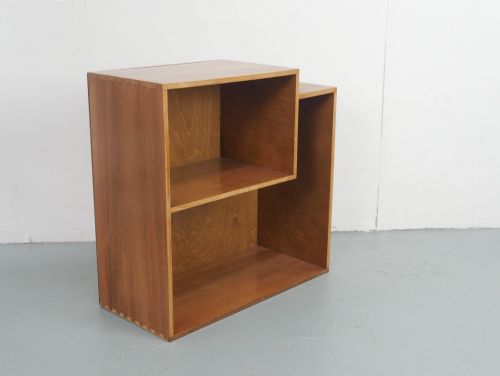
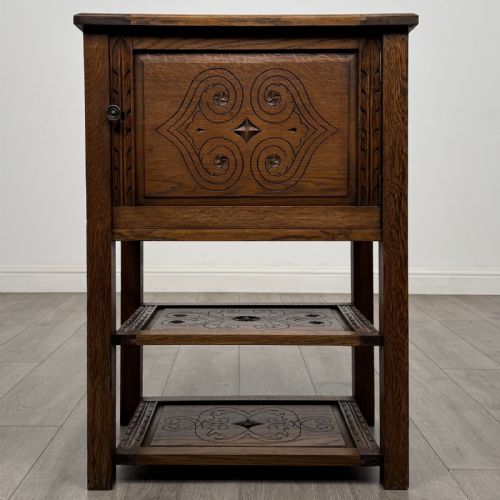
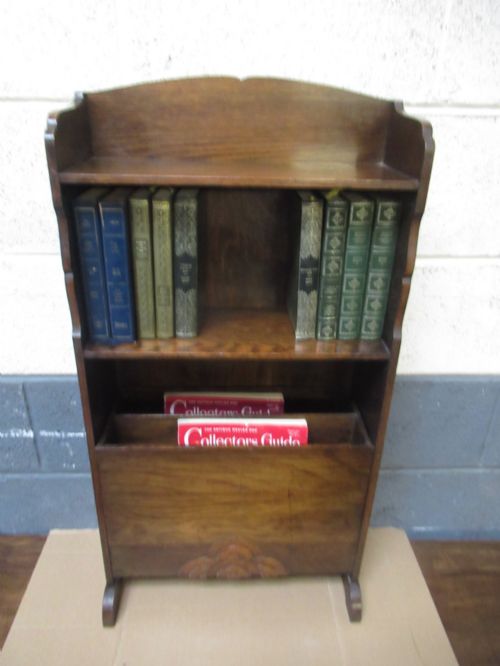
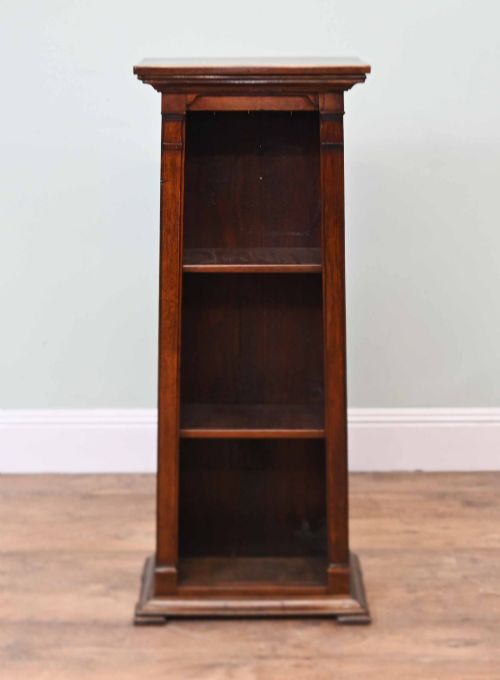
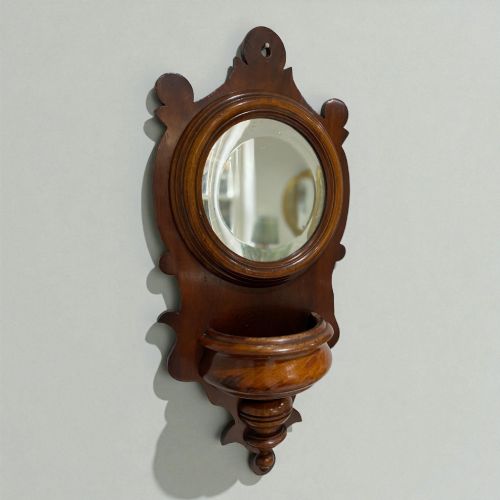
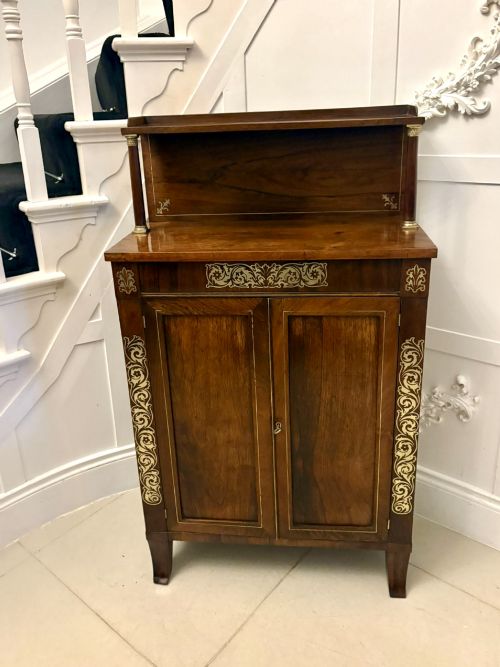
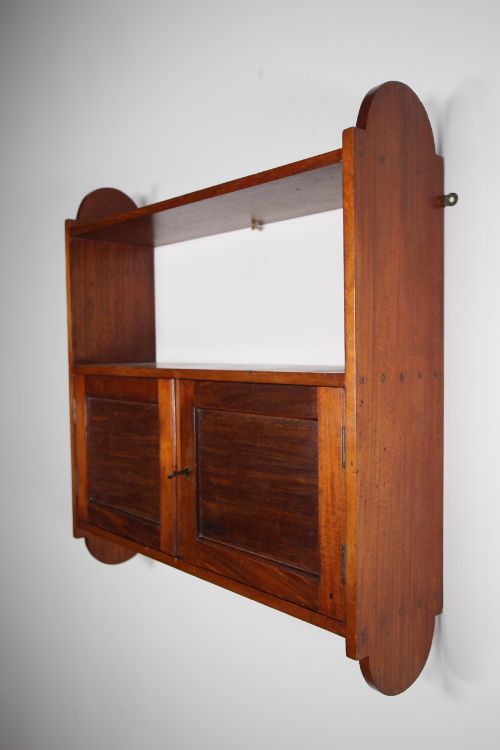
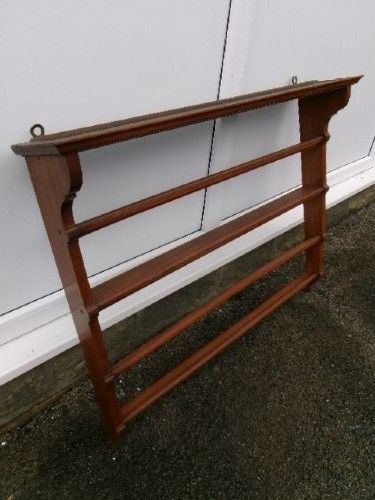
Small wooden shelves encompass open bookcases, wall-hanging racks, and compact chiffoniers designed to maximise storage in limited spaces. These pieces span the nineteenth and early twentieth centuries, drawing on Victorian, Edwardian, Arts and Crafts, and Art Deco traditions.
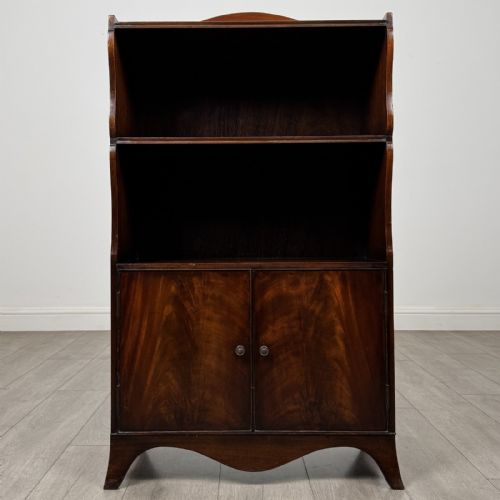
The version most commonly met on this page is the Edwardian or nineteen-twenties mahogany open bookcase, frequently featuring a raised gallery or lower drawer. Oak variants from the Arts and Crafts period also appear regularly, offering simpler lines and exposed grain.
Makers and workshops ranged from large commercial producers to distinctive firms like Heals and Ercol, producing functional items for domestic interiors. Their utility remains central, serving equally for books in studies or display in reception rooms.
Materials and construction
Cabinet makers utilised dense hardwoods such as mahogany, oak, walnut, and satinwood, occasionally applying flame mahogany veneer to prominent surfaces. Brass fittings, including castors and hanging brackets, provided functional reinforcement and subtle contrast to the timber.
Joinery techniques relied on traditional methods appropriate to the period, from dovetailed drawers in Edwardian cabinets to carved details on Arts and Crafts oak frameworks. Surfaces were typically polished or waxed to protect the wood while accentuating natural figuring.
Small Wooden Shelves Retail Price Guide 2026
Typical asking prices for small wooden shelves among the pieces listed under this phrase on Sellingantiques today, from the lower quarter to the upper quarter. They describe what is for sale here now, not the wider market.
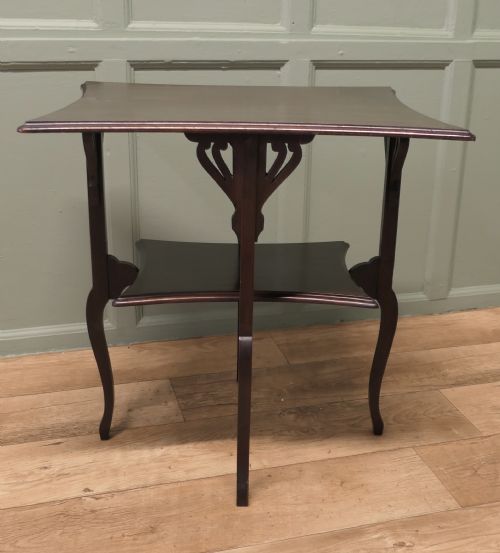
Common forms include open bookcases, wall-hanging racks, chiffoniers, and occasional tables with integrated shelving.
Assessing quality
Quality rests primarily in the selection of timber and the crispness of any applied carving or inlay. Pieces featuring figured walnut, flame mahogany, or finely contrasted satinwood demonstrate superior material ambition from the maker.
Structural integrity and proportion distinguish finer examples from standard utilitarian pieces. Clean lines, well-fitted adjustable shelves, and original brass hardware elevate a cabinet or wall rack above ordinary workshop output.
Heals·Ercol
The Small Wooden Shelves Glossary
- Waterfall bookcase
- A tiered set of open shelves diminishing in depth from bottom to top. This form became popular during the nineteenth century for displaying small volumes.
- Raised gallery
- A low decorative upstand running along the back or sides of a shelf top. It prevents items from sliding off the edge.
- Chiffonier
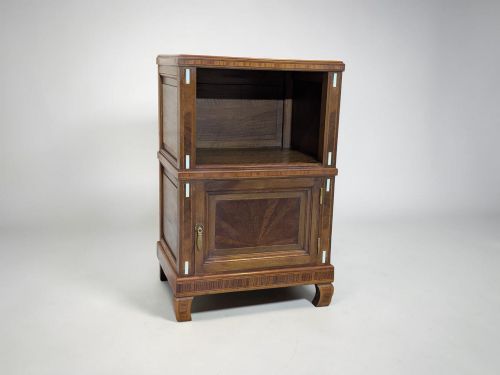
- A compact low cabinet featuring shelves or a cupboard section below. Victorian examples frequently combine display space with enclosed storage.
- Occasional table
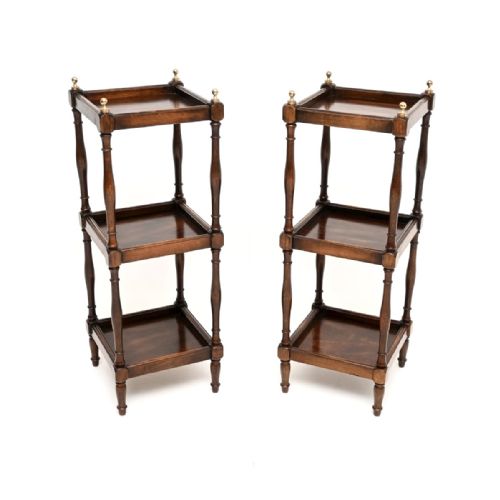
- A small, movable table designed for light domestic use in various rooms. These often incorporate lower shelves for books or ornaments.
- Bracket feet
- Short, architectural supports extending outward at the base of a cabinet. They lift the piece slightly off the floor while maintaining stability.
Small Wooden Shelves: Frequently Asked Questions
How do I hang a wall shelf?
Wall-hanging shelves require secure fixings into wall studs or solid masonry using appropriate brackets and screws. Ensure the weight distribution matches the load-bearing capacity of both the wall and the timber structure.
Position the shelf at a height that prevents accidental knocks while remaining accessible for everyday use. Checking level alignment during installation preserves the visual balance of the piece.
What rooms suit small bookcases?
Compact bookcases integrate easily into alcoves, narrow hallways, and bedrooms where floor space is limited. Their modest proportions allow them to sit beneath windows or alongside larger furniture without dominating the room.
In living spaces, they provide accessible storage for frequently read volumes or decorative objects. Their versatile scale ensures they adapt readily to changing domestic layouts.
How do I care for antique wood?
Maintain antique timber surfaces by dusting regularly with a soft, dry cloth and applying natural beeswax periodically. Avoid placing wooden furniture in direct sunlight or near heat sources to prevent warping and drying.
Keep humidity levels stable within the room to protect veneers and joints from stress. Gentle handling preserves the original polish and patina accumulated over decades.
How do I date an oak bookcase?
Dating oak pieces involves examining construction methods, hardware, and stylistic indicators such as carved motifs. Arts and Crafts examples typically display simpler, unadorned surfaces with pegged joints, while Edwardian pieces often incorporate lighter inlay.
Secondary woods and backboards provide further clues regarding the manufacturing era. Comparing these physical traits with documented period styles establishes a reliable timeframe.