

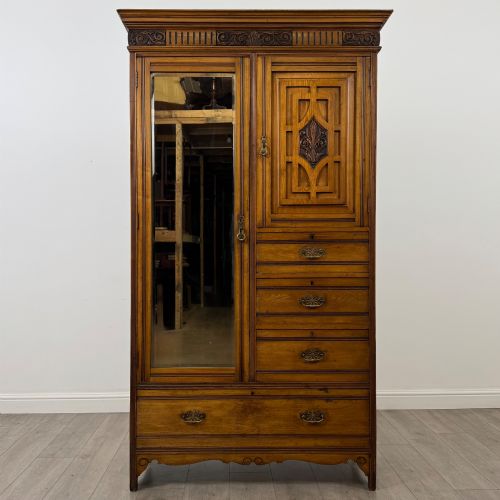


Small Wooden Armoire
A small wooden armoire brings substantial storage and distinct character into a room without dominating the floor space.
Small Wooden Armoire
A small wooden armoire encompasses compact wardrobes, linen presses, hall robes, and miniature cabinets designed for storage in smaller spaces. These pieces span periods from the early eighteenth century through the Georgian, Victorian, and Edwardian eras up to the nineteen-twenties.
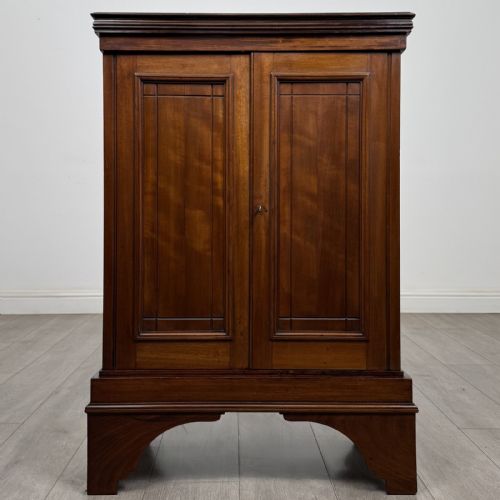
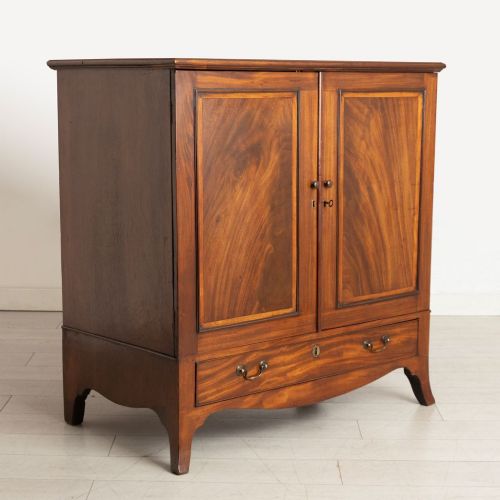
Buyers will encounter various forms on this page, including bow-fronted cupboards, fitted compactum wardrobes, and French armoires. Woods such as mahogany, oak, burr walnut, and ash predominate across these traditional formats.
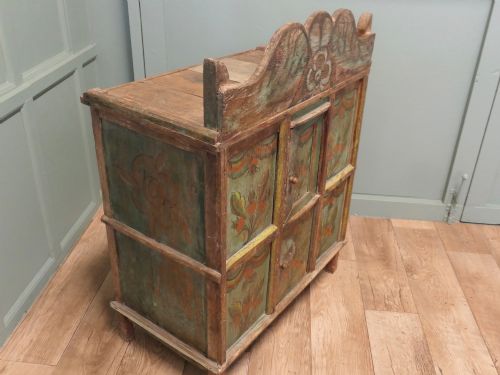
Origin and scale define this category, ranging from full-height hall robes down to miniature furniture and wall-hung cabinets. Continental Baroque and French Country styles also appear alongside British period designs.
Materials and construction methods
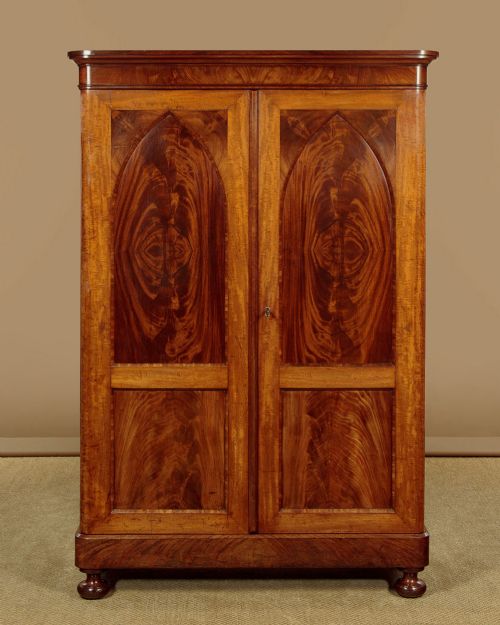
Cabinetmakers utilised solid timbers alongside veneers, applying flame mahogany veneer and burr walnut over stable secondary woods to create rich surface patterns. Brass hardware such as hinges and escutcheons punctuate these wooden facades.
Glass panels feature in selected cupboard doors, whilst interiors often incorporate fitted drawers, shelves, and hanging spaces suited to period garments and linens.
Small Wooden Armoire Retail Price Guide 2026
Typical asking prices for small wooden armoire among the pieces listed under this phrase on Sellingantiques today, from the lower quarter to the upper quarter. They describe what is for sale here now, not the wider market.
Current listings feature pieces spanning the early eighteenth century through to the nineteen-twenties, constructed from oak, mahogany, ash, and walnut.
Distinguishing finer examples
Quality rests in the selection of timber figures, such as the grain pattern in burr walnut or flame mahogany, and the crispness of period mouldings. Finer pieces display thoughtful internal fitting, such as compactum compartments and original brass work.
Proportion and structural integrity separate standard utility pieces from more refined cabinetmaking, particularly in miniature items and scaled-down hall robes where balance is critical.
The Small Wooden Armoire Glossary
- Armoire
- A tall cupboard or wardrobe, traditionally used for storing clothes. French examples often feature distinctive cornice mouldings and panelled doors.
- Compactum
- A fitted wardrobe designed to maximise internal storage through a combination of hanging space, drawers, and sliding trays. This form became particularly popular during the Victorian period.
- Linen Press
- A piece of furniture comprising upper cupboard doors enclosing shelves for textiles, set above a base of drawers. Georgian iterations often display formal proportion and fine mahogany timber.
- Flame Mahogany Veneer
- A thin slice of mahogany timber cut from the point where branches join the trunk, creating a distinctive flamed or feathered grain pattern. Cabinetmakers applied this decorative surface to primary display areas.
- Burr Walnut
- Timber taken from a tree growth or burl, yielding a swirling, highly figured grain. It was frequently utilised on luxury cabinet fronts during the early twentieth century.
Small Wooden Armoire: Frequently Asked Questions
What is a small wooden armoire used for?
These pieces provide versatile storage for clothing, linens, or household items while fitting into rooms with limited wall space. Miniature versions serve alternative decorative or tabletop storage functions.
Their varied internal configurations, from hanging sections to fitted drawers, adapt easily to modern storage needs.
How do I identify a Georgian armoire?
Georgian pieces typically exhibit restrained classical proportions, solid mahogany construction, and understated bracket feet or plinth bases. Mouldings are clean and structural rather than ornate.
Hardware tends to be functional brass work that complements the dark tones of the wood.
Are miniature wardrobes actually furniture?
Miniature wardrobes and compactums were often constructed as apprentice pieces, salesmen's samples, or specialised items for nursery use. They duplicate the exact construction methods of full-sized furniture on a reduced scale.
Despite their diminutive size, they feature working doors, drawers, and fitted interiors.
How should I care for antique wood?
Keep wooden furniture away from direct heat sources and strong sunlight to prevent the timber and veneers from drying out. Routine dusting with a dry, soft cloth maintains the finish.
Apply traditional beeswax periodically to nourish the surface of mahogany, oak, and walnut pieces.