


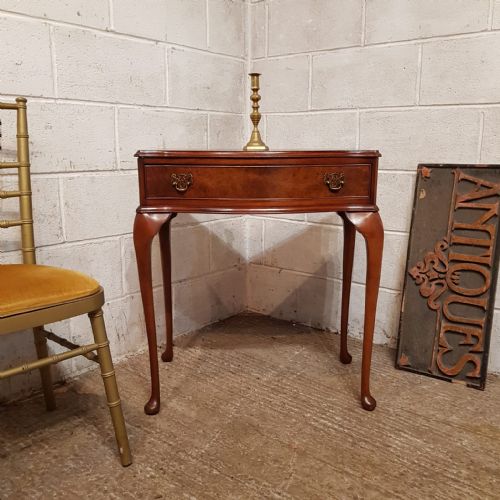


Small Walnut Console
These small walnut console tables bring compact warmth and period grain into a narrow hallway or drawing room.
Small Walnut Console
A small walnut console is typically a compact wall-abutting table designed for hallways, drawing rooms or beneath pier mirrors. The pieces answering this description span the eighteenth, nineteenth and twentieth centuries, taking forms such as console tables, side tables, lowboys, and demilune shapes.
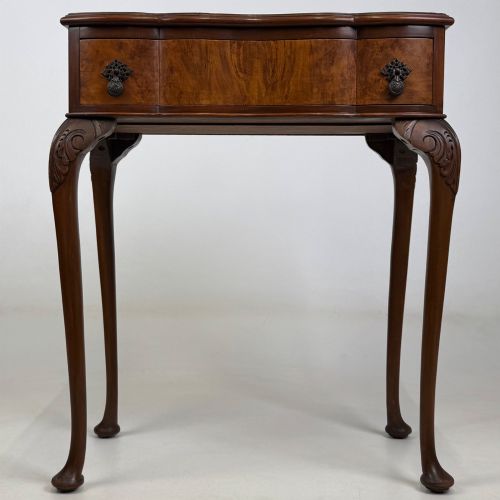
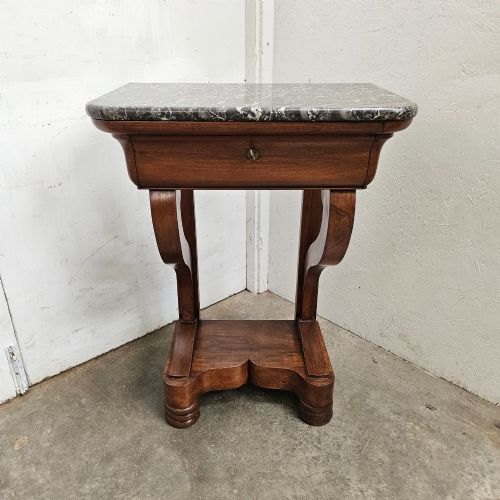
The most frequent examples found here are nineteenth-century Victorian pieces and early twentieth-century creations, often employing burr walnut veneers. Makers and cabinetmakers fashioned them to fit tighter spaces, occasionally pairing the timber with marble tops or brass hardware.
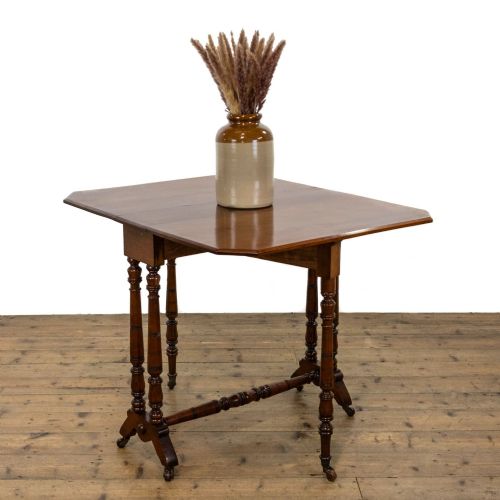
Alongside dedicated console tables, the selection includes related occasional furniture like lowboys and Sutherland tables that share similar proportions and timber choices. These forms provide practical surface space while retaining the rich colour characteristic of walnut.
Construction and Materials
Cabinetmakers built these tables using solid walnut and figured burr walnut veneers applied to secondary woods. Burr walnut sections were carefully selected for their swirling grain patterns, then laid onto tabletops and friezes to create visual depth.
Marble tops appear frequently on nineteenth-century console tables, providing a cool, durable surface set directly into the wooden frame. Brass mounts, handles, and occasional marquetry detailing supplement the timber construction.
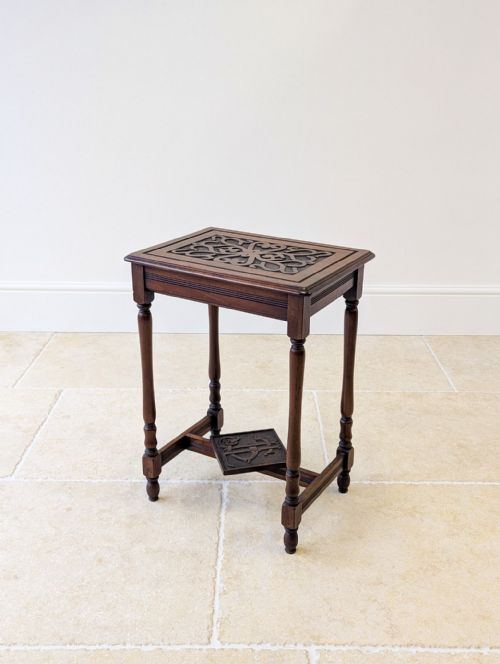
Joinery techniques ranged from traditional hand-cut dovetails in drawers to sturdy tenon frames for legs and aprons. Turned, cabriole, or fluted supports define the structural profiles across the various historical periods.
Victorian makers occasionally produced diminutive Sutherland tables nicknamed baby versions for exceptionally cosy drawing rooms.
Assessing Quality
Quality rests principally on the choice of timber and the execution of the veneer work. Superior examples display tightly figured burr walnut with a rich, natural lustre, whereas simpler pieces utilise plain walnut boards.
The finesse of the carving and shaping dictates the standard of the piece. Crisp mouldings, well-proportioned cabriole legs, and tightly fitted marble or wooden tops separate finer workshops from utilitarian production.
Originality of surface finish and hardware also plays a significant role in distinction. Tables retaining their early patination and matching brass fittings command higher regard than those with heavy modern restorations.
The Small Walnut Console Glossary
- Burr walnut
- A veneer sliced from the knot growths of walnut trees, yielding complex, swirling grain patterns. Cabinetmakers prized this wood for tabletops and drawer fronts.
- Console table
- A table designed to stand against a wall, traditionally supported by brackets or legs at the front. They often sat beneath mirrors in formal reception rooms.
- Lowboy
- A small seventeenth or eighteenth-century dressing or side table with one or more drawers. These pieces typically feature slender cabriole or straight legs.
- Demi-lune
- Half-moon in shape, describing tables built to fit flush against a wall. This format is common among nineteenth and early twentieth-century console tables.
- Sutherland table
- A narrow dropleaf table with folding flaps supported by swinging gates. Victorian examples frequently utilised solid or veneered walnut.
Small Walnut Console: Frequently Asked Questions
Where should I place a small walnut console?
These tables suit narrow entrance halls, landings, or tight spaces beneath wall mirrors where floor space is limited. Their shallow depth allows them to sit flush against a wall without obstructing walkways.
In living rooms or studies, they function as elegant side tables or surfaces for lamps and decorative objects. The compact footprint makes them adaptable to various rooms needing a touch of period character.
How do I care for walnut veneer?
Keep walnut furniture away from direct sunlight and heat sources to prevent the wood from drying out and the veneer from lifting. Dust regularly with a soft, dry cloth rather than using silicone-based polishes.
An occasional application of high-quality wax helps nourish the timber and maintain its natural lustre. Avoid placing damp items directly onto marble or wooden surfaces to protect the finish.
Are marble top consoles heavy?
The stone inserts add considerable weight to the overall piece, though the wooden bases remain manageable for two people to move. The added weight helps anchor the table firmly against the wall.
When repositioning the table, it is best to lift the marble separately if loose, or move the entire unit with care to avoid straining the frame joints.
How can I tell the period of a walnut table?
Examining the secondary woods, leg styles, and construction marks helps narrow down the manufacturing era. Georgian lowboys often feature hand-cut dovetails and distinct cabriole leg profiles, whereas Victorian and Edwardian examples show different turning methods and veneer thicknesses.
Stylistic revivals, such as Queen Anne or Georgian styles made in the early twentieth century, combine older aesthetic cues with modern machining techniques.