




Small Walnut Bureau Cabinet
A small walnut bureau cabinet offers compact fitted writing space paired with concealed storage, crafted in rich timber.
Small Walnut Bureau Cabinet
A small walnut bureau cabinet combines a sloping writing flap or fall-front desk with compartments and drawers below, frequently surmounted by an upper bookcase or cabinet section. When you search for a small walnut bureau cabinet, you encounter compact writing furniture designed for domestic studies and private sitting rooms rather than grand libraries.
The selections span distinct historical periods from the eighteenth century to the Victorian era, alongside later revivals. Eighteenth-century pieces originating in the Georgian and Queen Anne periods appear alongside nineteenth-century Victorian Davenport desks, French Louis XV revival pieces, and compact desks from the nineteen twenties.
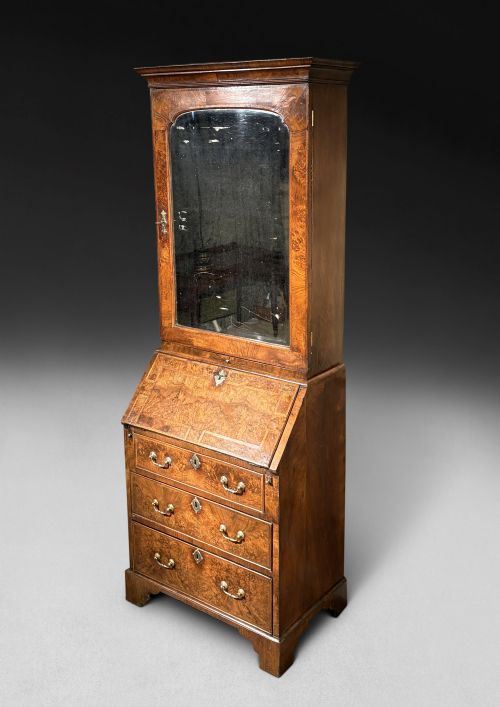
The format varies considerably across these periods, ranging from traditional bureau bookcases with glazed upper doors to Davenport desks and Bonheur du jour writing tables. Burr walnut veneers and straightforward walnut timbers dominate the forms, frequently enriched with boxwood inlay, brass mounts, and ormolu details.
Markers of superior craftsmanship
The refinement of the walnut veneer selection and the precision of the cabinet work determine the grade of the piece. Superior examples display matched burr walnut grain across the fall front and drawers, showing careful planning by the maker.
Fitted interiors reveal the standard of construction, featuring secret compartments, pigeonholes, and small drawers constructed with fine dovetails. The integration of quality brass handles, hinges, and boxwood stringing distinguishes better workshops from standard production.
Apprentice miniatures demonstrate that even diminutive writing cabinets required the exact same dovetailing skills as full-sized furniture.
Gillows
The Small Walnut Bureau Cabinet Glossary
- Burr walnut
- A wood veneer taken from the knotted growth of a walnut tree, prized for its swirling, highly figured grain patterns. It forms the primary decorative surface on many high-end writing cabinets.
- Bureau bookcase
- A dual-purpose piece featuring a sloping desk compartment on the lower section combined with an enclosed shelving unit above. The upper doors are frequently glazed.
- Davenport desk
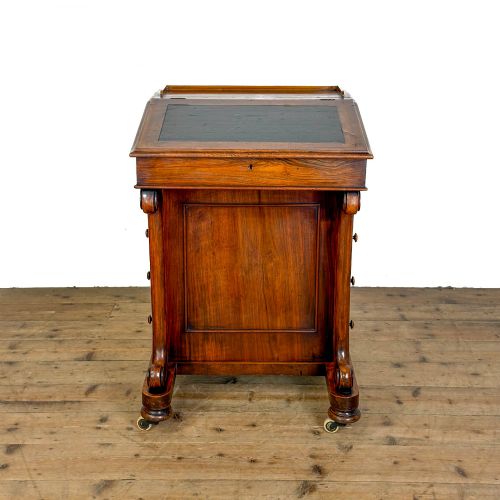
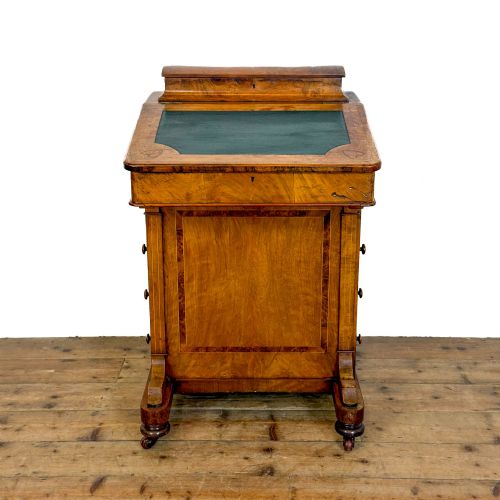
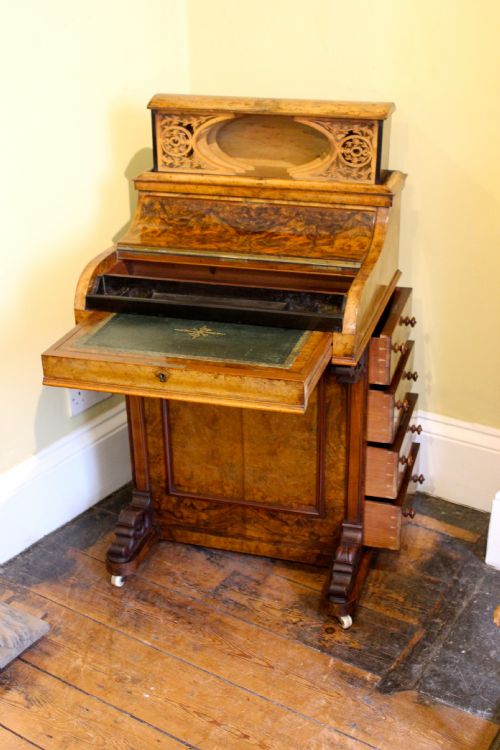
- A compact writing desk featuring a sloping lid with a leather writing surface, supported by a pedestal of drawers accessed from the side. Victorian makers produced numerous variations of this form.
- Bonheur du jour
- A light ladies writing desk, often fitted with small drawers and shelves above the main writing surface. French revival examples incorporate decorative brass ormolu mounts.
- Boxwood inlay
- Fine strips or floral motifs of pale boxwood embedded into contrasting dark walnut surfaces. This technique creates geometric borders and decorative highlights.
Small Walnut Bureau Cabinet: Frequently Asked Questions
What is a Davenport desk?
A Davenport desk is a compact form of writing furniture featuring a slanted, often leather-lined writing surface that lifts to reveal storage. A pedestal of drawers set to the side supports the upper writing box.
First popularised in the nineteenth century, this design suits smaller rooms where a full-sized bureau is impractical.
How do I distinguish eighteenth-century walnut from Victorian pieces?
Eighteenth-century pieces, including Georgian and Queen Anne examples, typically show simpler, highly figured grain and construction methods typical of earlier hand tool work. Victorian pieces frequently utilise richer burr walnut veneers alongside more ornate forms like piano top Davenports.
Examining the interior drawer construction and secondary woods helps clarify the period of manufacture.
How should I care for walnut veneer?
Walnut furniture requires placement away from direct sunlight and steady humidity levels to prevent veneer lifting or timber splitting. Regular gentle dusting preserves the polish without stripping the historic finish.
Avoid placing damp items or hot cups directly on the wood surface to protect the polish.