




Small Victorian Landscape Painting
These small victorian landscape painting works capture quiet rural views and coastal scenes in oils and watercolours.
Small Victorian Landscape Painting
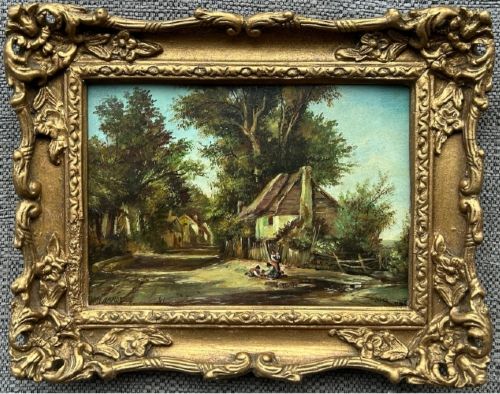
A small victorian landscape painting brings intimate nineteenth century pastoral and coastal views into a room without dominating the wall space. These works capture scenes from Welsh rivers to Scottish schools, often framed in gilt wood.
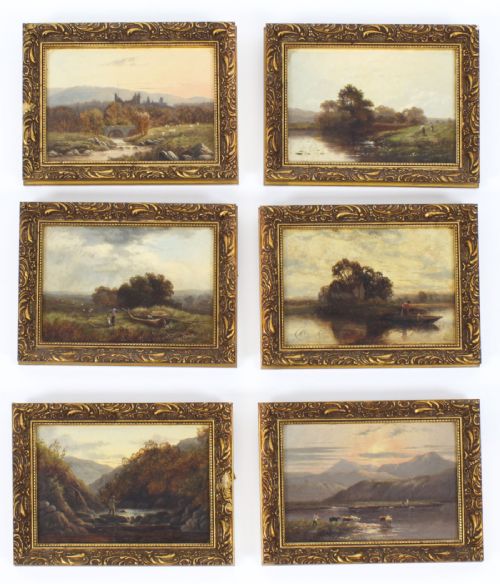
Most pieces seen here date from the nineteenth century, ranging from the Georgian era through to nineteen hundred. Subjects include cottages, sheep, rivers and camps by lakes, executed with varied brushwork.
Buyers encounter both oil paintings on panel or board and watercolours on paper. Pairs of coastal scenes and sets of river landscapes also appear in this selection.
Materials and construction
Artists painted these works using oil paint or watercolour applied to wood panels, boards or paper. Wooden supports provide rigidity for oil applications, whilst paper holds delicate watercolour pigments.
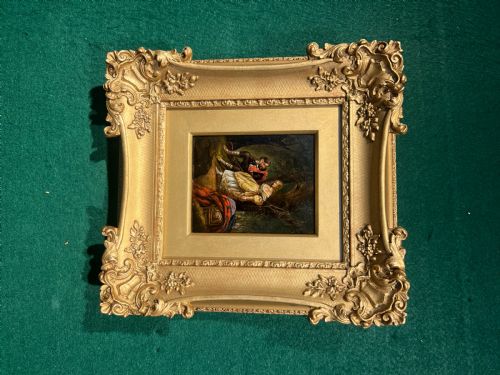
Frames incorporate gilt wood and gesso to complement the artwork. These materials reflect nineteenth century framing traditions, using moulded plaster and gold leaf finishes.
Listings span the nineteenth century, including Georgian and Edwardian examples, utilising oil paint, watercolour, wood panel and gilt wood.
Judging quality in these works
Quality rests in the handling of light and detail across the subject matter. Finer examples show careful brushwork in elements such as livestock, figures and water reflections.
The integration of the artwork with its period frame influences the overall character. Original gilt wood surrounds enhance the presence of oil paintings on panel and board.
William Howard Hardy·Miles Birkett Foster·Eugene Verboeckhoven·David Small·Cornelius Pearson·Richard Wilson
The Small Victorian Landscape Painting Glossary
- Gesso
- A plaster mix applied to wood before gilding. This mixture creates a smooth base for gold leaf on picture frames.
- Oil on Board
- Pigment bound in oil applied to a rigid board support. This surface provides a stable medium for nineteenth century painters.
- Watercolour
- Paint using water soluble pigments on paper. This medium suits delicate coastal views and atmospheric sketches.
- Panel
- A flat piece of wood used as a painting support. Panels offer a durable alternative to canvas for smaller works.
- Gilt Wood
- Timber covered with a thin layer of gold leaf. This material defines traditional nineteenth century framing.
Small Victorian Landscape Painting: Frequently Asked Questions
Where were these paintings displayed originally?
These compact works suited the domestic interiors of nineteenth century homes, fitting easily into smaller parlours and studies.
Their scale allowed owners to group multiple scenes together on a single wall without overwhelming the room.
How do I care for a watercolour painting?
Watercolours on paper require protection from direct sunlight to prevent the fading of delicate pigments over time.
Displaying them away from moisture sources helps preserve both the paper support and the surrounding mount.
What subjects are most common?
Common subjects include river valleys, coastal fishing boats, and rural cottages nestled in British and Scottish landscapes.
Artists also depicted specific local views, such as Welsh rivers and London street scenes.
How can I tell oils from watercolours?
Oil paintings utilise thick pigments on wooden panels or boards, often showing visible brush texture and a slightly glossy finish.
Watercolours feature thin, translucent washes on paper behind glass, revealing the texture of the sheet beneath.