


Small Tripod Stand
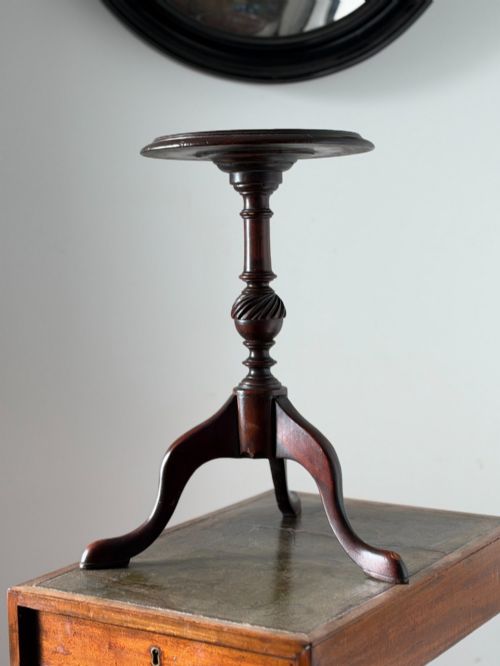
A small tripod stand provides a stable surface raised on three legs, offering compact utility and refined proportions for period interiors.
Small Tripod Stand
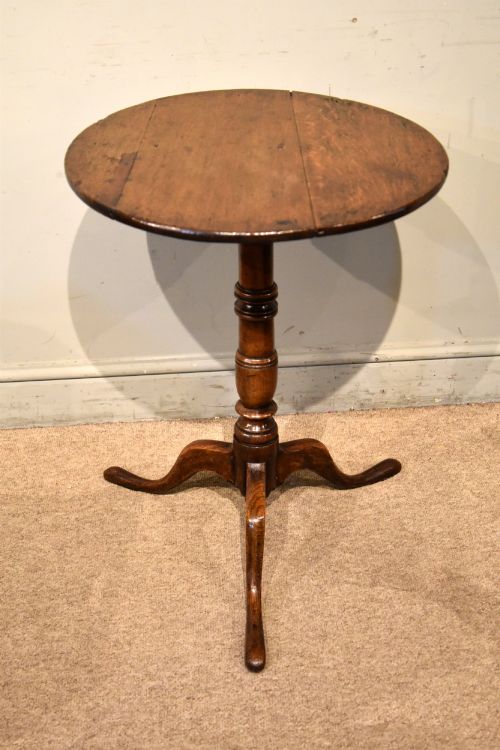
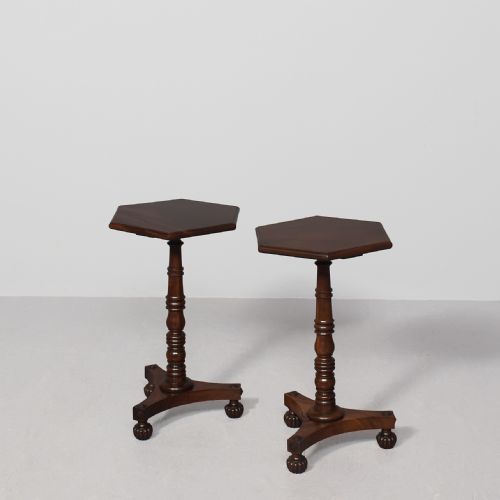
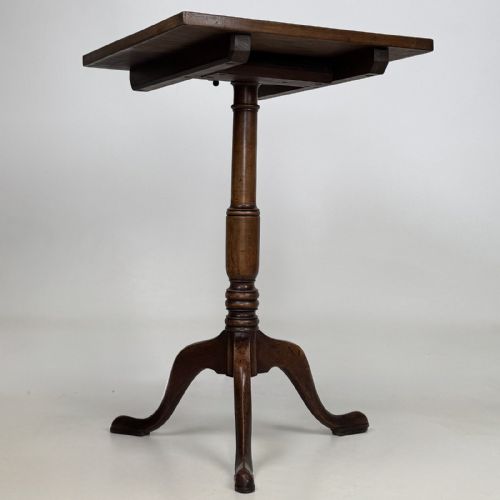
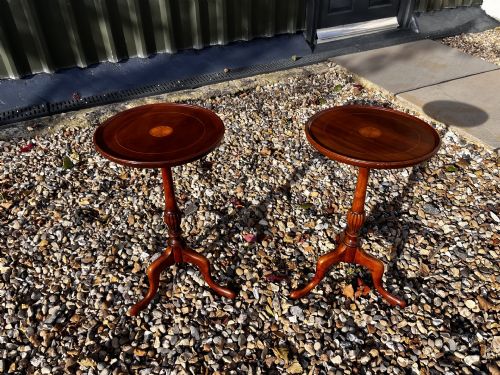
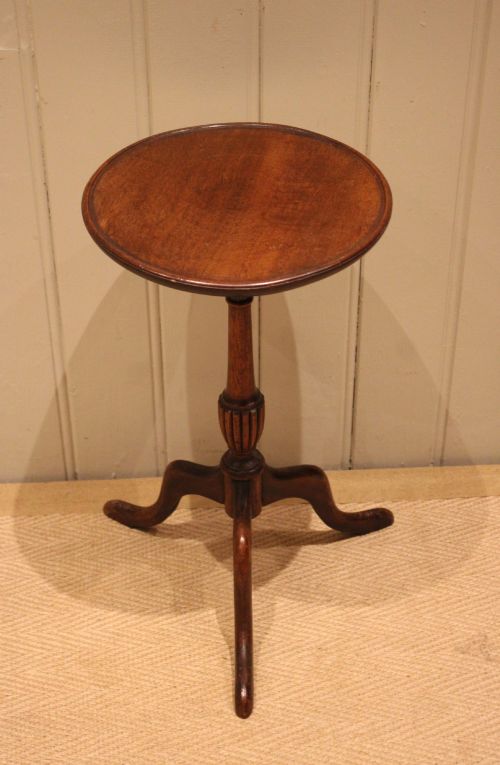
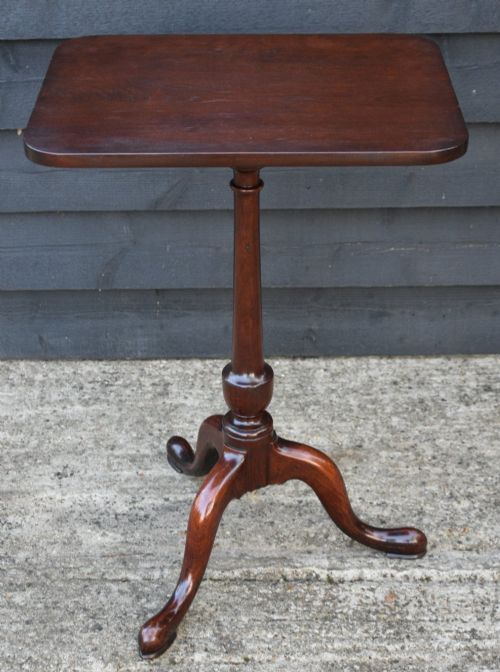
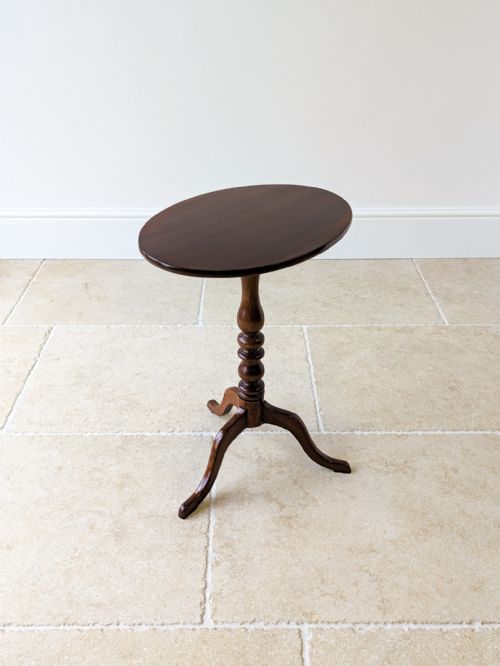
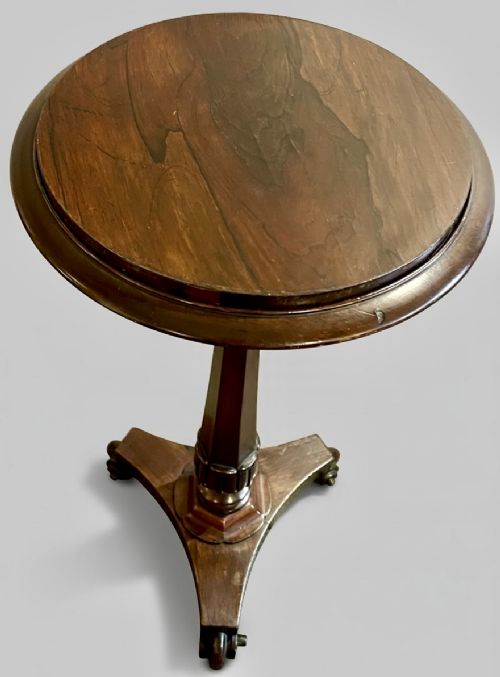
When you examine a small tripod stand on this page, you encounter pieces designed primarily as wine tables, candle stands, lamp tables, or occasional tables across the Georgian, Victorian, Regency, and Edwardian eras. The selection draws heavily from nineteenth-century production, alongside eighteenth-century George III examples and early twentieth-century revivals.
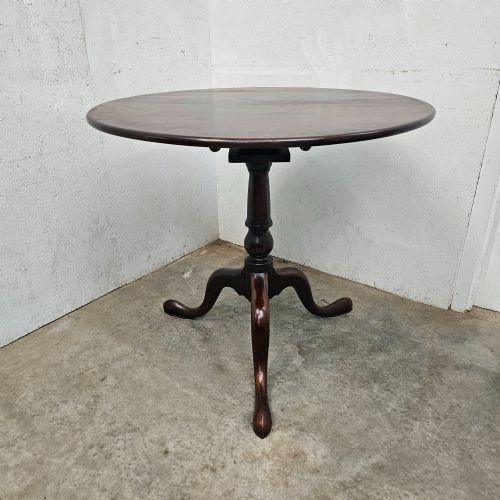
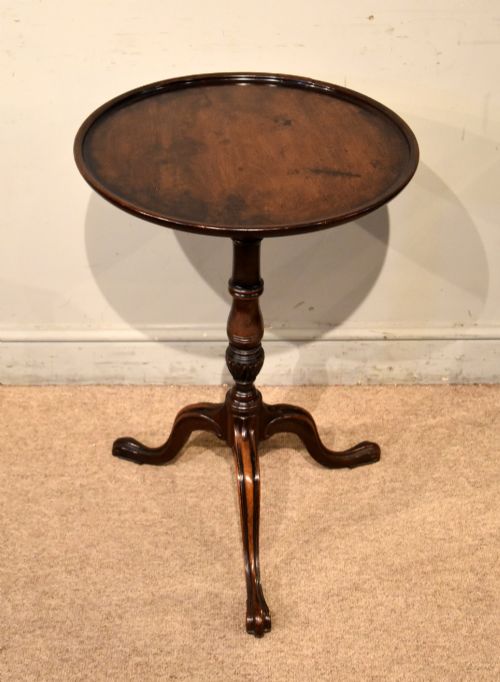
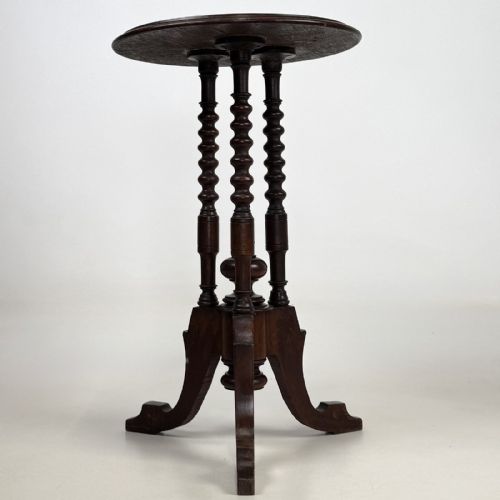
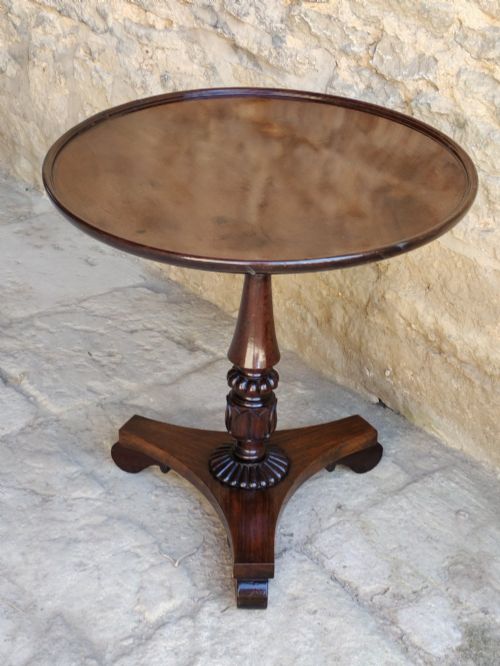
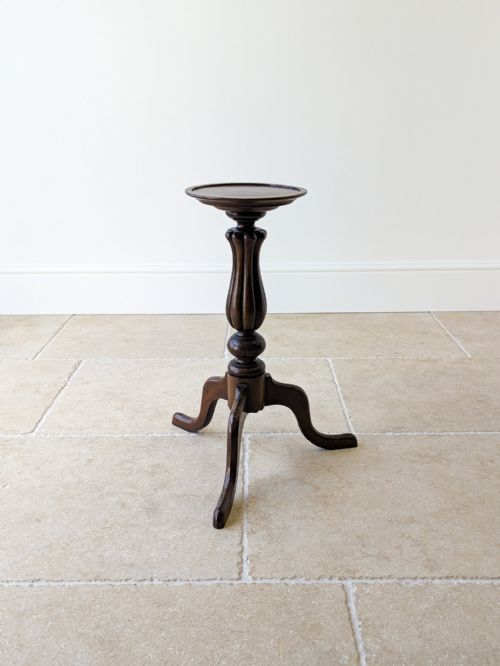
Most pieces stand on three splayed legs supporting a central pillar, carrying circular, rectangular, octagonal, or dished tops. Common timber choices include mahogany, oak, and walnut, frequently supplemented by rosewood, satinwood, and ebonised hardwood.
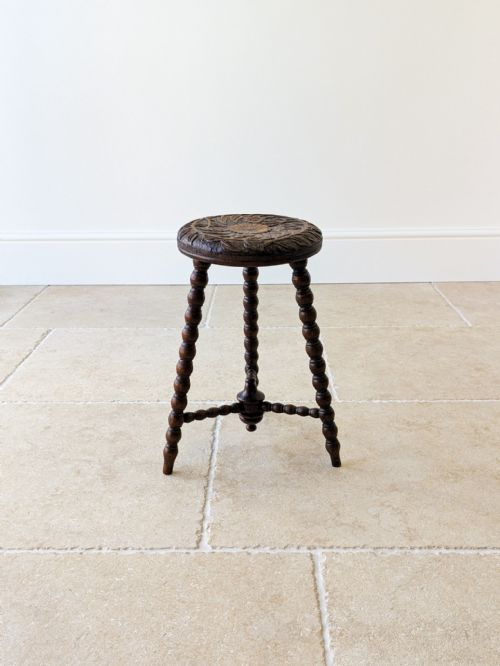
Forms range from plain utilitarian tables to tilt-top mechanisms, carved tripod stools, and occasional pieces featuring wood inlay or raised galleries.
How they were made
Cabinetmakers utilised solid timbers and veneers, turning central pillars on lathes and shaping individual legs to create balanced tripod supports. Joinery often incorporated pegged tenons, dovetails, and pivoting mechanisms for tilt-top variations.
Surface ornamentation relied on natural timber grain, French polishing, carved detailing, marquetry, and wood inlay rather than applied metalwork. Brass elements appear occasionally in castors or catches, while structural stability depended entirely on the precise geometry of the three-legged base.
Small Tripod Stand Retail Price Guide 2026
Typical asking prices for small tripod stand among the pieces listed under this phrase on Sellingantiques today, from the lower quarter to the upper quarter. They describe what is for sale here now, not the wider market.
Listings span the Georgian, Victorian, Edwardian, and Regency periods, utilising mahogany, oak, walnut, and rosewood.
What varies in quality
Quality rests upon the crispness of carved details, the choice and figuration of timber veneers, and the structural integrity of the central pillar joint. Superior examples maintain firm stance without wobble across the three legs, retaining original tilt mechanisms or smooth rotational action where applicable.
The refinement of the turning on the pedestal and the subtlety of edge moulding distinguish workshop-produced pieces from simpler utilitarian items. Secondary timbers used underneath or inside drawers also indicate the standard of construction expected by period makers.
Bulstrode Cambridge
The Small Tripod Stand Glossary
- Tilt-top
- A tabletop hinged to the pillar so it can be folded vertically when not in use. This clever mechanism allowed tables to be stored flat against a wall in smaller period rooms.
- Tripod base
- A support structure utilising three legs radiating from a central column. It ensures stability on uneven older floors by keeping all contact points firm.
- Dishtop
- A tabletop with a raised rim carved directly from the solid timber edge. This shallow depression prevented glassware or candles from sliding off.
- Marquetry
- The art of forming decorative patterns using fitted pieces of various coloured veneers. Craftsmen applied this technique to tabletops for ornamental richness.
- Occasional table
- A small, movable table used for specific, temporary purposes such as holding drinks or books. These versatile items easily relocated to different rooms as daily needs changed.
Small Tripod Stand: Frequently Asked Questions
What were small tripod stands used for originally?
These tables served specific domestic functions in period homes, holding wine glasses, tea equipment, or illumination from candles and lamps. Their portable nature allowed servants to move them about the room as social activities shifted.
Over time, owners placed them beside seating areas or in corners for display purposes. They remain practical today as compact bedside surfaces or chairside lamp tables.
How do I date a wooden tripod table?
Dating relies on observing timber choices, construction methods, and stylistic turning details. Georgian examples often display lighter, finer proportions and particular mahogany grain, while Victorian pieces can feature heavier turned pedestals or barley twist supports.
Revival pieces from the early twentieth century mimic earlier styles but reveal subtle differences in secondary woods and machine-cut joinery. Examining the underside and fixing methods of the top provides further clues to age.
Why do some tops tilt?
Tilt mechanisms were incorporated to save floor space when the furniture was not actively in use. A catch underneath allowed the surface to pivot upright against the pillar.
This design feature enabled multiple tables to store compactly against room perimeters in grand houses. Today, checking the hinge block helps determine if the tilting action is original.
Are these tables sturdy enough for daily use?
Three-legged construction naturally distributes weight evenly on flat surfaces without rocking. Solid timber frames handle normal everyday items like lamps or cups securely.
Care should be taken with tilt-top variants to ensure the locking catch is fully engaged before placing heavy objects on the edge. Proper placement away from direct heat sources protects the timber joints over time.