





Small Travel Timepiece
A small travel timepiece is a portable mechanical clock designed to keep accurate time on the move, combining utility with fine decorative metalwork.
Small Travel Timepiece
When you search for a small travel timepiece, you encounter portable clocks housed in robust cases designed for journeys and bedside use. The selection spans Victorian and Edwardian examples alongside French 19th-century models.
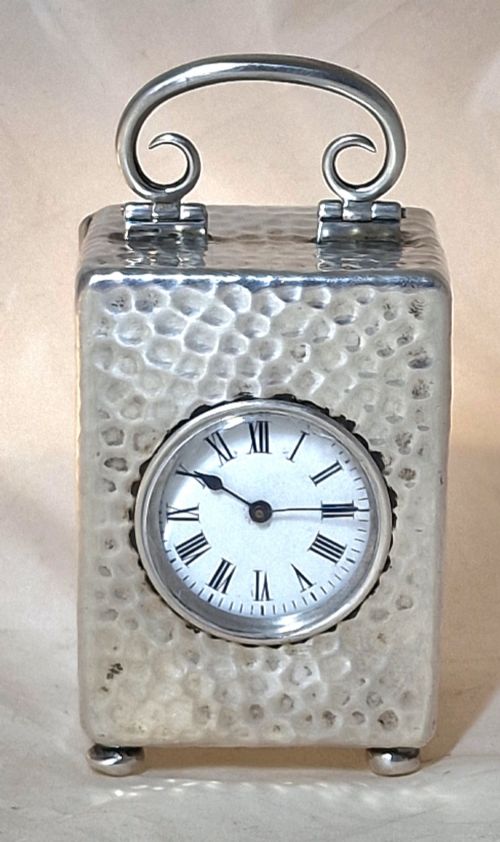
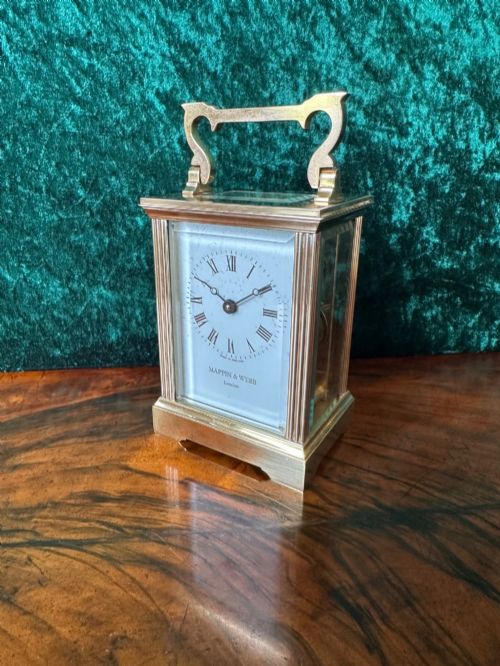
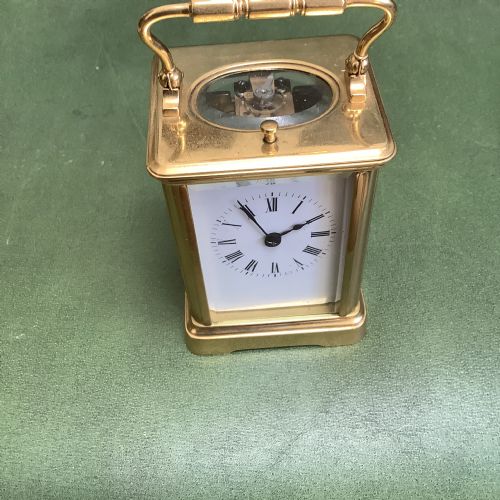
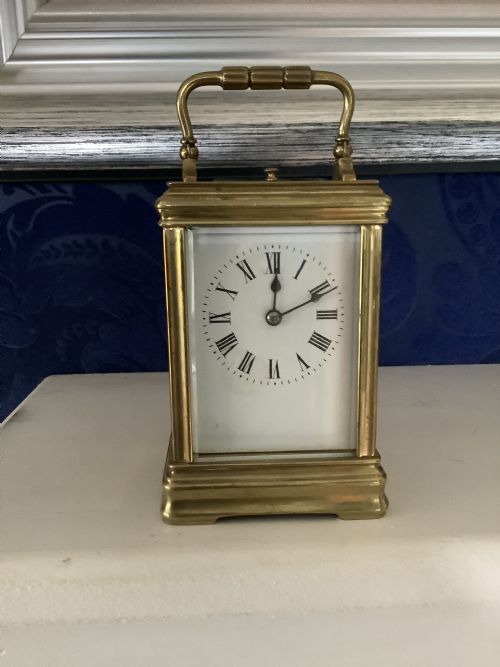
Most pieces on this page take the form of miniature carriage clocks or boudoir timepieces. They range from subminiature brass designs to silver cased examples equipped with travelling cases.
The origins split between British makers working in London and French workshops producing engraved gilt brass and enamelled dials. These pieces reflect the shift toward portable luxury during the 19th and early 20th centuries.
How they were made
The construction relies on metals such as brass, gilt brass, and sterling silver to form the protective outer frames and carrying handles. Glass panels are fitted to the sides and top to reveal the mechanical movement within.
Many cases incorporate decorative elements including floral enamelling, tortoiseshell backing, and leather outer travel cases. Dials feature delicate hand painting, Delft enamel, or fully engraved brass masks.
Movements are engineered for eight-day operation or standard daily runs, often utilising escapements that function reliably in a portable format.
Small Travel Timepiece Retail Price Guide 2026
Typical asking prices for small travel timepiece among the pieces listed under this phrase on Sellingantiques today, from the lower quarter to the upper quarter. They describe what is for sale here now, not the wider market.
Some tiny subminiature models were small enough to tuck into a waistcoat pocket alongside a pocket watch.
What varies in quality
Quality rests in the crispness of the hand engraving across the brass frame and the complexity of the movement. Fully engraved gorge cases and repeating mechanisms represent higher tiers of production.
The materials of the outer housing also dictate distinction, moving from standard brass to heavy cast silver and detailed tortoiseshell work. Signed pieces by known makers hold greater distinction than unmarked examples.
Mappin and Web·J Batson & Son·Richard co·Drocourt·J C Vickery
The Small Travel Timepiece Glossary
- Gorge case
- A distinct rectangular carriage clock case style with moulded top and bottom cornices. It is typical of high-quality French production.
- Escapement
- The internal mechanism that controls the release of power in a clock to maintain steady timekeeping. It is often visible through the dial glass.
- Boudoir timepiece
- A small ornamental clock intended for a private sitting room or bedroom rather than formal travel. These pieces frequently incorporate delicate enamel or silver decoration.
- Travelling case
- A fitted outer protective box, often made of leather, designed to safeguard a portable clock during transit. It allows the timepiece to endure journeys without sustaining surface damage.
Small Travel Timepiece: Frequently Asked Questions
How do I wind a small travel timepiece?
Most of these clocks utilise a dedicated winding key inserted into the backplate. Turn the key gently until resistance indicates the mainspring is fully tensioned.
Avoid overwinding the mechanism, as this can strain the internal spring. Ensure the clock is placed on a stable surface before winding.
Can I travel with these antique clocks?
While originally built for journeys, antique timepieces require careful handling today. Use their fitted leather travelling cases to absorb knocks and keep the movement secure.
Modern travel subjects delicate 19th-century gear trains to vibrations. Many collectors prefer to keep them stationary on a mantelpiece or desk.
How do I tell an English clock from a French one?
English pieces often feature British silver hallmarks and simpler, robust brass cases stamped with local maker details. London assay offices stamp dates that clarify the exact year of production.
French pieces frequently display gilt brass frames, intricate floral enamel dials, and Gorge cases. Their movements are typically unsigned or bear the stamps of Paris makers.
What does an eight-day movement mean?
An eight-day movement requires winding approximately once a week to maintain continuous operation. This improvement freed owners from daily manual winding during travel.
Such movements indicate a more complex gear train than standard single-day timepieces. They represent a higher standard of clockmaking craftsmanship.