






Small Roll Top Desk
A small roll top desk brings compact workspace and hidden storage together in timber, offering a neat cylinder or tambour cover for your papers.
Small Roll Top Desk
When you search for a small roll top desk, you find compact writing furniture designed to conceal papers and stationery beneath a curved sliding lid. These pieces range from Georgian and Regency mahogany examples to Victorian and Edwardian oak models, alongside miniature furniture and French styles.
The version you are most likely to meet on this page is an oak or mahogany pedestal or table format from the nineteenth or early twentieth century. These smaller formats suit domestic studies and sitting rooms where floor space is limited.
Makers and cabinet makers utilised rich timbers such as burr walnut, satinwood, and mahogany, sometimes adding parquetry or brass mounts. The internal fittings often include small drawers and pigeonholes for organisation.
How they were made
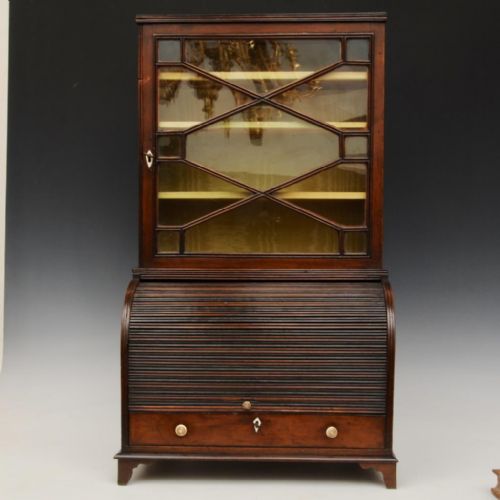
Carpenters built the curved roll top using either solid strips known as tambour slats or a solid bent cylinder of timber running in rebated tracks. These components demanded precise joinery to ensure the mechanism slid smoothly without binding.
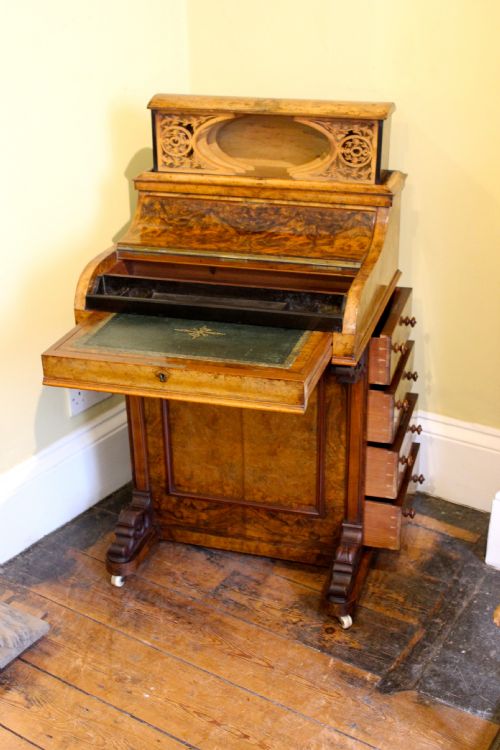
Cabinet makers framed the carcase in oak, mahogany, or walnut, frequently applying veneers of burr walnut or satinwood to the exterior surfaces. Many writing surfaces incorporated inset leather panels tooled with gold leaf borders.
Small Roll Top Desk Retail Price Guide 2026
Typical asking prices for small roll top desk among the pieces listed under this phrase on Sellingantiques today, from the lower quarter to the upper quarter. They describe what is for sale here now, not the wider market.
Miniature furniture pieces appear alongside full-sized desks, offering tiny working cylinders for dollhouse scribes.
What varies in quality
The smoothness of the cylinder or tambour action dictates much of the functional standard. Superior examples feature well-aligned slats or precisely turned cylinders that glide without resistance in their side grooves.
Timber selection and secondary wood usage separate workshops. Better pieces employ choice cuts of mahogany, burr walnut, or satinwood with matching grain patterns across the fall and drawer fronts, paired with secondary drawer linings in oak rather than softer deal.
William Angus and Co Ltd London
The Small Roll Top Desk Glossary
- Tambour
- A flexible sliding shutter formed of narrow vertical strips of wood glued to a canvas backing. This mechanism conceals the desk interior by following a curved track.
- Cylinder desk
- A writing desk featuring a quarter-circle solid wooden roll that encloses the writing surface and interior compartments when closed. It differs from the slatted tambour construction.
- Davenport desk
- A compact pedestal writing desk with a sloping desktop and drawers opening to the side. The evidence includes nineteenth-century burr walnut examples of this form.
- Escritoire
- A writing cabinet with a fall front or cylinder enclosing pigeonholes and small drawers. French styles often use this term for refined writing furniture.
- Parquetry
- Geometric patterns formed by small inlaid pieces of contrasting wood veneers. Cabinet makers applied this technique to decorative desk surfaces and miniature pieces.
Small Roll Top Desk: Frequently Asked Questions
How do I clean the leather writing surface?
Wipe the leather gently with a slightly damp cloth without using harsh chemical cleaners. Apply a neutral leather wax conditioner periodically to keep the material supple.
Avoid soaking the edges where the leather meets the wooden surrounds, as excess moisture can lift the adhesive and damage the surrounding timber grain.
How do I maintain the tambour mechanism?
Keep the sliding tracks free from dust and debris by using a soft brush or dry cloth. Smooth operation depends on clean grooves rather than heavy lubrication.
Avoid applying liquid oils or furniture sprays directly onto the tambour slats, as these products can attract dirt into the narrow joints between the strips.
Where should I place a small roll top desk?
Position the desk away from direct sunlight and strong heat sources such as radiators to prevent the timber veneers from drying out and cracking. Adequate clearance behind and above the desk ensures the sliding mechanism operates without obstruction.
Allow enough room around the chair so you can access the side drawers or pedestal compartments comfortably in a smaller room.
How can I tell a Victorian desk from an Edwardian one?
Victorian desks often employ heavier mahogany or burr walnut timbers with rich dark patination and formal proportions. They frequently feature deep mouldings and substantial brass hardware.
Edwardian and later pieces tend to show lighter oak or inlaid mahogany construction with simpler decorative schemes reflecting changing domestic tastes at the turn of the twentieth century.