


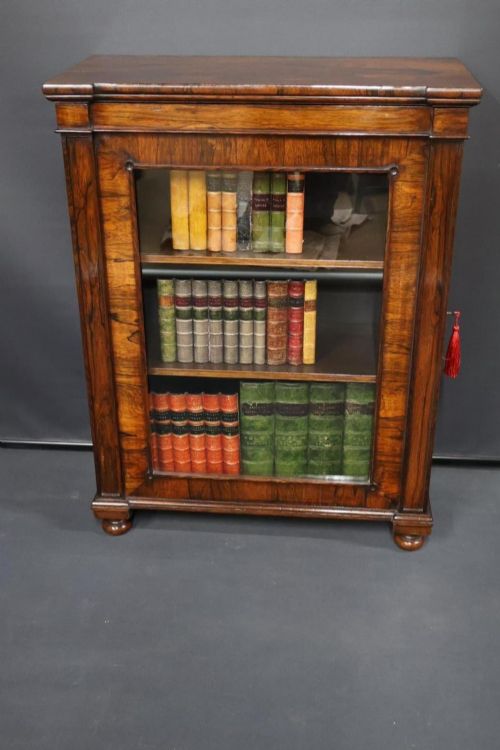
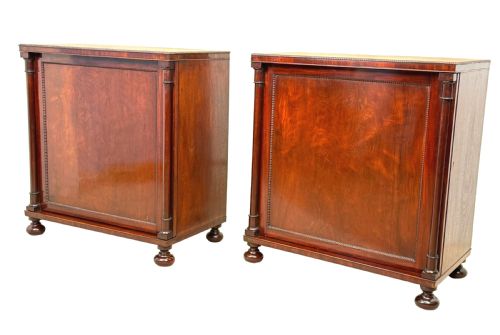

Small Regency Side Cabinet
A small regency side cabinet brings architectural discipline and rich rosewood or mahogany grain to a room.
Small Regency Side Cabinet
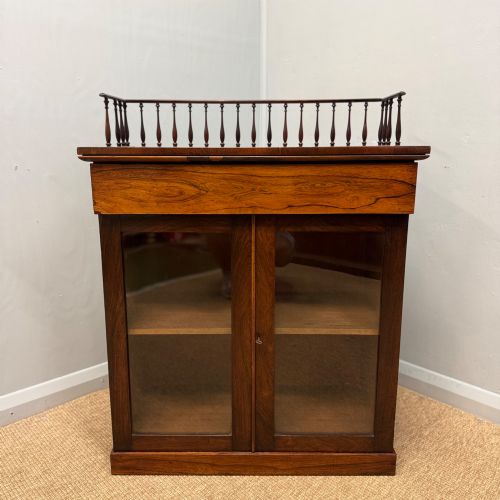
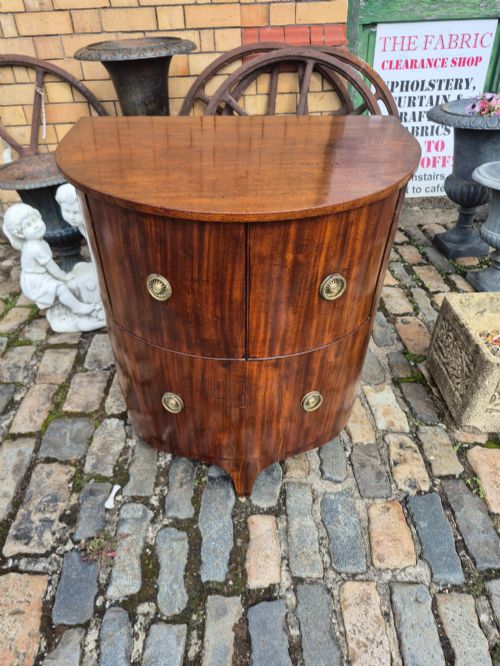
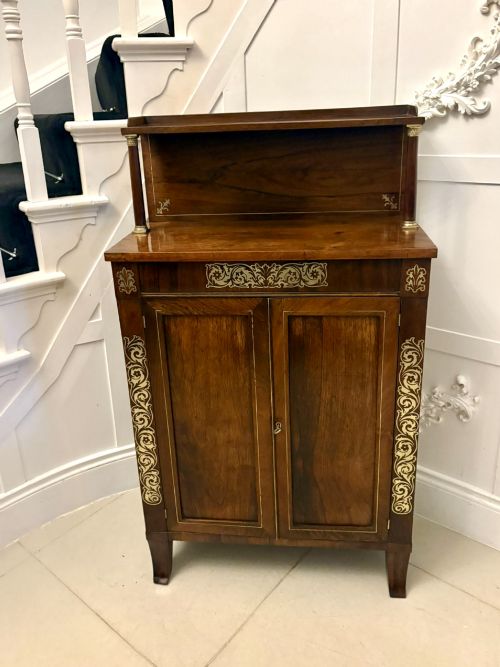
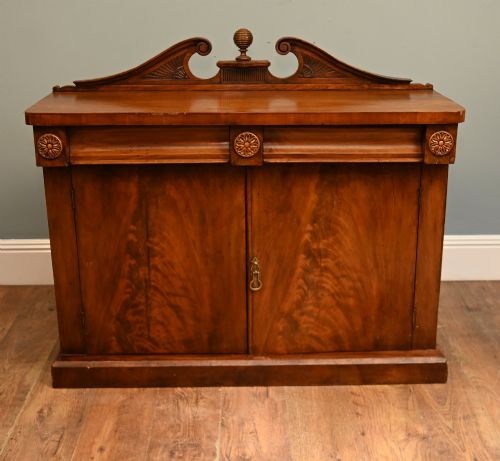
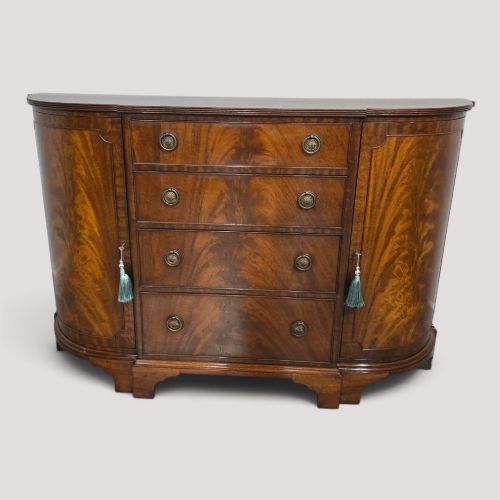
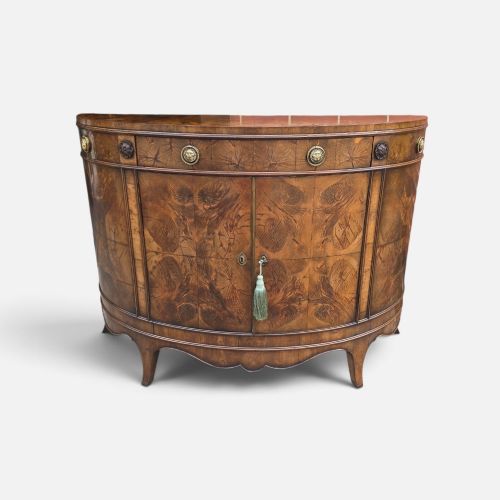
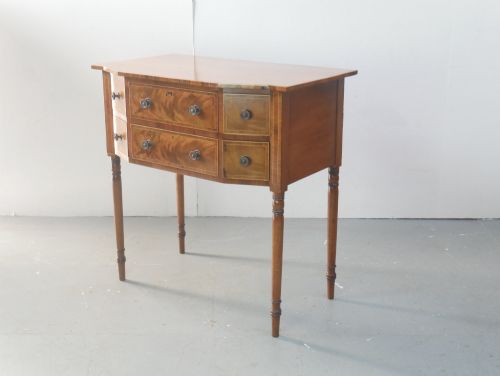
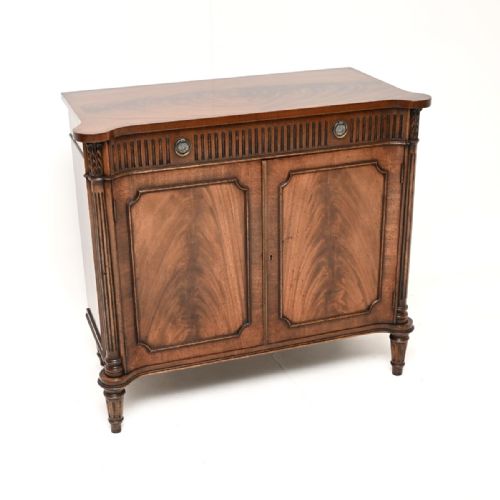
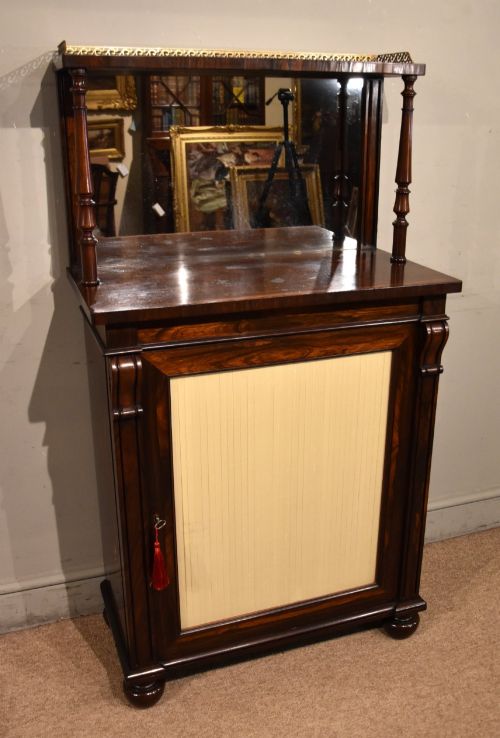
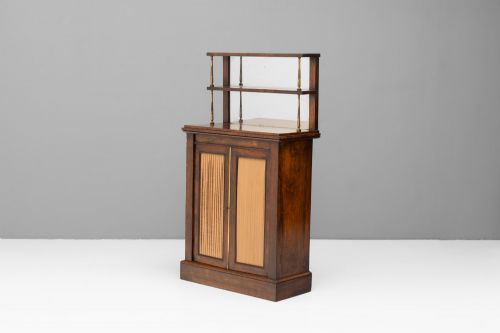
A small regency side cabinet serves primarily as a compact storage unit for the drawing room or parlour, often taking the form of a chiffonier or pier cabinet. These pieces provide surface display space alongside enclosed shelving behind doors.
The selections span genuine Regency and George IV periods as well as later Victorian interpretations and revival pieces. Mahogany and rosewood dominate the structural forms, frequently enhanced by brass details and spindle galleries.
Materials and construction
Cabinetmakers utilised solid mahogany and rosewood timbers, frequently applying flame mahogany veneer to create striking door panels and top surfaces. Brass hardware, including handles and grilles, provides functional contrast to the dark timber.
Joinery techniques focus on sturdy carcase construction combined with fine drawer dovetailing and applied mouldings. Gallery tops incorporate delicate turned spindles fixed securely into the upper shelf.
Small Regency Side Cabinet Retail Price Guide 2026
Typical asking prices for small regency side cabinet among the pieces listed under this phrase on Sellingantiques today, from the lower quarter to the upper quarter. They describe what is for sale here now, not the wider market.
Listings feature mahogany and rosewood predominantly, alongside select pieces in yew wood and satin birch.
Quality differences
The depth of timber figure and the precision of veneer matching distinguish finer examples from standard production pieces. Richly grained rosewood and well-figured flame mahogany elevate the visual impact significantly.
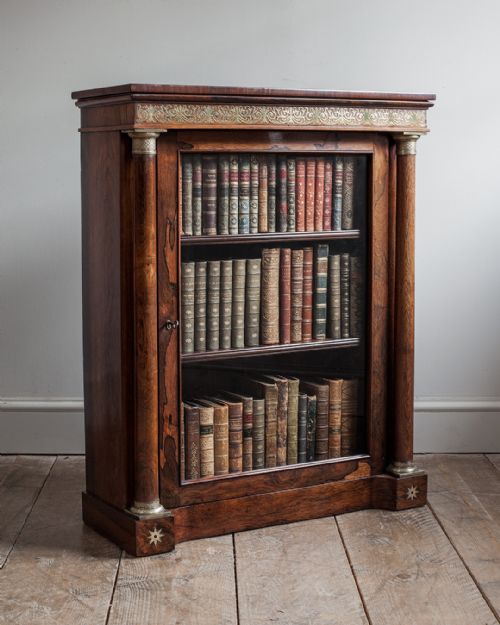
Refinement in carving, such as crisp brass inlay, well-turned columns, and original hardware, separates superior cabinet work from plain utility items.
Gillows
The Small Regency Side Cabinet Glossary
- Chiffonier
- A low sideboard or cabinet featuring enclosed shelving below, sometimes surmounted by a small shelf or gallery. This form evolved during the Regency period to hold books and decorative objects.
- Pier cabinet
- A narrow cabinet designed to stand against the wall space between windows. These pieces often incorporate glazed doors or open shelving with spindle galleries.
- Flame mahogany
- A veneer cut from the fork of the mahogany tree where the grain creates a characteristic flickering flame pattern. Cabinetmakers used this technique on prominent exterior surfaces.
- Davenport
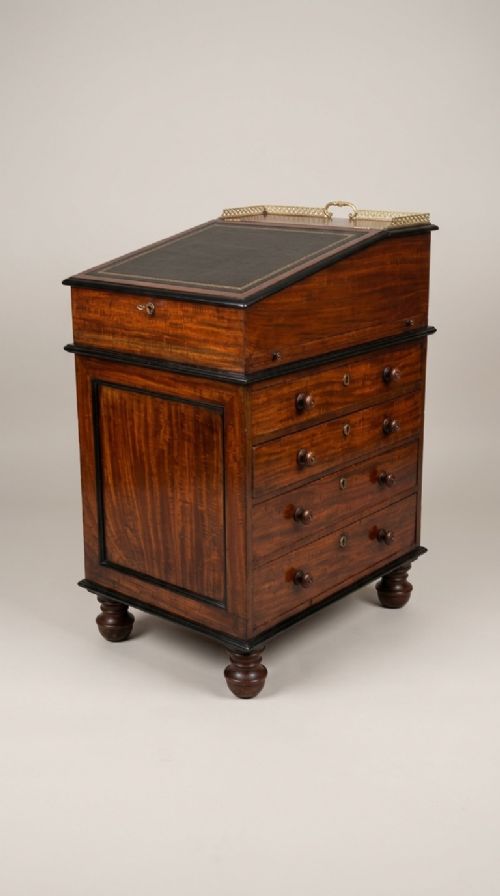
- A compact writing desk featuring a sloping top and drawers accessed from the side. Several examples appear alongside traditional side cabinets in the current selection.
- Spindle gallery
- A decorative open railing composed of small turned wooden pillars fitted to the top shelf. This feature helps retain small items displayed on the surface.
Small Regency Side Cabinet: Frequently Asked Questions
What is a small regency side cabinet used for?
These cabinets served as versatile storage furniture in period drawing rooms and parlours. They held books, writing materials, and decorative objects while providing a surface for lamps or ornaments.
Today, they function well as compact storage units in modern hallways, living rooms, or bedrooms where floor space is limited.
How do I identify a genuine period piece?
Examine the secondary timbers inside the drawers and carcase, which should match the expected construction methods of the early nineteenth century. Look for hand-cut dovetails and timber movement appropriate to the age.
Check for original brass hardware and consistent wear patterns around the handles and feet.
Can I use a chiffonier as a bedside table?
Many smaller chiffoniers and side cabinets fit well beside a bed, offering surface space for a lamp and enclosed storage underneath. Their compact proportions make them practical alternatives to standard bedside tables.
Ensure you measure the height of your mattress relative to the cabinet surface before placing one in a bedroom.
What is the difference between mahogany and rosewood furniture?
Mahogany provides a reddish-brown timber tone with varied grain patterns, ranging from straight figures to dramatic flame veneers. It formed the structural backbone of much Georgian and Regency cabinet making.
Rosewood offers a heavier, denser dark brown timber marked with distinctive black grain figuring and an oily lustre, prized for high-status display pieces.