



Small Regency Open Cabinet
These small regency open cabinets are compact bookcases and display shelves offering practical storage for modest spaces with period elegance.
Small Regency Open Cabinet
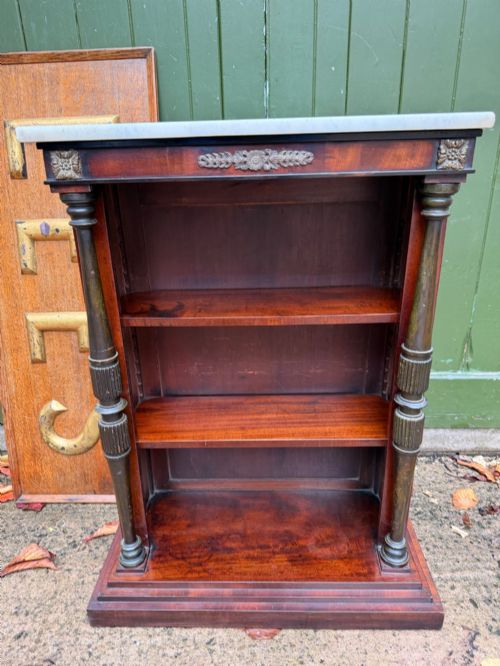
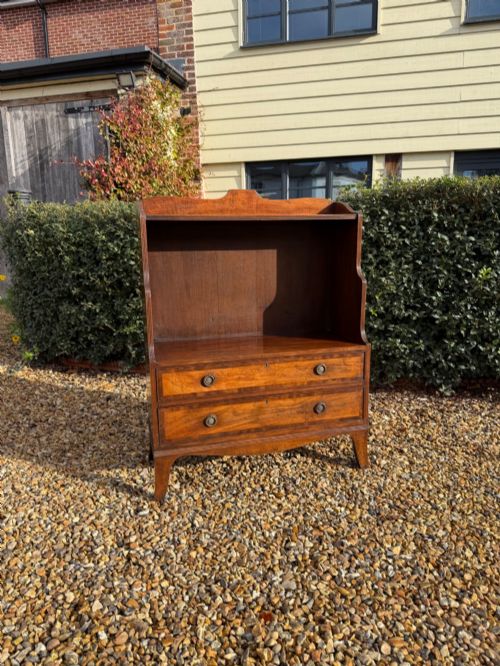
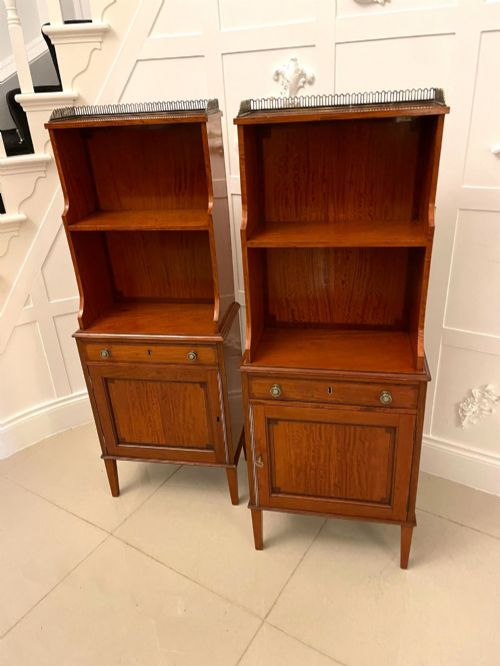
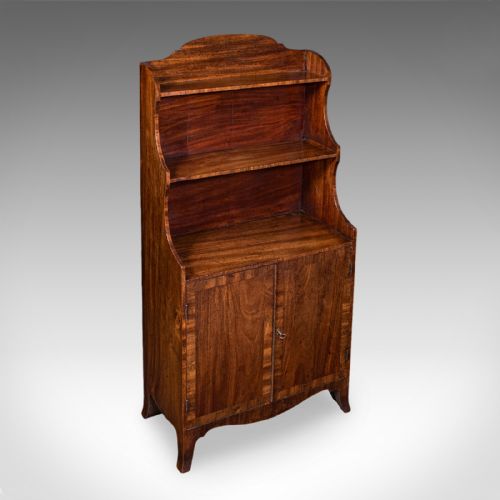
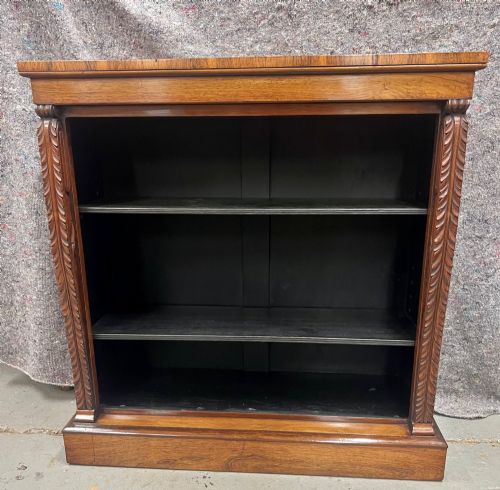
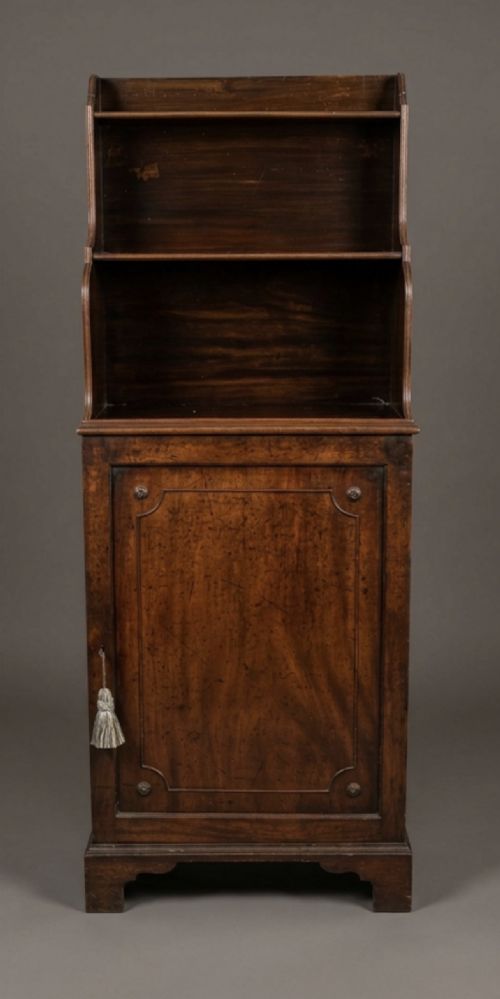
A small regency open cabinet typically appears as a low, open bookcase, display shelf, or diminutive breakfront piece suited to compact interiors. These items often feature neat proportions, open front shelving, and sometimes lower cupboards or waterfall tiers.
The pieces seen on this page span the Regency, Georgian, and Victorian eras, alongside later revival pieces from the early twentieth century. Mahogany and rosewood form the core of the selection, frequently enhanced by contrasting timbers or brass mounts.
How they were made
Cabinet makers utilised dense native and imported timbers, notably mahogany and rosewood, sometimes applying flame mahogany veneer for visual depth. Details such as satinwood, ebony, and brass mounts were integrated to accent the primary wood structure.
Many examples incorporate marble tops or tiered waterfall shelves, demanding precise carpentry to ensure stability across compact dimensions. Joinery methods reflect the cabinet-making standards of the nineteenth and early twentieth centuries.
Small Regency Open Cabinet Retail Price Guide 2026
Typical asking prices for small regency open cabinet among the pieces listed under this phrase on Sellingantiques today, from the lower quarter to the upper quarter. They describe what is for sale here now, not the wider market.
The selection spans the Georgian, Regency, and Victorian periods, with occasional twentieth-century interpretations.
What varies in quality
Quality rests in the choice of timber figure, such as the richness of flame mahogany or rosewood grain, and the refinement of brass or contrasting wood inlays. Better examples demonstrate crisp detailing in any mounts and balanced proportions across diminutive frames.
The integration of secondary materials like marble tops or finely stepped waterfall tiers distinguishes finer cabinet work from simpler utilitarian shelving. Original condition and restraint in decoration also separate standard items from superior pieces.
Gillows
The Small Regency Open Cabinet Glossary
- Regency
- A stylistic period spanning the early nineteenth century characterised by classical restraint, elegant proportions, and classical revival motifs. Furniture from this era often employs dark timbers and subtle brass detailing.
- Waterfall bookcase
- A set of open shelves stepped back in successive tiers from bottom to top, resembling cascading water. This form became popular for display and compact book storage.
- Chiffonier
- A low cabinet or sideboard, sometimes fitted with shelves on top for displaying books or ornaments. The form provides enclosed storage beneath open display space.
- Breakfront
- A piece of furniture where the central section projects forward from the flanking wings. This architectural arrangement creates depth and visual interest in cabinets.
Small Regency Open Cabinet: Frequently Asked Questions
What is a small regency open cabinet used for?
These compact pieces serve primarily as open bookcases or display shelves for modest collections of books and decorative objects. Their low profile allows them to sit comfortably beneath windows or against smaller wall spaces.
Historically, similar diminutive chiffoniers and open shelves provided accessible storage in parlours and drawing rooms without dominating the floor plan.
How do I identify a Regency period piece?
Regency furniture typically exhibits clean classical lines, restrained ornamentation, and a focus on the natural grain of timbers like mahogany or rosewood. Details such as brass stringing or mounts often point toward this era.
Later revival items from the nineteenth or twentieth century may mimic these forms but often reveal different construction methods or secondary woods upon closer inspection.
Are waterfall bookcases sturdy?
Despite their stepped, open construction, period waterfall shelves are built with solid joinery to support the weight of books. The graduated depth provides a stable centre of gravity when placed against a wall.
Care should be taken to distribute heavier volumes on the deeper lower shelves rather than the topmost tiers.
Where should I place an open cabinet in my home?
Because of their modest proportions, these cabinets fit well in studies, alcoves, or hallways where large furniture would overwhelm the space. Their open fronts make them ideal for everyday access to books.
Keeping them out of direct sunlight helps protect sensitive timbers like rosewood and mahogany from fading.