

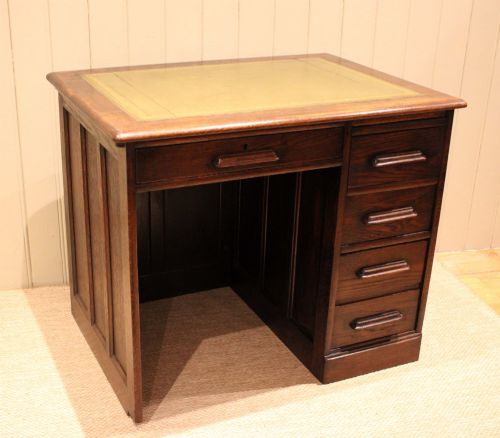
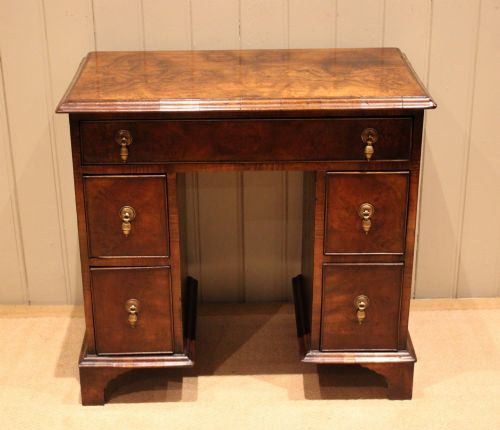


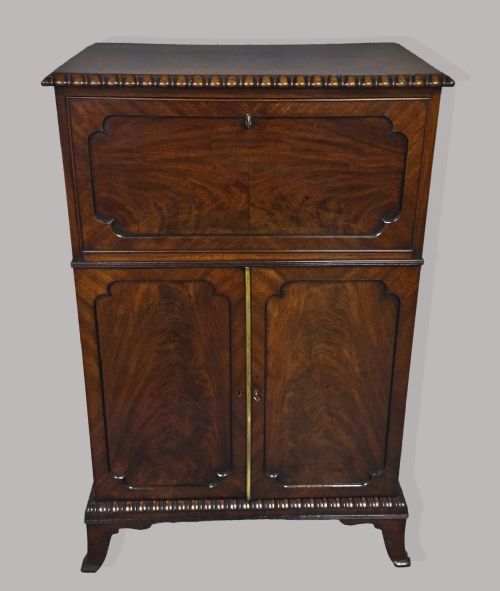


Small Proportion Bureau
A small proportion bureau provides compact writing space and concealed storage, answering the historic need for neatness in domestic rooms.
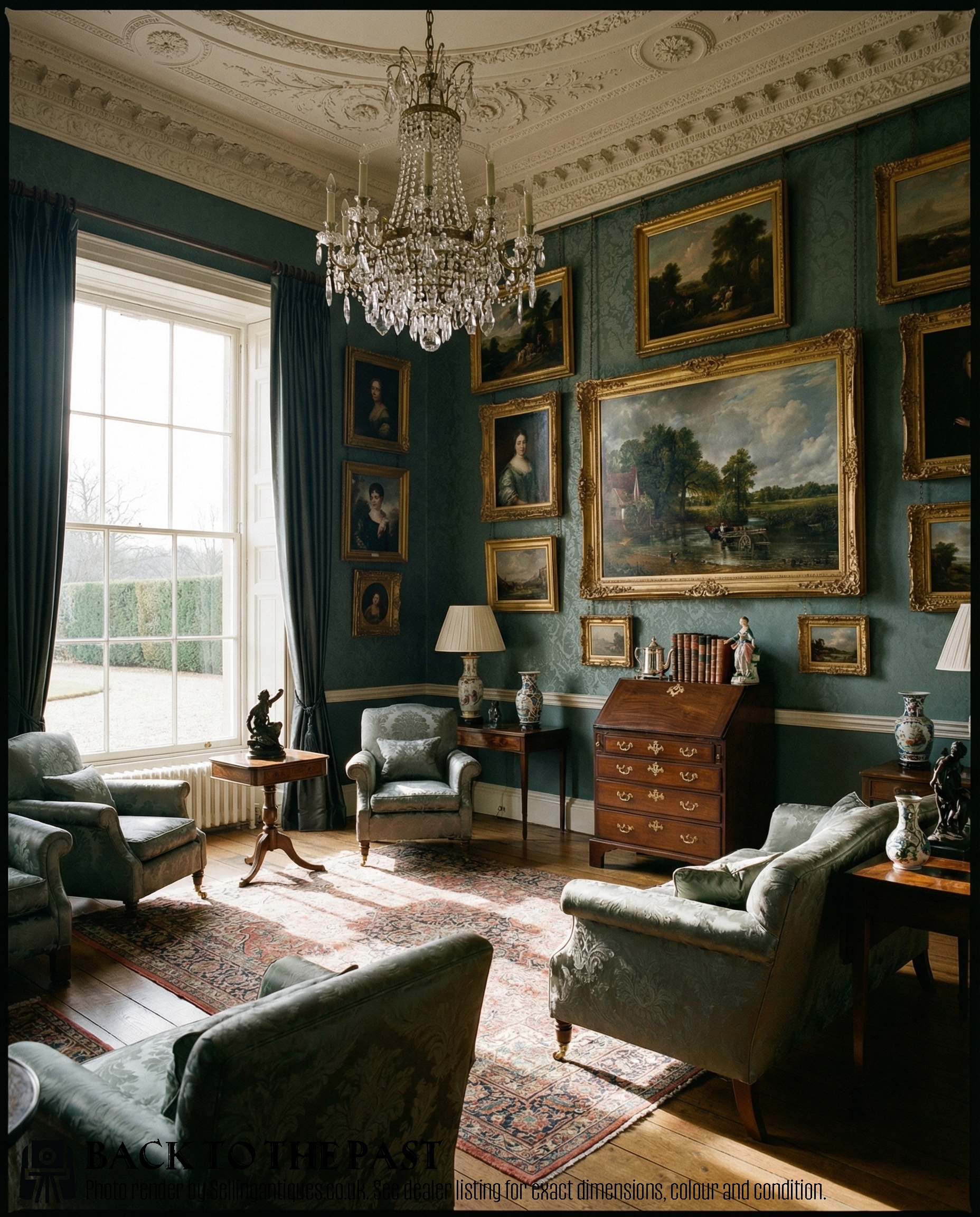
Small Proportion Bureau
A small proportion bureau is a writing cabinet built with a reduced footprint, designed to fit intimate chambers rather than grand reception rooms. The evidence shows these pieces appearing across multiple periods, from the late seventeenth century through the Georgian and Regency eras to the Edwardian period.
The form encompasses standard drop-front bureaux, bureau bookcases, kneehole desks, and secretaire cabinets. Mahogany, walnut, and oak dominate the selection, often enriched with burr walnut or flame mahogany veneers.
Buyers meet varied iterations, including diminutive Davenport desks and compact bureaux on stands. The unifying characteristic across these pieces is their diminished scale, built to occupy minimal floor space while retaining full functional utility.
How they were made
Cabinetmakers constructed these pieces using solid timbers like oak, mahogany, and walnut for structural frames and drawer linings. Fine veneers such as burr walnut, flame mahogany, and figured satinwood were applied to primary display surfaces to create complex grain patterns.
Brass hardware, including escutcheons, handles, and hinges, fastened doors and drawers while adding metallic contrast to the timber. Joinery methods relied on precise dovetailing for drawer construction and panel-in-frame assembly for carcases.
Small Proportion Bureau Retail Price Guide 2026
Typical asking prices for small proportion bureau among the pieces listed under this phrase on Sellingantiques today, from the lower quarter to the upper quarter. They describe what is for sale here now, not the wider market.
Listed examples span from late seventeenth-century William and Mary pieces through Georgian and Regency eras to Edwardian satinwood designs.
What varies in quality
Quality rests in the selection of timber figures and the restraint of the proportions. Cabinets utilising matched veneers and carefully chosen solid woods present a unified visual weight that lesser pieces lack.
The execution of secondary details, such as interior pigeonholes, small drawers, and hidden compartments, separates standard production from superior cabinet work. Patina and surface preservation determine how gracefully the timber ages over centuries of handling.
Gillows·Druce & Co·Heals
The Small Proportion Bureau Glossary
- Bureau
- A writing desk featuring a sloping fall-front that opens to reveal a fitted interior of small drawers and pigeonholes. It often sits above a chest of drawers.
- Secretaire
- A cabinet or chest containing a concealed writing drawer or a drop-front writing compartment. This form integrates a desk into the upper sections of bookcases or chests.
- Kneehole desk
- A compact desk with a central recess for the sitter's legs, flanked by pedestals of small drawers. This form maximises storage in a restricted footprint.
- Veneer
- A thin layer of figured timber applied to a secondary wood base to provide a decorative exterior surface. Burr walnut and flame mahogany are typical examples.
- Davenport
- A small compact writing desk featuring a sloping desk lid and drawers accessed from the side. Regency examples display this diminutive form.
Small Proportion Bureau: Frequently Asked Questions
Where should I place a small proportion bureau?
These compact desks suit narrow hallways, bedrooms, or small studies where standard furniture overwhelms the floor plan.
Their reduced depth allows them to sit comfortably against walls without obstructing movement through a room.
How do I maintain the wood surface?
Keep the timber away from direct heat sources and strong sunlight to prevent the veneer from drying and lifting.
Apply a microcrystalline wax periodically to nourish the surface and preserve the historic finish.
What is inside the fall-front?
Opening the sloping lid reveals a series of small pigeonholes and letter drawers intended for stationery and correspondence.
Some interiors also conceal a central cupboard door or hidden sliding compartments.
How do I distinguish eighteenth-century pieces?
Examine the drawer construction for hand-cut dovetails and inspect the secondary timbers used inside the carcase, such as oak or pine.
Eighteenth-century examples often display simpler, heavier carcase proportions and rich patination accumulated over time.